What is a Vendor Invoice?
The essential billing document that triggers payment workflows in accounts payable, from receipt through validation to payment.
Quick Definition
A vendor invoice (also called a supplier invoice) is a billing document sent by a vendor to a buyer requesting payment for goods delivered or services rendered. It contains itemized charges, payment terms, and serves as the primary input for the accounts payable process.
- Triggers the payment process in accounts payable
- Contains all details needed for payment and recording
- Can be PO-based or non-PO based requiring different workflows
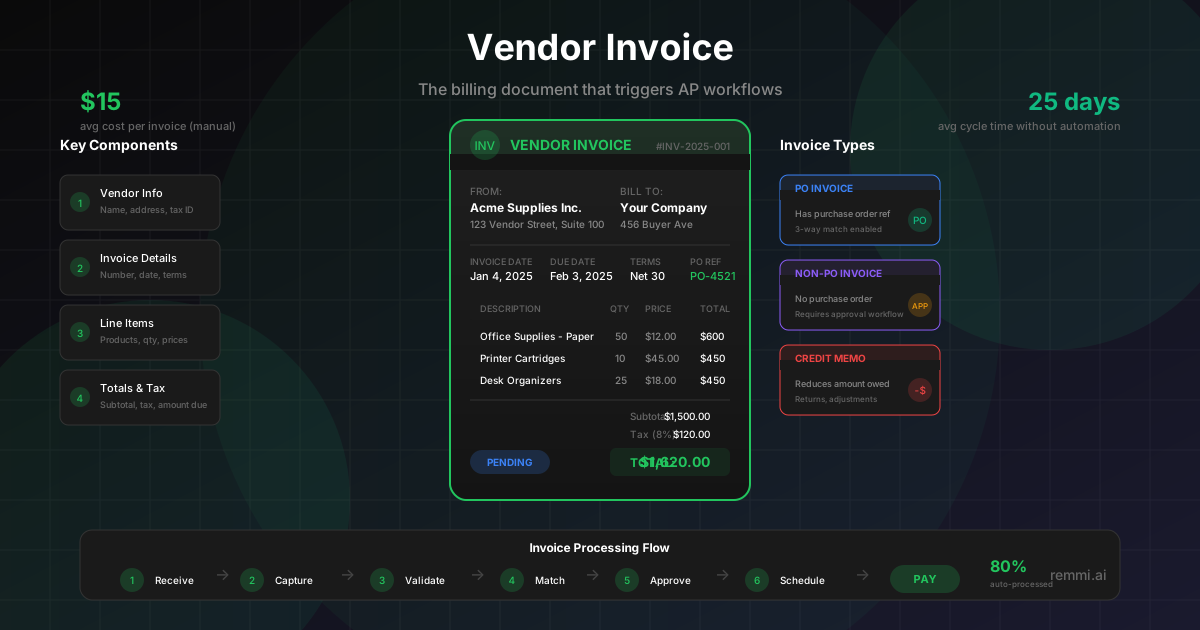
Understanding Vendor Invoices
A vendor invoice is the document that formally requests payment for products or services provided by a supplier. It's one of the most important documents in business operations, serving as the basis for accounts payable transactions, financial records, and tax documentation.
When a vendor delivers goods or completes services, they issue an invoice detailing what was provided and how much is owed. This invoice then enters the buyer's accounts payable process, where it's validated, approved, and scheduled for payment.
The efficiency of processing vendor invoices directly impacts an organization's cash flow management, vendor relationships, and operational costs. Organizations processing invoices manually often experience delays, errors, and higher processing costs compared to those using automated solutions.
Key Invoice Components
Vendor Information
Identifies who is requesting payment:
- • Company name & address
- • Tax ID / VAT number
- • Contact information
- • Bank/payment details
Invoice Details
Critical tracking and timing information:
- • Unique invoice number
- • Invoice date
- • Payment terms
- • PO reference (if applicable)
Line Items & Totals
The financial details of the transaction:
- • Item descriptions
- • Quantities & unit prices
- • Taxes (sales tax, VAT)
- • Total amount due
PO vs Non-PO Invoices
PO Invoice
- •References a pre-approved purchase order
- •Enables three-way matching (PO + Receipt + Invoice)
- •Budget already allocated at PO creation
- •Automated processing possible with clean match
Best for: Inventory, raw materials, planned purchases
Non-PO Invoice
- •No purchase order exists for reference
- •Requires budget owner approval workflow
- •Manual GL coding typically required
- •Higher processing cost and risk
Common for: Utilities, subscriptions, emergency purchases
Why Vendor Invoice Processing Matters
Average cost to process an invoice manually
Average cycle time without automation
Error rate in manual invoice processing
Efficient vendor invoice processing directly impacts cash flow, vendor relationships, and operational costs. Organizations that automate invoice processing see significant improvements in processing time, cost per invoice, and accuracy while capturing more early payment discounts.
How Vendor Invoices Are Processed
Invoice Receipt
Invoice arrives via email, mail, EDI, or vendor portal and is captured into the AP system.
Data Extraction
Key fields are extracted: vendor info, invoice number, amounts, line items, PO reference, and tax details.
Validation
Invoice is validated for completeness, checked for duplicates, and verified against vendor master data.
Matching (PO Invoices)
For PO invoices, three-way matching compares invoice against purchase order and goods receipt.
Approval Routing
Exceptions and non-PO invoices route to appropriate approvers based on rules and thresholds.
Payment Scheduling
Approved invoices are scheduled for payment based on terms and cash management strategy.
Invoice Processing Best Practices
Validate Before Processing
Check for duplicate invoices, verify vendor exists in master file, and validate tax calculations before approval.
Automate Data Capture
Use AI/OCR to extract invoice data automatically, eliminating manual entry errors and reducing processing time.
Maximize PO Coverage
Work with procurement to increase PO-based purchasing, enabling automated matching and reducing approval bottlenecks.
Track Key Metrics
Monitor processing time, cost per invoice, exception rates, and on-time payment percentage to identify improvements.
Centralize Invoice Receipt
Use a single email or portal for invoice submission to ensure all invoices are captured and nothing gets lost.
Common Invoice Processing Mistakes to Avoid
- ×Processing without duplicate check — Duplicate payments are a major source of AP leakage
- ×Skipping three-way match for PO invoices — Opens the door to fraud and overpayment
- ×Not validating tax calculations — Can result in incorrect tax payments and audit issues
- ×Manual processing at scale — Creates bottlenecks, errors, and high processing costs
Types of Vendor Invoices
| Type | Description | Example |
|---|---|---|
| Standard Invoice | One-time bill for goods or services | Equipment purchase, consulting project |
| Recurring Invoice | Regular, predictable bills | Rent, SaaS subscriptions, utilities |
| Credit Memo | Reduces amount owed (negative invoice) | Returns, pricing adjustments, rebates |
| Prepayment Invoice | Payment required before delivery | Custom orders, new vendor first order |
Related Terms
Invoice
Document requesting payment for goods or services
Vendor
Supplier or company providing goods or services
Purchase Order
Document authorizing a purchase from a vendor
Accounts Payable
Department managing vendor invoices and payments
Invoice Processing
End-to-end handling of invoices from receipt to payment
Three-Way Match
Comparing PO, receipt, and invoice before payment