What is Three-Way Matching?
The cornerstone AP control that compares purchase orders, receipts, and invoices to ensure accurate and authorized payments.
Quick Definition
Three-way matching (or 3-way match) is an accounts payable control process that compares three documents—the purchase order, the goods receipt, and the vendor invoice—to verify accuracy before authorizing payment.
- Prevents payment for goods not ordered or received
- Catches pricing discrepancies before payment
- Essential internal control for fraud prevention
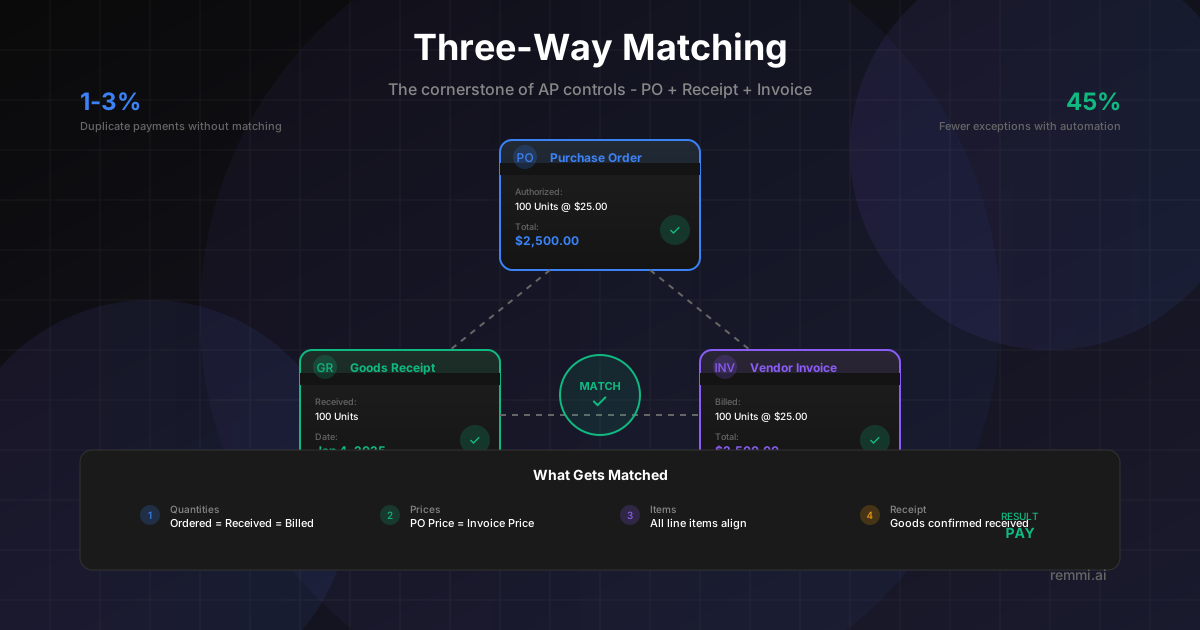
Understanding Three-Way Matching
Three-way matching is one of the most important controls in accounts payable. It's a verification process that ensures your organization only pays for goods and services that were properly ordered, actually received, and correctly billed.
The process works by comparing data across three key documents:
- Purchase Order (PO) — Confirms what was authorized to be purchased, including items, quantities, and agreed prices
- Goods Receipt (GR) — Confirms what was actually delivered and accepted by your receiving team
- Vendor Invoice — Shows what the vendor is asking to be paid for
When all three documents match—same items, same quantities, same prices—the invoice is considered "clean" and can proceed to payment. When there are discrepancies, the invoice becomes an "exception" requiring investigation and resolution.
This seemingly simple process prevents a wide range of payment errors and fraud schemes, making it a fundamental requirement for any well-controlled AP operation.
The Three Documents
Purchase Order
The authorization document that started it all. Contains:
- • Item descriptions
- • Ordered quantities
- • Agreed unit prices
- • Delivery terms
Goods Receipt
Proof that items were delivered and accepted. Contains:
- • Items received
- • Actual quantities
- • Receipt date
- • Condition notes
Vendor Invoice
The vendor's request for payment. Contains:
- • Billed items
- • Invoiced quantities
- • Invoice prices
- • Total amount due
Match vs Exception: What Gets Checked
Clean Match
- ✓Invoice quantity = Receipt quantity = PO quantity
- ✓Invoice price = PO price (within tolerance)
- ✓Invoice items match PO line items
- ✓Receipt exists and is complete
→ Proceeds to payment automatically
Exception
- ×Invoice price higher than PO price
- ×Invoiced more quantity than received
- ×No matching PO found
- ×No receipt recorded for the goods
→ Flagged for manual review and resolution
Why Three-Way Matching Matters
Average annual fraud loss per organization
Duplicate payments without matching controls
Reduction in invoice exceptions with automation
Three-way matching is a foundational internal control that protects against payment errors, duplicate payments, and various fraud schemes. Organizations without proper matching controls experience significantly higher rates of payment issues and fraud losses.
How Three-Way Matching Works
Invoice Received
Vendor invoice arrives via email, mail, EDI, or portal and enters the AP system.
PO Identification
System identifies the corresponding purchase order using PO number, vendor, or line item matching.
Receipt Verification
System checks that a goods receipt exists, confirming delivery was completed and accepted.
Data Comparison
System compares quantities, prices, and items across all three documents for discrepancies.
Tolerance Check
Minor variances are evaluated against tolerance thresholds (e.g., 2% price variance allowed).
Match or Exception
Clean matches proceed to approval; exceptions are flagged for manual review and resolution.
Three-Way Matching Best Practices
Set Appropriate Tolerances
Define reasonable tolerance thresholds to reduce exceptions from minor variances while still catching significant issues.
Require Receipts Before Payment
Never pay invoices without confirmed receipt, even for urgent requests. This is a critical fraud control.
Automate the Matching Process
Use AP automation to perform matching instantly and consistently, reducing manual effort and errors.
Track Exception Rates
Monitor your exception rate as a KPI. High exception rates indicate process or vendor issues to address.
Address Root Causes
When exceptions occur repeatedly, investigate and fix the underlying issues rather than just resolving symptoms.
Common Matching Mistakes to Avoid
- ×Skipping matching for "trusted" vendors — Fraud often comes from established vendor relationships
- ×Setting tolerances too high — Defeats the purpose of matching by letting significant variances pass
- ×Not requiring receipts for services — Services should have service confirmations just like goods
- ×Manual matching at scale — Manual processes are error-prone and can't scale efficiently
Comparing Match Types
| Type | Documents | Use Case |
|---|---|---|
| 2-Way Match | PO + Invoice | Low-value items, services where receipt is implicit |
| 3-Way Match | PO + Receipt + Invoice | Standard for most goods and services (most common) |
| 4-Way Match | PO + Receipt + Inspection + Invoice | Quality-critical items requiring inspection sign-off |
Related Terms
Accounts Payable
Department managing vendor invoices and payments
Invoice
Document requesting payment for goods or services
Purchase Order
Document authorizing a purchase from a vendor
Two-Way Match
Matching only PO and invoice, without receipt
Goods Receipt
Document confirming delivery of ordered items
Invoice Exception
When matching fails and requires manual review