What is Two-Way Matching?
A streamlined AP control that compares purchase orders and invoices to verify accuracy before payment—simpler than 3-way matching but still effective.
Quick Definition
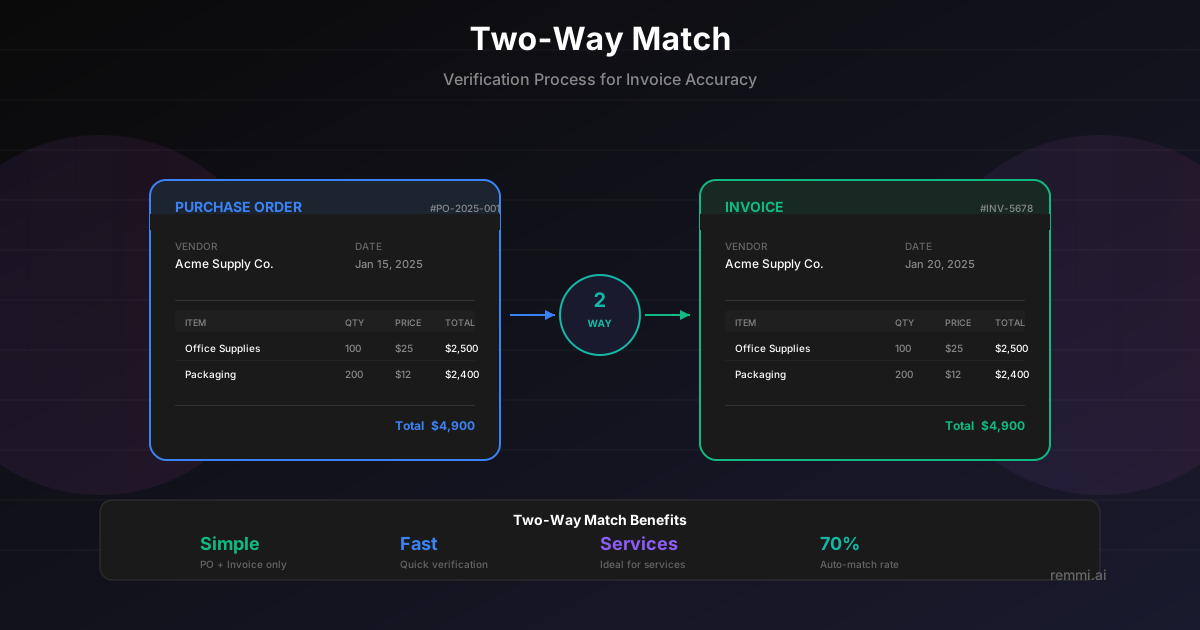
Two-way matching (or 2-way match) is an accounts payable control process that compares two documents—the purchase order and the vendor invoice—to verify that the invoice matches what was ordered before approving payment.
- Compares PO items, quantities, and prices to invoice
- Simpler than 3-way matching (no receipt required)
- Ideal for services and low-value purchases
Understanding Two-Way Matching
Two-way matching is a fundamental accounts payable control that ensures you only pay for what you ordered. It's called "two-way" because it compares two documents: the purchase order (what you authorized) and the vendor invoice (what they're billing).
When an invoice arrives, the AP system or team matches it against the corresponding PO. If the items, quantities, and prices align, the invoice is considered "matched" and can proceed to payment. If there are discrepancies, it becomes an exception requiring investigation.
The matching process verifies:
- Items — Do the invoiced items match what was ordered?
- Quantities — Are the quantities the same?
- Prices — Do the unit prices match the PO?
- Totals — Does the math check out?
Two-way matching is simpler and faster than three-way matching because it doesn't require a receiving document. This makes it well-suited for services, subscriptions, and other transactions where physical receipt isn't practical.
The Two Documents
Purchase Order
The authorization document specifying what was ordered.
- • Item descriptions
- • Ordered quantities
- • Agreed unit prices
- • Total authorized amount
Vendor Invoice
The payment request from the vendor.
- • Billed items
- • Invoiced quantities
- • Invoice prices
- • Total amount due
2-Way vs 3-Way Matching
| Aspect | 2-Way Match | 3-Way Match |
|---|---|---|
| Documents | PO + Invoice | PO + Receipt + Invoice |
| Control Level | Basic | Strong |
| Speed | Faster | Slower |
| Best For | Services, low-value | Goods, high-value |
| Receipt Verified? | No | Yes |
When to Use Two-Way Matching
Service Purchases
Consulting, maintenance, subscriptions—no physical goods to receive.
Low-Value Transactions
Small purchases where 3-way matching overhead isn't justified.
Recurring Payments
Established vendor relationships where receipt is implicit (rent, utilities).
Trusted Vendors
Long-standing vendors with proven reliability and minimal risk.
Limitations of 2-Way Matching
- ×No receipt verification — Could pay for items not actually received
- ×Higher fraud risk — Doesn't confirm delivery, enabling certain fraud schemes
- ×Not suitable for goods — Physical items should use 3-way matching
- ×Weaker audit trail — Less documentation than 3-way matching
Related Terms
Three-Way Match
Matching PO, receipt, and invoice before payment
Purchase Order
Document authorizing a purchase from a vendor
Invoice
Document requesting payment for goods or services
Accounts Payable
Department managing vendor invoices and payments
Invoice Matching
Process of comparing invoices to supporting documents
Goods Receipt
Document confirming delivery of ordered items