What is an Invoice?
A commercial document requesting payment for goods or services, serving as the foundation of accounts payable and business transactions.
Quick Definition
An invoice is a commercial document issued by a seller to a buyer that itemizes goods or services provided and requests payment. It includes quantities, prices, payment terms, and serves as a legal record of the transaction.
- Creates an accounts payable entry for the buyer
- Creates an accounts receivable for the seller
- Legal document for tax and audit purposes
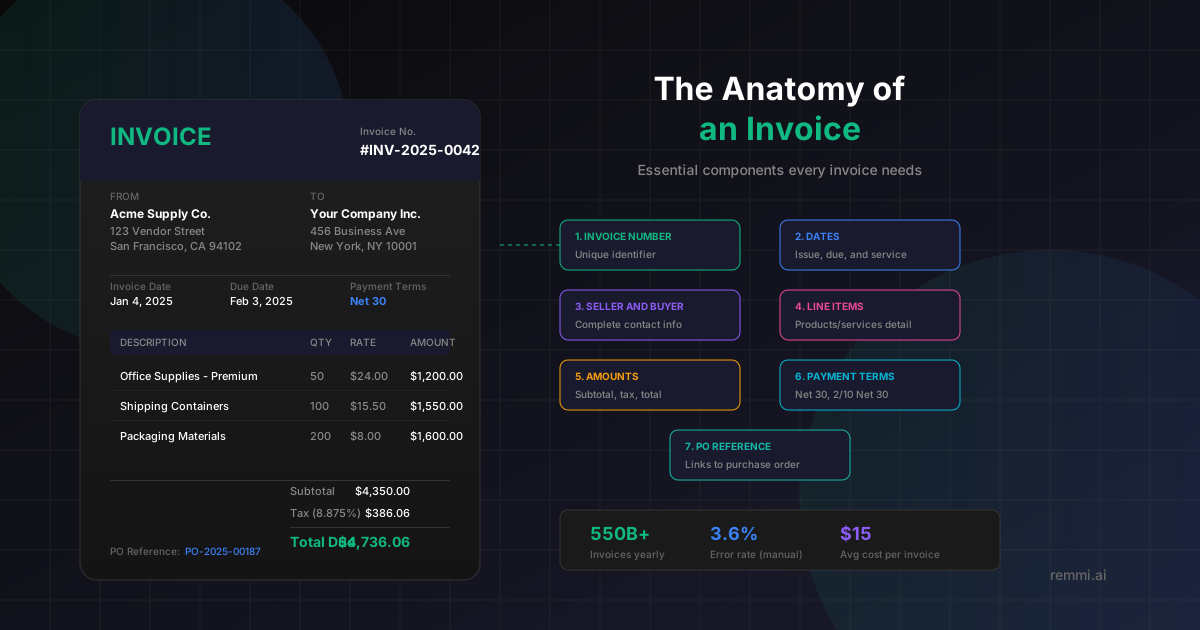
Understanding Invoices
An invoice is one of the most fundamental documents in business commerce. It serves as a formal request for payment from a seller (vendor) to a buyer (customer) for products delivered or services rendered. Without invoices, there would be no standardized way to track what's owed between businesses.
When a vendor ships goods or completes a service, they generate an invoice documenting exactly what was provided, the agreed-upon prices, and when payment is expected. This invoice then travels to the buyer's accounts payable department, where it's processed, validated, approved, and eventually paid.
Invoices serve multiple critical functions in business:
- Payment request — Formally asking for money owed for goods or services
- Legal documentation — Creating a binding record of the transaction terms
- Accounting record — Providing the basis for journal entries in both buyer and seller books
- Tax documentation — Supporting tax deductions, credits, and compliance requirements
The term "invoice" comes from the French word "envoyer" meaning "to send." Historically, invoices were physical documents sent with or after goods. Today, invoices can be paper, PDF, EDI, or structured electronic formats, but they all serve the same fundamental purpose.
Essential Components of an Invoice
Invoice Number
A unique identifier for tracking, reference, and preventing duplicate payments. Usually sequential or date-coded.
Dates
Invoice date (when issued), due date (when payment is expected), and service/delivery date for the goods or services.
Line Items
Detailed listing of each product or service including descriptions, quantities, unit prices, and extended amounts.
Amounts & Taxes
Subtotal, applicable taxes (sales tax, VAT, GST), any discounts applied, and the final total amount due.
Common Types of Invoices
Standard Invoice
The most common type, issued after goods are delivered or services completed. Contains all standard invoice elements.
Proforma Invoice
A preliminary invoice sent before goods are delivered, often used for customs or to confirm pricing. Not a demand for payment.
Recurring Invoice
Automatically generated at regular intervals for subscription services, retainers, or ongoing contracts.
Credit Memo
A negative invoice that reduces the amount owed, used for returns, overcharges, or adjustments.
Commercial Invoice
Used in international trade, includes additional details required for customs clearance like country of origin and HS codes.
Progress Invoice
Issued at milestones during long-term projects, billing for work completed to date rather than waiting until project end.
Why Invoices Matter
Invoices processed globally each year
Average invoice error rate in manual processing
Average cost to process a single invoice
Proper invoice management is critical for cash flow, vendor relationships, and financial accuracy. Errors in invoices lead to payment delays, duplicate payments, missed discounts, and strained vendor relationships. Organizations that automate invoice processing see dramatic improvements in accuracy and efficiency.
The Invoice Lifecycle
Creation
Vendor creates the invoice after delivering goods or completing services, including all required details.
Transmission
Invoice is sent to the buyer via email, mail, EDI, portal, or e-invoicing network.
Receipt & Capture
Buyer's AP team receives the invoice and captures data into their accounting system.
Validation & Matching
Invoice is validated against purchase orders and receiving documents (2-way or 3-way match).
Approval
Invoice routes through approval workflow based on amount, department, or vendor.
Payment
Approved invoice is scheduled and paid according to payment terms and cash strategy.
Reconciliation
Payment is reconciled with bank statement and invoice is marked as paid in the system.
Invoice Best Practices
Use Consistent Invoice Numbering
Implement a logical, sequential numbering system that's easy to track and prevents duplicates.
Include All Required Information
Ensure every invoice has complete vendor info, PO references, line items, and payment instructions.
Invoice Promptly
Send invoices immediately after delivery or service completion to improve cash flow.
Use Electronic Invoicing
Switch from paper to electronic invoices for faster delivery, processing, and reduced errors.
Maintain Proper Records
Keep invoices organized and accessible for at least 7 years for tax and audit purposes.
Common Invoice Mistakes to Avoid
- ×Missing or incorrect PO numbers — Causes matching failures and payment delays
- ×Math errors — Incorrect totals, extensions, or tax calculations
- ×Duplicate invoices — Sending the same invoice multiple times with different numbers
- ×Incomplete information — Missing vendor details, dates, or payment instructions
Related Terms
Accounts Payable
Department managing vendor invoices and payments
Purchase Order
Document authorizing a purchase from a vendor
Three-Way Match
Matching invoice, PO, and receipt before payment
Credit Memo
Document reducing the amount owed on an invoice
Payment Terms
Conditions specifying when payment is due
Invoice Processing
The workflow from receipt to payment