What are Payment Terms?
The agreed conditions that define when and how invoices must be paid, including due dates and available discounts.
Quick Definition
Payment terms are the conditions agreed upon between buyer and seller that specify when payment is due, what discounts are available for early payment, and any other conditions of the transaction.
- Define when invoices must be paid (e.g., Net 30)
- May include early payment discounts (e.g., 2/10 Net 30)
- Directly impact cash flow and vendor relationships
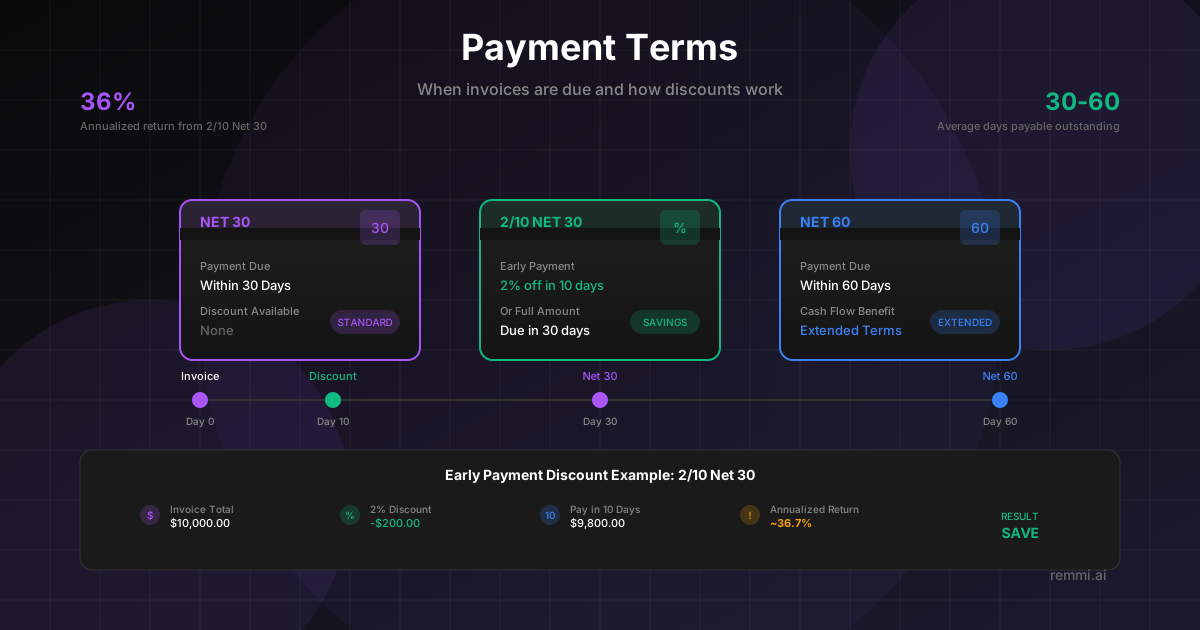
Understanding Payment Terms
Payment terms are a fundamental aspect of every business transaction. They establish the rules for when and how a buyer will pay a seller for goods or services received. Clear payment terms protect both parties and help maintain healthy business relationships.
Payment terms typically appear on invoices, purchase orders, and contracts. They specify:
- Due Date — When the full payment is expected (e.g., 30 days from invoice date)
- Early Payment Discounts — Any discounts available for paying before the due date
- Late Payment Penalties — Interest or fees applied if payment is late
- Accepted Payment Methods — How payment should be made (ACH, check, wire, etc.)
Understanding and strategically managing payment terms can significantly impact your organization's cash flow, working capital, and overall financial health.
Common Payment Term Formats
Net 30
The most common payment term in business transactions.
- • Full amount due in 30 days
- • No early payment discount
- • Standard for most B2B
2/10 Net 30
Offers a discount incentive for faster payment.
- • 2% discount if paid in 10 days
- • Full amount due in 30 days
- • ~36% annualized return
Net 60 / Net 90
Extended terms for larger purchases or established relationships.
- • Payment due in 60 or 90 days
- • Preserves buyer cash flow
- • Common for large orders
Due on Receipt
Immediate payment required upon receiving the invoice.
- • No payment delay
- • Used for new customers
- • High-risk situations
Early Payment Discount Value
2/10 Net 30 Example
- Invoice Amount:$10,000
- 2% Discount:$200 saved
- Pay if early:$9,800
- Days earlier:20 days
Annualized Return
- Discount Rate:2%
- Periods/Year:~18.25 (365/20)
- Annualized:~36.7% return
- Formula:(Discount / (100 - Discount)) x (365 / Days)
Early payment discounts often represent one of the highest-return, lowest-risk financial opportunities available to businesses. A 2% discount for paying 20 days early equals roughly 36% annualized return—far exceeding typical investment returns.
How Payment Terms Affect Cash Flow
Average days payment outstanding (DPO)
Working capital per $1M in payables at Net 60 vs Net 30
Annualized return from typical 2/10 Net 30 discount
Payment terms are a key lever for cash flow management. Extending terms from Net 30 to Net 60 on $1 million in monthly payables keeps an additional $1 million in your business. However, this must be balanced against vendor relationships and available discounts.
Strategic Payment Term Management
Know Your Terms
Maintain a master list of payment terms for all vendors. Track discount eligibility dates to never miss savings opportunities.
Calculate Discount Value
Before skipping a discount, calculate its annualized return. Compare to your cost of capital to make informed decisions.
Negotiate Strategically
Use payment history and volume as leverage. Loyal customers can often negotiate better terms or larger discounts.
Pay Strategically
Pay on the optimal date—early for discounts, on due date otherwise. Avoid paying early without a discount benefit.
Monitor and Report
Track DPO (Days Payable Outstanding), discount capture rate, and late payment occurrences as key AP metrics.
Payment Terms Best Practices
Capture Early Payment Discounts
Prioritize capturing early payment discounts when cash is available. The annualized returns often exceed 30%, making them highly valuable.
Negotiate Terms Proactively
Don't accept default terms passively. Negotiate based on order volume, payment history, and market conditions for better deals.
Never Pay Late
Late payments damage vendor relationships, incur penalties, and can affect credit terms. Set up alerts to ensure on-time payment.
Automate Term Tracking
Use AP automation to track due dates, flag discount deadlines, and schedule payments optimally for each invoice.
Standardize Where Possible
Consolidate to standard terms across similar vendors to simplify processing and payment scheduling.
Common Payment Term Mistakes to Avoid
- ×Missing early payment discounts — Letting discount deadlines pass costs significant money over time
- ×Paying too early without discounts — Paying before the due date when no discount is offered wastes working capital
- ×Ignoring late payment consequences — Late payments incur fees, damage credit, and strain vendor relationships
- ×Not negotiating terms — Accepting default terms without negotiation leaves money on the table
Payment Terms Quick Reference
| Term | Meaning | Best For |
|---|---|---|
| Net 15 | Due in 15 days | Recurring services, small amounts |
| Net 30 | Due in 30 days | Standard B2B transactions (most common) |
| 2/10 Net 30 | 2% off if paid in 10 days | Buyers with available cash |
| Net 60/90 | Due in 60 or 90 days | Large purchases, capital equipment |
| Due on Receipt | Immediate payment | New customers, high-risk situations |
Related Terms
Net 30
Payment due within 30 days of invoice date
Invoice
Document requesting payment for goods or services
Accounts Payable
Department managing vendor invoices and payments
Early Payment Discount
Discount offered for paying before due date
Cash Flow
Movement of money in and out of a business
Vendor
Supplier or seller providing goods or services