What is Net 30?
The most common payment term in business transactions, giving buyers 30 days from the invoice date to pay in full.
Quick Definition
Net 30 is a payment term indicating that the full invoice amount is due within 30 calendar days from the invoice date. The "Net" means the total amount due, with no deductions or discounts.
- Most widely used B2B payment term
- Calculated from invoice date, not receipt date
- Balances buyer cash flow with seller needs
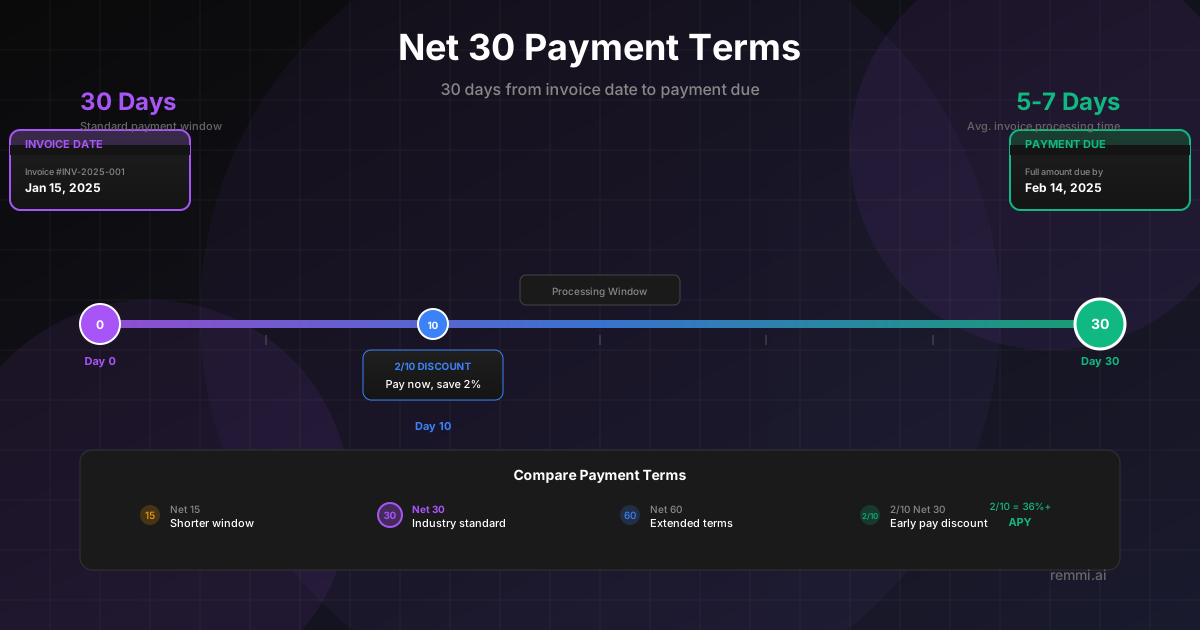
Understanding Net 30 Payment Terms
Net 30 is one of the most common payment terms in business-to-business transactions. When you see "Net 30" on an invoice, it means you have 30 calendar days from the invoice date to pay the full amount. This standard term provides buyers with reasonable time to process invoices and manage cash flow while giving sellers a predictable payment timeline.
The term breaks down simply:
- "Net" — Refers to the total amount due after any applicable discounts or deductions
- "30" — The number of calendar days allowed for payment
For example, if you receive an invoice dated January 15th with Net 30 terms, payment is due by February 14th. Missing this deadline can result in late fees, damaged vendor relationships, and negative impacts on your business credit.
How Net 30 Works
Day 0: Invoice Date
The clock starts on the date printed on the invoice:
- • Invoice created by vendor
- • 30-day countdown begins
- • Date is legally binding
- • Not receipt date
Days 1-29: Processing
Time to review, approve, and schedule payment:
- • Receive and capture invoice
- • Verify accuracy and match PO
- • Route for approvals
- • Schedule payment
Day 30: Due Date
Payment must be received by this date:
- • Full amount due
- • Funds must clear
- • Late fees may apply after
- • Credit may be affected
Net 30 vs Other Payment Terms
| Term | Payment Window | Best For |
|---|---|---|
| Net 15 | 15 days | Vendors needing faster cash flow, smaller transactions |
| Net 30 | 30 days | Standard B2B transactions, balanced for both parties |
| Net 60 | 60 days | Large purchases, enterprise buyers, extended supply chains |
| 2/10 Net 30 | 10 or 30 days | Incentivizing early payment, improving vendor cash flow |
| Due on Receipt | Immediate | New customers, high-risk transactions, small vendors |
Why Net 30 Matters
Days is the industry standard payment window
Annualized return when taking 2/10 Net 30 discounts
Days average invoice processing time cuts into Net 30
Net 30 strikes a balance between buyer and seller needs. Buyers get time to process invoices and manage cash flow, while sellers have a clear, predictable timeline for receiving payment. However, slow invoice processing can significantly reduce the effective payment window.
When to Use Net 30 Terms
Established Business Relationships
Net 30 works best with vendors and customers you have an ongoing relationship with and trust to pay on time.
Standard B2B Transactions
Most business purchases from office supplies to professional services use Net 30 as the default payment term.
Moderate Invoice Amounts
Net 30 is appropriate for typical business purchases—too short for large capital purchases, sufficient for regular operations.
Businesses with Stable Cash Flow
If you have predictable cash flow, Net 30 gives you flexibility to batch payments and optimize cash management.
Industries Where It Is Standard
Manufacturing, wholesale, professional services, and most B2B sectors use Net 30 as the expected norm.
Best Practices for Managing Net 30
Process Invoices Immediately
Every day an invoice sits unprocessed is a day lost from your payment window. Automate capture to start the clock fast.
Track Due Dates Systematically
Use AP automation to track all due dates in one place, with alerts before deadlines to prevent late payments.
Evaluate Early Payment Discounts
If offered 2/10 Net 30, calculate the annualized return (often 36%+). Take discounts when cash flow allows.
Standardize Payment Runs
Schedule regular payment runs (weekly or bi-weekly) to batch payments efficiently while meeting due dates.
Monitor Days Payable Outstanding
Track your DPO metric to understand actual payment timing versus terms and optimize cash flow strategies.
Common Net 30 Mistakes to Avoid
- ×Miscalculating due dates at month end — January 31st plus 30 days is March 2nd, not February 30th
- ×Counting from receipt date instead of invoice date — The clock starts when the invoice is dated, not when you receive it
- ×Ignoring early payment discounts — 2/10 Net 30 offers 36%+ annualized returns—often better than other uses of cash
- ×Not accounting for payment processing time — ACH takes 2-3 days; schedule payments to arrive by the due date, not sent
Industry Standards and Variations
Net 30 is Standard
- •Manufacturing and wholesale distribution
- •Professional services (consulting, legal, accounting)
- •Office supplies and equipment
- •Most B2B software and SaaS
Longer Terms Common
- •Large retailers (Net 60-90 with suppliers)
- •Construction and capital projects
- •Government contracts
- •Enterprise software implementations
Related Terms
Payment Terms
Conditions specifying when payment is due
Invoice
Document requesting payment for goods or services
Accounts Payable
Department managing vendor invoices and payments
Due Date
The deadline by which payment must be made
Early Payment Discount
Discount offered for paying before the due date
Cash Flow
Movement of money in and out of a business