What is a Purchase Order?
The foundational document that authorizes purchases and establishes the terms of buyer-seller transactions.
Quick Definition
A purchase order (PO) is a commercial document issued by a buyer to a seller that authorizes a purchase transaction. It specifies the items to be purchased, quantities, agreed prices, delivery terms, and payment terms.
- Becomes a binding contract when accepted by seller
- Used in 3-way matching to verify invoices
- Essential for spend control and budgeting
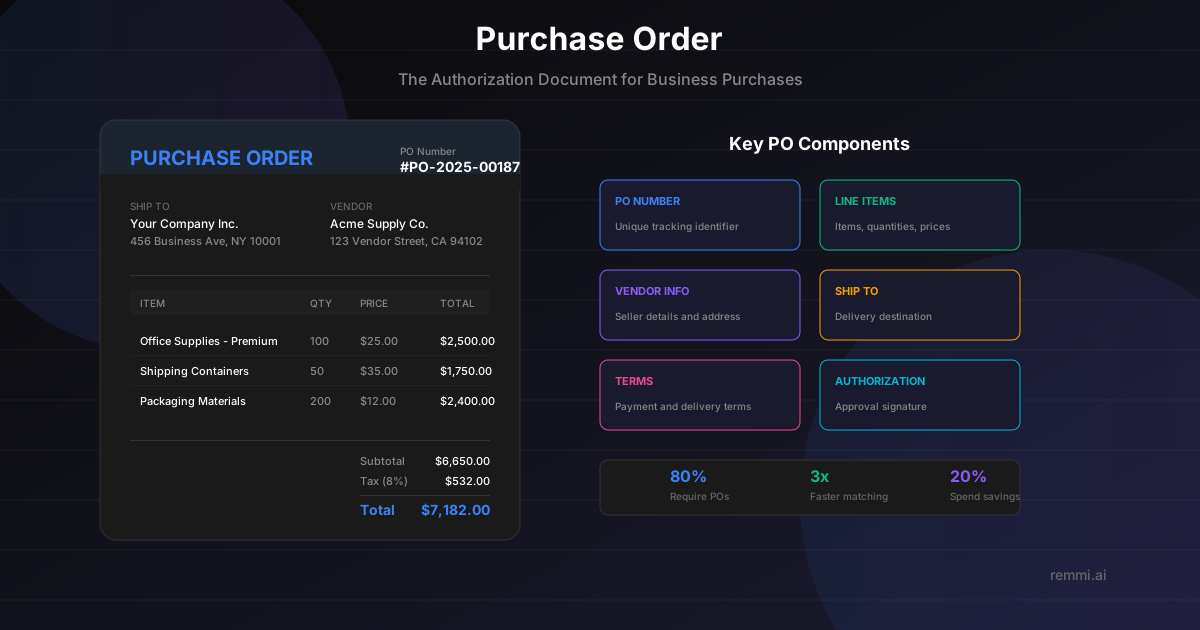
Understanding Purchase Orders
A purchase order is one of the most fundamental documents in business procurement. It serves as the buyer's official authorization to purchase specific goods or services from a vendor at agreed-upon prices and terms. Think of it as a formal "shopping list" that becomes a legal contract.
When a company needs to buy something, they create a purchase order detailing exactly what they want, how much, at what price, and when they need it. Once the vendor accepts the PO (explicitly or by shipping the goods), both parties are legally bound to honor the terms.
Purchase orders serve multiple critical functions:
- Authorization — Formally approving the purchase before money is spent
- Contract — Creating a legal agreement on transaction terms
- Control — Enabling budget tracking and spend visibility
- Verification — Providing the basis for invoice matching and payment approval
Without purchase orders, organizations have no formal control over what gets bought, at what price, or from whom. This leads to maverick spending, budget overruns, and an inability to verify that invoices match what was actually ordered.
Key Components of a Purchase Order
Header Information
PO number, date, buyer info, vendor info, ship-to address, and payment terms.
Line Items
Item descriptions, part numbers, quantities, unit prices, and extended amounts for each item.
Financial Details
Subtotal, taxes, shipping costs, discounts, and total PO amount.
Terms & Dates
Delivery date, payment terms, shipping method, and special instructions.
Why Purchase Orders Matter
Avg spend reduction with proper PO controls
Of companies require POs for purchases
Faster invoice processing with PO matching
Organizations with strong PO processes have better spend visibility, fewer invoice disputes, and significantly reduced fraud risk. POs are the foundation of procurement controls.
Types of Purchase Orders
Standard Purchase Order
One-time order for specific goods or services with defined quantities and prices.
Blanket Purchase Order
Long-term agreement for recurring purchases over a period, with releases against a total amount.
Contract Purchase Order
Establishes terms and conditions without specifying quantities; used with release orders.
Planned Purchase Order
Tentative commitment for future purchases, converted to standard POs when needed.
Purchase Order Best Practices
Enforce PO Requirements
Require POs for all purchases above a threshold to maintain spend control and enable matching.
Use Approval Workflows
Route POs for approval based on amount, department, or category before sending to vendors.
Maintain Accurate Vendor Data
Keep vendor master data current to ensure POs go to the right contacts with correct terms.
Track PO Status
Monitor open POs to identify late deliveries, partial receipts, and stuck orders.
Match Invoices to POs
Always match invoices against POs to catch discrepancies before payment.
Common PO Mistakes to Avoid
- ×Maverick spending — Purchasing without POs, losing visibility and control
- ×After-the-fact POs — Creating POs after purchase to "check the box"
- ×Vague descriptions — Not specifying items clearly, leading to disputes
- ×Open-ended blanket POs — Not setting limits or expiration dates
Related Terms
Invoice
Document requesting payment for goods or services
Three-Way Match
Matching PO, receipt, and invoice before payment
Vendor
Company that sells goods or services to your organization
Accounts Payable
Department managing vendor invoices and payments
Goods Receipt
Document confirming delivery of ordered items
Procure-to-Pay
End-to-end purchasing and payment process