What is a Debit Memo?
A document that increases amounts owed, used for additional charges, price adjustments, chargebacks, and invoice corrections.
Quick Definition
A debit memo (or debit memorandum) is a document that increases the amount a buyer owes to a seller. It's typically issued for additional charges, price adjustments upward, corrections to previous invoices, or chargebacks.
- Increases the amount owed (opposite of credit memo)
- Used for additional charges and price corrections
- Creates audit trail for billing adjustments
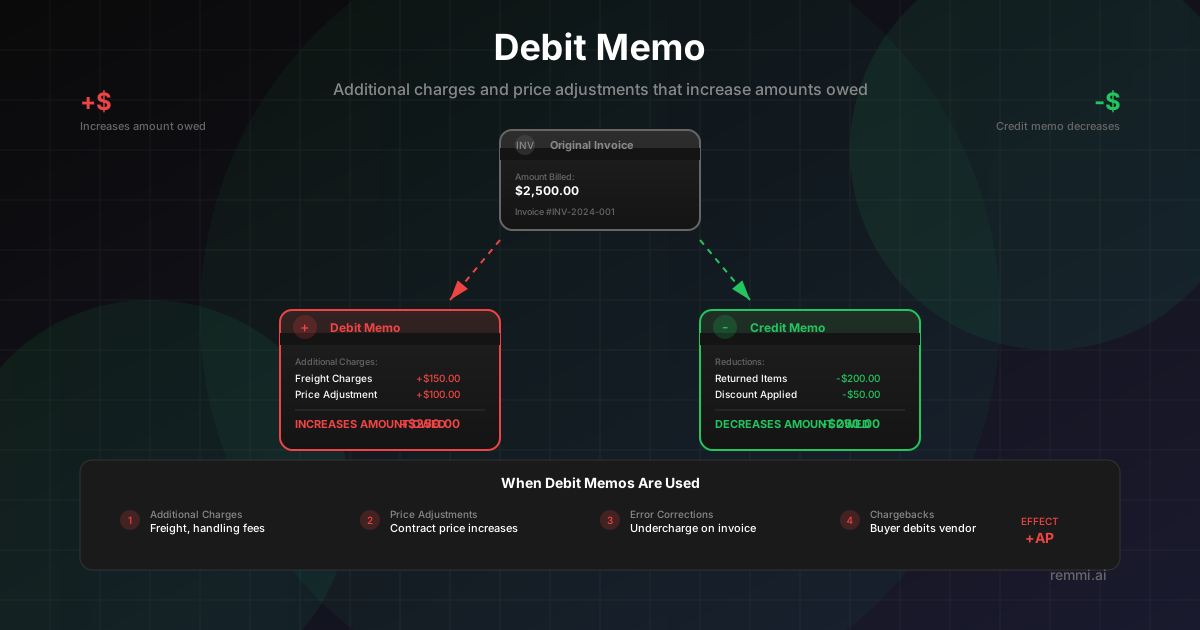
Understanding Debit Memos
A debit memo is a commercial document that notifies a buyer of an increase in the amount they owe. While invoices establish the initial amount due, debit memos adjust that amount upward after the fact. They serve as a formal record of additional charges or corrections.
The term "debit" refers to the accounting treatment: from the seller's perspective, a debit memo debits (increases) accounts receivable. From the buyer's perspective, it means more money going out.
Debit memos are the opposite of credit memos. Where credit memos reduce amounts owed (for returns, refunds, or price reductions), debit memos increase amounts owed (for additional charges, price increases, or undercharge corrections).
Debit Memo vs Credit Memo
Debit Memo
Increases the amount owed by the buyer:
- + Additional charges
- + Price increases
- + Undercharge corrections
- + Late fees & penalties
Buyer pays MORE
Credit Memo
Decreases the amount owed by the buyer:
- - Returns and refunds
- - Price reductions
- - Overcharge corrections
- - Promotional credits
Buyer pays LESS
When Debit Memos Are Used
Vendor Issues Debit Memo
- +Price increased after original invoice
- +Additional shipping or freight charges
- +Original invoice was undercharged
- +Late payment fees or interest
Buyer Issues Chargeback
- -Returning goods to vendor
- -Short shipment received
- -Damaged or defective goods
- -Vendor overcharged on invoice
Common Debit Memo Scenarios
Additional Charges After Invoice
Vendor discovers additional shipping costs or service fees that weren't included in the original invoice and issues a debit memo for the difference.
Price Adjustment Upward
Contract prices increased but the original invoice used old pricing. A debit memo corrects the invoice to reflect the current agreed price.
Billing Error Correction
Original invoice contained calculation errors or missed line items. Debit memo documents the correction and additional amount due.
Chargeback to Vendor
Buyer issues a debit memo (chargeback) to reduce what they owe the vendor for returns, short shipments, or quality issues.
Processing Debit Memos in AP
Receive and Validate
Receive the debit memo and verify it references a valid original invoice or transaction. Check that the vendor and amounts are legitimate.
Review Charges
Examine the reason for additional charges. Verify pricing matches contracts, quantities are correct, and charges are authorized.
Match to Original
Link the debit memo to the original invoice or purchase order in your system for complete audit trail and reconciliation.
Route for Approval
Send to appropriate approvers based on amount thresholds and charge type. Additional charges may require budget holder approval.
Record in System
Post the debit memo: Debit expense/asset account, Credit accounts payable. This increases your liability to the vendor.
Include in Payment
Add the debit memo amount to the next payment run for the vendor, or pay separately based on payment terms.
Debit Memo Best Practices
Always Verify Legitimacy
Confirm debit memos reference real transactions and that additional charges are contractually valid before processing.
Maintain Clear Documentation
Keep debit memos linked to original invoices with clear reason codes. This supports audits and dispute resolution.
Process Promptly
Handle debit memos quickly to maintain accurate AP balances and avoid confusion during vendor statement reconciliation.
Track Patterns
Monitor debit memo frequency by vendor. Excessive debit memos may indicate pricing issues or process problems to address.
Dispute When Warranted
Don't automatically accept all debit memos. Review for validity and dispute unauthorized or incorrect charges promptly.
Debit Memo Red Flags to Watch For
- !No reference to original invoice — Legitimate debit memos should always cite the original transaction
- !Vague descriptions — Additional charges should be clearly explained with specific line items
- !Charges not in contract — Verify all additional charges are covered by your vendor agreement
- !Frequent small debit memos — Pattern may indicate systematic underpricing or billing manipulation
Accounting Treatment
| Scenario | Debit | Credit |
|---|---|---|
| Receive vendor debit memo | Expense/Asset Account | Accounts Payable |
| Issue chargeback to vendor | Accounts Payable | Inventory/Expense |
| Pay debit memo | Accounts Payable | Cash/Bank |
Related Terms
Credit Memo
Document that decreases the amount owed to a seller
Credit Note
Alternative term for credit memo used in some regions
Invoice
Document requesting payment for goods or services
Accounts Payable
Department managing vendor invoices and payments
Accounts Receivable
Money owed to a company by its customers
Vendor
Supplier of goods or services to your organization