What is a Credit Note?
A document that reduces the amount a buyer owes, issued for returns, corrections, or agreed adjustments.
Quick Definition
A credit note (also called credit memo) is a document issued by a seller to a buyer that reduces the amount owed. It's essentially a negative invoice, typically issued when goods are returned, there's a pricing error, or an agreed discount needs to be applied.
- Reduces the amount owed by a buyer
- Creates audit trail for invoice adjustments
- Same as credit memo (different regional terms)
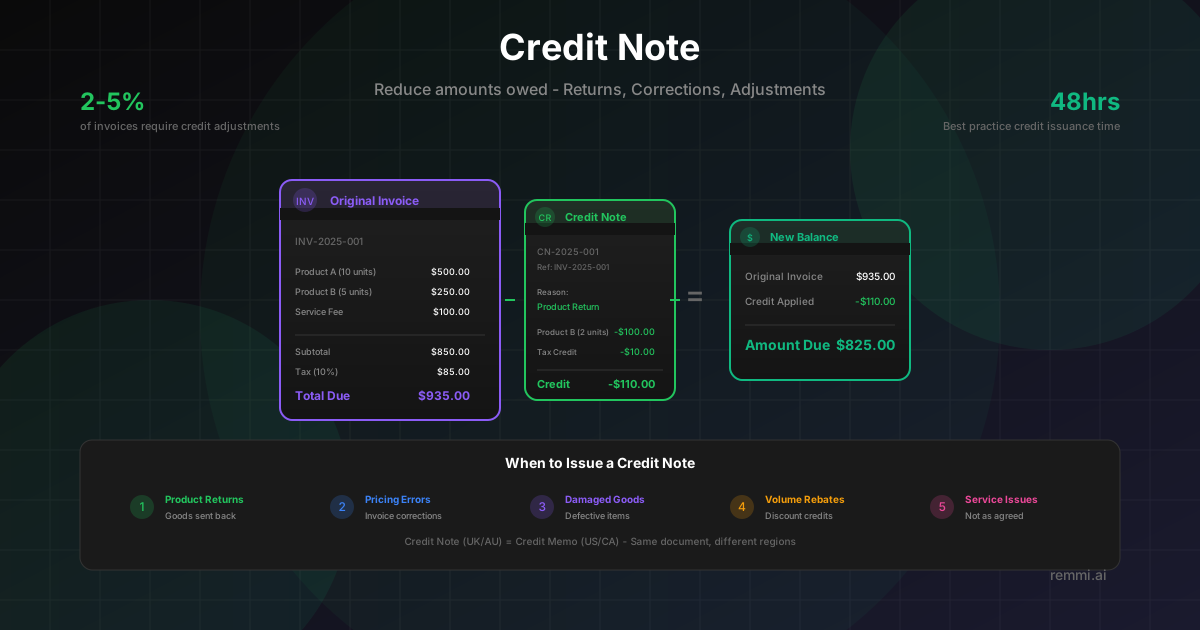
Understanding Credit Notes
A credit note is a vital document in business transactions that formally reduces the amount a buyer owes to a seller. Think of it as a "reverse invoice" or "negative invoice" that subtracts from a customer's balance rather than adding to it.
Credit notes are issued for various legitimate business reasons:
- Goods Returns — When a customer returns products, either fully or partially
- Pricing Errors — When the original invoice charged the wrong price
- Damaged Goods — When items arrive damaged or defective
- Volume Discounts — When a customer qualifies for a discount after hitting purchase thresholds
- Service Issues — When services weren't delivered as agreed
The credit note provides a clear audit trail showing why and how an adjustment was made, which is essential for accounting accuracy, tax compliance, and financial reporting.
Credit Note vs Credit Memo
One of the most common questions in accounting is whether a credit note and credit memo are different. The answer is simple: they're the same document.
Credit Note
Preferred terminology in:
- • United Kingdom
- • Australia
- • New Zealand
- • India
- • Other Commonwealth countries
Credit Memo
Preferred terminology in:
- • United States
- • Canada
- • Latin America
- • Some European countries
- • International corporations
When working with international vendors or customers, be aware that both terms may be used interchangeably. Your accounting system should treat them identically.
When to Issue a Credit Note
Product Returns
When customers return goods for any reason:
- • Wrong items shipped
- • Customer changed mind
- • Duplicate order
- • No longer needed
Invoice Corrections
When the original invoice was incorrect:
- • Pricing errors
- • Quantity mistakes
- • Wrong tax calculation
- • Missed discounts
Agreed Adjustments
When business terms trigger a credit:
- • Volume rebates
- • Early payment discounts
- • Promotional credits
- • Goodwill adjustments
How Credit Notes Work in Accounting
Credit Is Issued
Seller creates credit note documenting the reason, amount, and reference to original invoice.
Seller Records Entry
Seller debits Sales Returns/Allowances and credits Accounts Receivable, reducing the AR balance.
Buyer Receives Credit
Buyer receives credit note and records it, debiting Accounts Payable and crediting Inventory or relevant account.
Credit Application
Credit is either applied to the original invoice, held for future invoices, or refunded if no balance exists.
Reconciliation
Both parties reconcile the credit during statement reconciliation to ensure accurate balances.
Understanding AR Credits
Impact on Seller (AR)
- -Reduces accounts receivable balance
- -Decreases revenue (or increases returns account)
- -May affect sales tax liability
- -Impacts cash flow forecasting
Impact on Buyer (AP)
- -Reduces accounts payable balance
- -Decreases cost of goods or expense
- -May affect input tax credit claims
- -Improves vendor payment accuracy
What a Credit Note Should Include
Credit Note Number
A unique identifier for tracking and reference purposes, following your document numbering sequence.
Original Invoice Reference
The invoice number(s) being credited, allowing clear matching and audit trails.
Credit Amount and Details
Line-item breakdown showing what's being credited, quantities, prices, and total credit amount.
Reason for Credit
Clear explanation of why the credit is being issued (return, error, discount, etc.).
Tax Adjustments
If the original invoice included tax, the credit note should show corresponding tax credits.
Credit Note Best Practices
- 1Always reference the original invoice — Makes matching and reconciliation straightforward
- 2Issue credits promptly — Don't delay credit notes as they affect customer statements
- 3Document the reason clearly — Helps with audits and prevents disputes
- 4Apply credits systematically — Have a clear policy for how credits are applied to outstanding invoices
- 5Track unapplied credits — Monitor aging credits that haven't been used
Common Credit Note Mistakes to Avoid
- xNot matching credits to invoices — Leads to reconciliation nightmares and aging report issues
- xForgetting tax adjustments — If original invoice had tax, credit should include corresponding tax credit
- xDelaying credit issuance — Customers get frustrated and cash forecasting becomes inaccurate
- xIssuing credits without approval — Can lead to fraud or unauthorized adjustments
Related Terms
Credit Memo
Same as credit note, common term in North America
Debit Memo
Document increasing the amount owed by a buyer
Invoice
Document requesting payment for goods or services
Accounts Payable
Department managing vendor invoices and payments
Accounts Receivable
Money owed to a company by its customers
Vendor
Supplier providing goods or services to a company