What is Accounts Receivable?
The money owed to your business by customers, representing future cash inflows and a critical component of working capital.
Quick Definition
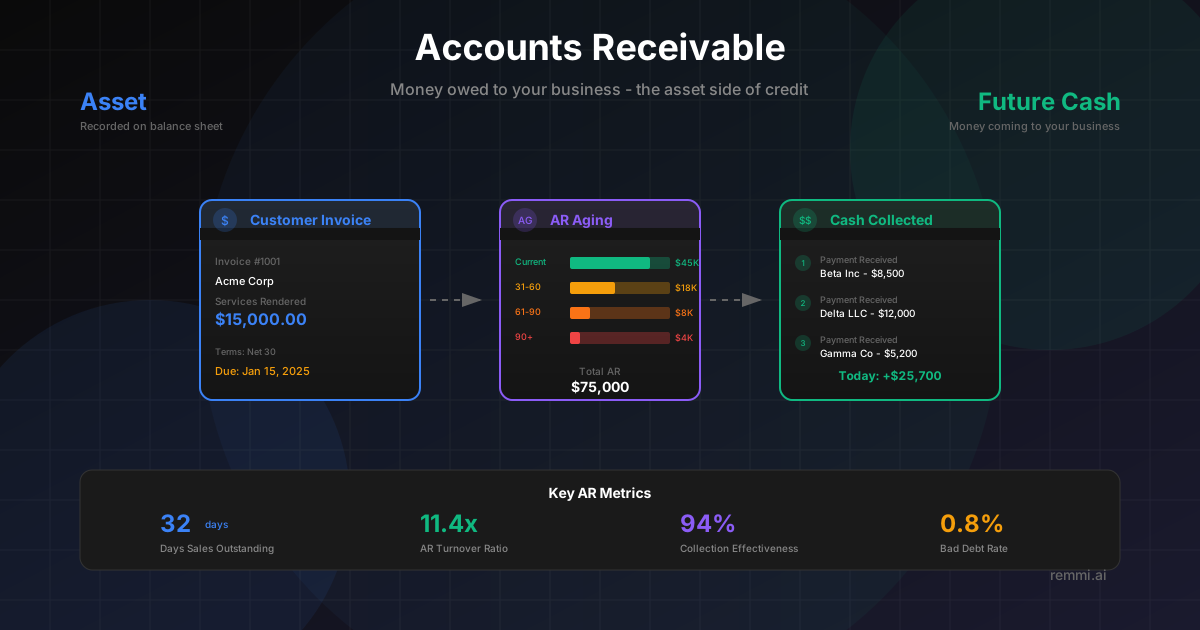
Accounts receivable (AR) represents the money owed to a company by its customers for goods or services that have been delivered but not yet paid for. AR is recorded as a current asset on the balance sheet.
- Represents future cash inflows from customers
- Opposite of accounts payable (what you owe others)
- Critical for managing cash flow and working capital
Understanding Accounts Receivable
Accounts receivable is one of the most important line items on a company's balance sheet. It represents the total amount of money owed to the business by customers who have purchased goods or services on credit but haven't yet paid.
When your company sells something and allows the customer to pay later (rather than requiring immediate payment), you create an account receivable. This extends credit to your customer and creates an asset for your company—the legal right to receive payment.
Managing AR effectively is crucial for business health. While AR represents future cash, it's not cash in hand. Companies must balance extending credit (which drives sales) with collecting payments efficiently (which maintains cash flow).
AR vs AP: Two Sides of Credit
Accounts Receivable (AR)
Money owed TO your company:
- • Customer invoices outstanding
- • Recorded as a current asset
- • Represents future cash inflows
- • You are the creditor
Accounts Payable (AP)
Money your company owes TO others:
- • Vendor bills outstanding
- • Recorded as a current liability
- • Represents future cash outflows
- • You are the debtor
Key AR Metrics to Track
Days Sales Outstanding—how long to collect
Collection Effectiveness Index—collection efficiency
Average Days Delinquent—payment delay beyond terms
These metrics help AR teams monitor collection performance, identify trends, and benchmark against industry standards. A healthy AR operation typically maintains DSO under 45 days and CEI above 80%.
Understanding AR Aging
AR aging reports categorize outstanding invoices by how long they've been unpaid. This helps prioritize collection efforts and estimate bad debt risk.
| Aging Bucket | Risk Level | Action |
|---|---|---|
| Current (0-30 days) | Low | Standard monitoring, send reminders |
| 31-60 days | Moderate | Follow up calls, escalate contact |
| 61-90 days | High | Intensive collection efforts, payment plans |
| Over 90 days | Severe | Consider collections agency, write-off evaluation |
The Accounts Receivable Process
Credit Approval
Evaluate customer creditworthiness before extending credit. Set appropriate credit limits and payment terms.
Invoice Generation
Create and send invoices promptly after delivering goods or services. Include clear payment terms and due dates.
Invoice Delivery
Send invoices via customer-preferred channels (email, EDI, portal) to ensure receipt and avoid delays.
Payment Tracking
Monitor outstanding invoices, track due dates, and identify accounts approaching or past due.
Collections
Follow up on overdue accounts with reminders, calls, and escalated communications as needed.
Cash Application
Match incoming payments to open invoices, reconcile accounts, and resolve any discrepancies.
AR Management Best Practices
Invoice Immediately
Send invoices as soon as goods are delivered or services completed. Delays in invoicing delay payment.
Establish Credit Policies
Screen new customers, set credit limits based on risk, and enforce policies consistently.
Offer Early Payment Incentives
Discounts like 2/10 net 30 encourage faster payment and improve cash flow.
Automate Reminders
Set up automated payment reminders before and after due dates to reduce manual follow-up.
Monitor AR Metrics
Track DSO, aging, and collection rates regularly to identify issues early and measure improvement.
Common AR Mistakes to Avoid
- ×Extending credit without assessment — Always evaluate creditworthiness before offering payment terms
- ×Delayed invoicing — Every day you wait to invoice is a day added to your DSO
- ×Inconsistent follow-up — Sporadic collection efforts signal to customers that late payment is acceptable
- ×Ignoring aging reports — The longer an invoice ages, the less likely it is to be collected
Related Terms
Accounts Payable
Money your company owes to vendors and suppliers
Invoice
Document requesting payment for goods or services
Days Sales Outstanding
Average days to collect payment after a sale
Cash Flow
Movement of money in and out of a business
Credit Memo
Document reducing the amount a customer owes
Collections
Process of pursuing payment on overdue accounts