What is ACH Payment?
Electronic bank-to-bank transfers through the Automated Clearing House network, powering payroll, vendor payments, and recurring transactions across the United States.
Quick Definition
ACH (Automated Clearing House) payment is an electronic funds transfer between banks processed through the ACH network, a batch processing system governed by NACHA. ACH handles over 30 billion transactions annually, including direct deposits, bill payments, and B2B payments.
- Low cost: typically free or under $1 per transaction
- Processes in 1-3 business days (or same-day)
- Ideal for recurring and high-volume payments
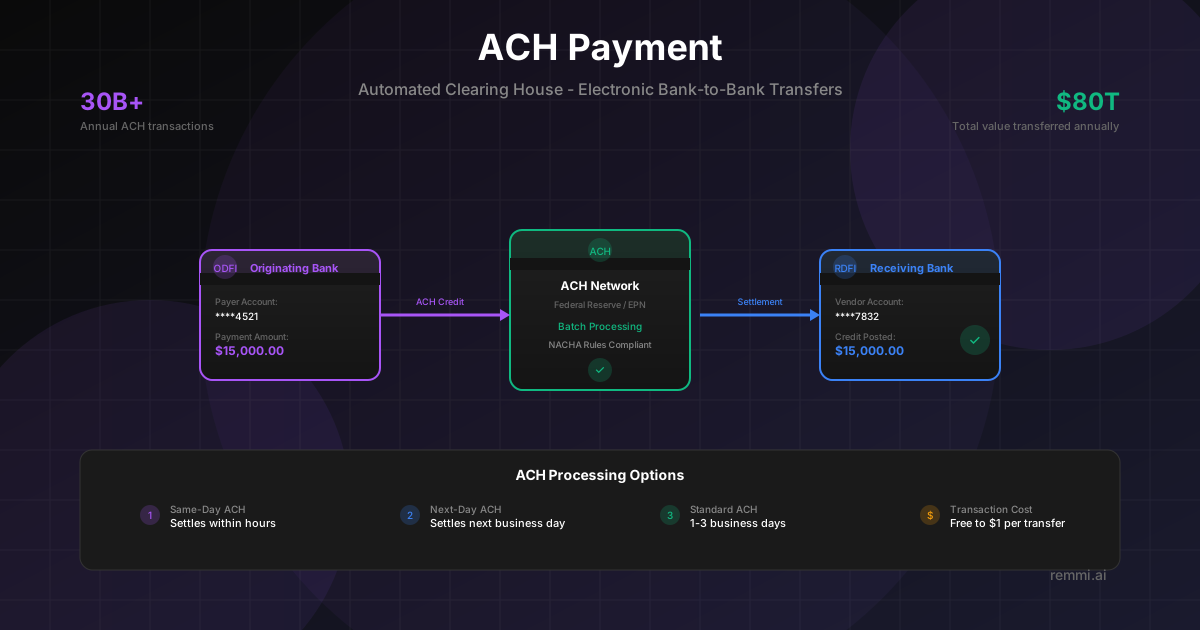
Understanding ACH Payments
ACH (Automated Clearing House) is the backbone of electronic payments in the United States. When you receive a direct deposit paycheck, pay a bill online, or set up automatic payments, you're likely using the ACH network.
Unlike wire transfers that process individually in real-time, ACH transactions are collected and processed in batches throughout the day. This batch processing makes ACH extremely cost-effective, typically costing nothing or just cents per transaction compared to $15-50 for wire transfers.
The ACH network is governed by NACHA (National Automated Clearing House Association), which sets the rules and standards all financial institutions must follow. There are two types of ACH transactions:
- ACH Credit — "Pushes" money from the originator to the receiver (e.g., payroll direct deposit, vendor payment)
- ACH Debit — "Pulls" money from the receiver's account to the originator (e.g., automatic bill payment, subscription charges)
For accounts payable teams, ACH credits are the standard method for paying vendors, offering a secure, low-cost, and traceable alternative to paper checks.
ACH vs Wire Transfer
ACH Payment
- +Low cost (free to $1)
- +Batch processed
- +1-3 days (or same-day)
- +Reversible within window
- -US domestic only
Best for: Payroll, vendor payments, recurring transactions
Wire Transfer
- +Real-time processing
- +Same-day settlement
- +International capable
- -Higher cost ($15-50+)
- -Generally irreversible
Best for: Urgent payments, high-value, international transfers
ACH Processing Timeline
Settles within hours if submitted before cutoff (2:45 PM ET)
Faster than standard batch, settles following business day
Standard processing, lowest cost, most common for AP
Why ACH Matters for AP Teams
ACH transactions processed annually in the US
Total value transferred via ACH each year
Of B2B payments now made electronically
ACH has become the default payment method for modern AP operations, replacing checks for most vendor payments. The combination of low cost, reliability, and electronic record-keeping makes it ideal for high-volume payment operations.
How ACH Payments Work
Payment Initiation
Originator (payer) submits payment instruction to their bank (ODFI - Originating Depository Financial Institution) with recipient bank details.
Batch Collection
ODFI collects ACH entries throughout the day and batches them for submission to the ACH operator (Federal Reserve or EPN).
ACH Network Processing
ACH operator sorts and routes transactions to the appropriate receiving banks (RDFI - Receiving Depository Financial Institution).
Delivery to Receiving Bank
RDFI receives the ACH file and posts the credit or debit to the recipient's account.
Settlement
Federal Reserve settles the net amounts between financial institutions, completing the funds transfer.
Confirmation
Both parties receive confirmation of the completed transaction. Returns/reversals can occur within defined windows.
ACH Fraud Prevention
ACH Positive Pay / Debit Blocks
Control which companies can debit your account by pre-authorizing specific originators or blocking all ACH debits.
Dual Authorization
Require two separate approvers for payment initiation and release, preventing single-person fraud.
Verify Bank Details Out-of-Band
Always confirm vendor bank account changes via phone using known contact numbers, not email links.
Daily Account Monitoring
Review account activity daily to catch unauthorized transactions within the return window.
Transaction Limits and Alerts
Set payment limits and configure alerts for transactions above thresholds or to new recipients.
Common ACH Fraud Schemes to Watch
- !Business Email Compromise (BEC) — Fraudsters impersonate vendors or executives to change bank routing info
- !Unauthorized ACH Debits — Criminals use stolen bank info to pull funds from victim accounts
- !Payroll Diversion — Attackers redirect employee direct deposits to fraudulent accounts
- !Vendor Impersonation — Fake invoices with fraudulent ACH details sent to AP teams
Key NACHA Rules
| Rule | Description | Impact |
|---|---|---|
| Return Timeframes | 2 business days for most returns; 60 days for unauthorized consumer debits | Limited window to dispute transactions |
| Account Validation | Required validation of account numbers before first WEB debit | Reduces invalid transactions |
| Same-Day ACH Limits | $1 million per transaction limit for same-day processing | Larger payments require standard ACH or wire |
| Fraud Detection | Required fraud monitoring for all originators | Compliance obligation for businesses |
Related Terms
Wire Transfer
Real-time individual bank transfers for urgent payments
Electronic Payment
Digital methods for transferring funds between parties
Payment Processing
Systems that handle transaction execution and settlement
Bank Reconciliation
Matching bank statements with internal payment records
Accounts Payable
Department managing vendor invoices and payments
Vendor
Supplier or provider receiving payment for goods/services