What is a Wire Transfer?
The fastest way to move money between banks—essential for urgent, high-value, and international business payments.
Quick Definition
A wire transfer is an electronic transfer of funds between banks or financial institutions, enabling fast and secure movement of money domestically via Fedwire or internationally via SWIFT.
- Same-day settlement for domestic transfers
- Irrevocable once processed—funds are guaranteed
- Ideal for large, urgent, or international payments
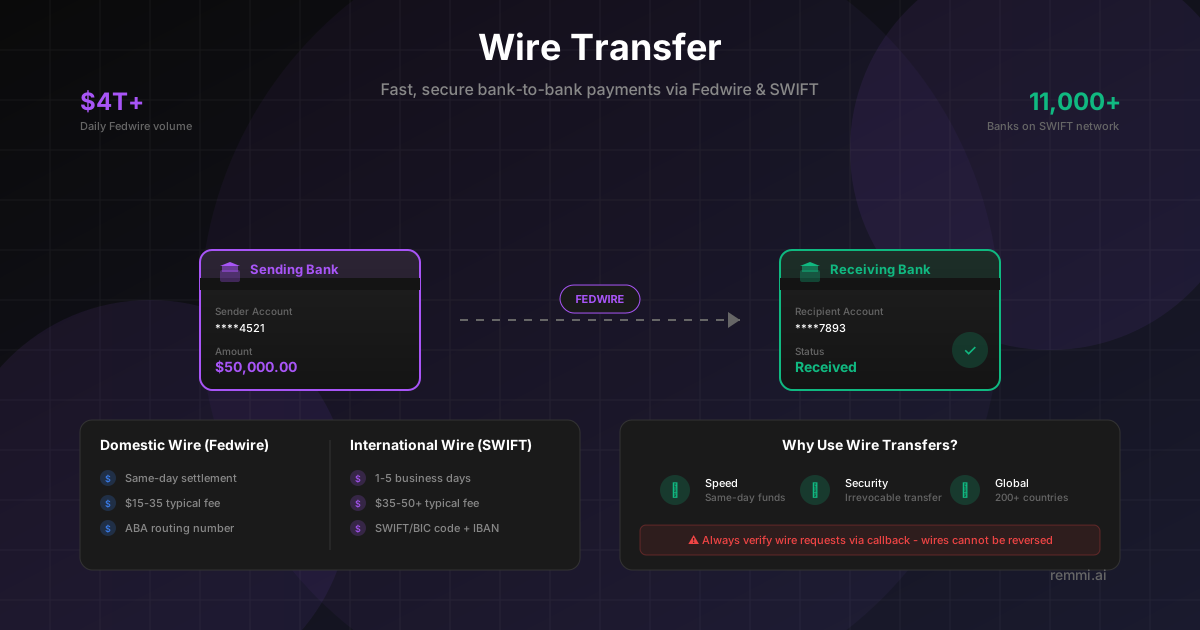
Understanding Wire Transfers
A wire transfer is one of the fastest and most secure methods for moving money between bank accounts. Unlike ACH payments that are processed in batches, wire transfers are processed individually and in real-time, making them ideal for time-sensitive transactions.
When you initiate a wire transfer, your bank sends an electronic message to the receiving bank with instructions to transfer funds. For domestic US wires, this happens through the Fedwire system operated by the Federal Reserve. For international transfers, banks use the SWIFT network to communicate across borders.
Wire transfers are commonly used for:
- Real estate transactions — Closing costs, earnest money, and property purchases
- Large business payments — Major vendor payments, equipment purchases, acquisitions
- International payments — Paying overseas suppliers or transferring funds abroad
- Urgent payments — When same-day settlement is critical
Types of Wire Transfers
Domestic Wire (Fedwire)
Bank-to-bank transfers within the United States:
- • Processed via Federal Reserve
- • Same-day settlement (hours)
- • Fees: $15-35 typical
- • Uses ABA routing number
International Wire (SWIFT)
Cross-border transfers between countries:
- • Processed via SWIFT network
- • Takes 1-5 business days
- • Fees: $35-50+ typical
- • Uses SWIFT/BIC code + IBAN
Wire Transfer Networks Explained
Fedwire
The Federal Reserve's real-time gross settlement system for domestic US transfers:
- •Processes over $4 trillion daily
- •Each transfer settled individually
- •Immediate, irrevocable settlement
- •Operating hours: 9 PM - 7 PM ET
SWIFT
Global messaging network connecting 11,000+ banks in 200+ countries:
- •Sends instructions, not actual funds
- •Uses correspondent banking network
- •Each bank has unique SWIFT/BIC code
- •Standardized message formats (MT103)
Wire Transfer vs ACH: When to Use Each
| Factor | Wire Transfer | ACH |
|---|---|---|
| Speed | Same day (hours) | 1-3 business days |
| Cost | $15-50 per transfer | $0-3 per transfer |
| Reversibility | Irrevocable | Can be reversed |
| Best For | Large, urgent payments | Routine, recurring payments |
| International | Yes (SWIFT) | Limited (US only) |
Wire Transfer Fees & Costs
Typical domestic outgoing wire fee
Typical international wire fee
Currency conversion spread
Wire transfer costs include sending fees, receiving fees (sometimes charged by the recipient's bank), intermediary bank fees for international wires, and currency conversion costs. Business accounts often have negotiated rates lower than retail pricing.
Wire Fraud Prevention: Critical Safeguards
Wire fraud, especially Business Email Compromise (BEC), costs businesses billions annually. Because wires are irrevocable, prevention is essential:
- !Verify via callback — Always call the requester at a known number (not one from the email) before processing any wire
- !Dual authorization — Require two people to approve any wire transfer
- !Beware urgency — Fraudsters create artificial time pressure to bypass controls
- !Verify bank changes — Treat any request to change vendor banking details as high-risk
- !Train your team — Educate all employees on BEC scams and social engineering tactics
How a Wire Transfer Works
Initiation
Sender provides recipient's bank details (name, bank, routing/SWIFT, account) and authorizes the transfer.
Verification
Sending bank verifies sender's identity, account balance, and authenticates the request.
Transmission
Bank sends electronic instructions via Fedwire (domestic) or SWIFT (international) to receiving bank.
Correspondent Processing
For international wires, intermediary banks may process the transfer and take additional fees.
Credit
Receiving bank credits the recipient's account and may notify them of the incoming funds.
Confirmation
Both parties receive confirmation. Funds are available immediately upon credit.
Wire Transfer Best Practices
Implement Strong Controls
Require dual authorization, verify all wire requests through separate channels, and set approval limits.
Mind the Cutoff Times
Initiate wires before your bank's cutoff (usually 3-5 PM) to ensure same-day processing.
Use Wires Strategically
Reserve wires for urgent or high-value payments; use ACH for routine transactions to reduce costs.
Secure Banking Credentials
Use strong passwords, MFA, and dedicated devices for initiating wire transfers.
Track and Reconcile
Monitor all wire activity, reconcile promptly, and investigate any unrecognized transactions immediately.
When to Use Wire Transfers
Large Payments
Real estate closings, M&A transactions, major equipment purchases, or any payment where guaranteed funds matter.
Urgent Payments
When same-day settlement is critical—avoiding late fees, meeting contractual deadlines, or emergency situations.
International Payments
Paying overseas vendors, suppliers, or transferring funds to foreign subsidiaries where ACH isn't available.
Related Terms
ACH Payment
Electronic bank transfers via the ACH network
Electronic Payment
Digital methods for transferring funds
International Payment
Cross-border payment methods and considerations
Bank Transfer
Moving funds between bank accounts
Accounts Payable
Department managing vendor invoices and payments
Payment Processing
Systems and workflows for executing payments