What is Electronic Payment?
Digital methods of transferring funds between parties without physical checks or cash, enabling faster, more secure, and cost-effective business payments.
Quick Definition
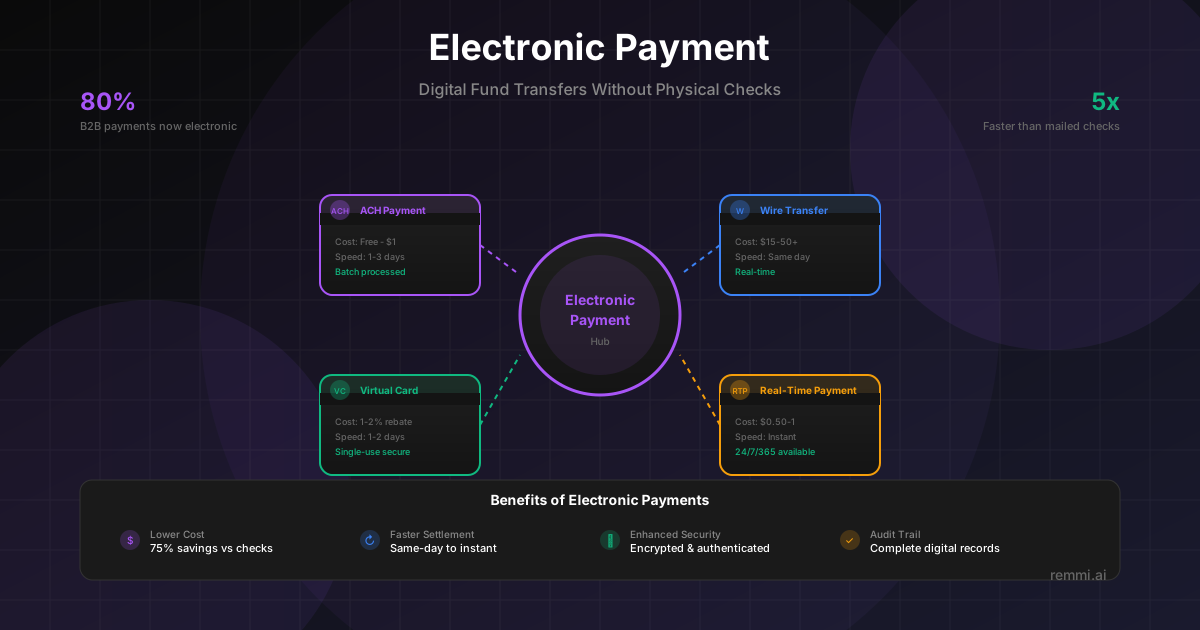
Electronic payment (e-payment) refers to any digital method of transferring funds without physical checks or cash. This includes ACH transfers, wire transfers, virtual cards, and real-time payments. Electronic payments are faster, more secure, and more cost-effective than traditional paper-based methods.
- Lower cost than paper checks ($1-3 vs $5-25)
- Faster settlement (same-day to instant)
- Enhanced security with encryption and audit trails
Understanding Electronic Payments
Electronic payments have transformed how businesses pay vendors, employees, and partners. Rather than printing, signing, and mailing paper checks, companies can now transfer funds digitally through various secure channels, each optimized for different payment scenarios.
For accounts payable teams, electronic payments offer significant advantages: lower processing costs, faster settlement, automatic audit trails, and reduced fraud risk. The shift from checks to electronic payments is accelerating, with over 80% of B2B payments now made electronically.
The main types of electronic payments used in business include:
- ACH (Automated Clearing House) — Bank-to-bank transfers processed in batches, ideal for routine vendor payments and payroll
- Wire Transfer — Real-time individual transfers for urgent or high-value payments
- Virtual Card — Single-use digital card numbers providing security and rebates
- Real-Time Payment (RTP) — Instant settlement available 24/7/365
Choosing the right electronic payment method depends on factors like urgency, cost sensitivity, vendor acceptance, and whether the payment is domestic or international.
Electronic Payment Methods Compared
ACH Payment
- +Lowest cost (free to $1)
- +Batch processed, scalable
- -1-3 days settlement
- -US domestic only
Best for: Routine vendor payments, payroll
Wire Transfer
- +Real-time processing
- +International capable
- -Higher cost ($15-50+)
- -Generally irreversible
Best for: Urgent, high-value, international
Virtual Card
- +Cash-back rebates (1-2%)
- +Single-use security
- -Vendor must accept cards
- -Some vendors charge fees
Best for: Vendors accepting cards, expense rebates
Real-Time Payment (RTP)
- +Instant settlement 24/7
- +Confirmation in seconds
- -Higher cost than ACH
- -Not all banks support yet
Best for: Time-sensitive payments, weekends/holidays
Why Electronic Payments Matter for AP
Of B2B payments now made electronically
Cost reduction vs paper check processing
Faster settlement than mailed checks
Electronic payments have become essential for modern AP operations, offering cost savings, speed, security, and seamless integration with financial systems. The remaining paper check volume continues to decline as more vendors prefer electronic payment methods.
How Electronic Payments Work
Payment Initiation
Payer initiates payment through their bank or payment platform, specifying amount, recipient, and payment method (ACH, wire, virtual card, or RTP).
Authentication & Authorization
Multi-factor authentication verifies the payer's identity. For business payments, this often includes dual authorization requiring two approvers.
Payment Network Processing
The payment is routed through the appropriate network (ACH network, SWIFT for international wires, card networks, or RTP network) based on payment type.
Funds Transfer
Money moves from payer's account to recipient's account. Settlement time varies from instant (RTP) to 1-3 days (standard ACH).
Confirmation & Recording
Both parties receive confirmation. Transaction details are recorded for audit trails and automatically sync with accounting systems.
Security Advantages
Encryption & Secure Transmission
All electronic payment data is encrypted in transit and at rest, protecting sensitive bank and payment information.
Multi-Factor Authentication
Payments require multiple verification steps, preventing unauthorized access even if credentials are compromised.
Real-Time Fraud Monitoring
Banks and payment processors monitor transactions in real-time, flagging suspicious activity for review.
Detailed Audit Trails
Every electronic payment creates a complete digital record of who, what, when, and where for compliance and reconciliation.
Electronic Payment Risks to Watch
- !Business Email Compromise (BEC) — Fraudsters impersonate vendors or executives to change payment routing information
- !Unauthorized Transactions — Stolen credentials used to initiate fraudulent payments
- !Vendor Impersonation — Fake invoices with fraudulent payment details sent to AP teams
- !Phishing Attacks — Fake login pages designed to steal banking credentials
Always verify payment routing changes through trusted phone numbers, implement dual authorization, and train staff to recognize fraud attempts.
Cost Comparison
| Method | Cost per Payment | Speed | Best Use Case |
|---|---|---|---|
| Paper Check | $5-25 | 5-10 days | Legacy vendors only |
| ACH | $0-1 | 1-3 days | Routine domestic payments |
| Wire Transfer | $15-50+ | Same day | Urgent/international |
| Virtual Card | $0 (+ 1-2% rebate) | 1-2 days | Card-accepting vendors |
| RTP | $0.50-1 | Instant | Time-critical payments |
Related Terms
ACH Payment
Bank-to-bank transfers via Automated Clearing House network
Wire Transfer
Real-time individual bank transfers for urgent payments
Virtual Card
Single-use digital card numbers for secure vendor payments
Real-Time Payment
Instant settlement payments available 24/7/365