What is a Virtual Card?
Digital payment card numbers that provide enhanced security, control, and rebate opportunities for accounts payable payments.
Quick Definition
A virtual card is a digital payment card number generated for a specific transaction, vendor, or time period. Unlike physical cards, virtual cards exist only as data and can be single-use, have exact spend limits, and be instantly created or canceled.
- Enhanced security with single-use numbers
- Earn rebates of 1-1.5% on card spend
- Instant payment with detailed transaction data
Understanding Virtual Cards
Virtual cards have transformed how businesses make supplier payments. Instead of writing checks or sharing bank account details for ACH transfers, companies can generate unique card numbers for each payment—providing better security, earning rebates, and simplifying reconciliation.
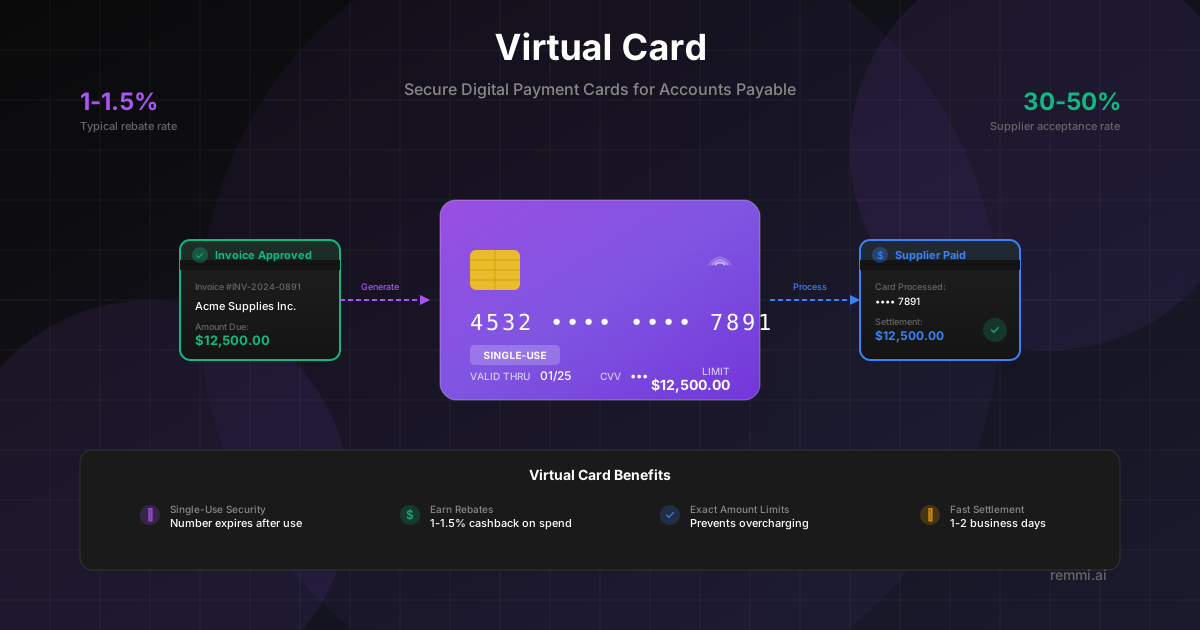
In accounts payable, virtual cards work differently than consumer virtual cards. When an invoice is approved for payment, the AP system generates a virtual card number with the exact invoice amount as the spending limit. This number is then sent to the supplier, who processes it like any credit card payment.
The key advantages are security (single-use numbers can't be reused if compromised), control (exact amount limits prevent overcharging), and financial benefit (rebates turn AP into a potential profit center). However, virtual cards require supplier acceptance and come with interchange costs that suppliers must absorb.
How Virtual Cards Work
Card Generation
System creates a unique 16-digit card number with:
- - Exact invoice amount limit
- - Expiration date
- - CVV security code
- - Vendor restrictions (optional)
Supplier Processing
Supplier receives and processes the card:
- - Card details sent via email/portal
- - Supplier charges like credit card
- - Funds settle in 1-2 days
- - Transaction data captured
Rebate & Reconciliation
Post-payment benefits flow back:
- - 1-1.5% rebate credited
- - Auto-matched to invoice
- - Level 3 data for reporting
- - Card number deactivated
Virtual Card vs Other Payment Methods
Virtual Card Advantages
- +Earn rebates (1-1.5% of spend)
- +Single-use numbers prevent fraud reuse
- +Exact amount limits prevent overcharging
- +Instant generation and cancellation
Considerations
- !Only 30-50% of vendors typically accept cards
- !Suppliers pay 2-3% interchange fees
- !Requires supplier enablement effort
- !Some suppliers may increase prices to offset fees
Why Virtual Cards Matter
Typical rebate on virtual card spend
Average supplier acceptance rate
Fraud liability with single-use cards
Virtual cards are increasingly popular in accounts payable because they combine security benefits with financial returns. A company with $10M in annual card-eligible spend could earn $100K-150K in annual rebates while reducing fraud risk and improving payment visibility.
Types of Virtual Cards
Generated for one specific payment. Card number expires after the transaction is processed or after a set time period. Maximum security—number is worthless if compromised.
Use case: Ideal for one-time vendor payments and invoice settlements
Card number remains active for multiple transactions with a specific vendor. Often 'lodged' in the supplier's payment system for recurring charges.
Use case: Best for recurring payments like subscriptions or utilities
A single virtual card number used across multiple suppliers, often with spending controls. Simpler to manage but less secure than single-use.
Use case: Departmental spending or travel booking portals
Virtual card locked to a specific merchant ID. Can only be charged by the designated supplier, adding an extra layer of fraud prevention.
Use case: High-value vendors with frequent transactions
Virtual Card Security Benefits
Single-Use Protection
Each payment uses a unique card number. Even if intercepted, the number cannot be reused for fraudulent transactions.
Exact Amount Limits
Card is generated with the exact invoice amount as the limit. Suppliers cannot charge more than authorized.
Instant Cancellation
Virtual cards can be canceled immediately if fraud is suspected, without affecting other payments or requiring new account numbers.
Supplier Restrictions
Cards can be locked to specific merchant IDs, preventing unauthorized vendors from processing charges.
No Physical Card Risk
No plastic cards to lose, steal, or copy. Virtual cards exist only as encrypted data in secure systems.
Payment Method Comparison
| Method | Cost to Buyer | Cost to Supplier | Speed |
|---|---|---|---|
| Virtual Card | Earns 1-1.5% rebate | 2-3% interchange fee | 1-2 business days |
| ACH | $0.25-1.00 per payment | Usually free | 1-3 business days |
| Check | $4-20 per check | Free to deposit | 5-10 business days |
| Wire Transfer | $15-50 per wire | May have receiving fee | Same day |
Virtual Card Challenges
- !Limited supplier acceptance — Many vendors refuse cards due to interchange fees, limiting card-eligible spend
- !Supplier enablement effort — Requires ongoing outreach to convince suppliers to accept card payments
- !Price increases — Some suppliers may raise prices to offset interchange fees, negating rebate benefits
- !Processing delays — Suppliers must manually process card numbers unless straight-through processing is enabled
Virtual Card Best Practices
Focus on High-Acceptance Categories
Target suppliers in industries with high card acceptance like travel, office supplies, and professional services.
Invest in Supplier Enablement
Actively work with suppliers to increase card acceptance. Some may accept cards in exchange for faster payment or preferred vendor status.
Use Single-Use Cards for AP
Default to single-use virtual cards for invoice payments. Reserve multi-use cards only for recurring, trusted vendor relationships.
Automate Card Delivery
Integrate virtual card generation with your AP workflow so cards are automatically created and sent when invoices are approved.
Related Terms
ACH Payment
Electronic bank-to-bank transfers via ACH network
Electronic Payment
Digital transfer of funds between parties
Payment Processing
Systems and workflows for executing payments
Accounts Payable
Department managing vendor invoices and payments
Rebate
Cashback earned on card-based payments
P-Card
Purchasing card for employee procurement