What is Bank Reconciliation?
The process of matching internal payment records against bank statements to ensure accuracy and identify discrepancies.
Quick Definition
Bank reconciliation is the accounting process of comparing your internal cash records (from your general ledger or AP system) with your bank statement to ensure all transactions are properly recorded and to identify any discrepancies that require investigation.
- Verifies all payments and deposits are accurately recorded
- Identifies errors, bank fees, and unauthorized transactions
- Essential for accurate cash position and financial reporting
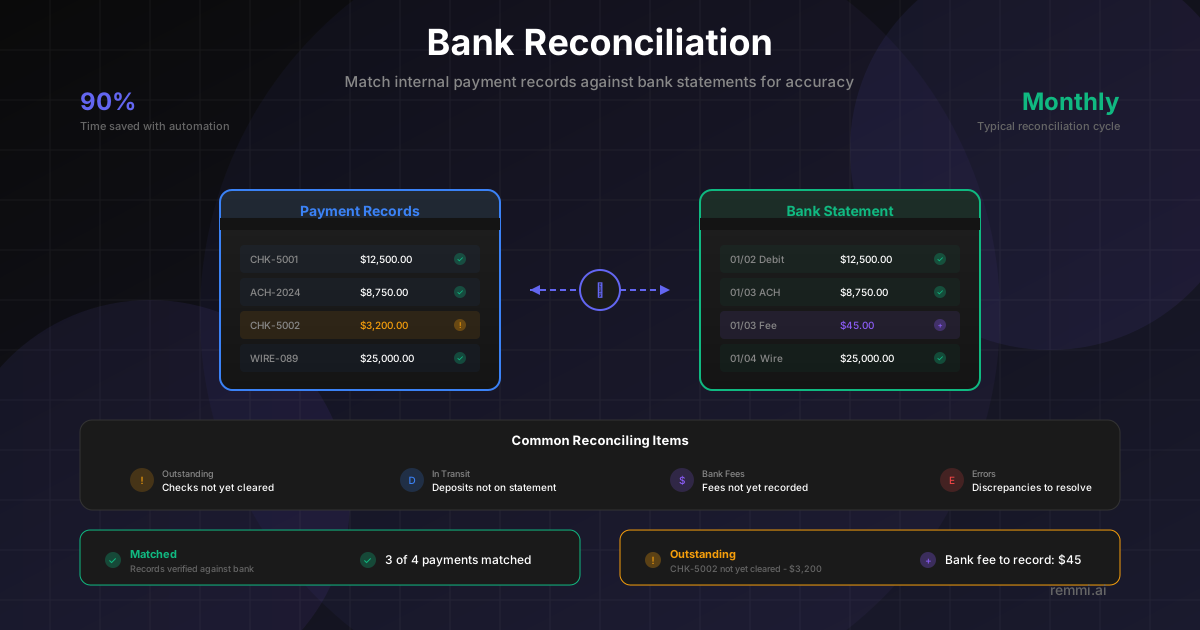
Understanding Bank Reconciliation
Bank reconciliation is a fundamental financial control that compares the transactions recorded in your internal accounting system with those appearing on your bank statement. This process ensures your records accurately reflect your true cash position and helps identify errors, omissions, or unauthorized activity.
In accounts payable, bank reconciliation is particularly important for verifying that:
- All payments are recorded - Every check, ACH transfer, or wire payment made to vendors appears in both your records and the bank statement
- Amounts are accurate - Payment amounts in your system match what the bank actually processed
- No unauthorized transactions - All debits from your account were properly authorized
- Timing differences are understood - Outstanding checks and deposits in transit are properly tracked
Without regular bank reconciliation, organizations risk inaccurate financial statements, undetected errors, and potential fraud going unnoticed.
The Bank Reconciliation Process
Gather Documents
Obtain the bank statement for the reconciliation period and your internal cash records (general ledger, cash book, or AP payment register).
Compare Deposits
Match deposits recorded in your books to deposits on the bank statement. Note any deposits in transit (recorded by you but not yet on the statement).
Compare Withdrawals
Match payments (checks, ACH, wires) in your records to bank debits. Identify outstanding checks that haven't cleared yet.
Identify Bank-Only Items
Note items on the bank statement not in your records: bank fees, interest, automatic payments, and returned items that need to be recorded.
Investigate Discrepancies
Research unmatched items and differences in amounts. Determine if they're timing differences, errors, or issues requiring action.
Make Adjusting Entries
Record journal entries for bank fees, interest, and corrections. Update your records to match reconciled amounts.
Document and Approve
Prepare reconciliation documentation showing adjusted balances match. Obtain required approvals and file for audit trail.
Common Reconciling Items
Outstanding Checks Most Common
Checks you've issued and recorded but that haven't cleared the bank yet. These reduce your book balance but aren't reflected on the statement.
Deposits in Transit
Deposits you've recorded in your books but that aren't yet on the bank statement, typically due to timing of bank processing.
Bank Fees and Charges
Service fees, wire transfer fees, and other charges deducted by the bank that haven't been recorded in your books.
Automatic Debits/Credits
Recurring payments, loan payments, or credits processed automatically by the bank that may not be in your records yet.
Bank Reconciliation Format
A standard bank reconciliation adjusts both the bank balance and book balance to arrive at the same adjusted cash balance.
Bank Statement Balance
- +Deposits in transit
- -Outstanding checks
- +/-Bank errors (if any)
- =Adjusted bank balance
Book Balance
- +Interest earned, collections
- -Bank fees, NSF charges
- +/-Recording errors
- =Adjusted book balance
When reconciliation is complete, adjusted bank balance = adjusted book balance
Benefits of Automated Bank Reconciliation
Faster Processing
Reconcile thousands of transactions in minutes instead of hours. Automated matching eliminates tedious line-by-line comparison.
Higher Match Rates
AI-powered matching handles variations in transaction descriptions, dates, and amounts that would create false exceptions manually.
More Frequent Reconciliation
Move from monthly to weekly or daily reconciliation without adding headcount, catching issues before they compound.
Better Fraud Detection
Earlier detection of unauthorized transactions, duplicate payments, or suspicious activity through continuous monitoring.
Clear Audit Trail
Complete documentation of matching decisions, discrepancy resolution, and approvals for audit and compliance requirements.
Why Bank Reconciliation Matters
Average manual reconciliation time per month
Time reduction with automation
of companies find errors during reconciliation
Organizations that delay or skip bank reconciliation face higher risk of undetected errors, cash flow surprises, and fraud losses. Regular reconciliation is essential for accurate financial statements and cash management.
Common Bank Reconciliation Mistakes
- XWaiting too long to reconcile - Monthly delays allow errors to compound and make investigation harder
- XNot investigating discrepancies - Forcing balances to match without understanding differences
- XIgnoring small differences - Small discrepancies can indicate systematic issues or fraud
- XSame person records and reconciles - Lack of segregation of duties creates control weaknesses
- XNot tracking outstanding checks - Stale checks should be investigated and possibly voided