What is Reconciliation?
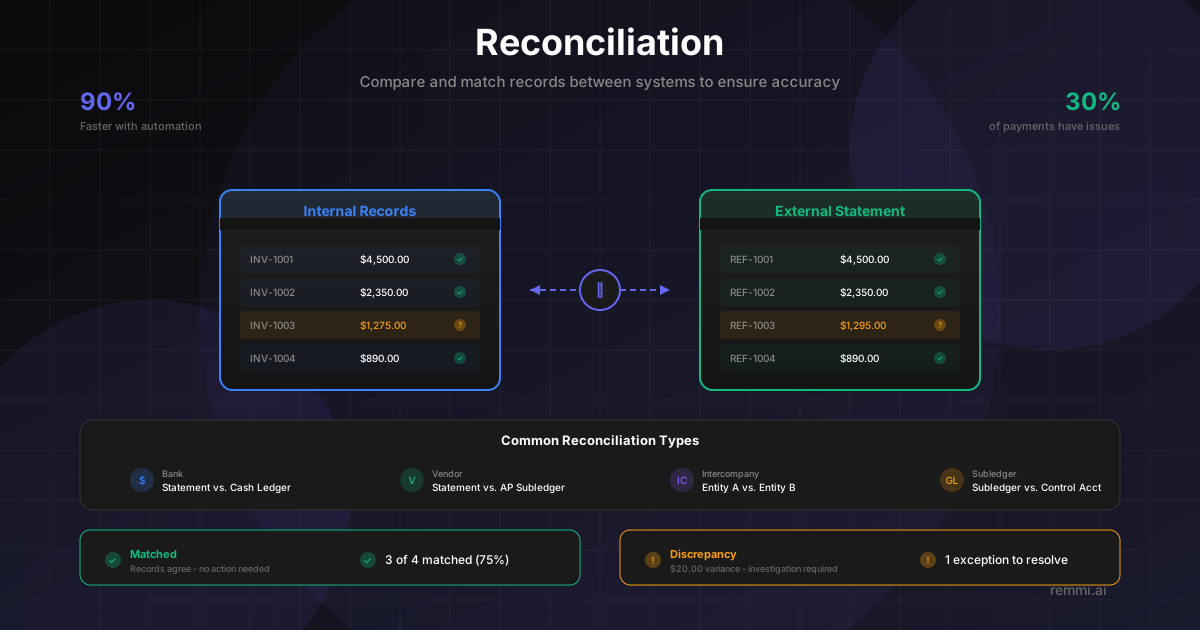
The process of comparing and matching records between systems to ensure accuracy, identify discrepancies, and maintain financial integrity.
Quick Definition
Reconciliation is the accounting process of comparing two or more sets of records to verify they are in agreement. Common examples include bank reconciliation (comparing bank statements to cash records) and vendor reconciliation (comparing vendor statements to AP records).
- Ensures accuracy between internal and external records
- Identifies errors, duplicates, and missing transactions
- Critical for financial statement accuracy and fraud detection
Understanding Reconciliation
Reconciliation is a fundamental financial control that ensures records across different systems agree with each other. It's the process of comparing data from two or more sources—typically an internal record and an external statement—to identify and resolve any differences.
In accounts payable, reconciliation serves several critical purposes:
- Verify accuracy — Confirm that all payments made match what was recorded in your systems
- Detect errors — Identify duplicate payments, missing transactions, or data entry mistakes
- Prevent fraud — Catch unauthorized transactions or suspicious patterns
- Maintain compliance — Ensure financial statements accurately reflect your organization's position
Unlike invoice matching, which occurs before payment, reconciliation typically happens after transactions are recorded to verify everything was captured correctly.
Types of Reconciliation
Bank Reconciliation Most Common
Compares your bank statement to your internal cash records to ensure all deposits, withdrawals, and fees are properly recorded.
Vendor Reconciliation
Compares vendor statements to your AP subledger to identify outstanding invoices, unapplied payments, or disputed items.
Intercompany Reconciliation
Compares transactions between related entities within an organization to ensure intercompany balances eliminate properly during consolidation.
Subledger-to-GL Reconciliation
Verifies that subledger totals (AP, AR, inventory) agree with the corresponding general ledger control accounts.
The Reconciliation Process
Gather Records
Collect the internal records and external statements to be compared for the reconciliation period.
Match Transactions
Compare records line by line to identify transactions that appear in both sources and agree in amount.
Identify Differences
Flag transactions that appear in only one source, or that appear in both but with different amounts.
Investigate Discrepancies
Research each difference to determine the cause—timing, error, omission, or unauthorized transaction.
Make Adjustments
Record necessary journal entries to correct errors and update records based on findings.
Document and Approve
Prepare reconciliation documentation with explanations for all differences and obtain required approvals.
Matching vs. Reconciliation
While often confused, matching and reconciliation serve different purposes in the procure-to-pay process.
Invoice Matching
- -Occurs before payment
- -Compares documents within one transaction
- -Invoice vs. PO vs. Receipt
- -Authorizes payment release
Reconciliation
- -Occurs after transactions post
- -Compares aggregated records across systems
- -Internal ledger vs. external statement
- -Verifies recording completeness
Common Discrepancy Types
Timing Differences
Transactions recorded in different periods—like checks issued but not yet cleared, or deposits in transit. These reconcile in subsequent periods.
Data Entry Errors
Transposition errors, incorrect amounts, or wrong account coding. These require corrections to internal records.
Missing Transactions
Items appearing on external statements but not in internal records—bank fees, automatic debits, or invoices not yet recorded.
Duplicate Transactions
The same transaction recorded twice, often from processing the same invoice or payment more than once.
Benefits of Automated Reconciliation
Speed and Efficiency
Match thousands of transactions in minutes instead of days. Automated reconciliation is 90% faster than manual processes.
Higher Match Rates
AI-powered matching handles variations in descriptions, amounts, and dates that would create false exceptions in rule-based systems.
Better Controls
Consistent application of matching rules, complete audit trails, and no items overlooked due to manual fatigue.
Earlier Detection
More frequent reconciliation catches errors and fraud faster, reducing the cost and complexity of resolution.
Continuous Reconciliation
Move from monthly to daily reconciliation without adding headcount, enabling real-time visibility into financial position.
Why Reconciliation Matters
of payments have reconciliation issues
Average time for manual bank reconciliation
Time reduction with automation
Organizations that delay or skip reconciliation face higher risk of undetected errors, fraud losses, and inaccurate financial statements. Automation makes frequent reconciliation practical and cost-effective.
Common Reconciliation Mistakes
- XReconciling too infrequently — Monthly reconciliation misses issues that compound over time
- XForcing balances to match — Adjusting records to eliminate differences without investigation
- XNot documenting discrepancies — Missing patterns that indicate systematic issues or fraud
- XSame person records and reconciles — Lacking segregation of duties creates control weaknesses
Related Terms
Bank Reconciliation
Comparing bank statements to internal cash records
Accounts Payable
Department managing vendor invoices and payments
Invoice Matching
Verifying invoices against POs and receipts
Three-Way Match
Comparing PO, receipt, and invoice for verification