What is Straight-Through Processing?
The ultimate goal of AP automation—invoices that flow from receipt to payment without any manual intervention.
Quick Definition
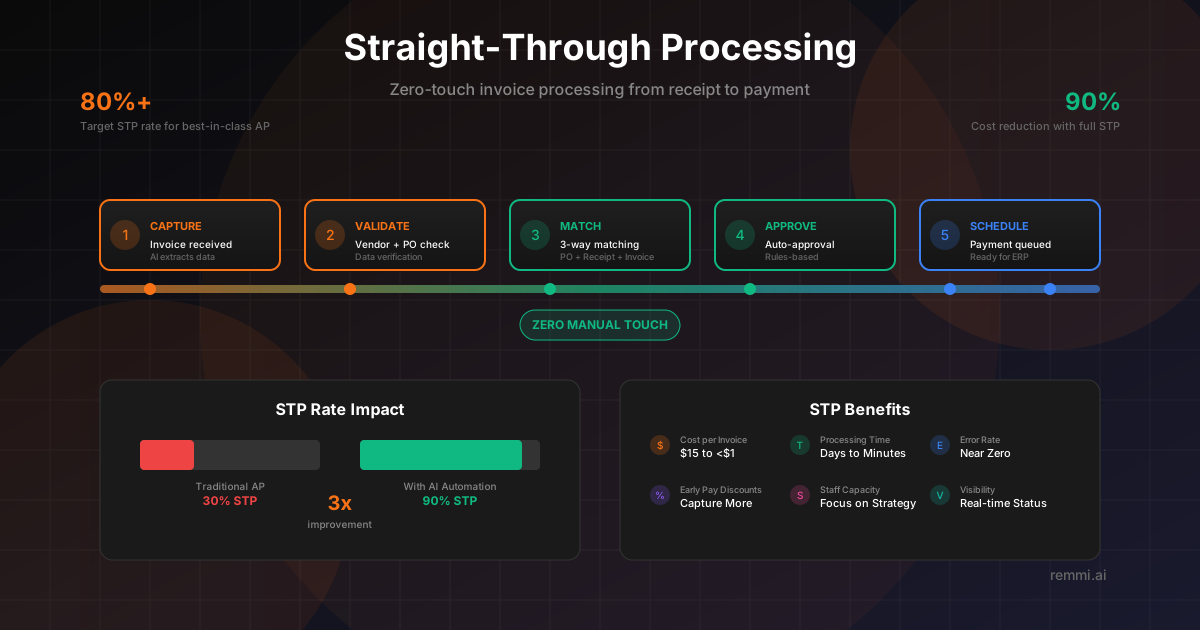
Straight-through processing (STP) is the automated, end-to-end processing of invoices without manual intervention—from receipt through validation, matching, approval, and payment scheduling.
- Zero manual touchpoints from invoice to payment
- Measured as STP rate—percentage of touchless invoices
- Key metric for AP automation success
Understanding Straight-Through Processing
Straight-through processing (STP) represents the gold standard of accounts payable automation. When an invoice achieves STP, it means every step—from the moment it arrives to when it's scheduled for payment—happens automatically without any human intervention.
Think of STP as the difference between a toll booth with a human attendant versus an automated toll tag system. Both get you through, but one requires stopping and manual interaction while the other processes you seamlessly at full speed.
For AP teams, achieving high STP rates means freeing up staff from repetitive data entry and validation tasks to focus on exception handling, vendor relationships, and strategic initiatives. It's the core metric that separates truly automated AP operations from those that have simply digitized manual processes.
The STP Journey: What Happens Automatically
1. Capture
Invoice arrives and data is automatically extracted via OCR/AI
2. Validate
System validates vendor, PO match, quantities, and pricing
3. Approve
Auto-approval rules process invoice without human review
4. Schedule
Invoice queued for payment based on terms and cash strategy
STP vs Exception: Two Paths
Straight-Through Processing
- →Invoice arrives with valid PO number
- →Data extracted accurately by AI
- →3-way match passes within tolerance
- →Auto-approval rules satisfied
✓ Processed in minutes, zero human touch
Exception (Fails STP)
- ✗Missing or invalid PO number
- ✗Price exceeds PO beyond tolerance
- ✗Goods receipt not yet recorded
- ✗New vendor requiring review
✗ Routed to exception queue for manual review
Why STP Rate Matters
Target STP rate for mature AP automation
Cost per invoice with manual processing
Cost per invoice with full STP
Your STP rate directly impacts processing costs, cycle times, and team productivity. Every percentage point improvement means fewer invoices requiring manual intervention and more capacity for value-added work.
Requirements for Achieving STP
High-Quality Data Capture
AI-powered OCR that accurately extracts invoice data including line items, PO numbers, and amounts with high confidence.
Clean Vendor Master Data
Up-to-date vendor records with correct payment terms, tax IDs, and remittance information to enable automatic validation.
PO-Backed Purchases
Invoices referencing valid purchase orders enable automated 3-way matching and validation without manual lookup.
Timely Goods Receipts
Receiving teams must record goods receipts promptly so they're available when invoices arrive for matching.
Defined Tolerance Thresholds
Reasonable tolerance levels for price and quantity variances allow minor discrepancies to pass without exception.
Auto-Approval Rules
Configurable rules that automatically approve invoices meeting criteria (matched, within limits, known vendors).
Best Practices for Improving STP Rates
Analyze Exception Root Causes
Track why invoices fail STP and address the top blockers systematically. Often 20% of causes drive 80% of exceptions.
Measure by Invoice Type
Segment STP rates by PO vs non-PO, by vendor, and by business unit to identify specific improvement opportunities.
Enforce PO Compliance
Work with procurement to increase PO coverage. PO-backed invoices have significantly higher STP rates than non-PO invoices.
Accelerate Goods Receipts
Partner with receiving teams to record receipts faster. A receipt delay of even 1 day can block STP for many invoices.
Continuously Tune Tolerances
Review tolerance thresholds quarterly. Too tight creates unnecessary exceptions; too loose weakens controls.
Common STP Blockers to Address
- ✗Missing PO numbers on invoices — Work with vendors to always include PO references
- ✗Price changes not updated on POs — Ensure procurement updates POs when prices change
- ✗Delayed goods receipt entry — Train warehouse staff on importance of timely receipts
- ✗Poor invoice quality from vendors — Establish vendor invoice standards and provide feedback
- ✗Outdated vendor master data — Implement regular vendor data hygiene processes
STP Rate Benchmarks
| Invoice Type | Average STP | Best-in-Class |
|---|---|---|
| PO-Backed Invoices | 70-80% | 90-95% |
| Non-PO Invoices | 40-55% | 65-75% |
| Overall Blended | 60-70% | 80-85% |
Note: Benchmarks vary significantly by industry, invoice complexity, and vendor mix. Use these as directional guidance rather than absolute targets.
Related Terms
Touchless Processing
Invoice processing with zero manual intervention
AP Automation
Technology that automates accounts payable workflows
Invoice Processing
The end-to-end workflow for handling vendor invoices
Three-Way Match
Matching PO, receipt, and invoice before payment
Exception Handling
Managing invoices that fail automated processing
Auto-Approval
Automatic approval based on predefined rules