What is a Duplicate Payment?
When an invoice gets paid twice, organizations lose money that requires time-consuming recovery efforts. Learn how to detect and prevent this costly AP error.
Quick Definition
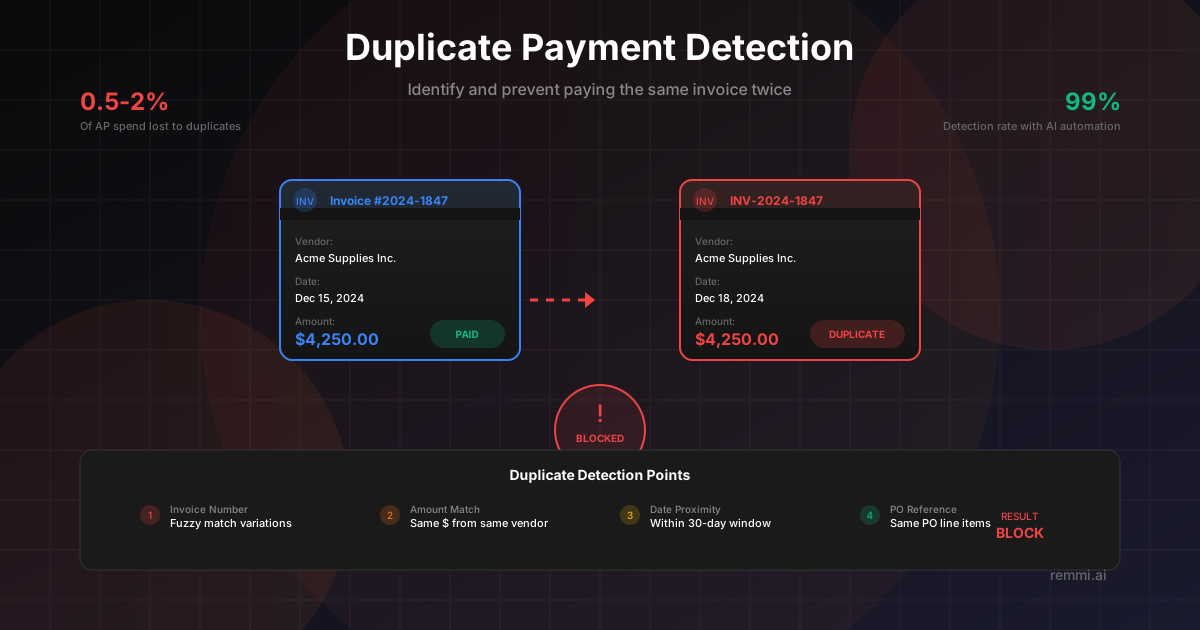
A duplicate payment occurs when an organization pays the same invoice more than once, or pays multiple invoices for the same goods or services. This results in overpayment to vendors and requires recovery efforts to reclaim the lost funds.
- Affects 0.5-2% of total AP spend without controls
- Preventable with automated duplicate detection
- Recovery rates average 50-80% when detected
Understanding Duplicate Payments
Duplicate payments are one of the most common and costly errors in accounts payable. They occur when the same invoice is paid twice, when similar invoices for the same transaction are both paid, or when a vendor is paid for goods or services that were already compensated.
While duplicate payments are often honest mistakes rather than fraud, they represent a significant drain on organizational resources. Not only is money lost to overpayments, but additional time and effort must be spent identifying duplicates and recovering funds from vendors.
The challenge with duplicate payments is that they can be difficult to detect without proper controls. An invoice might come in via email one day and mail the next, or a vendor might change their invoice number format, making it hard to spot the duplicate during normal processing.
How Duplicate Payments Happen
Multiple Invoice Channels
Same invoice arrives via email, mail, and vendor portal. Each gets entered separately without cross-checking.
Vendor Resubmissions
Vendor believes invoice was not paid and resubmits it. Both the original and resubmission get processed.
Invoice Number Variations
Invoice numbers entered differently (INV-001 vs 001 vs Invoice#1) bypass simple duplicate checks.
Payment Timing Issues
Invoice reprocessed before previous payment clears or hits the vendor's account, appearing as unpaid.
The Cost of Duplicate Payments
Of total AP spend lost to duplicates without controls
Average annual duplicate exposure for mid-sized companies
Average time before duplicates are discovered
Beyond the direct financial loss, duplicate payments create hidden costs: staff time spent on detection and recovery, damaged vendor relationships, audit findings, and the opportunity cost of tied-up capital. Many duplicates are never recovered, especially small amounts that cost more to pursue than they're worth.
Duplicate Payment Detection Methods
Invoice Number Matching
Compare incoming invoice numbers against all previously processed invoices for the same vendor.
Amount + Date Matching
Flag invoices with the same amount and similar dates from the same vendor, even if invoice numbers differ.
Fuzzy Matching Algorithms
Use AI-powered matching that catches near-duplicates despite slight variations in data entry.
PO-Based Detection
Check if multiple invoices reference the same purchase order and line items.
Vendor Statement Reconciliation
Compare your payment records against vendor statements to identify discrepancies and overpayments.
Periodic Payment Audits
Conduct regular audits of historical payments using data analytics to surface hidden duplicates.
Duplicate Payment Recovery Process
Recovery Steps
- 1Document both payments with proof of duplicate
- 2Contact vendor AP/AR with overpayment claim
- 3Request refund check or credit memo
- 4Track recovery and apply credits promptly
Average recovery rate: 50-80% of identified duplicates
Recovery Challenges
- -Time-consuming back-and-forth with vendors
- -Small amounts may not be cost-effective to pursue
- -Vendors may dispute or delay refunds
- -Old duplicates may be past recovery windows
Prevention is far more cost-effective than recovery
Duplicate Payment Prevention Best Practices
Implement Automated Duplicate Detection
Use AP automation that flags potential duplicates before payment, comparing multiple data points simultaneously.
Require Three-Way Matching
Match invoices to POs and receipts to ensure you're only paying for goods actually ordered and received once.
Centralize Invoice Receipt
Funnel all invoices through a single channel (AP email or portal) to prevent duplicate entries from multiple sources.
Standardize Invoice Number Entry
Create data entry standards and use fuzzy matching to catch duplicates despite format variations.
Conduct Regular Payment Audits
Run periodic duplicate detection scans on historical payments to catch any that slipped through.
Common Mistakes That Lead to Duplicates
- xRelying only on invoice number matching — Misses duplicates with different formats or typos
- xProcessing urgent requests without checks — Pressure to pay quickly bypasses duplicate controls
- xNot reconciling vendor statements — Missing the external check that catches internal errors
- xIgnoring small-amount duplicates — Small duplicates add up and indicate control weaknesses
Types of Duplicate Payments
| Type | Description | Detection Method |
|---|---|---|
| Exact Duplicate | Same invoice number, amount, and vendor | Simple invoice number matching |
| Near Duplicate | Same amount and vendor, different invoice number | Amount + date + vendor matching |
| Partial Duplicate | Same line items paid on different invoices | PO line item analysis |
| Timing Duplicate | Reprocessed before first payment clears | Payment status validation |
Related Terms
Accounts Payable
Department managing vendor invoices and payments
Invoice Processing
The workflow from invoice receipt to payment
Fraud Prevention
Controls and processes to prevent payment fraud
Internal Controls
Safeguards to ensure accurate financial processing
Three-Way Match
Matching PO, receipt, and invoice before payment
Payment Audit
Review of payments for errors and compliance