What is Vendor Management?
The strategic process of managing supplier relationships, master data, and risk to optimize procurement and protect your organization.
Quick Definition
Vendor management is the systematic process of managing an organization's relationships with external suppliers, including onboarding, master data maintenance, performance monitoring, and risk assessment.
- Ensures accurate vendor data for payments and compliance
- Prevents fraud through proper verification controls
- Enables better negotiations and spend visibility
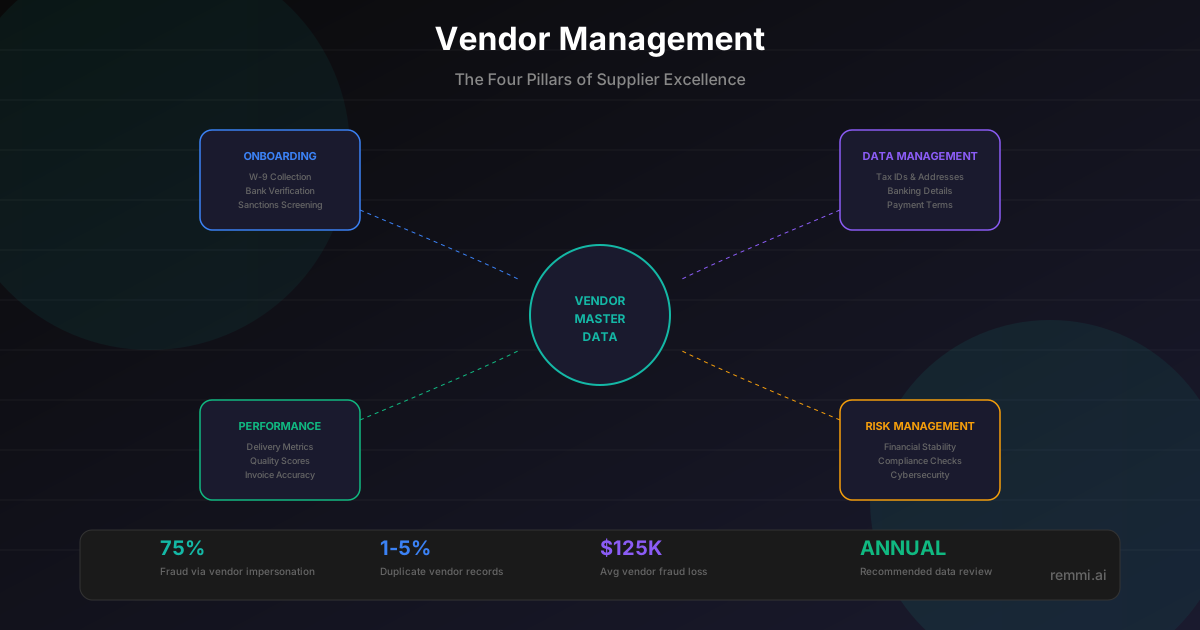
Understanding Vendor Management
Vendor management is far more than just maintaining a list of suppliers. It's a strategic discipline that encompasses everything from how you bring new vendors into your system to how you monitor their performance and manage associated risks over time.
In the context of accounts payable, effective vendor management directly impacts your ability to process invoices accurately, make payments on time, comply with tax regulations, and protect your organization from fraud.
The four pillars of vendor management are:
- Vendor Onboarding — The structured process of collecting and verifying new vendor information before they can receive payments
- Master Data Management — Maintaining accurate, complete, and up-to-date information about all vendors in your system
- Performance Monitoring — Tracking vendor delivery, quality, and responsiveness to ensure they meet expectations
- Risk Management — Identifying and mitigating financial, compliance, and operational risks associated with vendors
Organizations with mature vendor management practices experience fewer payment errors, lower fraud rates, better supplier relationships, and more strategic procurement decisions.
The Four Pillars of Vendor Management
Vendor Onboarding
Structured process for adding new suppliers:
- * W-9/W-8 tax form collection
- * Bank account verification
- * Identity and legitimacy checks
- * Sanctions screening
Master Data Management
Maintaining accurate vendor information:
- * Legal names and addresses
- * Tax IDs and banking details
- * Payment terms and methods
- * Contact information
Performance Monitoring
Tracking vendor quality and reliability:
- * On-time delivery rates
- * Quality metrics and defects
- * Invoice accuracy
- * Responsiveness and support
Risk Management
Protecting against vendor-related risks:
- * Financial stability monitoring
- * Compliance verification
- * Cybersecurity assessment
- * Business continuity planning
Vendor Master Data: What to Track
Essential Data Fields
- +Legal business name (as on W-9)
- +Tax ID (EIN, SSN, or foreign equivalent)
- +Remittance address for payments
- +Bank account and routing numbers
- +Payment terms (Net 30, Net 60, etc.)
Common Data Problems
- !Duplicate vendor records (1-5% typical)
- !Outdated addresses causing payment delays
- !Missing or incorrect tax IDs (1099 issues)
- !Stale bank details causing ACH failures
- !Inactive vendors cluttering the system
Why Vendor Management Matters
Of payment fraud involves vendor impersonation
Of vendor records are duplicates
Average loss from vendor fraud schemes
Poor vendor management exposes organizations to significant risks: payment fraud through fake vendors or bank account changes, duplicate payments from duplicate records, tax penalties from incorrect 1099 reporting, and operational disruptions from inaccurate data. Strong vendor management is a critical control for any AP operation.
Vendor Onboarding Process
Request Initiation
Business user submits request to add a new vendor, providing business justification and basic information.
Information Collection
Vendor completes onboarding form with legal name, address, tax ID, banking details, and submits W-9 or W-8 form.
Verification & Screening
Verify vendor identity, validate tax ID with IRS TIN matching, screen against OFAC sanctions and watchlists.
Bank Account Validation
Verify bank account ownership through micro-deposits, bank verification services, or callback procedures.
Duplicate Check
Search existing vendor master for potential duplicates using name, tax ID, and address matching.
Record Creation & Approval
Create vendor record in ERP/AP system with all verified information and route for final approval.
Vendor Management Best Practices
Implement Duplicate Detection
Use fuzzy matching on names, tax IDs, and addresses during onboarding and periodically audit for duplicates.
Verify Bank Changes Separately
Always verify bank account change requests through a separate channel (phone call to known number) to prevent fraud.
Maintain W-9 Documentation
Collect and store W-9 forms for all US vendors to ensure accurate 1099 reporting and avoid IRS penalties.
Segment Vendors by Risk
Classify vendors by spend level and criticality to apply appropriate verification and monitoring controls.
Regular Data Hygiene
Conduct annual reviews to inactivate dormant vendors, update stale information, and merge duplicates.
Common Vendor Management Mistakes
- xAllowing duplicate vendor creation — Leads to split spend data, missed discounts, and duplicate payment risk
- xNot verifying bank account changes — Business email compromise fraud exploits unverified banking updates
- xSkipping sanctions screening — Can result in severe regulatory penalties for payments to blocked entities
- xLetting data go stale — Outdated addresses and contacts cause payment delays and communication failures
Vendor Lifecycle Stages
| Stage | Key Activities | Risk Focus |
|---|---|---|
| Selection | RFP, evaluation, negotiation | Financial stability, capability |
| Onboarding | Data collection, verification, setup | Identity fraud, sanctions |
| Active | Ordering, invoicing, payment | Performance, invoice fraud |
| Review | Data refresh, performance assessment | Data accuracy, continued fit |
| Offboarding | Final payments, record retention | Reactivation fraud |
Related Terms
Vendor
External party providing goods or services to your organization
Supplier
Business that supplies products or raw materials
Vendor Onboarding
Process of setting up new vendors in your system
Vendor Master
Centralized database of all vendor information
Accounts Payable
Department managing vendor invoices and payments
Procurement
Process of sourcing and acquiring goods and services