What is a Freight Invoice?
The carrier billing document that details transportation charges, accessorial fees, and logistics costs for shipping goods.
Quick Definition
A freight invoice (also called a carrier invoice or transportation invoice) is a billing document from a carrier or freight company that itemizes charges for shipping goods—including base rates, fuel surcharges, and accessorial fees.
- Details all charges for a specific shipment
- References BOL, PRO number, and PO for matching
- Requires audit to catch common billing errors
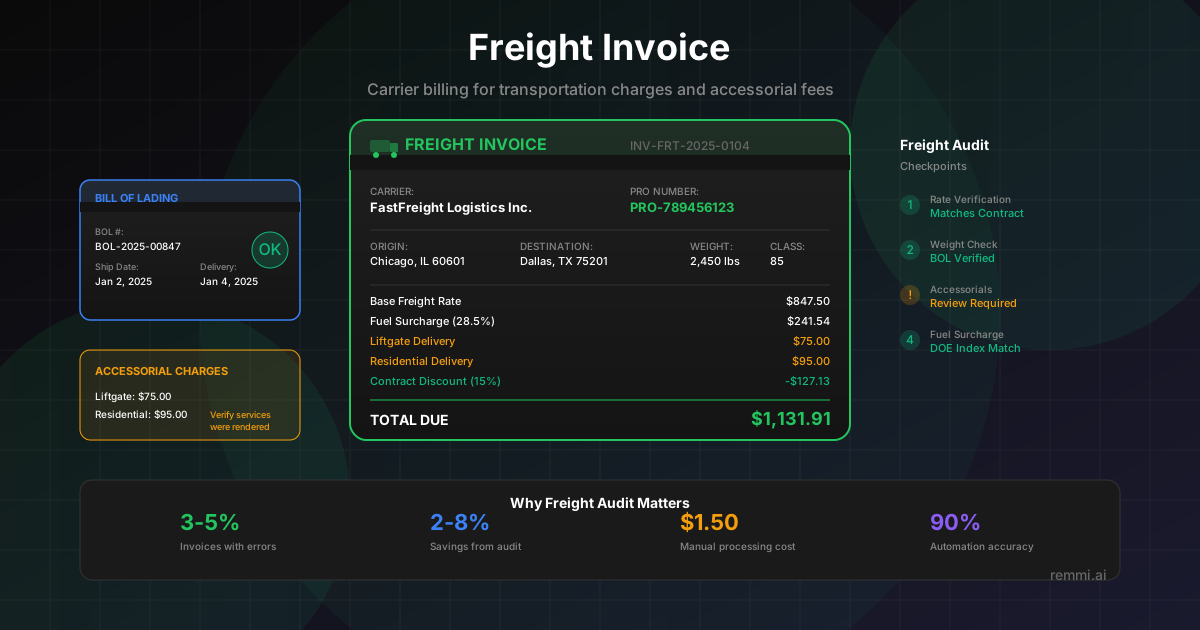
Understanding Freight Invoices
Freight invoices are among the most complex documents in accounts payable. Unlike standard vendor invoices for goods or services, freight invoices involve multiple variable charges, industry-specific terminology, and require matching against shipping documents rather than purchase orders alone.
Every time your company ships or receives goods via a carrier—whether LTL (less-than-truckload), FTL (full truckload), parcel, or air freight—you'll receive a freight invoice. These invoices can come from dozens of different carriers, each with their own rate structures, surcharges, and billing formats.
The complexity of freight billing makes it a prime area for billing errors and overcharges. Studies consistently show that 3-5% of freight invoices contain errors, making freight audit and payment an essential function for any company with significant shipping volume.
Freight Invoice Components
Shipment Details
Core information about the freight movement:
- • Origin and destination
- • Ship date and delivery date
- • Weight and dimensions
- • Freight class (for LTL)
Charges Breakdown
Itemized costs that make up the total:
- • Base transportation rate
- • Fuel surcharge
- • Accessorial charges
- • Discounts applied
Reference Numbers
Key identifiers for matching and tracking:
- • PRO number (carrier ID)
- • Bill of Lading (BOL) number
- • Purchase Order number
- • Shipper reference number
Common Accessorial Charges
Accessorial charges are additional fees beyond the base freight rate. They can significantly increase invoice totals and are a common source of billing disputes.
Delivery-Related
- •Liftgate — Hydraulic lift for loading/unloading
- •Residential delivery — Delivery to home address
- •Inside delivery — Beyond the first door
- •Limited access — Schools, churches, farms
Service-Related
- •Detention — Waiting time at pickup/delivery
- •Redelivery — Failed delivery attempt
- •Appointment — Scheduled delivery window
- •Hazmat — Hazardous materials handling
Why Freight Audit Matters
Of freight invoices contain billing errors
Average cost to manually process one freight invoice
Typical savings from freight audit programs
Freight invoices are notoriously error-prone due to complex rating rules, weight reweighs, class changes, and accessorial disputes. Without systematic audit, companies routinely overpay carriers by thousands of dollars annually.
Freight Invoice Processing Workflow
Invoice Receipt
Carrier invoice arrives via EDI, email, or carrier portal. Capture all data including line-item charges.
Document Matching
Match invoice to bill of lading (BOL) and delivery receipt to verify shipment details are accurate.
Rate Verification
Compare billed rates against contracted pricing. Verify fuel surcharge percentage matches agreement.
Weight & Class Audit
Verify weight and freight class are correct. Carriers may reweigh shipments and adjust class.
Accessorial Review
Confirm each accessorial charge was actually required and authorized. Dispute unauthorized charges.
Approve or Dispute
Clean invoices proceed to payment. Discrepancies are disputed with carrier for resolution or credit.
Freight Invoice Best Practices
Audit Every Invoice
Don't assume carrier invoices are accurate. Implement systematic audit for all freight bills regardless of carrier relationship.
Maintain Rate Contracts
Keep carrier contracts and rate agreements organized and accessible for rate verification during audit.
Automate Matching
Use automation to match freight invoices to BOLs and delivery receipts, reducing manual effort and errors.
Track Accessorial Trends
Monitor accessorial charge patterns to identify opportunities to reduce costs or negotiate better terms.
Dispute Promptly
File disputes quickly—most carriers have time limits for claims. Track dispute status to resolution.
Common Freight Billing Errors to Catch
- ×Wrong rate applied — Invoice uses list rates instead of contracted discounted rates
- ×Incorrect weight — Carrier reweigh differs from actual shipment weight
- ×Duplicate invoices — Same shipment billed multiple times under different PRO numbers
- ×Unauthorized accessorials — Charges for services not requested or required
- ×Wrong freight class — Higher class charged than product density warrants
Freight Invoice vs Related Documents
| Document | Purpose | Created By |
|---|---|---|
| Freight Invoice | Billing document requesting payment for shipping | Carrier (after delivery) |
| Bill of Lading (BOL) | Contract of carriage and receipt for goods | Shipper (at pickup) |
| Delivery Receipt (POD) | Proof that goods were delivered | Carrier (at delivery) |
| Commercial Invoice | Customs document for international shipments | Shipper/Exporter |
Related Terms
Invoice
Document requesting payment for goods or services
Vendor
A supplier or carrier providing goods or services
Accounts Payable
Department managing vendor invoices and payments
Freight Audit
Process of verifying carrier invoice accuracy
Bill of Lading
Legal document between shipper and carrier
Shipping
Transportation of goods from origin to destination