What is an Accrual?
The accounting method that matches expenses to the period when they occur, ensuring accurate financial reporting.
Quick Definition
An accrual is an accounting adjustment that records revenues or expenses when they are incurred, regardless of when cash is exchanged. In accounts payable, accrued expenses represent liabilities for goods or services received but not yet invoiced.
- Matches expenses to the period they belong to
- Required under GAAP for accurate financial statements
- Critical for month-end and year-end close processes
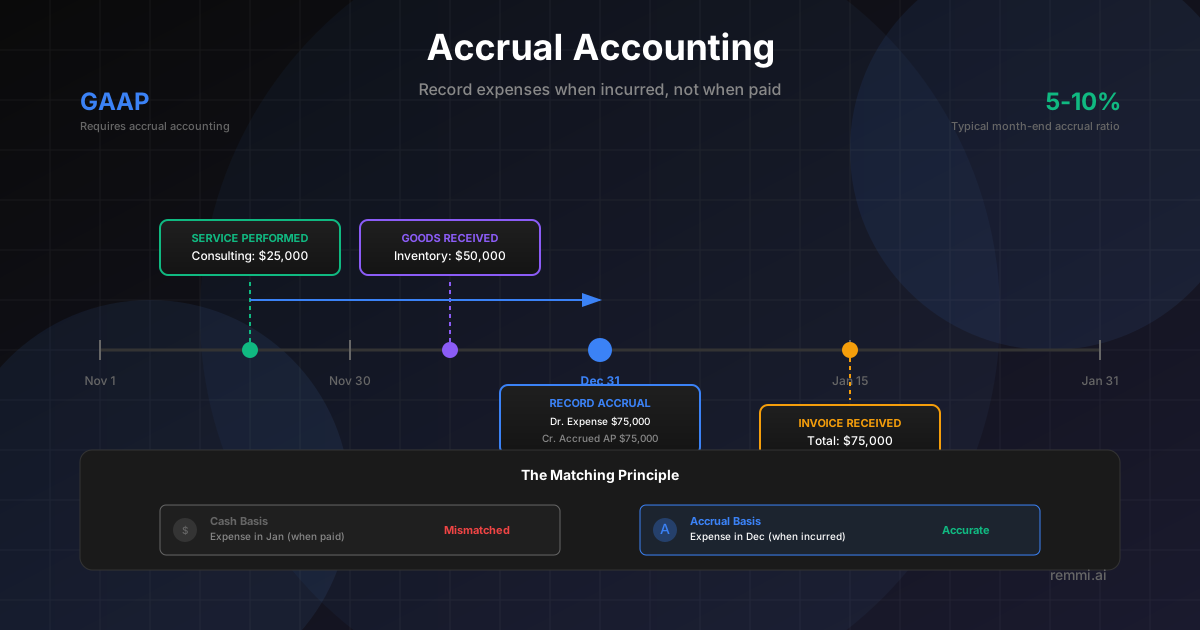
Understanding Accruals
Accrual accounting is the foundation of modern financial reporting. Unlike cash basis accounting, which only recognizes transactions when money changes hands, accrual accounting records revenues and expenses when they are earned or incurred—regardless of when payment occurs.
For accounts payable teams, this means recording expenses when goods are received or services are performed, even if the vendor invoice hasn't arrived yet. This practice ensures financial statements accurately reflect the true cost of operations in each period.
Accruals are particularly important during month-end close, when AP teams must estimate and record liabilities for all goods and services consumed but not yet invoiced. These accrued expenses prevent understating costs and overstating profits.
Accrual vs Cash Basis Accounting
Accrual Basis
Records transactions when they occur, not when cash moves:
- • Expense recorded when goods received
- • Revenue recorded when earned
- • Matches costs to the period incurred
- • Required under GAAP
Cash Basis
Records transactions only when cash changes hands:
- • Expense recorded when payment made
- • Revenue recorded when cash received
- • Simpler but less accurate
- • Allowed only for small businesses
Types of Accruals in AP
Goods Received, Invoice Not Received (GRNI)
The most common AP accrual. When goods are received and entered into inventory, but the vendor invoice hasn't arrived by month-end, an accrual is recorded based on the PO amount.
Service Accruals
For services performed but not yet billed—such as consulting, legal, or professional services—an accrual is recorded based on contracts, timesheets, or estimated work completed.
Utility Accruals
Utilities like electricity, water, and gas are consumed before bills arrive. These are estimated based on prior periods or meter readings and accrued at month-end.
Interest Accruals
Interest on loans or credit lines accumulates daily but is typically billed monthly or quarterly. The unpaid interest is accrued to match expense to the period.
The Month-End Accrual Process
Identify Uninvoiced Receipts
Review goods receipts and service confirmations that don't have matching invoices recorded by month-end.
Estimate Accrual Amounts
Calculate the liability amount using PO values, contracts, historical data, or vendor confirmations.
Record Accrual Entry
Debit the expense account and credit an accrued liability account (or AP accrual account) for the estimated amount.
Document and Review
Maintain supporting documentation for each accrual and have entries reviewed before posting to the general ledger.
Reverse in New Period
On the first day of the new period, reverse the accrual. When the actual invoice arrives, process it normally through AP.
Reconcile Variances
Compare accrued amounts to actual invoices received. Analyze significant variances to improve future estimates.
Example: AP Accrual Entry
Scenario: On December 31, your company received $50,000 of inventory, but the vendor invoice hasn't arrived.
December 31 — Record Accrual
Records the liability in December when goods were received
January 1 — Reverse Accrual
Reverses accrual; invoice processed normally when received
Why Accruals Matter
Of GAAP-compliant companies use accrual accounting
Typical month-end accrual as % of AP balance
Faster close with automated accrual tracking
Accurate accruals are essential for financial statement integrity, budget vs. actual analysis, tax compliance, and investor/auditor confidence. Poor accrual practices lead to restated financials and audit findings.
Accrual Best Practices
Set Materiality Thresholds
Define minimum amounts for accrual (e.g., $1,000+) to focus effort on significant items and avoid over-processing.
Automate Recurring Accruals
Set up automated entries for predictable recurring accruals like rent, insurance, and subscription services.
Maintain an Accrual Schedule
Keep a detailed schedule listing all accruals, amounts, accounts, and supporting documentation for audit readiness.
Track Accrual Accuracy
Compare accrued amounts to actual invoices and analyze variances to improve estimation methods over time.
Use a Consistent Cutoff
Establish clear cutoff procedures to ensure all receipts are captured and nothing falls through the cracks at period-end.
Common Accrual Mistakes to Avoid
- ×Forgetting to reverse — Leaving accruals on the books causes double-counting when actual invoices post
- ×Inconsistent estimation methods — Changing how you estimate makes period comparisons unreliable
- ×Missing the cutoff — Not capturing all receipts at month-end leads to understated liabilities
- ×No supporting documentation — Auditors require evidence for accrual estimates; keep detailed records
Related Terms
Accounts Payable
Department managing vendor invoices and payments
Invoice
Document requesting payment for goods or services
Month-End Close
Process of finalizing books at period end
Financial Close
Completing and reporting financial statements
General Ledger
Master record of all financial transactions
Accounts Receivable
Money owed to the company by customers