What is ASC 842?
The FASB lease accounting standard that requires lessees to recognize most leases on the balance sheet as right-of-use assets and lease liabilities.
Quick Answer
ASC 842 (Leases) is the Financial Accounting Standards Board (FASB) standard that fundamentally changed lease accounting by requiring lessees to recognize virtually all leases on their balance sheet. This standard replaced ASC 840 and brought previously off-balance-sheet operating leases onto the balance sheet.
- Requires recognition of right-of-use (ROU) assets and lease liabilities for most leases
- Distinguishes between operating leases and finance leases for expense recognition
- Effective for public companies since 2019, private companies since 2022
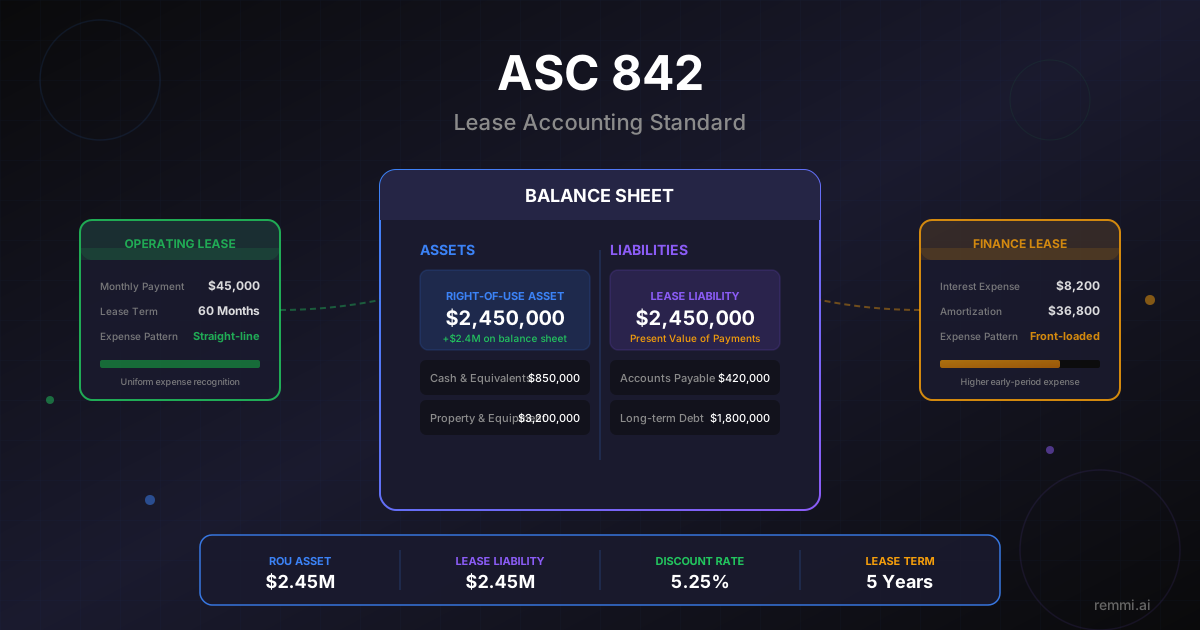
Understanding ASC 842: The Lease Accounting Revolution
ASC 842, issued by the Financial Accounting Standards Board (FASB), represents one of the most significant changes to accounting standards in decades. Before its implementation, operating leases were kept off the balance sheet, meaning trillions of dollars in lease obligations were not visible to investors and stakeholders reviewing financial statements.
The standard addresses this transparency issue by requiring lessees to recognize a right-of-use (ROU) asset representing their right to use the leased asset, and a corresponding lease liability representing their obligation to make lease payments. This applies to all leases with terms greater than 12 months, regardless of whether they are classified as operating or finance leases.
For lessors, ASC 842 largely maintains the previous accounting model from ASC 840, with some modifications to align with the new lessee model and the revenue recognition principles in ASC 606. However, the most dramatic impact has been on lessee accounting, where organizations have had to identify, catalog, and account for every significant lease in their portfolio.
The implementation of ASC 842 has required organizations to establish new processes for lease identification, data gathering, and ongoing compliance. Many companies have invested in lease accounting software to manage the complexity of tracking lease terms, calculating present values, and generating the required journal entries for each reporting period.
Key Components of ASC 842
Right-of-Use Asset
The ROU asset represents the lessee's right to use an underlying asset during the lease term. Initially measured at the lease liability amount plus initial direct costs and prepaid payments, less lease incentives received.
Lease Liability
The present value of remaining lease payments, discounted using the rate implicit in the lease or the lessee's incremental borrowing rate. Updated each period for payments made and interest accretion.
Lease Classification
Leases are classified as either finance leases or operating leases based on five criteria that assess whether the lease effectively transfers control of the underlying asset to the lessee.
Disclosure Requirements
Extensive qualitative and quantitative disclosures required, including lease cost components, maturity analysis of lease liabilities, and significant judgments made in applying the standard.
Why ASC 842 Matters
$3T+
Lease obligations brought onto balance sheets globally
85%
Of companies report impact on financial ratios
12+
Month threshold for balance sheet recognition
ASC 842 has fundamentally changed how organizations think about leasing decisions. With lease obligations now visible on the balance sheet, companies must consider the impact on debt covenants, financial ratios, and investor perception. The standard has driven organizations to centralize lease management, improve lease data quality, and implement more rigorous processes for lease decisions.
Key Requirements Under ASC 842
Identify All Leases
Review all contracts to identify embedded leases. A contract contains a lease if it conveys the right to control the use of an identified asset for a period of time in exchange for consideration.
Determine Lease Term
Calculate the non-cancellable period plus any renewal options reasonably certain to be exercised, minus any termination options reasonably certain to be exercised.
Calculate Lease Payments
Include fixed payments, variable payments based on an index or rate, purchase option amounts if reasonably certain, termination penalties if applicable, and residual value guarantees.
Determine Discount Rate
Use the rate implicit in the lease if determinable. Otherwise, use the lessee's incremental borrowing rate - the rate the lessee would pay to borrow a similar amount over a similar term.
Classify the Lease
Apply the five classification criteria to determine if the lease is a finance lease or operating lease. This affects how expenses are recognized over the lease term.
Record Initial Journal Entries
Recognize the ROU asset and lease liability at lease commencement. Adjust for initial direct costs, prepaid payments, and lease incentives received.
Maintain Ongoing Compliance
Record monthly/quarterly journal entries for amortization, interest, and lease payments. Reassess for modifications, impairments, and changes in lease term assessments.
Best Practices for ASC 842 Compliance
Centralize Lease Data
Maintain a comprehensive lease database with all critical terms, dates, and payment information. Avoid scattered spreadsheets that create compliance risk.
Automate Calculations
Use specialized software to calculate present values, generate amortization schedules, and produce journal entries. Manual calculations are error-prone and time-consuming.
Establish Modification Processes
Create workflows for identifying and processing lease modifications promptly. Delayed recognition of modifications creates audit issues.
Document Judgments
Thoroughly document significant judgments including lease term assessments, discount rate determinations, and classification decisions for audit support.
Integrate with Invoice Processing
Connect lease accounting with accounts payable to ensure rent payments automatically trigger the correct journal entries and update lease liability balances.
Common ASC 842 Compliance Mistakes
- 1.Missing embedded leases: Failing to identify leases embedded in service contracts, IT agreements, or equipment maintenance arrangements.
- 2.Incorrect lease term assessment: Not properly evaluating renewal and termination options, leading to understated or overstated lease liabilities.
- 3.Using inappropriate discount rates: Applying rates that do not reflect the lessee's specific credit profile and collateralized borrowing position.
- 4.Delayed modification accounting: Failing to timely remeasure leases when terms change, amendments are signed, or options are exercised.
Related Accounting Terms
ASC 606
Revenue recognition standard for contracts with customers
GAAP
Generally Accepted Accounting Principles in the United States
FASB
Financial Accounting Standards Board that issues US GAAP
IFRS 16
International lease accounting standard similar to ASC 842
Balance Sheet
Financial statement showing assets, liabilities, and equity
Amortization
Systematic allocation of costs over the useful life of an asset