Vendor Self-Service Portals: Reducing AP Workload While Improving Supplier Experience
Your AP team answers the same questions hundreds of times per month: "When will I get paid?" "Did you receive my invoice?" "What's my payment status?" A vendor self-service portal eliminates these repetitive inquiries while giving suppliers the transparency they need.
Ryan Shugars
Director of Product
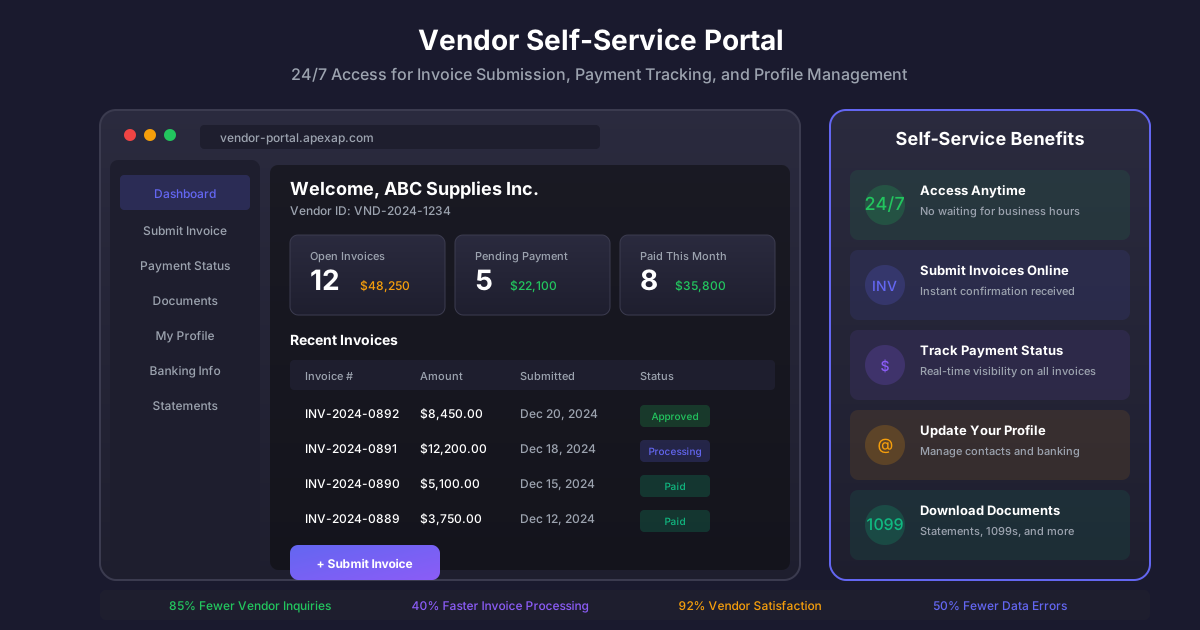
According to Ardent Partners, AP teams spend up to 35% of their time responding to vendor inquiries about invoice and payment status. For a team of five, that's nearly two full-time employees dedicated to answering questions that vendors could answer themselves. The solution is a vendor self-service portal that transforms how suppliers interact with your organization.
A well-designed vendor portal doesn't just reduce AP workload—it fundamentally improves supplier relationships. Vendors gain 24/7 visibility into their transactions, eliminating the frustration of waiting for callbacks or emails. Meanwhile, your AP team reclaims time to focus on strategic activities like early payment discount capture, cash flow optimization, and exception resolution.
The Hidden Cost of Manual Vendor Communication
Before implementing a vendor portal, it's essential to understand the true cost of manual vendor communication. Most organizations dramatically underestimate how much time and money they spend answering routine supplier inquiries.
The Cost of Manual Vendor Inquiries
Average vendor inquiries per month for mid-sized companies
Cost per vendor inquiry when handled manually
Average time to research and respond to payment status questions
Annual cost of manual vendor communication for enterprise AP teams
These inquiries come through multiple channels—phone, email, even fax in some industries— creating tracking and response time challenges. Each inquiry interrupts workflow, breaks concentration, and adds to the cognitive load of your AP staff. The cumulative effect is significant: reduced productivity, delayed processing, and frustrated vendors who feel ignored.
Essential Features of a Modern Vendor Portal
Not all vendor portals are created equal. The most effective portals go beyond basic status checking to provide a comprehensive self-service experience that addresses the full range of vendor needs.
1. Invoice Submission and Tracking
The cornerstone of any vendor portal is the ability for suppliers to submit invoices electronically. This eliminates the delays and errors associated with paper invoices or emailed PDFs that need manual processing.
Effective invoice submission features include:
- Multiple submission methods: Web upload, email capture, or EDI integration for high-volume vendors
- Real-time validation: Immediate feedback on missing fields or formatting errors
- PO matching: Automatic linkage to purchase orders with quantity and price validation
- Duplicate detection: Warning when an invoice number has already been submitted
- Submission confirmation: Instant receipt with tracking number
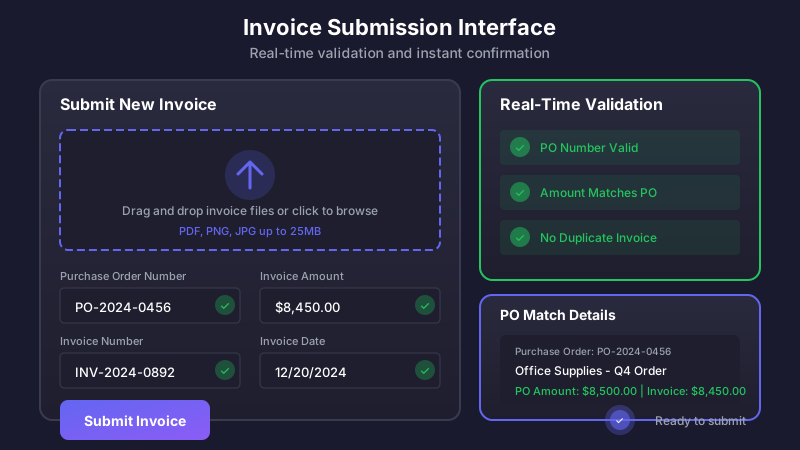
A modern invoice submission interface provides immediate validation and confirmation
2. Payment Status Visibility
The single most common vendor inquiry is "When will I get paid?" A robust payment tracking feature answers this question instantly, at any time, without requiring AP intervention.
Payment Status Information to Display
- Invoice receipt confirmation with date and time stamp
- Current processing stage (received, validated, approved, scheduled, paid)
- Expected payment date based on terms and approval status
- Actual payment date and method (ACH, check, wire)
- Remittance details including invoice breakdown
- Any holds or exceptions requiring vendor action
3. Profile and Banking Management
Vendors frequently need to update contact information, addresses, or banking details. Without a portal, each change requires phone calls, emails, and manual processing—all while maintaining security controls.
A self-service profile management feature should include:
- Contact updates: Primary and secondary contact changes with email verification
- Address management: Separate fields for remittance and business addresses
- Banking changes: Secure submission with mandatory verification workflow
- Tax document upload: W-9 and W-8 submission with TIN validation
- Certificate management: Insurance, minority certification, and compliance documents
4. Document Repository
A centralized document repository benefits both vendors and your organization. Vendors can access historical invoices, payments, and statements. Your team avoids time spent locating and resending documents.
- Invoice history: Complete searchable archive of all submitted invoices
- Payment history: Record of all payments with remittance details
- Statements: On-demand statement generation by period
- Tax documents: 1099s and other year-end tax forms
- Contracts and POs: Active purchase orders and agreement documents
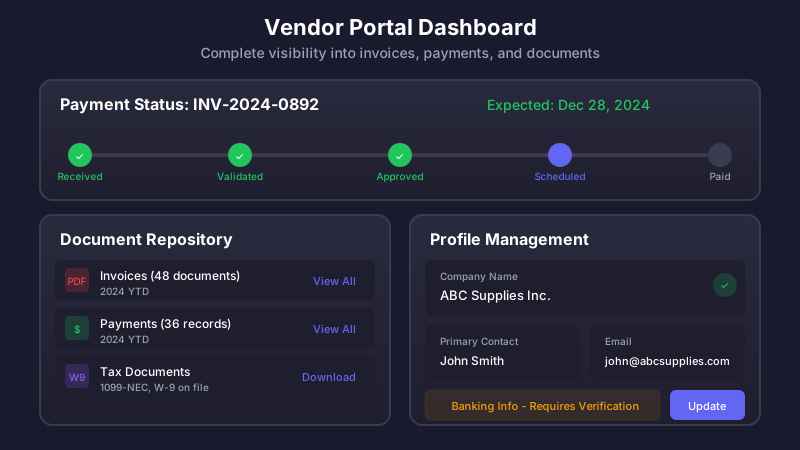
A comprehensive vendor dashboard provides visibility into all transactions and documents
Measuring the ROI of Vendor Self-Service
Organizations that implement vendor portals consistently report dramatic improvements in both efficiency and supplier satisfaction. The ROI comes from multiple sources:
Vendor Portal ROI Metrics
Inquiry Reduction
Decrease in vendor phone/email inquiries
Typical Result: 70-85% reduction
Processing Speed
Faster invoice-to-payment cycle time
Typical Result: 40% faster
Data Accuracy
Reduction in invoice errors and exceptions
Typical Result: 50% fewer exceptions
Vendor Satisfaction
Improvement in supplier satisfaction scores
Typical Result: 30-40% improvement
Implementation Best Practices
Successful vendor portal implementation requires thoughtful planning and change management. The technology is straightforward; the challenge is achieving vendor adoption and ensuring the portal truly reduces workload rather than creating a new channel to manage.
Start with High-Volume Vendors
Focus initial rollout on your highest-volume vendors—those who generate the most invoices and inquiries. These vendors have the strongest incentive to adopt self-service tools, and their adoption generates the largest efficiency gains.
Vendor Segmentation for Rollout
- Phase 1: Top 50 vendors by invoice volume (typically 60-70% of transactions)
- Phase 2: Next 200 vendors by volume (additional 20-25% of transactions)
- Phase 3: Remaining active vendors with open enrollment
- Ongoing: Mandatory portal enrollment for all new vendors
Drive Adoption Through Incentives
Some vendors will embrace self-service immediately; others need encouragement. Effective adoption strategies include:
- Faster payment for portal invoices: Prioritize processing for electronically submitted invoices
- Early payment programs: Offer dynamic discounting only through the portal
- Reduced payment cycles: Move portal vendors to faster payment terms
- Support availability: Provide portal training and dedicated onboarding assistance
- Communication preference: Sunset email-based inquiries in favor of portal messaging
Security and Compliance Considerations
Vendor portals handle sensitive financial information and must be designed with security as a primary consideration, not an afterthought.
Security Requirements
- Multi-factor authentication for all vendor accounts
- Role-based access control within vendor organizations
- Audit trail for all portal activities
- Encryption for data in transit and at rest
- Out-of-band verification for banking changes
- Automatic session timeout and IP restrictions
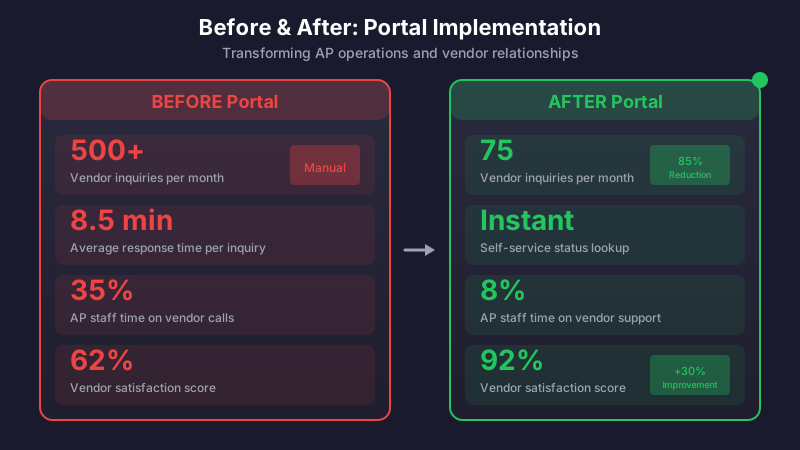
Portal implementation transforms AP operations while improving vendor relationships
Common Implementation Challenges
Understanding potential obstacles helps you plan for successful deployment:
- Vendor resistance: Some vendors prefer familiar processes. Address through clear communication of benefits and dedicated support.
- Integration complexity: The portal must sync with your ERP and AP system. Choose solutions with proven integrations.
- Change management: Your team needs training on new workflows. Include internal adoption in your implementation plan.
- Maintaining dual processes: Until full adoption, you'll run parallel processes. Set clear timelines for transitions.
- Data quality: Portal effectiveness depends on accurate data. Clean vendor master records before launch.
The Supplier Experience Advantage
While efficiency gains often drive portal implementation decisions, the supplier experience benefits are equally important—especially in competitive markets where vendor relationships directly impact pricing, priority, and service levels.
What Vendors Value Most
24/7 Status Visibility
No waiting for business hours or callbacks
92% satisfaction
Instant Invoice Confirmation
Proof of submission with tracking number
88% satisfaction
Self-Service Updates
Control over profile and contact information
85% satisfaction
Document Access
Historical invoices, payments, and statements on demand
81% satisfaction
Getting Started: Your Portal Roadmap
Implementing a vendor self-service portal is a significant initiative that delivers substantial returns. Here's a practical roadmap to get started:
Quick Wins (First 30 Days)
- Audit current vendor inquiry volume and types
- Identify top 50 vendors by transaction volume
- Document current invoice submission processes
- Review existing AP system portal capabilities
Strategic Implementation (60-90 Days)
- Select and configure portal solution
- Integrate with ERP and AP systems
- Develop vendor onboarding materials
- Pilot with 10-15 high-volume vendors
- Refine based on pilot feedback
Scale and Optimize (90+ Days)
- Expand to all active vendors
- Implement adoption incentive programs
- Add advanced features (dynamic discounting, supply chain financing)
- Track ROI metrics and optimize
- Mandate portal use for new vendors
The Bottom Line
Vendor self-service portals represent one of the highest-ROI investments in AP automation. They simultaneously reduce costs, improve efficiency, and strengthen supplier relationships— a rare combination of benefits from a single initiative.
The question isn't whether your organization will implement vendor self-service. It's whether you'll do it proactively to capture the benefits, or reactively after competitors have already raised supplier expectations. In an era where suppliers have choices, the organizations that make it easy to do business will attract the best partners.
Modern AP automation platforms include vendor portal capabilities as standard features, making implementation more accessible than ever. The technology is proven, the ROI is clear, and the time to act is now.
Ryan Shugars
Director of Product
Ryan has spent 15 years as a Systems Architect, building enterprise solutions that transform how organizations manage their financial operations.