Vendor Onboarding Best Practices: Streamline Your AP Process from Day One
The foundation of efficient accounts payable begins with how you onboard vendors. Poor vendor master data leads to payment errors, compliance risks, and frustrated suppliers. Here's how to build a vendor onboarding process that sets your AP team up for success.
Ryan Shugars
Director of Product
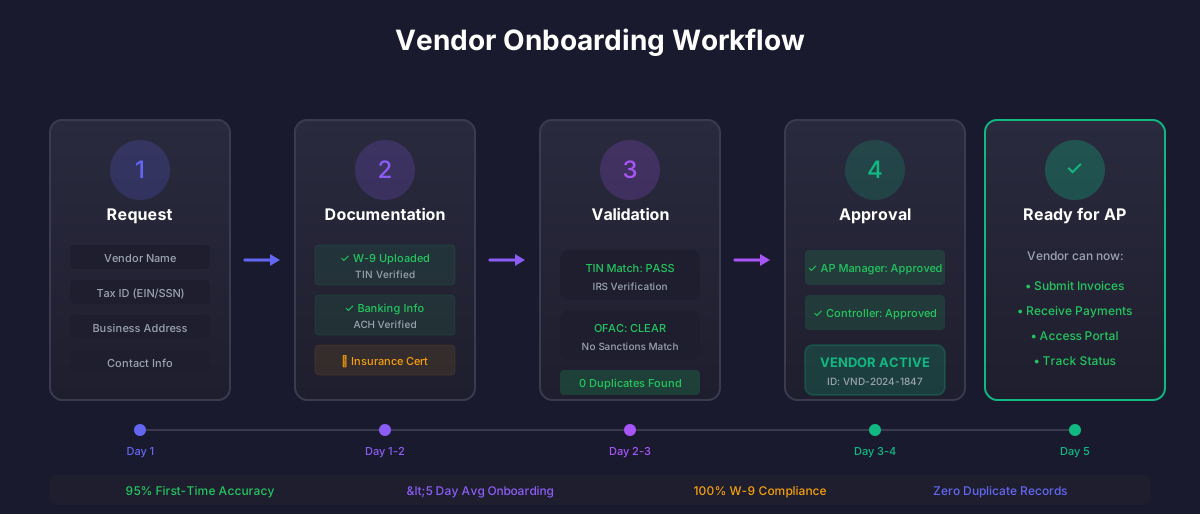
According to PayStream Advisors, organizations lose an average of 1-3% of invoice value due to vendor master data errors. For a company processing $50 million in annual payables, that translates to $500,000-$1.5 million in preventable losses. Yet most finance teams treat vendor onboarding as an afterthought—a clerical task rather than a strategic process.
The reality is that every invoice you process inherits the quality of your vendor master data. Incorrect bank details cause payment failures. Missing tax IDs trigger compliance headaches. Duplicate vendor records lead to overpayments and audit nightmares. The solution isn't to work harder on the back end—it's to build a bulletproof onboarding process from the start.
The True Cost of Poor Vendor Onboarding
Before diving into solutions, let's quantify what's at stake. Poor vendor onboarding creates a cascade of problems that affect every downstream process:
Impact of Vendor Master Data Errors
of duplicate payments stem from duplicate vendor records
average cost per vendor record correction
average delay for new vendor first payment
cost to research and correct a failed payment
Beyond direct costs, poor vendor data erodes supplier relationships. Vendors who experience payment delays or errors lose confidence in your organization. In competitive markets, this can affect pricing, payment terms, and priority allocation.
The Five Pillars of Effective Vendor Onboarding
World-class vendor onboarding rests on five foundational elements. Each must work in concert to create a seamless, error-free process.
1. Standardized Information Collection
The first pillar is gathering complete, accurate vendor information upfront. This means moving beyond spreadsheets and email attachments to a structured intake process that validates data as it's entered.
Essential vendor data includes:
- Legal business name exactly as it appears on tax documents
- Tax identification (EIN, SSN for sole proprietors, or foreign equivalent)
- Business address including remittance address if different
- Banking information for ACH/wire transfers
- Contact details for AP inquiries and escalations
- Payment terms and preferences
- Minority/diverse supplier certifications if applicable
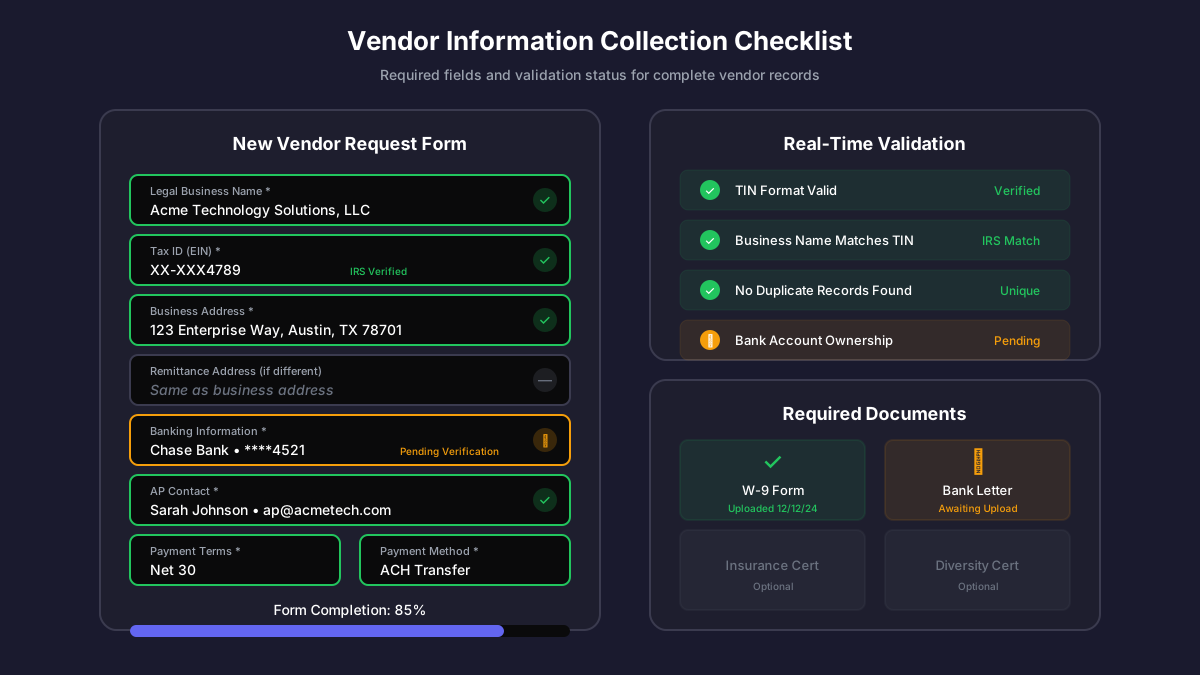
A standardized vendor intake form ensures consistent data collection across all new suppliers
2. Tax Compliance Documentation
W-9 collection isn't just a best practice—it's a legal requirement for U.S. vendors who will receive $600 or more in a calendar year. Yet many organizations struggle with incomplete or outdated W-9s, leading to backup withholding requirements and 1099 reporting issues.
W-9 Best Practices
- • Collect W-9s before the first payment, not after
- • Validate TIN matches using IRS TIN Matching program
- • Set expiration reminders for re-certification every 3 years
- • Store documents securely with audit trail
3. Bank Account Verification
Banking information is the most sensitive data in vendor onboarding—and the most common target for fraud. Business Email Compromise (BEC) attacks often exploit vendor onboarding or bank change processes to redirect payments.
Effective bank verification includes:
- Out-of-band verification: Call a known phone number (not one provided on the form) to confirm banking details
- Micro-deposit validation: Send small test amounts and ask vendor to confirm
- Prenote transactions: Submit zero-dollar ACH transactions to validate account
- Bank account ownership verification: Use services that confirm the account belongs to the named entity
4. Duplicate Detection and Prevention
Duplicate vendor records are a primary cause of overpayments. They occur when the same supplier is entered multiple times—often with slight variations in name, address, or other fields.
Effective duplicate prevention requires:
- Real-time fuzzy matching during vendor creation
- TIN-based duplicate blocking
- Address standardization and comparison
- Periodic vendor master data audits

AI-powered duplicate detection catches variations that manual review often misses
5. Approval Workflow and Audit Trail
Vendor creation should never be a single-person activity. Proper segregation of duties requires separate individuals for requesting, creating, and approving new vendors—and for any subsequent changes to banking or contact information.
Recommended Approval Matrix
New Vendor Request
Initial vendor creation
Requestor → AP Manager
Banking Changes
Any modification to payment details
Requestor → AP Manager → Controller
One-Time Vendor
Single-use vendor records
Requestor → Department Head
Building a Vendor Self-Service Portal
The most efficient vendor onboarding processes shift data entry responsibility to the vendors themselves. A self-service portal allows suppliers to enter their own information, upload documents, and maintain their records—while your team focuses on verification and approval.
Key portal capabilities include:
- Guided data entry with real-time validation
- Document upload for W-9, insurance certificates, and contracts
- Status visibility so vendors can track their onboarding progress
- Self-service updates for address or contact changes (banking changes still require verification)
- Invoice submission and payment status checking
Organizations with vendor portals report 40% faster onboarding and60% fewer data entry errors compared to manual intake processes.
Automating Vendor Onboarding with AI
Modern AP automation platforms bring intelligence to vendor onboarding that manual processes can't match. AI-powered systems can:
- Extract data from documents automatically, populating vendor records from W-9s, contracts, or email communications
- Validate information in real-time against external databases for TIN verification, OFAC screening, and business registration
- Detect anomalies like mismatched TINs and business names, or addresses that don't match registered locations
- Suggest matches when potential duplicates are detected
- Route for approval based on vendor type, spend category, or risk level
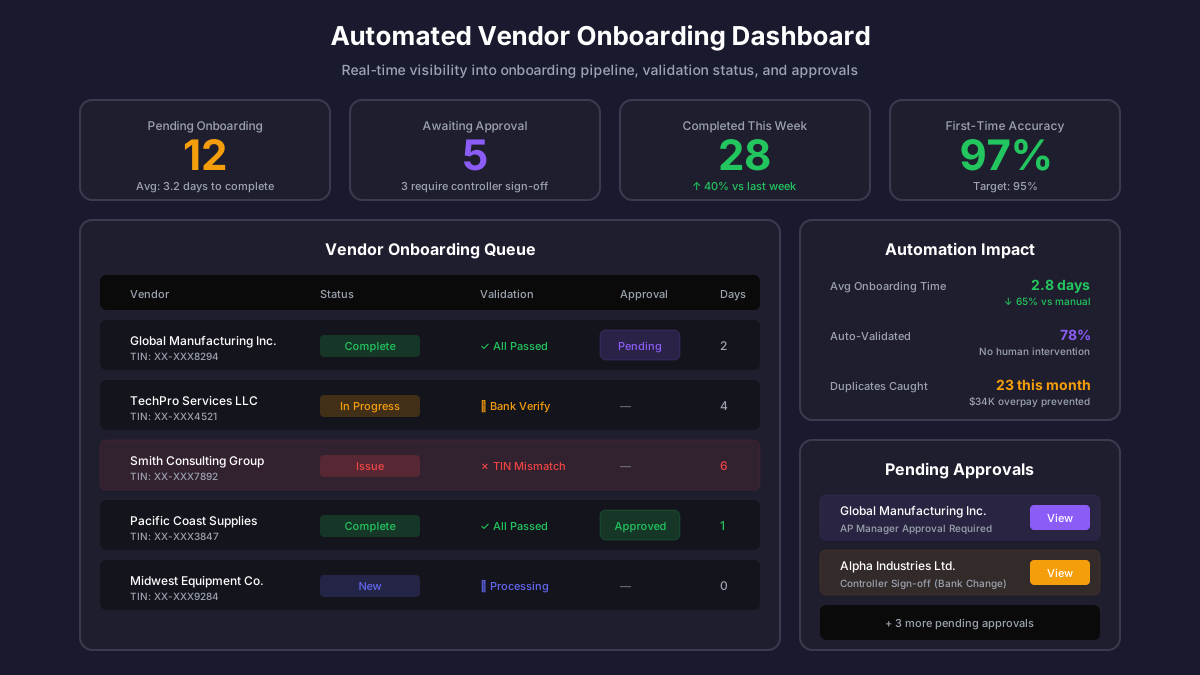
AI automation reduces vendor onboarding time from days to hours while improving data accuracy
Measuring Vendor Onboarding Success
What gets measured gets managed. Track these KPIs to continuously improve your vendor onboarding process:
Vendor Onboarding KPIs
Onboarding Cycle Time
Days from request to approved vendor
Target: < 5 business days
First-Time Accuracy Rate
% of vendor records requiring no corrections
Target: > 95%
Duplicate Rate
% of new vendors flagged as potential duplicates
Target: < 2%
W-9 Compliance
% of active vendors with valid W-9 on file
Target: 100%
Common Vendor Onboarding Mistakes to Avoid
Even well-intentioned AP teams fall into these common traps:
- Rushing onboarding for urgent purchases: Emergency vendor setup often bypasses controls, creating risk. Establish expedited processes that maintain verification.
- Accepting incomplete information: "We'll get the W-9 later" leads to compliance gaps. Require complete documentation before approval.
- Not verifying banking changes: Bank change requests are the #1 vector for payment fraud. Always verify through established channels.
- Ignoring inactive vendors: Dormant vendor records create audit issues and potential fraud vectors. Implement periodic reviews and inactivation policies.
- Treating all vendors the same: A $50/month subscription vendor doesn't need the same scrutiny as a $500,000 contract manufacturer. Risk-based onboarding improves efficiency.
Your Vendor Onboarding Action Plan
Transforming vendor onboarding doesn't happen overnight. Here's a practical roadmap to improve your process:
Quick Wins (Implement This Month)
- ✓ Create a standardized vendor request form
- ✓ Establish W-9 collection policy before first payment
- ✓ Implement out-of-band verification for banking information
- ✓ Audit existing vendor master for duplicates
Strategic Improvements (Next Quarter)
- ✓ Implement automated TIN verification
- ✓ Deploy vendor self-service portal
- ✓ Establish risk-based approval workflows
- ✓ Create KPI dashboard for onboarding metrics
The Bottom Line
Vendor onboarding is the foundation of efficient accounts payable. Every minute invested in building a robust onboarding process pays dividends through fewer payment errors, reduced fraud risk, better supplier relationships, and easier audits.
The choice isn't whether to improve vendor onboarding—it's whether to do it proactively or reactively after problems occur. Organizations that treat vendor management as a strategic capability consistently outperform those that view it as clerical overhead.
Modern AP automation platforms make world-class vendor onboarding accessible to organizations of all sizes. The technology exists—the question is whether you're ready to use it.
Ryan Shugars
Director of Product
Ryan has spent 15 years as a Systems Architect, building enterprise solutions that transform how organizations manage their financial operations.