Utility Invoice Processing: Automating Complex Multi-Site Energy Management
Organizations with multiple locations face a unique AP challenge: utility invoices that arrive in countless formats, from dozens of providers, with complex rate structures that require specialized knowledge to validate and allocate correctly.
Ryan Shugars
Director of Product

For organizations managing 50, 100, or even 1,000+ locations, utility invoice processing consumes an outsized share of AP resources. Each site generates monthly invoices for electricity, natural gas, water, sewer, and waste management—often from different providers with unique formats, billing cycles, and rate structures. Without automation, AP teams spend countless hours on manual data entry, validation, and allocation.
The complexity multiplies when you consider rate tariffs that change seasonally, demand charges that vary based on peak usage, and tiered pricing structures that require deep domain expertise to verify. Add in the challenge of allocating costs across departments, cost centers, and projects, and utility invoice processing becomes a significant operational burden that traditional AP automation often fails to address adequately.
The Unique Challenges of Utility Invoices
Utility invoices differ fundamentally from standard vendor invoices. Understanding these differences is essential for designing effective automation strategies.
Why Utility Invoices Are Different
Each utility has proprietary invoice formats with different data locations
Rates vary by time of use, demand peaks, and consumption tiers
Large facilities have multiple meters requiring individual tracking
Costs swing dramatically based on weather and seasonal rate changes
Format Fragmentation
Unlike standard vendor invoices that follow reasonably consistent patterns, utility invoices vary dramatically. Each utility company—and there are thousands across North America—designs its own invoice format. The location of key data points like account numbers, meter readings, rate codes, and total amounts differs from one provider to the next.
For multi-site organizations, this means dealing with dozens or hundreds of different invoice formats. Traditional OCR and template-based extraction struggle to handle this diversity, requiring extensive template development and ongoing maintenance as utilities update their formats.
Complex Rate Structures
Utility pricing goes far beyond simple per-unit rates. Most commercial customers face multi-component rate structures that include:
- Demand charges: Based on peak usage during billing period
- Time-of-use rates: Different prices for on-peak, off-peak, and shoulder periods
- Tiered consumption: Escalating rates as usage increases
- Fixed charges: Customer charges, meter fees, and minimum bills
- Riders and surcharges: Fuel adjustments, renewable energy fees, and regulatory charges
Validating that invoices correctly apply these rate structures requires understanding tariff schedules and comparing billed amounts against expected calculations based on actual consumption data.
The Hidden Cost of Billing Errors
Studies consistently find that 2-5% of utility invoices contain billing errors, with errors typically favoring the utility company. For an organization spending $10 million annually on utilities, this represents $200,000-$500,000 in potential overcharges. Without systematic validation, these errors go undetected and unpaid—year after year.
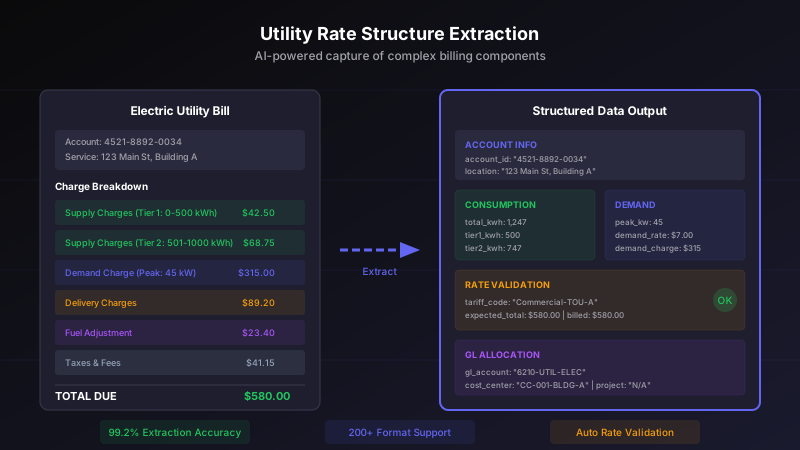
AI-powered extraction captures complex utility rate structures and validates against tariff schedules
Building an Automated Utility Invoice Workflow
Effective utility invoice automation requires specialized capabilities beyond standard AP automation. Here's a framework for building a comprehensive utility invoice processing workflow.
Step 1: Centralized Invoice Capture
The first challenge is simply collecting invoices from all locations and providers. Utilities deliver invoices through multiple channels—paper mail, email, online portals, and EDI. Establishing a centralized capture point ensures no invoices slip through the cracks.
Invoice Capture Methods
Utility Portal Scraping
Automated login and download from utility websites
60-70%
of invoices
Email Integration
Auto-processing of emailed PDFs and attachments
20-30%
of invoices
Paper Mail Scanning
Centralized mailroom digitization for paper bills
10-15%
of invoices
Step 2: Intelligent Data Extraction
Once invoices are captured, AI-powered extraction handles the format diversity challenge. Modern extraction engines learn to recognize utility invoice patterns and adapt to new formats without manual template configuration.
Key data points to extract from utility invoices include:
- Account identification: Account number, meter number, service address
- Billing details: Service period, billing date, due date
- Consumption data: kWh, therms, gallons, demand readings
- Rate information: Rate schedule, tariff codes
- Charges breakdown: Supply charges, delivery charges, taxes, fees
- Comparison data: Prior period usage, same month prior year
Step 3: Account Mapping and Cost Allocation
Utility accounts must be mapped to your organizational structure for proper cost allocation. This mapping connects utility account numbers to:
- Physical locations and addresses
- Cost centers and departments
- GL account codes
- Projects or property identifiers
- Budget categories
Multi-Tenant Allocation
For properties with multiple tenants or departments sharing utility services, automation can apply allocation rules based on square footage, headcount, sub-metered readings, or other allocation methodologies. This eliminates manual spreadsheet calculations and ensures consistent cost distribution across periods.
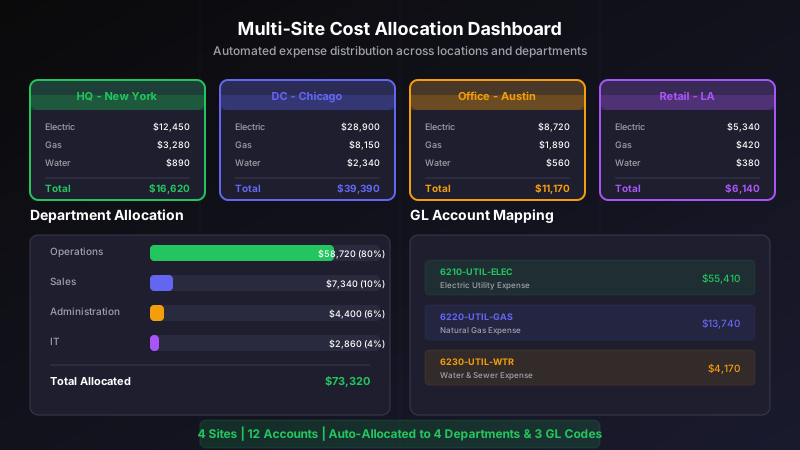
Automated cost allocation distributes utility expenses across locations, departments, and projects
Variance Analysis and Anomaly Detection
One of the most valuable capabilities of utility invoice automation is systematic variance analysis. By maintaining historical data for each account, the system can flag invoices that deviate from expected patterns.
Types of Variance Analysis
Variance Detection Methods
Month-over-Month
- Compare current vs. prior month
- Flag consumption spikes
- Detect rate changes
- Identify billing anomalies
Year-over-Year
- Seasonal comparison
- Weather normalization
- Trend identification
- Budget variance analysis
Rate Validation
- Tariff schedule matching
- Expected vs. billed rates
- Tax calculation verification
- Surcharge validation
Cross-Site Comparison
- Similar facility benchmarking
- Cost per square foot
- Energy intensity metrics
- Outlier identification
Exception-Based Processing
With variance thresholds configured, the system can auto-approve invoices that fall within expected ranges while routing exceptions for review. This dramatically reduces manual intervention while ensuring anomalies receive appropriate attention.
Common exception triggers include:
- Consumption exceeding historical average by configurable threshold
- Cost per unit outside expected range
- New account or meter not in master data
- Estimated reads versus actual reads
- Late fees or penalties on invoice
- Missing invoices (expected bills not received)
Utility Data Analytics and Reporting
Beyond processing efficiency, automated utility invoice handling creates a foundation for energy analytics and cost management. The structured data captured from invoices enables powerful reporting and analysis.
Analytics Capabilities
Cost Analysis
- - Total utility spend by category
- - Cost trends by location
- - Budget vs. actual reporting
- - Rate comparison across sites
Consumption Metrics
- - Usage patterns by facility
- - Energy intensity (kWh/sqft)
- - Demand profile analysis
- - Weather-normalized usage
Sustainability and ESG Reporting
With increasing focus on sustainability and ESG reporting, utility data becomes critical for calculating carbon footprints and tracking environmental metrics. Automated utility invoice processing provides the granular consumption data needed for accurate emissions calculations and sustainability reporting.
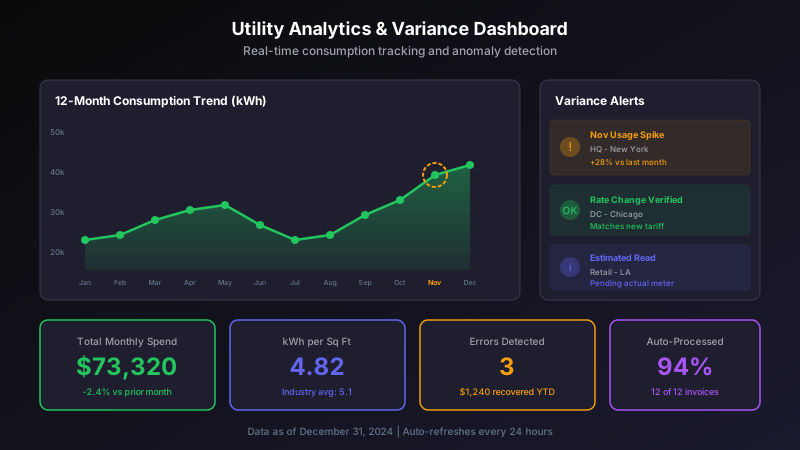
Comprehensive analytics transform utility data into actionable energy management insights
Implementation Best Practices
Organizations launching utility invoice automation should follow these proven practices for successful implementation.
Start with Data Quality
Begin by building a comprehensive utility account master. This database should include all utility accounts, service addresses, meter information, rate schedules, and organizational mappings. Clean, accurate master data is the foundation for successful automation.
Establish Variance Thresholds
Configure variance thresholds based on historical patterns and business risk tolerance. Start with wider thresholds to minimize false positives, then tighten as the system learns and teams become comfortable with exception handling.
Recommended Variance Thresholds
Month-over-Month Consumption
Flag invoices with usage changes exceeding threshold
+/- 25%
Year-over-Year Consumption
Compare same month in prior year (seasonal adjustment)
+/- 15%
Cost per Unit Variance
Flag rate changes that exceed expected tariff variations
+/- 10%
Plan for Utility Provider Communication
When variance analysis identifies potential billing errors, you'll need processes for disputing charges with utility providers. Document dispute procedures, track open disputes, and measure recovery rates to demonstrate program value.
Measuring Success
Track these metrics to evaluate the effectiveness of your utility invoice automation initiative:
Key Performance Indicators
Efficiency Metrics
- - Processing time per invoice
- - Touchless processing rate
- - Data extraction accuracy
- - Exception resolution time
Financial Metrics
- - Billing errors identified
- - Refunds recovered
- - Late fees avoided
- - Cost per invoice processed
The Bottom Line
Utility invoice processing represents one of the most complex and resource-intensive areas of accounts payable. The combination of format diversity, rate complexity, multi-site scale, and allocation requirements makes manual processing unsustainable for growing organizations.
Automation designed specifically for utility invoices addresses these challenges while delivering benefits beyond processing efficiency. Systematic variance analysis catches billing errors that manual review misses. Structured data enables energy analytics that support cost reduction and sustainability initiatives. Accurate allocation ensures utility costs are properly attributed across the organization.
For organizations spending significant amounts on utilities across multiple locations, purpose-built utility invoice automation pays for itself through error recovery alone—while freeing AP teams from one of their most tedious and time-consuming responsibilities.
Quick Win: Start with Exception Analysis
Even before full automation, running historical variance analysis on your utility data often uncovers immediate savings opportunities. Organizations regularly find billing errors, duplicate charges, and rate misapplications that have gone undetected for years. This analysis can fund your automation initiative while demonstrating the value of systematic utility bill management.
Ryan Shugars
Director of Product
Ryan has spent 15 years as a Systems Architect, building enterprise solutions that transform how organizations manage their financial operations.