Telecom Expense Management: Automating Complex Communications Invoice Processing
Telecommunications invoices present unique challenges for AP teams: cryptic line items, complex rate plans, thousands of individual devices, and multi-page bills that can run into the hundreds of pages. Without specialized automation, telecom spend becomes a black box of unvalidated charges.
Ryan Shugars
Director of Product

For organizations managing hundreds or thousands of mobile devices, landlines, and data circuits, telecommunications represents one of the largest and most complex expense categories. The average enterprise telecom invoice contains over 500 line items across voice, data, and equipment charges, making manual validation virtually impossible. Yet most organizations simply pay these invoices without scrutiny, leaving significant savings on the table.
Telecom Expense Management (TEM) automation addresses this gap by applying intelligent processing to communications invoices. From wireless plans to VoIP services to dedicated data circuits, automated TEM validates rates against contracts, identifies billing anomalies, allocates costs to departments, and ensures organizations only pay for services actually used and correctly billed.
The Unique Complexity of Telecom Invoices
Telecommunications billing differs fundamentally from other vendor invoices. Understanding these differences is critical for designing effective automation strategies.
Why Telecom Invoices Are Uniquely Challenging
Enterprise bills contain hundreds of charges across devices and services
Voice, data, SMS, international, roaming, equipment, and more
Pooled plans, unlimited tiers, usage-based, and hybrid structures
Industry studies find significant billing errors favor carriers
Multi-Service Complexity
A single telecom relationship typically spans multiple service categories, each with distinct billing structures. Wireless services bill per device with plan charges, overages, and add-on features. Landline services include local, long distance, and feature charges. Data circuits have committed rates and burst charges. Unified communications platforms combine voice, video, and messaging with per-seat licensing.
Each service type requires different validation logic. Wireless plans need device-level tracking and pool utilization analysis. Data circuits require bandwidth monitoring against committed levels. VoIP services demand per-minute rate validation for different call types and destinations.
Contract Rate Validation
Telecom contracts often run 50-100 pages with rate tables buried in exhibits and amendments. Contract rates typically include:
- Base service rates: Monthly recurring charges per line or device
- Usage rates: Per-minute, per-message, or per-megabyte charges
- Feature pricing: Add-on services like international calling or mobile hotspot
- Equipment charges: Device payments, leases, or purchase options
- Taxes and surcharges: Carrier-imposed fees that should align with contracted terms
Without automated contract rate validation, organizations cannot verify that invoiced rates match negotiated terms. Carriers regularly make billing system errors that result in overcharges, and manual invoice review cannot catch these discrepancies across hundreds of line items.
The Cost of Unvalidated Telecom Spend
Organizations typically find 7-12% savings opportunities when implementing TEM automation. For a company spending $1 million annually on telecom, this represents $70,000-$120,000 in recoverable overcharges and optimization opportunities. Most of these errors repeat month after month until discovered.
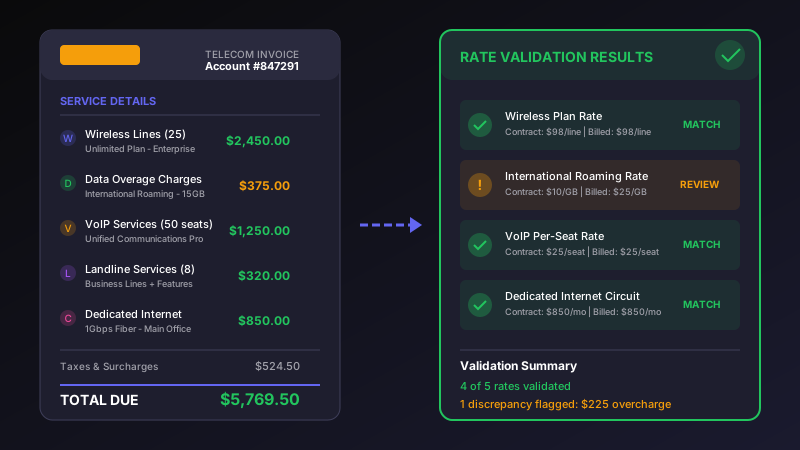
AI-powered extraction captures complex telecom billing structures and validates against contract rates
Building an Automated TEM Workflow
Effective telecom expense management requires specialized capabilities that go beyond standard AP automation. Here's a framework for building a comprehensive TEM workflow.
Step 1: Inventory and Asset Management
Before processing invoices, establish a complete inventory of telecom assets. This inventory serves as the foundation for validation and cost allocation.
Telecom Asset Categories
Mobile Devices
Smartphones, tablets, mobile hotspots, IoT devices
Per Device
tracking
Fixed Lines
Landlines, fax lines, alarm circuits, elevator phones
Per Circuit
tracking
Data Services
MPLS, dedicated internet, SD-WAN, cloud connectivity
Per Circuit
tracking
UCaaS Seats
Voice, video, messaging, contact center licenses
Per User
tracking
Step 2: Invoice Ingestion and Parsing
Telecom invoices arrive in various formats, from paper bills to electronic data files. Carriers often provide multiple invoice formats, including PDF summaries, detailed CSV exports, and EDI transmissions. Each format requires different parsing approaches.
Key data points to extract from telecom invoices include:
- Account identification: Account number, billing name, invoice number
- Service identifiers: Phone numbers, circuit IDs, user IDs
- Charge categories: Monthly recurring, usage, equipment, taxes, fees
- Usage details: Minutes, messages, data consumption by service
- Rate information: Plan names, rate codes, per-unit charges
- Period information: Service dates, billing cycle, proration adjustments
Step 3: Contract Rate Validation
With invoice data extracted and asset inventory established, automated validation compares billed rates against contracted terms. This validation operates at multiple levels:
Multi-Level Rate Validation
Plan-Level Validation
- - Monthly recurring vs. contract
- - Feature charges vs. negotiated
- - Equipment rates vs. agreement
- - Promotional pricing expiration
Usage-Level Validation
- - Per-minute rate verification
- - Data overage calculations
- - International rate validation
- - Roaming charge verification
Step 4: Usage Analysis and Optimization
Beyond validating that billed amounts are correct, TEM automation analyzes usage patterns to identify optimization opportunities. This includes:
- Zero-usage devices: Lines or devices with no activity that could be cancelled
- Plan optimization: Devices on expensive plans with minimal usage
- Pool utilization: Shared data pools that are over or under-provisioned
- Feature analysis: Unused features that could be removed
- Duplicate services: Overlapping services or redundant lines

Usage analysis identifies zero-use devices, plan mismatches, and optimization opportunities
Cost Allocation and Departmental Chargebacks
Telecom costs often need to be allocated across departments, cost centers, or projects. This allocation drives accountability and enables departments to manage their own communications expenses.
Allocation Methodologies
Cost Allocation Approaches
Device-Based Allocation
- Assign devices to cost centers
- Allocate charges per device
- Handle device transfers
- Prorate mid-cycle changes
Usage-Based Allocation
- Allocate by actual usage
- Split shared pool costs
- Track project-specific usage
- Bill clients for time/materials
Location-Based Allocation
- Allocate circuits to sites
- Split shared infrastructure
- Handle multi-site services
- Property-level reporting
Hybrid Allocation
- Combine methodologies
- Base + usage models
- Shared service allocation
- IT vs. business unit split
Chargeback Reporting
Effective chargeback systems provide department managers with visibility into their telecom spending. Self-service portals let managers view their allocated costs, drill into device-level details, and take action on optimization recommendations.
Dispute Management and Recovery
When rate validation or usage analysis identifies billing errors, automated dispute management streamlines the recovery process. This includes:
- Dispute documentation: Automatically generate dispute packages with supporting evidence
- Carrier submission: File disputes through carrier portals or via email
- Tracking and aging: Monitor open disputes and escalate as needed
- Credit verification: Confirm credits appear on subsequent invoices
- Recovery analytics: Track dispute success rates and recovered amounts
Dispute Recovery Rates
Organizations with systematic dispute processes typically recover 60-80% of identified billing errors. The key is timely filing within carrier dispute windows (typically 60-120 days) and thorough documentation that clearly demonstrates the billing discrepancy against contracted terms.
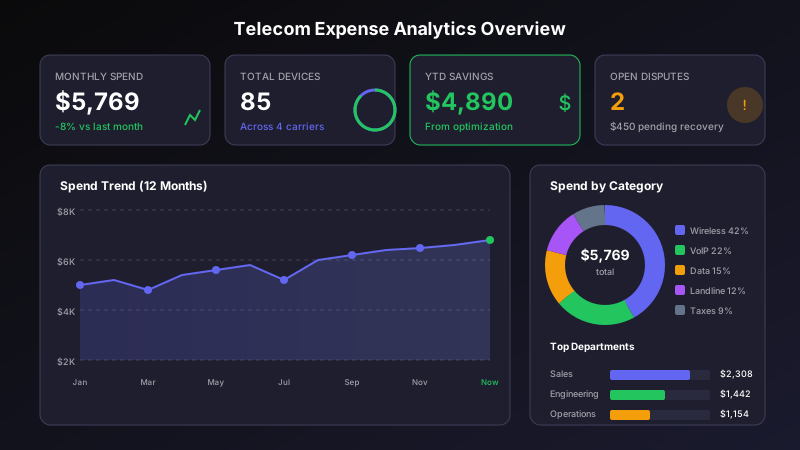
Comprehensive analytics provide visibility into telecom spending trends and savings opportunities
Wireless Device Lifecycle Management
Mobile device management intersects with TEM at multiple points. Effective integration between device lifecycle and expense management ensures billing aligns with actual device status.
Device Lifecycle Integration Points
Device Activation
Validate new devices appear on invoice with correct plan
Day 1
billing validation
Plan Changes
Confirm upgrade/downgrade reflected in next invoice
Mid-Cycle
proration check
Device Termination
Verify cancelled devices stop billing promptly
Final Bill
reconciliation
Contract Renewal
Track equipment payoff and upgrade eligibility
Term End
monitoring
Implementation Best Practices
Organizations launching TEM automation should follow these proven practices for successful implementation.
Start with a Baseline Audit
Before implementing ongoing automation, conduct a comprehensive audit of current telecom invoices against contracts. This baseline audit typically identifies immediate savings that can fund the automation initiative while establishing the accurate asset inventory needed for ongoing management.
Prioritize High-Value Carriers
Focus initial automation efforts on carriers representing the largest spend. For most organizations, 2-3 carriers represent 80% of telecom expense. Achieving automation and validation for these primary carriers delivers the majority of potential savings.
Key Performance Indicators
Invoice Processing Time
Time from receipt to validated and coded
<2 Days
Billing Error Detection Rate
Percentage of errors caught before payment
>95%
Cost Savings Realized
Recovered overcharges plus optimization savings
8-15%
The Bottom Line
Telecommunications represents a significant expense category that most organizations pay without adequate validation or optimization. The complexity of telecom billing, combined with the volume of line items and services, makes manual management impractical.
Automated TEM transforms telecom from a cost black box into a managed expense category. Rate validation ensures organizations pay contracted rates. Usage analysis identifies optimization opportunities. Cost allocation drives departmental accountability. Dispute management recovers billing errors that would otherwise go unnoticed.
For organizations spending significant amounts on telecommunications, purpose-built TEM automation typically pays for itself within the first quarter through recovered overcharges and identified savings, while freeing AP and IT teams from one of their most tedious and specialized invoice processing challenges.
Quick Win: Zero-Usage Analysis
Even before full TEM implementation, running a zero-usage report across your wireless inventory often uncovers immediate cancellation opportunities. Organizations typically find 5-10% of mobile devices show no usageover the past 90 days. These lines represent pure waste that can be cancelled immediately, generating savings that can fund broader TEM automation.
Ryan Shugars
Director of Product
Ryan has spent 15 years as a Systems Architect, building enterprise solutions that transform how organizations manage their financial operations.