Tax Compliance in Accounts Payable: Navigating Sales Tax, Use Tax, and 1099 Requirements
Tax compliance is one of the most complex—and consequential—responsibilities of the AP function. From calculating use tax on out-of-state purchases to managing W-9s and generating accurate 1099s, the stakes are high. Here's your comprehensive guide to getting it right.
Ryan Shugars
Director of Product
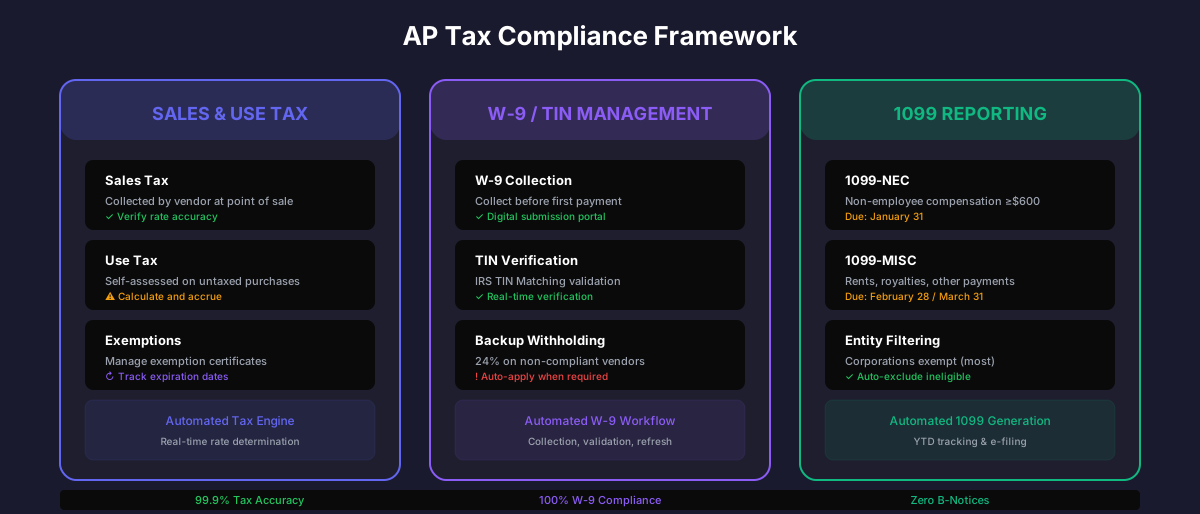
The IRS estimates that $688 billion in taxes goes unreported annually—and a significant portion of that gap involves business-to-business transactions. For AP teams, tax compliance isn't just about avoiding penalties; it's about protecting your organization from audit risk, ensuring accurate financial statements, and maintaining vendor relationships built on trust.
The challenge is that AP tax compliance spans multiple domains: sales and use tax on purchases, withholding requirements for certain vendor payments, and information reporting obligations like 1099s. Each area has its own rules, deadlines, and penalties for non-compliance.
Understanding Sales Tax vs. Use Tax
The distinction between sales tax and use tax is fundamental to AP compliance, yet it confuses many organizations:
Sales Tax vs. Use Tax
Collected by the seller at the point of sale
- • Vendor has nexus in your state
- • Appears as line item on invoice
- • Remitted by vendor to state
- • Your responsibility: Pay the invoice
Self-assessed by the buyer on untaxed purchases
- • Vendor has no nexus in your state
- • No tax on original invoice
- • You remit directly to state
- • Your responsibility: Calculate and pay
The critical point: when a vendor doesn't charge sales tax on a taxable purchase, you're still liable for use tax. Many organizations overlook this obligation, creating significant audit exposure.
Common Use Tax Scenarios
Use tax obligations typically arise in these situations:
- Out-of-state purchases: Buying from vendors without physical presence in your state
- Online marketplaces: Some marketplace sales still require self-assessment
- Direct imports: Goods shipped directly from foreign suppliers
- Interstate transfers: Moving inventory between your own locations
- Fixed asset acquisitions: Equipment purchases from non-nexus vendors
Audit Alert
State auditors specifically look for use tax exposure. A common audit technique is to review accounts payable ledgers for out-of-state vendors and calculate potential use tax due. Organizations can face 3-5 years of back taxes plus penalties and interest.
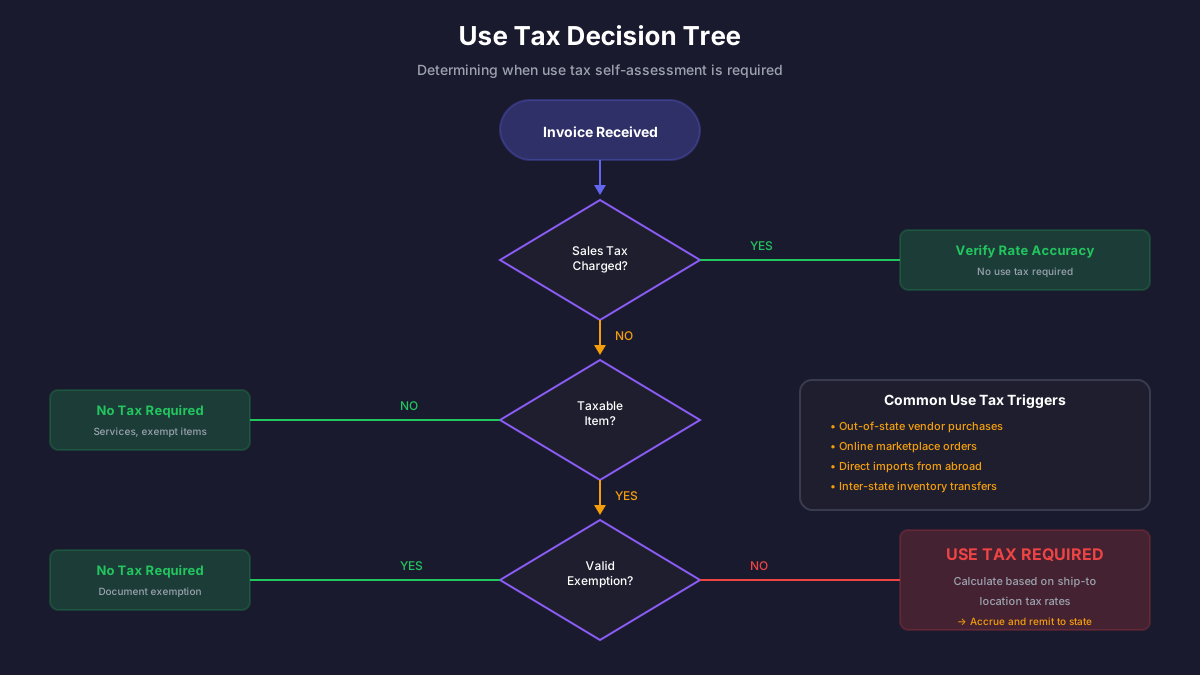
Use tax decision flow helps AP teams identify self-assessment obligations
Automating Tax Determination
Manual tax determination is error-prone and unsustainable. Modern AP automation platforms integrate with tax engines to automate these calculations:
- Taxability determination: Is this item/service taxable in this jurisdiction?
- Rate lookup: What's the combined rate for this ship-to address?
- Exemption handling: Does a valid exemption certificate apply?
- Use tax accrual: When no tax is charged, calculate and accrue use tax
- Reporting: Generate return-ready data by jurisdiction
Tax Automation ROI
Accuracy rate with automated tax engines
Reduction in tax-related audit findings
Time savings on tax compliance tasks
W-9 Management and TIN Verification
The W-9 form is the foundation of 1099 compliance. It captures the vendor's legal name, business type, address, and Taxpayer Identification Number (TIN). Without valid W-9 information, you risk:
- Incorrect 1099 reporting leading to IRS penalties
- Backup withholding requirements (currently 24%)
- Vendor payment delays while resolving discrepancies
- Audit exposure for information reporting failures
W-9 Best Practices
Effective W-9 management includes these elements:
- Collect before first payment: Never pay a new vendor without a valid W-9
- Validate TIN/Name combinations: Use IRS TIN Matching to verify accuracy
- Refresh periodically: Request updated W-9s every 3 years or when information changes
- Secure storage: W-9s contain sensitive data requiring appropriate protection
- Track certifications: Document the date received and any backup withholding status
TIN Matching Program
The IRS offers a free TIN Matching program that allows businesses to verify TIN/Name combinations before filing 1099s. This proactive verification can prevent B-Notices and reduce penalty exposure significantly.
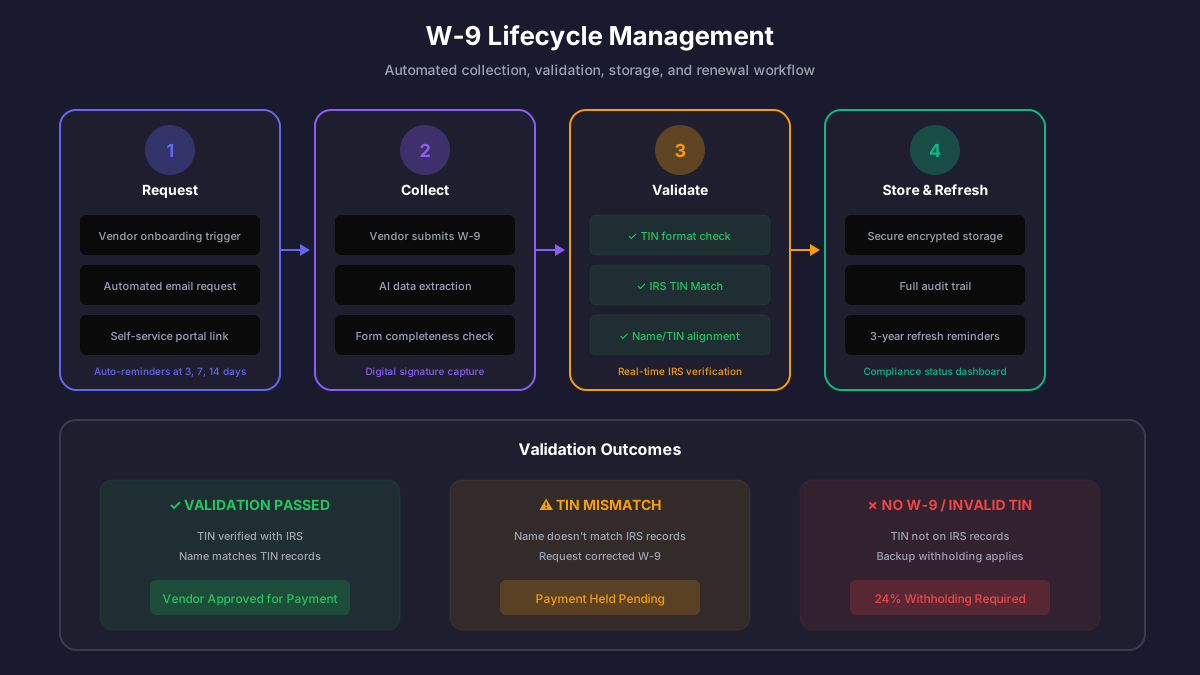
Automated W-9 lifecycle management ensures continuous compliance
1099 Reporting Requirements
The 1099 family of forms reports various types of payments made to non-employees. For AP teams, the most common forms are:
Common 1099 Forms for AP
1099-NEC
Non-employee compensation ≥ $600
1099-MISC
Rents, royalties, other payments ≥ $600
1099-K
Payment card/network transactions ≥ $600
1099-INT
Interest payments ≥ $10
Determining 1099 Reportability
Not all payments require 1099 reporting. Key factors include:
- Entity type: Corporations (C and S corps) are generally exempt, except for attorney fees and medical payments
- Payment type: Merchandise purchases are typically not reportable; services usually are
- Payment method: Credit card payments are reported by the card processor on 1099-K
- Threshold: Most 1099s have a $600 threshold ($10 for interest)
Building a Tax-Compliant AP Process
Tax compliance should be built into your AP workflow, not bolted on at year-end. Here's a framework for continuous compliance:
At Vendor Onboarding
- Collect W-9 before processing first payment
- Validate TIN/Name combination
- Determine entity type for 1099 reportability
- Collect exemption certificates if applicable
- Flag vendor as 1099-reportable in master data
At Invoice Processing
- Verify sales tax charged matches expected rate
- Identify untaxed purchases requiring use tax accrual
- Validate exemption certificate coverage
- Code purchases to appropriate GL accounts for reporting
At Payment
- Apply backup withholding if required
- Track payment method for 1099-K exclusions
- Accumulate YTD totals by vendor/payment type
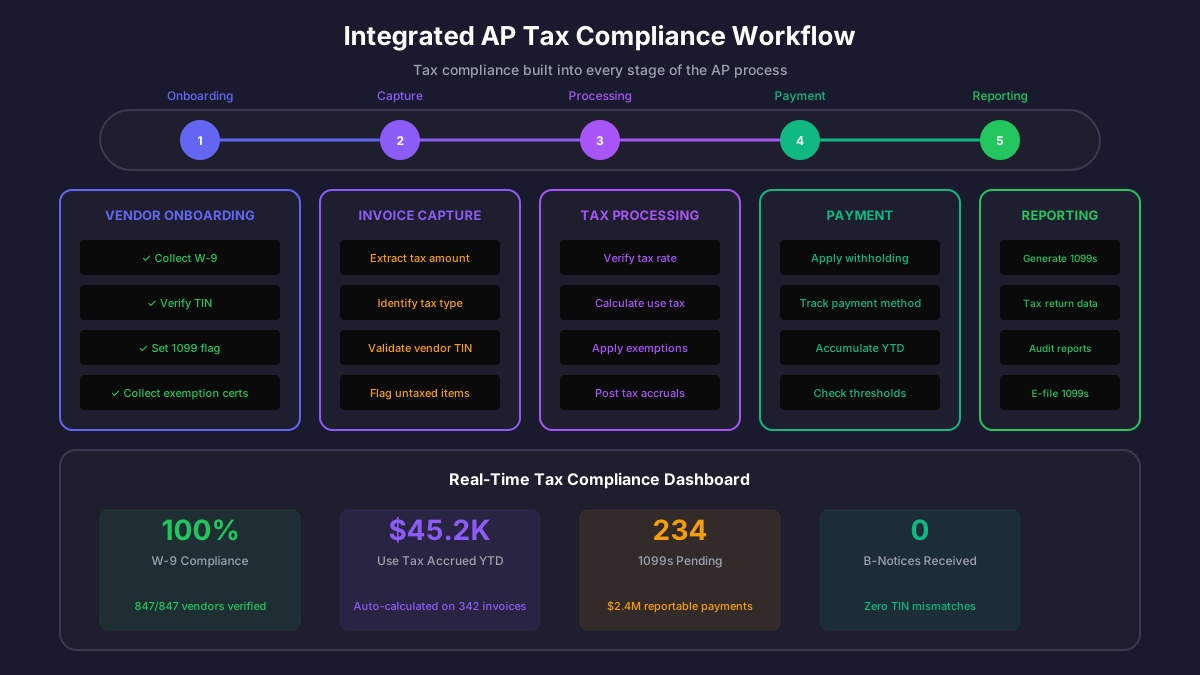
Integrated tax compliance throughout the AP lifecycle eliminates year-end scrambles
Penalties for Non-Compliance
The financial consequences of tax compliance failures can be severe:
Non-Compliance Penalties
- • $60/form if filed within 30 days late
- • $120/form if 30 days to Aug 1
- • $310/form if after Aug 1 or not filed
- • Maximum: $3.78M per year
- • Back taxes for audit period (3-5 years)
- • Interest on unpaid amounts
- • Penalties up to 25% of tax due
- • Potential fraud penalties if willful
- • 24% withholding on payments
- • Applies when TIN invalid/missing
- • Must remit to IRS quarterly
- • Penalties for failure to withhold
- • $630/form minimum penalty
- • No maximum cap
- • Potential criminal prosecution
- • Reputational damage
Technology Solutions for Tax Compliance
Modern AP platforms address tax compliance through integrated capabilities:
- Tax engine integration: Real-time taxability and rate determination
- Automated use tax accrual: Calculate and post use tax on untaxed purchases
- W-9 workflow: Collect, validate, store, and refresh vendor tax documentation
- TIN verification: Automatic IRS TIN Matching integration
- 1099 tracking: Continuous accumulation of reportable payments
- Exemption management: Track and apply sales tax exemption certificates
- Return-ready reporting: Generate data for tax return preparation
Compliance Confidence
Organizations using integrated AP tax compliance tools report 95% fewer B-Notices from the IRS and 80% reduction in audit adjustmentsrelated to use tax and information reporting.
Your Tax Compliance Action Plan
Improving AP tax compliance is an ongoing effort. Start with these priorities:
- Audit your vendor master: Identify vendors missing W-9s or with unverified TINs
- Review use tax exposure: Analyze out-of-state purchases for use tax obligations
- Implement TIN verification: Use IRS TIN Matching before issuing 1099s
- Automate tax determination: Integrate a tax engine for accurate calculations
- Build compliance into workflow: Address tax requirements at each stage of AP processing
Tax compliance may not be the most exciting aspect of accounts payable, but it's among the most consequential. Organizations that build robust, automated tax compliance processes protect themselves from significant financial and reputational risk while freeing their AP teams to focus on higher-value work.
Ryan Shugars
Director of Product
Ryan has spent 15 years as a Systems Architect, building enterprise solutions that transform how organizations manage their financial operations.