Supplier Relationship Management: How AP Impacts Vendor Partnerships
Your accounts payable practices directly shape how suppliers perceive your organization. Payment timing, communication quality, and dispute resolution all influence whether you're treated as a preferred customer or just another account. Here's how to leverage AP as a strategic tool for building stronger vendor partnerships.
Ryan Shugars
Director of Product
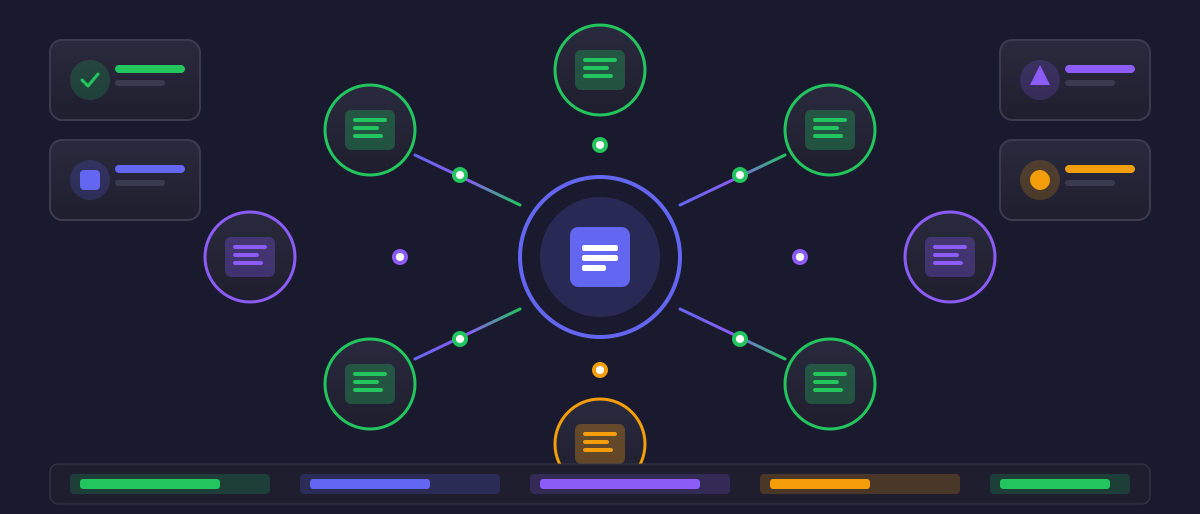
According to a study by Hackett Group, companies with best-in-class supplier relationship management programs achieve 26% lower procurement costs and 33% faster time-to-market compared to their peers. Yet many organizations overlook the critical role their accounts payable department plays in building—or eroding—these valuable vendor partnerships.
The reality is stark: your AP practices speak louder than any procurement policy or vendor conference attendance. Suppliers evaluate you based on whether payments arrive on time, how quickly disputes get resolved, and whether your team communicates proactively about issues. Organizations that master these fundamentals unlock preferential treatment that translates directly to competitive advantage.
The Business Case for Strong Supplier Relationships
Before diving into tactics, let's establish why supplier relationships deserve strategic attention. The benefits extend far beyond warm feelings and handshake deals:
Value of Preferred Customer Status
Better pricing through early payment discounts and negotiated terms
First access to new products, capacity allocation during shortages
Better terms during cash flow constraints, emergency order fulfillment
Collaborative product development, shared R&D investments
During the supply chain disruptions of recent years, companies with strong supplier relationships fared dramatically better than those treating vendors as interchangeable commodities. When capacity was limited, preferred customers received allocation while others scrambled. This lesson demonstrated that supplier relationships are a form of business resilience insurance.
How AP Practices Shape Supplier Perception
Your accounts payable department is the primary touchpoint for most supplier interactions after the initial sale. Every invoice, every payment, every inquiry creates an impression that accumulates over time. Understanding these touchpoints is the first step toward optimization.
Payment Timeliness: The Foundation of Trust
Nothing erodes supplier confidence faster than chronic late payments. According to the Institute of Finance and Management, 47% of suppliers consider payment timeliness the most important factor in vendor relationship satisfaction. Late payments signal financial instability, disorganization, or—worst of all—intentional cash flow manipulation at their expense.
The impact extends beyond the individual relationship. Suppliers talk to each other, especially within industries. A reputation for late payment spreads quickly, affecting your ability to onboard new vendors or negotiate favorable terms.
Payment Timing Impact
- • Early payment (10-15 days): Captures discounts, builds goodwill, preferred allocation
- • On-time payment (net terms): Maintains relationship, meets expectations
- • Late payment (1-15 days): Triggers concerns, may affect future terms
- • Chronic late (>15 days): Damages relationship, potential service restrictions
Communication Quality and Responsiveness
Beyond payment timing, how your AP team communicates during the invoice lifecycle significantly impacts supplier satisfaction. Vendors need visibility into payment status and prompt responses to inquiries. Silence breeds anxiety, especially for smaller suppliers who depend on predictable cash flow.
Key communication touchpoints include:
- Invoice receipt confirmation: Acknowledging invoices have been received and are in process
- Discrepancy notification: Proactively alerting vendors to issues rather than silently delaying payment
- Payment remittance details: Providing clear information about what's being paid and why
- Inquiry response time: How quickly your team responds to vendor questions
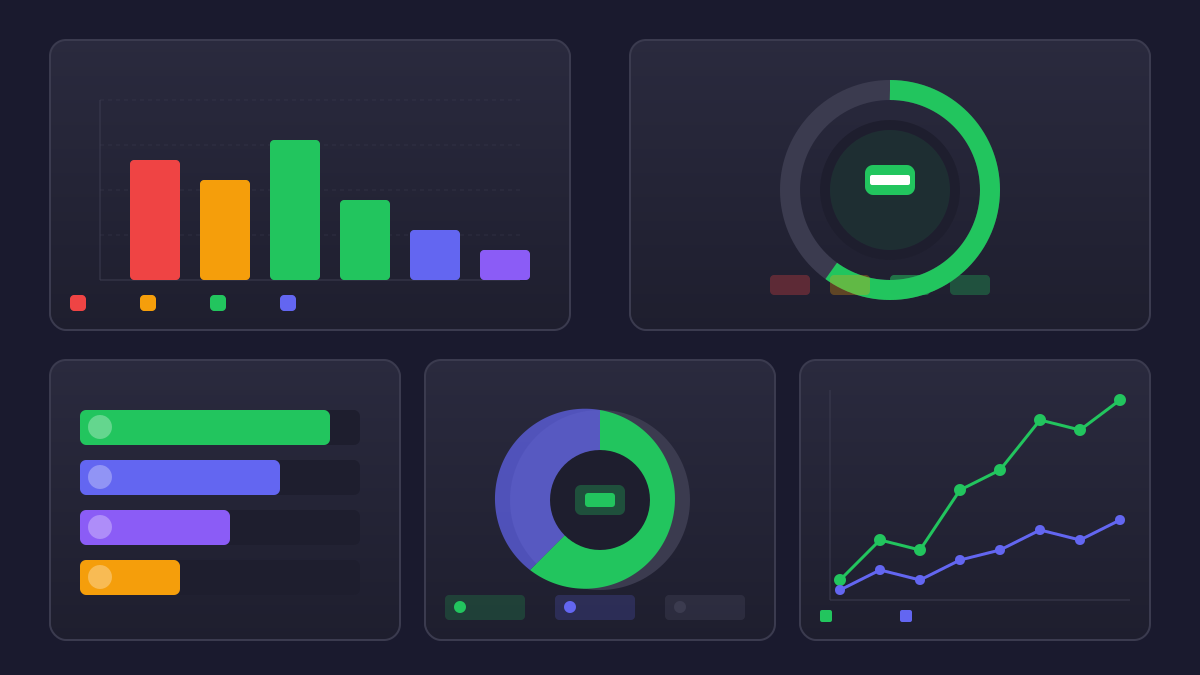
Key metrics that reveal the health of your supplier relationships and AP performance
Dispute Resolution Efficiency
Disputes are inevitable in any supplier relationship. What matters is how efficiently and fairly they're resolved. Organizations that let disputes linger for weeks or months create frustration that poisons the broader relationship. Conversely, teams that address issues promptly and collaboratively strengthen vendor trust.
Common dispute categories and resolution strategies:
- Quantity discrepancies: Verify receiving records, communicate findings within 48 hours
- Price variances: Reference purchase order terms, escalate to procurement for contract clarification
- Quality issues: Coordinate with receiving/quality teams, provide documentation for returns
- Duplicate invoices: Identify root cause, implement controls to prevent recurrence
Building a Supplier-Centric AP Operation
Transforming AP from a back-office function to a strategic supplier relationship enabler requires intentional design. Here are the key elements of a supplier-centric approach:
Tiered Supplier Management
Not all suppliers warrant the same level of attention. A tiered approach allows you to allocate resources appropriately while ensuring strategic partners receive priority treatment.
Supplier Tier Framework
Strategic Partners (Tier 1)
Critical suppliers, high spend, long-term relationships
Priority processing, dedicated contact
Preferred Vendors (Tier 2)
Important suppliers, moderate spend, reliable performance
Standard SLAs, regular reviews
Standard Suppliers (Tier 3)
Transactional relationships, commodity purchases
Automated processing, self-service
Proactive Communication Programs
Rather than waiting for suppliers to inquire about payment status, leading AP organizations push information proactively. This reduces inbound inquiries while demonstrating respect for vendor time and concerns.
Effective proactive communication includes:
- Automated payment notifications: Email confirmations when payments are initiated
- Self-service portals: Allow vendors to check invoice and payment status anytime
- Exception alerts: Notify vendors immediately when issues are identified
- Payment forecast sharing: For strategic suppliers, share upcoming payment schedules
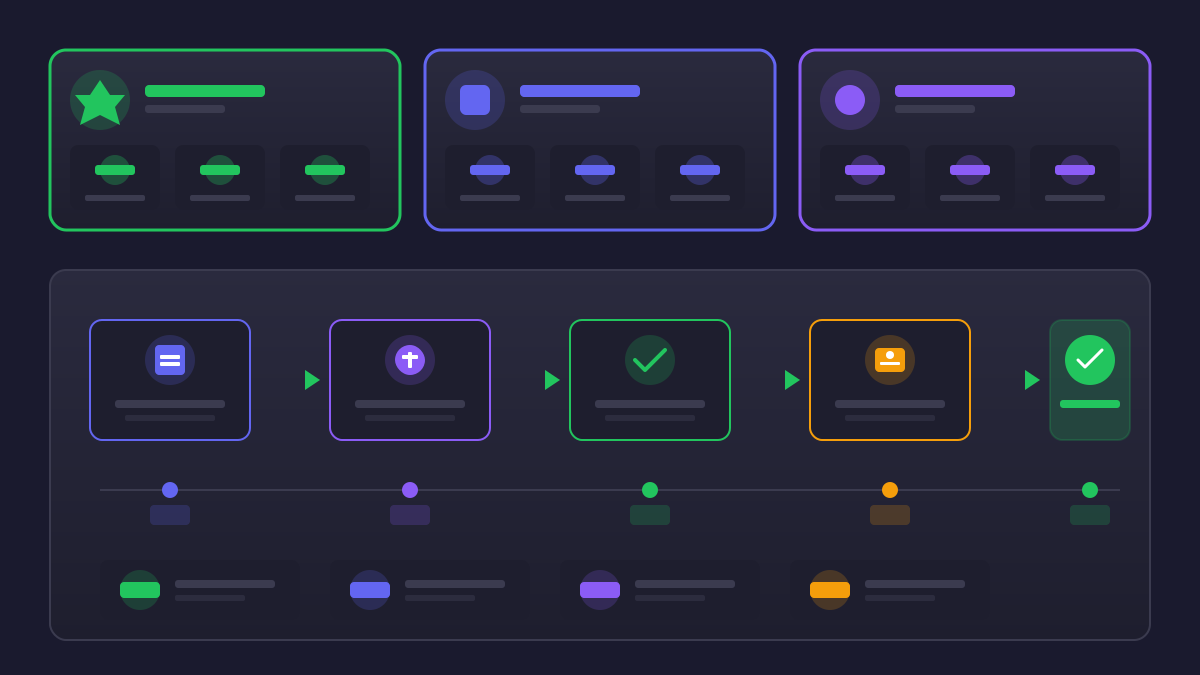
A structured vendor tiering system ensures strategic suppliers receive appropriate priority
Early Payment Programs
Early payment programs create a win-win: suppliers receive faster payment in exchange for discounts, while buyers improve working capital returns. These programs also demonstrate commitment to supplier success, strengthening relationships.
Common early payment approaches include:
- Static discounts: Fixed discount for payment within specified window (2/10 net 30)
- Dynamic discounting: Sliding scale based on how early payment is made
- Supply chain financing: Third-party funding enables early payment without impacting buyer cash
- Virtual cards: Immediate settlement with rebate benefits
Early Payment ROI Example
Consider a 2% discount for payment in 10 days versus net 30:
- • 2% discount for 20 days early = 36.5% annualized return
- • Far exceeds typical investment returns on excess cash
- • Builds goodwill and preferred customer status simultaneously
Measuring Supplier Relationship Health
What gets measured gets managed. Tracking supplier relationship metrics helps identify problems early and demonstrate improvement over time.
Key Performance Indicators
Supplier Relationship Metrics
On-Time Payment Rate
Percentage of invoices paid within terms
Target: > 95%
Discount Capture Rate
Percentage of available discounts captured
Target: > 80%
Query Response Time
Average time to respond to vendor inquiries
Target: < 24 hours
Dispute Resolution Cycle
Average days to resolve invoice disputes
Target: < 5 days
Supplier Satisfaction Surveys
Beyond internal metrics, directly surveying suppliers provides invaluable feedback. Annual or semi-annual surveys for strategic vendors reveal blind spots and improvement opportunities that internal metrics might miss.
Effective survey questions include:
- How would you rate our payment timeliness compared to other customers?
- When issues arise, how effectively do we communicate and resolve them?
- What one change would most improve our business relationship?
- Would you recommend doing business with our organization to other suppliers?
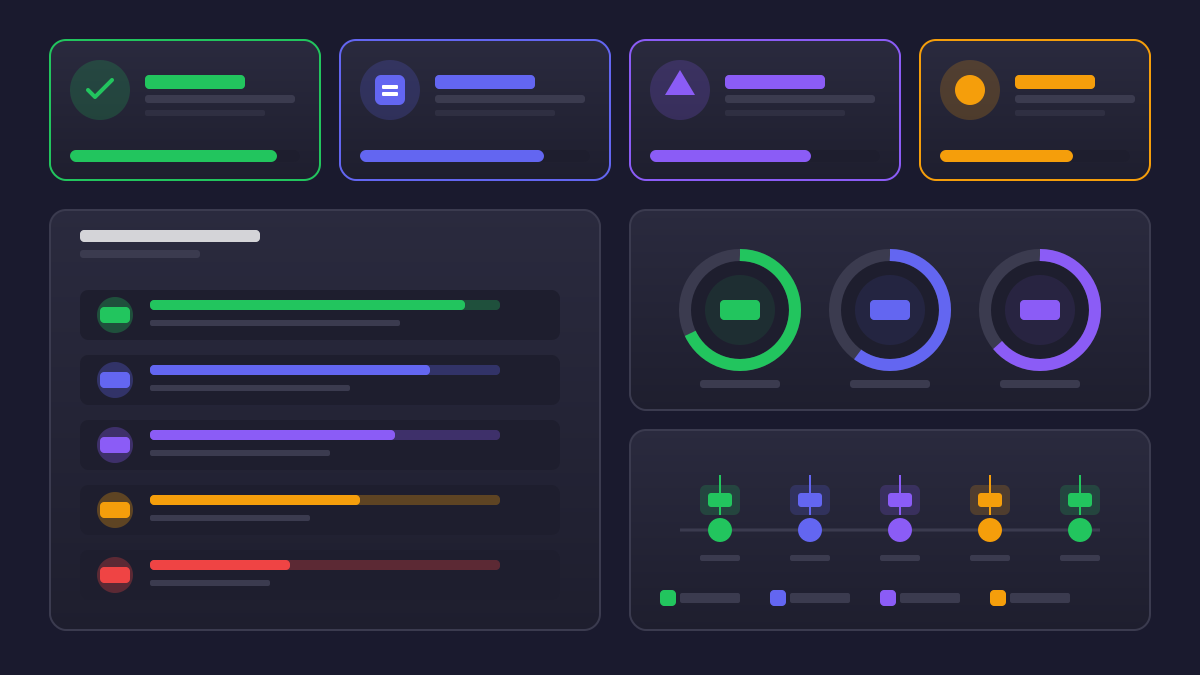
A comprehensive vendor relationship dashboard provides visibility into the health of key partnerships
Technology as an Enabler
Modern AP automation platforms transform supplier relationship management from aspiration to execution. Manual processes simply cannot deliver the consistency, speed, and visibility that strong supplier relationships require.
Key technology capabilities for supplier relationship excellence:
- Automated invoice processing: Faster processing means faster payment, reducing DSO for suppliers
- Vendor portals: Self-service access to invoice and payment status eliminates inquiry friction
- Dynamic discounting: Automated early payment programs that scale across the supplier base
- Exception management: AI-powered routing and resolution accelerates dispute handling
- Payment optimization: Intelligent scheduling maximizes discount capture while managing cash
How Remmi Strengthens Supplier Relationships
- • Faster processing: AI-powered invoice capture reduces processing time by 80%
- • Consistent payments: Automated workflows ensure invoices don't fall through cracks
- • Proactive communication: Automatic notifications keep vendors informed
- • Early payment optimization: Capture every available discount automatically
- • Rapid dispute resolution: AI-assisted matching catches issues before they become problems
Common Supplier Relationship Mistakes
Even well-intentioned organizations fall into patterns that damage supplier relationships. Awareness of these pitfalls helps avoid them:
Relationship-Damaging Practices
Extending payment terms unilaterally
Announcing extended terms without negotiation breeds resentment and signals disrespect
Treating AP as a profit center
Intentionally delaying payments to float cash comes at the cost of supplier trust
Ignoring small supplier concerns
Small suppliers often become critical; relationships built when they're small pay dividends later
Siloing AP from strategic supplier discussions
Procurement negotiates relationships; AP executes them. Coordination is essential.
Your Supplier Relationship Action Plan
Improving supplier relationships through AP doesn't require massive transformation. Start with high-impact improvements and build from there:
Quick Wins (Implement This Month)
- Audit on-time payment rates for top 20 suppliers
- Implement payment confirmation notifications
- Establish response time SLAs for vendor inquiries
- Create escalation path for strategic supplier issues
Strategic Improvements (Next Quarter)
- Implement vendor self-service portal
- Launch early payment discount program
- Conduct supplier satisfaction survey
- Establish tiered service levels by supplier category
The Bottom Line
Supplier relationships are business assets that appreciate with consistent investment and depreciate with neglect. Your accounts payable practices are the primary expression of your commitment to these relationships—far more than any vendor appreciation event or partnership award ceremony.
The organizations that recognize AP as a strategic function—investing in automation, establishing supplier-centric processes, and measuring relationship health—gain advantages that extend far beyond cost savings. They earn preferred customer status that translates to priority allocation, innovation access, and flexibility when it matters most.
In an era of supply chain volatility and increasing competition for quality suppliers, the question isn't whether you can afford to invest in supplier relationships through better AP practices. The question is whether you can afford not to.
Ryan Shugars
Director of Product
Ryan has spent 15 years as a Systems Architect, building enterprise solutions that transform how organizations manage their financial operations.