Supplier Risk Assessment: Integrating Due Diligence into Vendor Onboarding
Every new vendor relationship carries inherent risk. From financial instability to compliance failures, the suppliers you onboard can become your greatest vulnerabilities. Here is how to build comprehensive risk assessment into your vendor onboarding process.
Ryan Shugars
Director of Product
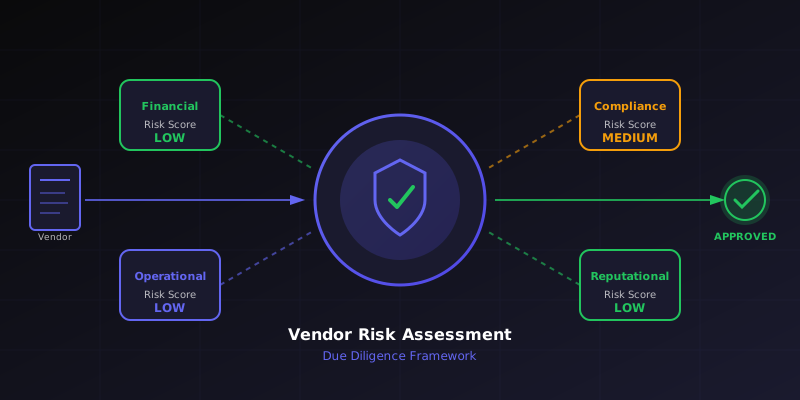
In 2023, supply chain disruptions cost organizations an average of $82 million annually, with many of these disruptions traceable to inadequate vendor vetting during onboarding. Yet most organizations still rely on basic verification processes that check whether a vendor exists rather than whether they pose material risk to operations.
The consequences of insufficient vendor due diligence extend far beyond operational disruption. Organizations face regulatory penalties when vendors violate compliance requirements, financial losses when suppliers default, and reputational damage when vendor misconduct becomes public. In regulated industries, vendor failures can trigger enforcement actions that affect the entire organization.
A comprehensive supplier risk assessment program transforms vendor onboarding from a bureaucratic checkbox exercise into a strategic control that protects your organization before problems materialize. By evaluating financial stability, compliance status, operational capability, and security posture during onboarding, you can make informed decisions about which vendors to engage and under what terms.
The Four Pillars of Vendor Risk Assessment
Effective vendor risk assessment evaluates suppliers across multiple dimensions. Each dimension captures different risk factors that can affect your organization in distinct ways. Understanding these pillars helps you design assessment processes that comprehensively evaluate vendor risk.
Financial Risk
Evaluates the vendor's financial health and stability. Includes credit scores, payment history, bankruptcy filings, liens, and Dun & Bradstreet ratings. A financially unstable vendor may fail to deliver, go out of business mid-contract, or become a fraud risk as financial pressures mount.
Compliance Risk
Assesses regulatory standing and certification status. Includes industry certifications, regulatory actions, sanctions screening, and required insurance coverage. Non-compliant vendors can expose your organization to regulatory liability and create audit findings.
Operational Risk
Measures delivery capability and business continuity. Includes capacity assessment, geographic concentration, single points of failure, and disaster recovery capabilities. Operationally weak vendors create supply chain vulnerabilities that can halt your business.
Security and Reputational Risk
Evaluates cybersecurity practices and public perception. Includes data protection measures, breach history, news sentiment, and litigation history. Vendors with weak security or poor reputations can become attack vectors and damage your brand by association.
Each risk pillar contributes to an overall vendor risk score that guides onboarding decisions. Low-risk vendors can be approved quickly with standard terms. Medium-risk vendors may require additional due diligence or modified contract terms. High-risk vendors should trigger executive review or automatic decline.
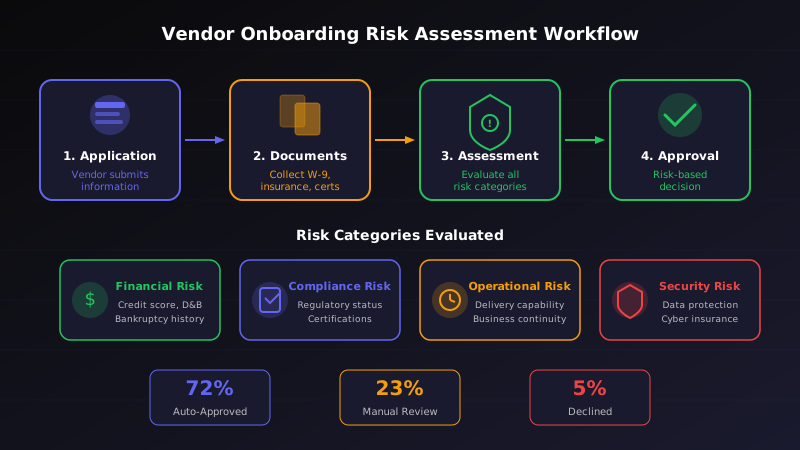
A structured risk assessment workflow evaluates vendors across multiple dimensions before approval
Building the Risk Assessment Process
Effective vendor risk assessment requires a structured process that balances thoroughness with efficiency. The goal is comprehensive evaluation without creating onboarding bottlenecks that frustrate stakeholders and delay needed vendor relationships.
Information Collection
The foundation of risk assessment is comprehensive information collection. Modern vendor portals automate this process by guiding vendors through required submissions while validating data quality in real time.
Essential Documentation:
- W-9 or equivalent tax identification with TIN verification
- Certificate of insurance with your organization named as additional insured
- Bank account information with micro-deposit verification
- Business registration and licensing documentation
- Industry-specific certifications and qualifications
- References from similar customers in your industry
Automated Screening
Manual verification of vendor information is time-consuming and error-prone. Automated screening tools can verify tax IDs, check sanctions lists, retrieve credit reports, and validate insurance coverage in seconds rather than days.
Automated Verification Points:
- IRS TIN matching to confirm tax identification accuracy
- OFAC and other sanctions list screening
- D&B or Experian business credit report retrieval
- State business registration verification
- Professional license validation where applicable
- Insurance certificate authenticity verification
Risk Scoring and Tiering
Collecting information is only valuable if it drives decisions. Risk scoring algorithms weight various factors to produce an overall risk score that determines vendor tier classification and required approval levels.
Risk-Based Vendor Tiering
Tier 1
Low Risk (70-100)
Auto-approval with standard terms, annual review cycle
Tier 2
Medium Risk (40-69)
Manager approval required, enhanced monitoring, quarterly review
Tier 3
High Risk (0-39)
Executive approval, contract modifications, continuous monitoring
Financial Due Diligence
Financial risk assessment predicts whether a vendor can fulfill their obligations throughout the contract term. A vendor that appears healthy today may be heading toward distress that will affect their ability to deliver.
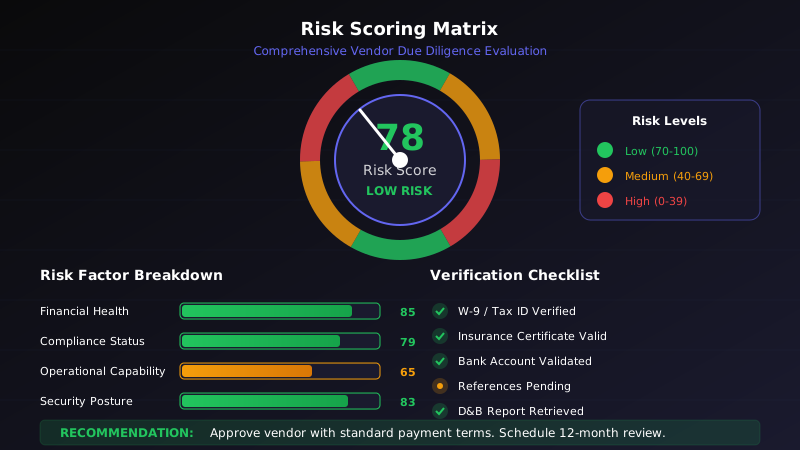
A comprehensive risk scoring matrix evaluates vendors across multiple dimensions
Credit and Payment History
Business credit reports from Dun & Bradstreet, Experian, or Equifax provide standardized scores that predict payment behavior and financial stability. A D&B PAYDEX score below 50 indicates the vendor pays bills more than 30 days past due, signaling potential cash flow problems.
Financial Health Indicators:
- D&B PAYDEX score of 80+ indicates excellent payment history
- Years in business correlates with stability and track record
- Revenue trends show growth trajectory or decline
- Debt levels and financing arrangements affect flexibility
- Lawsuit and judgment history indicates potential liabilities
Bankruptcy and Lien Monitoring
Bankruptcy filings and tax liens are lagging indicators of financial distress. By the time these events occur, the vendor is already in serious trouble. However, checking for prior bankruptcies and existing liens helps identify vendors with troubled histories or current encumbrances that could affect their ability to perform.
Red Flag: Recent Financial Events
Bankruptcy filings within the past seven years, federal tax liens, or UCC filings indicating secured debt should trigger enhanced due diligence. These indicators do not automatically disqualify vendors but require understanding of the circumstances and current financial position before proceeding with engagement.
Compliance Verification
Compliance risk assessment ensures vendors meet regulatory requirements and maintain necessary certifications. In regulated industries, vendor compliance failures can create direct liability for your organization.
Regulatory Standing
Verify that vendors hold required licenses and registrations in good standing. This includes state business registrations, professional licenses, and industry-specific certifications. Check for regulatory actions, consent orders, or enforcement proceedings that indicate compliance problems.
Sanctions and Watch Lists
OFAC screening is mandatory for all vendors to ensure you are not doing business with sanctioned entities or individuals. Beyond OFAC, consider screening against debarment lists, excluded parties lists, and industry-specific prohibition databases.
Screening Databases:
- OFAC Specially Designated Nationals and Blocked Persons
- System for Award Management (SAM) for federal contractors
- State debarment and exclusion lists
- Industry-specific prohibition lists
- International sanctions lists for global vendors
Insurance Requirements
Verify that vendors maintain appropriate insurance coverage with your organization named as additional insured where appropriate. Collect certificates of insurance and configure alerts for expiration to ensure continuous coverage throughout the relationship.
Operational Capability Assessment
Operational risk assessment evaluates whether vendors can consistently deliver at the required quality and volume. A financially stable, compliant vendor may still pose operational risk if they lack the capacity or resilience to meet your needs.
Capacity and Scalability
Assess whether the vendor has sufficient capacity for your requirements with appropriate headroom for demand fluctuations. Understand their other customer commitments and how your organization's needs fit into their overall capacity.
Business Continuity
Evaluate the vendor's ability to maintain operations during disruptions. This includes disaster recovery capabilities, geographic concentration risk, and dependency on key personnel or facilities. A vendor with a single manufacturing facility in a disaster-prone area presents different risk than one with distributed operations.
Concentration Risk
If your organization represents more than 25% of a vendor's revenue, you face mutual concentration risk. Your dependency on them is matched by their dependency on you. This creates unique risk dynamics that require careful management and may justify developing alternative suppliers.
Continuous Monitoring
Initial risk assessment establishes a baseline, but vendor risk changes over time. Continuous monitoring detects emerging risks before they materialize into problems, enabling proactive intervention.
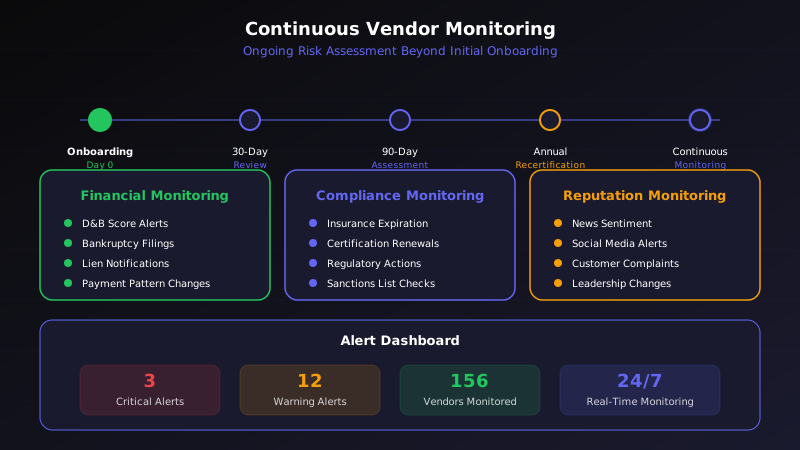
Continuous monitoring extends risk assessment beyond initial onboarding throughout the vendor relationship
Automated Alert Systems
Configure automated monitoring for key risk indicators. Credit score changes, new liens, bankruptcy filings, regulatory actions, and significant news events should trigger alerts for review. Modern vendor risk management platforms integrate with data providers to deliver near-real-time notification of material changes.
Periodic Recertification
Establish recertification schedules based on vendor tier. High-risk vendors may require quarterly review, while low-risk vendors can follow annual cycles. Recertification should refresh documentation, verify continued compliance, and reassess risk scores.
Monitoring Triggers:
- Credit score decline of 10+ points from baseline
- New UCC filings or federal tax liens
- Regulatory enforcement actions or consent orders
- Material adverse news coverage or sentiment shift
- Insurance lapse or coverage reduction
- Leadership changes at executive level
Technology Enablement
Manual vendor risk assessment does not scale. As your vendor base grows, technology becomes essential to maintain consistent, comprehensive evaluation without overwhelming your team.
Vendor Management Platforms
Modern vendor management systems integrate the entire risk assessment lifecycle from initial application through ongoing monitoring. They provide vendor portals for self-service information submission, automated verification workflows, risk scoring algorithms, and alert management dashboards.
Integration with AP Systems
Vendor risk data should flow into your accounts payable system to enforce risk-based controls. High-risk vendors might require additional approval for payments, while vendors with expired insurance can be automatically placed on payment hold until coverage is renewed.
Implementation Roadmap
Building a comprehensive vendor risk assessment program requires phased implementation that builds capability without disrupting ongoing vendor relationships.
- Phase 1: Foundation (Month 1-2) Document current vendor base and existing risk information. Define risk categories, scoring weights, and tier thresholds. Select or configure technology platform.
- Phase 2: New Vendor Process (Month 3-4) Implement enhanced onboarding for new vendors including automated screening and risk scoring. Train stakeholders on the new process and approval requirements.
- Phase 3: Existing Vendor Assessment (Month 5-8) Risk-rank existing vendors based on spend and criticality. Prioritize high-spend and high-criticality vendors for initial assessment. Complete baseline risk scoring for all active vendors.
- Phase 4: Continuous Monitoring (Month 9+) Activate automated monitoring and alerting. Establish recertification schedules. Refine scoring models based on observed predictive accuracy.
Measuring Program Effectiveness
Track metrics that demonstrate program value and identify improvement opportunities:
- Risk detection rate: Percentage of eventual vendor problems identified during initial assessment
- False positive rate: Vendors flagged as high risk that performed without incident
- Onboarding cycle time: Days from vendor application to approval, segmented by risk tier
- Monitoring alert volume: Number of alerts generated and percentage requiring action
- Vendor incident rate: Frequency of vendor-related problems compared to pre-program baseline
The Bottom Line
Vendor risk does not disappear because you ignore it during onboarding. The suppliers you engage become extensions of your organization, and their failures can become your problems. A comprehensive risk assessment program surfaces these risks before engagement, enabling informed decisions about which vendors to work with and under what terms.
The investment in vendor risk assessment pays dividends through avoided disruptions, reduced regulatory exposure, and stronger supplier relationships built on transparency. Organizations that implement systematic vendor vetting report fewer supplier-related incidents, faster issue resolution when problems do occur, and improved negotiating position with vendors who understand their risk profile.
Start by assessing your current vendor onboarding process against the four risk pillars. Identify gaps in financial verification, compliance screening, operational assessment, and security evaluation. Prioritize improvements based on your industry's risk profile and regulatory requirements. Then build toward continuous monitoring that extends protection beyond the initial onboarding decision.
In an environment where a single vendor failure can cascade into operational crisis, reputational damage, or regulatory action, comprehensive risk assessment is not optional. It is the price of doing business responsibly in an interconnected supply chain.
Ryan Shugars
Director of Product
Ryan has spent 15 years as a Systems Architect, building enterprise solutions that transform how organizations manage their financial operations.