Increasing Spend Under Management: Bringing Tail Spend into AP Visibility
Most organizations only manage 60-70% of their total spend through formal channels. The remaining tail spend flies under the radar, creating compliance gaps, missed savings opportunities, and weakened negotiating positions with suppliers.
Ryan Shugars
Director of Product

For every dollar your organization spends, how much of it flows through systems that provide visibility, control, and analytics? Industry research shows that even well-run procurement organizations only capture 60-70% of total spend under management. The remaining 30-40%—often called tail spend or maverick spend—represents a significant blind spot with real financial consequences.
Increasing spend under management isn't just a procurement initiative. It's a strategic imperative that impacts AP efficiency, compliance posture, cash flow management, and your ability to negotiate better terms with suppliers. Organizations that bring more spend into visibility consistently achieve 5-15% savings on previously unmanaged categories.
Understanding the Tail Spend Problem
Tail spend refers to the high volume of low-value transactions that typically escape procurement oversight. These purchases often bypass formal purchasing processes, use corporate credit cards, or flow through expense reimbursement systems. While each individual transaction seems insignificant, the aggregate impact is substantial.
The Tail Spend Reality
Typical distribution of organizational spend and the tail spend challenge:
Formal contracts, preferred vendors, purchase orders
P-cards, expense reports, maverick purchases
Lost negotiating leverage, duplicate vendors, pricing variance
Transactions without proper controls or visibility
Why Tail Spend Escapes Management
Several factors contribute to spend escaping formal management channels:
- Low-value transactions: Perceived cost of processing exceeds transaction value
- Urgency: Employees bypass procurement for time-sensitive needs
- Convenience: P-cards and expense reimbursement are easier than formal purchasing
- Fragmentation: Thousands of vendors make consolidation seem impossible
- Lack of visibility: No system aggregates spend across all payment channels
The Strategic Value of Spend Visibility
Bringing more spend under management delivers benefits that compound over time. Beyond the immediate savings from better pricing, visibility enables strategic decisions that would otherwise be impossible.
Visibility Enables Strategic Action
- - Consolidation opportunities: Identify spend fragmented across multiple vendors
- - Negotiating leverage: Aggregate volume for better pricing
- - Compliance enforcement: Ensure purchases flow through approved channels
- - Risk identification: Spot vendors without proper vetting or contracts
- - Budget accuracy: Know actual spend versus planned budget
Building the Business Case
Quantifying the value of increased spend under management requires analyzing your current state and modeling the potential improvements. Most organizations find compelling ROI in three areas:
Direct savings come from consolidating fragmented spend with strategic suppliers who offer volume-based pricing. When you show a supplier they're receiving $500K across 50 different purchase paths, they'll often provide 10-15% better pricing for consolidated volume.
Process efficiency improves when spend flows through managed channels. Automated matching, coding, and approval workflows reduce the cost per transaction significantly compared to manual expense processing.
Risk reduction comes from proper vendor vetting, contract coverage, and compliance controls that don't exist for maverick spend.
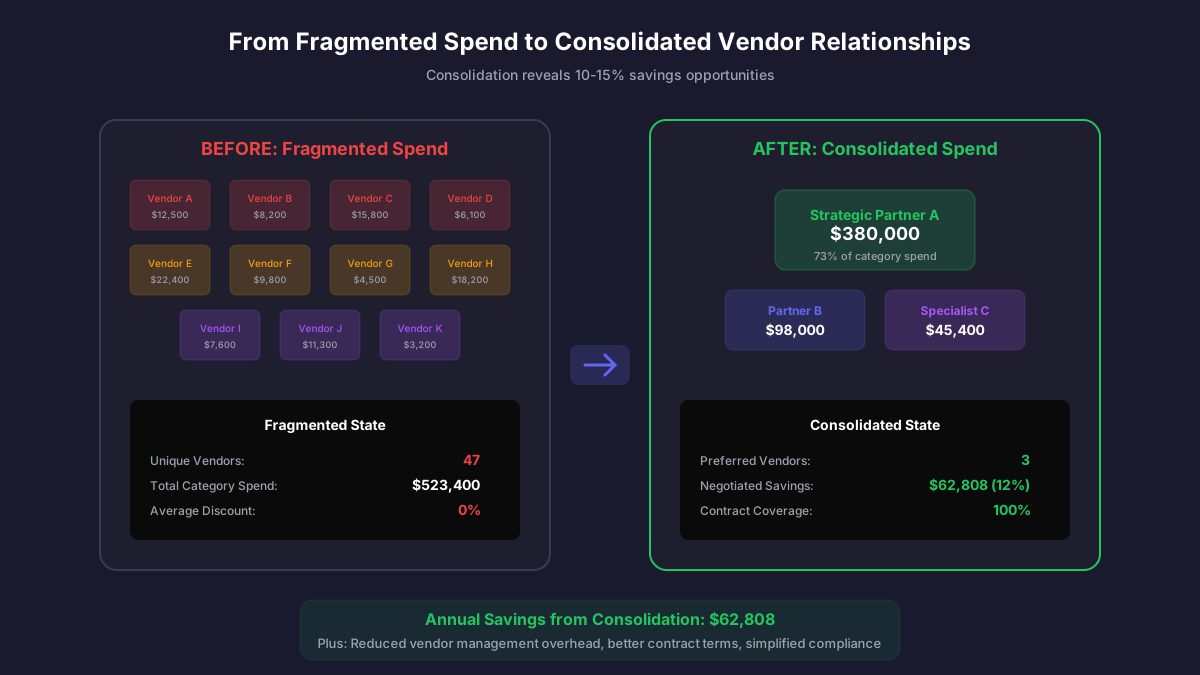
Consolidating fragmented spend reveals significant savings opportunities
Strategies to Capture More Spend
Increasing spend under management requires a multi-pronged approach that combines technology, policy, and cultural change. Here are proven strategies that organizations use to bring tail spend into visibility.
Strategy 1: Unified Spend Platform
The foundation of spend visibility is a single platform that aggregates data from all payment channels. This means connecting AP, P-card, expense management, and procurement systems to create a complete picture of organizational spend.
Spend Data Integration Points
Accounts Payable
Invoiced spend from all vendors
50-60%
of total spend
Purchasing Cards
Corporate card transactions
15-25%
of total spend
Expense Reimbursement
Employee out-of-pocket purchases
10-15%
of total spend
Direct Procurement
ERP and specialized systems
5-10%
of total spend
Strategy 2: Smart Categorization
Raw transaction data becomes actionable only when properly categorized. Modern spend analytics platforms use AI to automatically categorize transactions, even when vendor names are inconsistent or transaction descriptions are cryptic.
Effective categorization reveals patterns invisible in raw data. You might discover that office supplies spend is fragmented across 47 different vendors when consolidating to 2-3 preferred suppliers could save 20%.
Strategy 3: Policy and Process Alignment
Technology alone won't capture maverick spend. You need policies that guide behavior and processes that make compliance easy. Key policy elements include:
- Clear purchasing thresholds: Define when formal procurement is required
- Preferred vendor lists: Make it easy to buy from approved suppliers
- Consequence for non-compliance: Enforce policies consistently
- Exception handling: Provide legitimate paths for urgent needs
Balance Control with Convenience
Overly restrictive policies drive spend further underground. If the formal purchasing process is too slow or complicated, employees will find workarounds. Design processes that are easy to follow while still capturing the visibility you need. The goal is compliance through convenience, not enforcement alone.
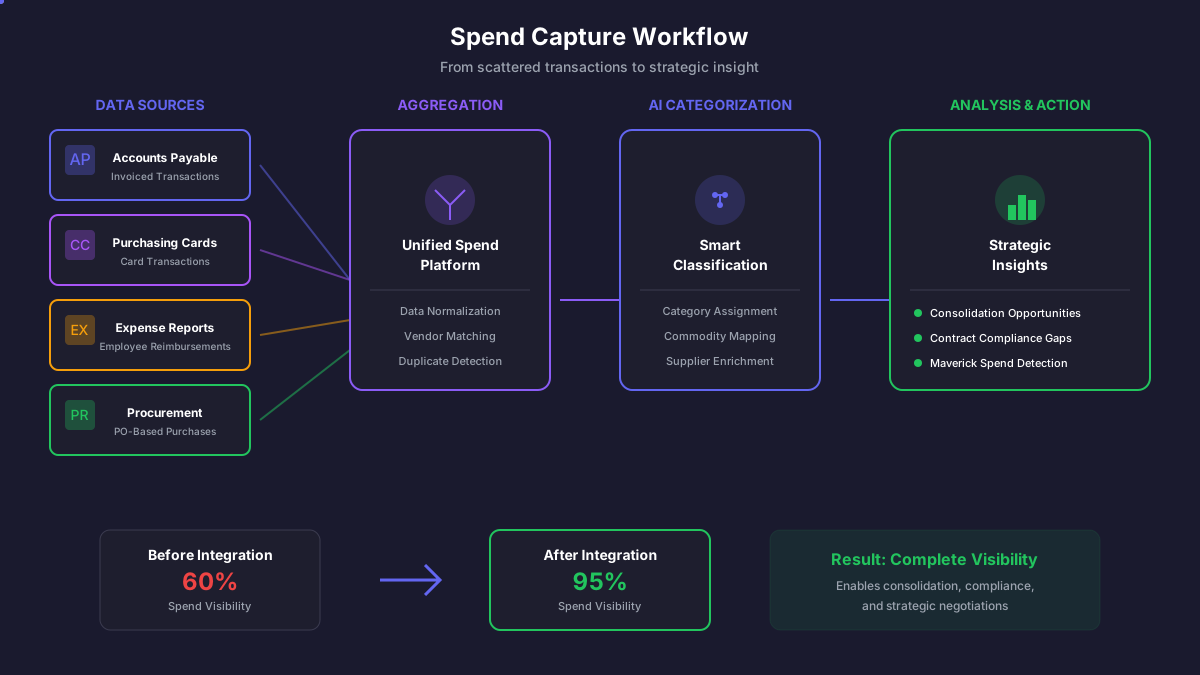
The spend capture workflow transforms scattered transactions into strategic insight
Implementing a Spend Visibility Program
Successful spend visibility programs follow a phased approach that builds momentum through quick wins while working toward comprehensive coverage.
Phase 1: Baseline Assessment
Start by understanding your current state. How much spend flows through each channel? What percentage can you categorize today? Where are the biggest gaps?
Baseline Assessment Questions
Visibility Assessment
- What % of spend is invoiced through AP?
- What % goes through P-card/expense?
- How many unique vendors last year?
- What categories lack visibility?
Opportunity Assessment
- Fragmented categories with 10+ vendors?
- Off-contract purchases to strategic vendors?
- Categories without preferred suppliers?
- Vendors without master data or contracts?
Phase 2: Quick Win Categories
Identify 3-5 categories where bringing spend under management will generate immediate, visible results. Good candidates are categories with:
- High fragmentation across many vendors
- Significant tail spend volume
- Willing strategic suppliers ready to offer volume pricing
- Clear policy violations that are easy to address
Phase 3: Systematic Expansion
Use the momentum and lessons from quick wins to expand coverage systematically. This typically involves:
- Connecting additional data sources to your spend platform
- Improving categorization accuracy through machine learning training
- Establishing preferred vendors in additional categories
- Rolling out guided buying tools that steer spend to managed channels
Realistic Timeline Expectations
Moving from 60% to 80% spend under management typically takes 12-18 months. Getting to 90%+ requires sustained effort over 2-3 years. Set incremental targets—improving by 5% quarterly is achievable and demonstrates consistent progress to stakeholders.

Track spend under management metrics to measure program success
Measuring Success
Track these metrics to evaluate and communicate the value of your spend visibility program:
Key Performance Metrics
Coverage Metrics
- - Spend under management percentage
- - Categories with visibility
- - Vendors in master data
- - Transactions through managed channels
Value Metrics
- - Savings from consolidation
- - Contract compliance rate
- - Preferred vendor utilization
- - Cost per transaction improvement
Technology Enablers
Modern spend visibility requires technology that can aggregate, categorize, and analyze transactions across multiple sources. Key capabilities include:
- Multi-source integration: Connect AP, P-card, expense, and procurement data
- AI-powered categorization: Automatically classify transactions accurately
- Vendor normalization: Recognize the same vendor across different spellings and entities
- Drill-down analytics: Move from summary to transaction-level detail
- Guided buying: Steer requisitioners to preferred vendors and channels
Quick Win: Start with AP Data
Before investing in comprehensive spend platforms, maximize visibility from your existing AP data. Most organizations find that 50-60% of total spend flows through AP. Proper categorization and analysis of this data alone reveals significant consolidation opportunities and serves as proof of concept for broader visibility initiatives.
The Bottom Line
Increasing spend under management is one of the highest-ROI initiatives available to finance and procurement teams. The combination of direct savings from consolidation, process efficiency gains, and risk reduction creates compelling returns that fund themselves many times over.
Start by understanding your current visibility gaps. Focus on quick-win categories to build momentum. Systematically expand coverage while measuring and communicating value. Organizations that commit to this journey consistently achieve 80-90% spend under management within 2-3 years.
Every dollar of spend that escapes visibility is a missed opportunity for savings, control, and strategic insight. The question isn't whether you can afford to invest in spend visibility—it's whether you can afford to leave 30-40% of your spend in the dark.
Ryan Shugars
Director of Product
Ryan has spent 15 years as a Systems Architect, building enterprise solutions that transform how organizations manage their financial operations.