Retail AP Automation: Managing High-Volume Invoice Processing Across Multiple Locations
Retail operations generate invoices at a scale that overwhelms traditional AP processes. When you are managing hundreds of stores, distribution centers, and e-commerce fulfillment operations, every invoice represents a critical link in your supply chain. Here is how leading retailers are scaling their AP operations without scaling their AP headcount.
Ryan Shugars
Director of Product
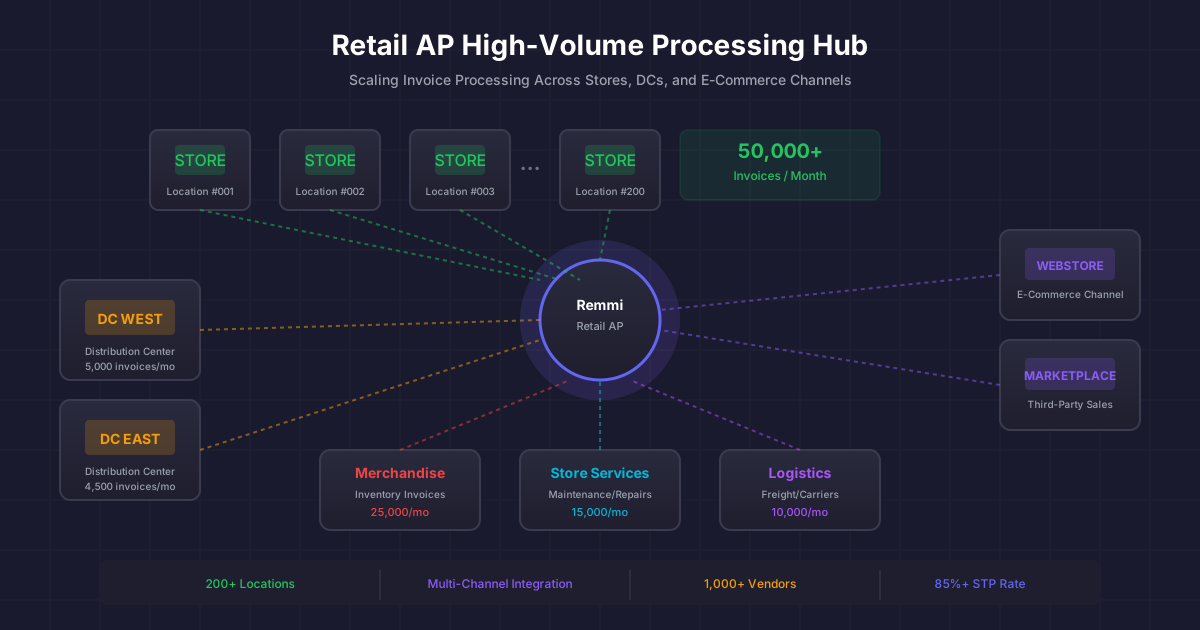
Retail is a volume business in every sense. High transaction volumes, thin margins, and complex supply chains create an AP environment unlike any other industry. A mid-sized retailer with 200 stores might process 50,000 invoices per month from thousands of vendors, ranging from multinational consumer goods companies to local service providers. Managing this complexity while maintaining accuracy and vendor relationships requires purpose-built automation.
According to the National Retail Federation, retailers spend an average of $12-18 per invoice when processing manually, compared to $2-4 with automation. For a retailer processing 600,000 invoices annually, that difference represents millions in potential savings. But cost reduction is only part of the story. Faster invoice processing means better vendor terms, fewer stockouts, and improved cash flow visibility.
The Retail AP Challenge: Scale Meets Complexity
Retail AP is not simply about processing more invoices faster. The complexity stems from the intersection of multiple invoice types, diverse vendor relationships, and geographically distributed operations that must all reconcile to a single source of truth.
Retail Invoice Categories
Inventory purchases from vendors, often with complex promotional allowances, returns, and markdown funding
Maintenance, repairs, cleaning, security, and other services across hundreds of locations
Freight, warehousing, last-mile delivery, and returns processing from multiple carriers
Advertising, signage, digital campaigns, and local market promotions
Each invoice category brings unique processing requirements. Merchandise invoices must match to purchase orders and receiving documents across potentially dozens of delivery locations. Store service invoices require location-specific approval workflows. Freight invoices need rate validation against complex carrier contracts. Marketing invoices often lack POs entirely and require proof-of-performance verification.
Multi-Location Complexity: The Heart of Retail AP
The defining characteristic of retail AP is geographic distribution. A single vendor shipment might be received at 50 different stores, each generating receiving documentation that must reconcile to a single invoice. Store managers make local purchasing decisions that corporate AP must process and control. Services are performed at locations far from the AP team that must verify and approve the work.
Location-Based Invoice Routing
Effective retail AP automation begins with intelligent invoice routing. When an invoice arrives, the system must determine not just what type of invoice it is, but which locations it affects and who has authority to approve it.
- Store-specific invoices: Route to store manager with regional backup
- DC invoices: Route to receiving manager with logistics oversight
- Corporate invoices: Route to department manager with category expertise
- Multi-location invoices: Allocate and route to each affected location or roll up to regional approvers
Location Master Data is Critical
Every retail AP automation initiative must begin with clean location master data. Store numbers, addresses, cost centers, and manager assignments must be accurate and current. Many retailers underestimate the effort required to maintain this foundation, especially during periods of store openings, closings, and remodels.
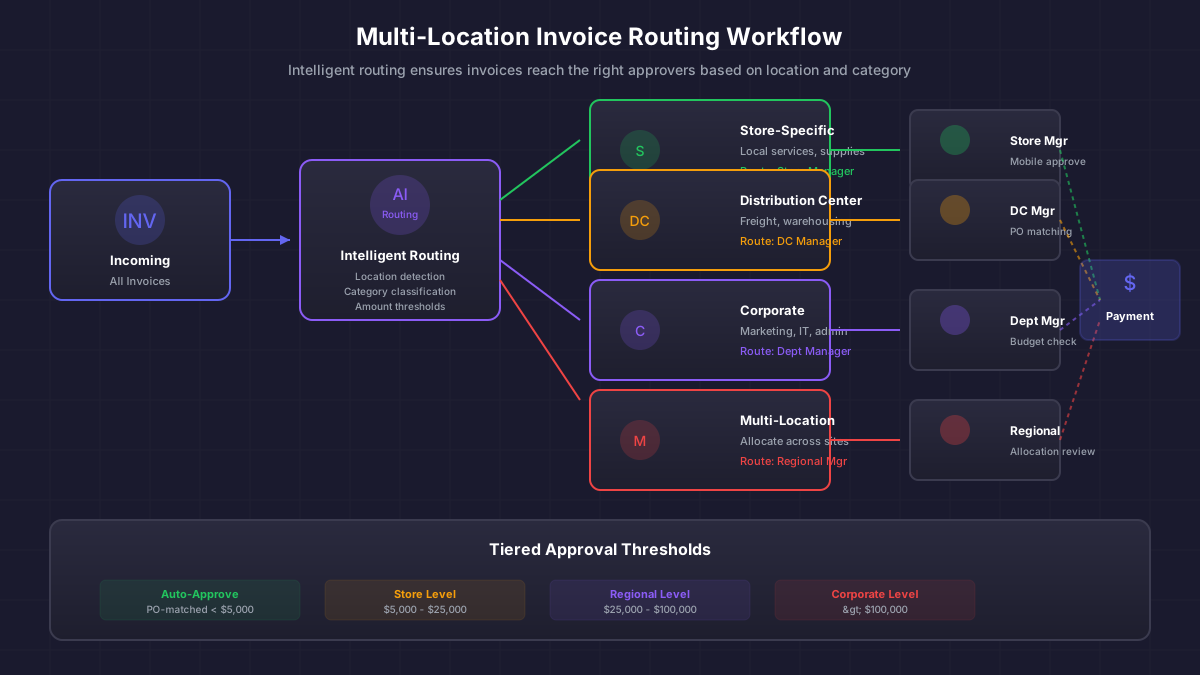
Intelligent routing ensures invoices reach the right approvers regardless of location or category
High-Volume Processing: Strategies That Scale
When you are processing tens of thousands of invoices monthly, every efficiency gain compounds. The difference between 80% and 90% straight-through processing means thousands fewer manual touches per month. Retail leaders focus on several key strategies to maximize automation rates.
1. Vendor Invoice Standardization
Major retail vendors often submit invoices through EDI or structured electronic formats. These invoices can achieve near-100% automation when properly configured. The challenge is the long tail of smaller vendors who submit PDFs, emails, or even paper invoices.
- EDI-enabled vendors: Configure for automatic three-way matching
- Portal submission: Provide structured forms for non-EDI vendors
- AI extraction: Apply intelligent OCR to unstructured formats
- Exception handling: Route unclear invoices for human review with AI suggestions
2. Receiving Integration
Retail inventory systems generate receiving data at multiple touchpoints: store back rooms, distribution center docks, cross-dock facilities, and direct-to-consumer fulfillment centers. AP automation must connect to all these sources for effective matching.
Receiving Integration Points
Store Receiving
Handheld scans, back-room systems
Real-time sync
DC Receiving
WMS integration, ASN matching
Real-time sync
Drop Ship
Vendor shipping confirmations
Near real-time
E-commerce Returns
Returns portal, RMA systems
Batch OK
3. Promotional Allowance Management
Retail vendor agreements often include promotional allowances, markdown funding, cooperative advertising, and other deductions from invoice amounts. Managing these allowances manually is a full-time job for many retail AP teams. Automation can transform this process.
- Agreement capture: Store promotional terms in a structured database
- Automatic deduction: Apply earned allowances to incoming invoices
- Accrual management: Track unearned allowances for proper accounting
- Vendor communication: Provide clear deduction explanations to reduce disputes
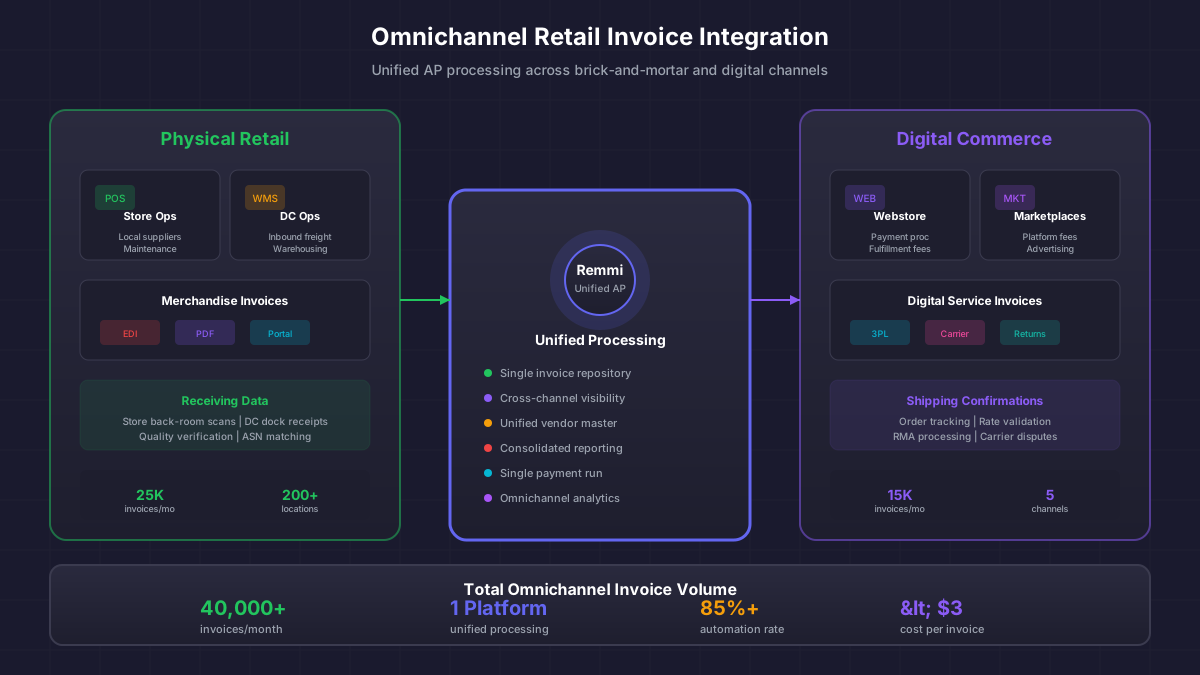
Omnichannel retail requires unified AP processing across brick-and-mortar and digital channels
E-Commerce Complexity: The Omnichannel Challenge
Modern retail extends far beyond physical stores. E-commerce operations, marketplace fulfillment, buy-online-pickup-in-store (BOPIS), and ship-from-store all create unique invoice streams that must integrate with traditional retail AP.
E-commerce adds several invoice categories that traditional retail AP may not encounter:
- Fulfillment services: Third-party logistics for e-commerce orders
- Marketplace fees: Platform commissions and advertising charges
- Payment processing: Transaction fees from multiple payment providers
- Returns processing: Reverse logistics and refurbishment costs
- Last-mile delivery: Parcel carrier invoices with complex rate structures
E-Commerce AP Pitfall
Many retailers struggle with e-commerce carrier invoices because they arrive weeks after shipment, often with hundreds or thousands of line items. Without automation, reconciling these invoices to individual order shipments is nearly impossible, leading to overpayments for shipping services.
Store-Level Controls Without Store-Level Bottlenecks
Retail organizations must balance the need for local control with the efficiency of centralized processing. Store managers need visibility into spending at their locations. Regional directors need rollup views. Corporate AP needs to ensure compliance and accuracy.
Tiered Approval Thresholds
Effective retail AP implements tiered approval based on invoice amount, type, and location:
- Auto-approve: PO-matched invoices under threshold require no human touch
- Store approval: Local service invoices routed to store manager
- Regional approval: Higher amounts or multi-store invoices to district/regional manager
- Corporate approval: Capital expenditures, new vendor setups, contract changes
Mobile Approval is Essential
Store managers are on the sales floor, not at desks. Retail AP automation must include mobile approval capabilities that let managers review and approve invoices from anywhere in the store. Push notifications for urgent approvals prevent delays that could affect vendor relationships.
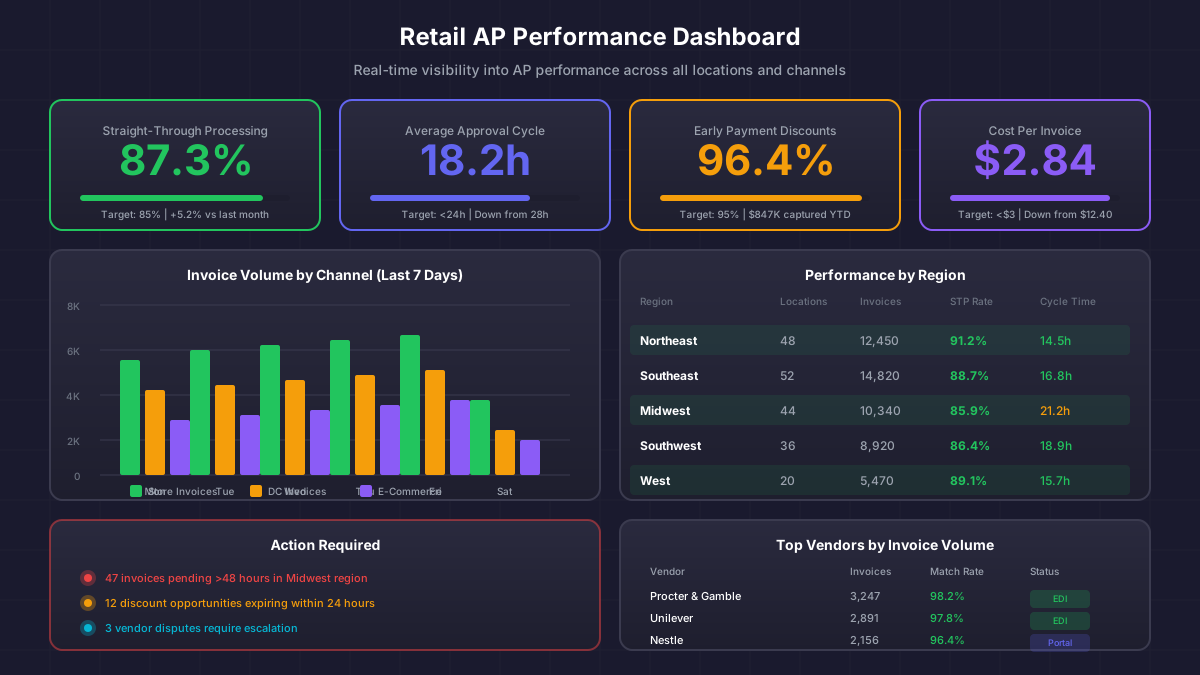
Real-time visibility into AP performance across all locations enables proactive management
Measuring Retail AP Performance
Retail AP requires metrics that reflect the unique challenges of high-volume, multi-location processing. Traditional measures remain important, but retail-specific KPIs provide deeper insight.
Retail AP KPIs
Straight-Through Processing Rate
Invoices processed without human touch
Target: > 85% for high-volume retail
Approval Cycle Time
Hours from receipt to approval
Target: < 24 hours average
Vendor Inquiry Rate
Inquiries per 1,000 invoices processed
Target: < 5 inquiries
Discount Capture Rate
Early payment discounts captured
Target: > 95% of available
Invoice Exception Rate
Invoices requiring exception handling
Target: < 15%
Cost Per Invoice
Full-loaded processing cost
Target: < $3.00
Implementation Roadmap for Retail AP
Transforming retail AP is a significant undertaking that requires careful planning and phased execution. Success depends on addressing foundational elements before pursuing advanced automation.
Phase 1: Foundation (Months 1-3)
- - Clean and validate location and vendor master data
- - Implement centralized invoice intake and scanning
- - Deploy AI-powered data extraction for unstructured invoices
- - Establish basic approval workflows by invoice type
Phase 2: Integration (Months 4-6)
- - Connect receiving systems for three-way matching
- - Integrate EDI invoice streams from major vendors
- - Implement location-based routing and approval
- - Deploy mobile approval for store managers
Phase 3: Optimization (Months 7-9)
- - Implement promotional allowance automation
- - Add carrier invoice validation and dispute management
- - Deploy advanced analytics and spend visibility
- - Optimize matching tolerances based on performance data
The Bottom Line
Retail AP automation is not a luxury; it is a competitive necessity. As margins tighten and customer expectations rise, retailers cannot afford to have their AP teams buried in paper while strategic opportunities pass by.
The retailers winning in today's environment have transformed AP from a cost center into a strategic asset. They capture every early payment discount. They maintain strong vendor relationships through timely, accurate payments. They have real-time visibility into spending across every location and channel.
Modern AI-native AP automation makes this transformation achievable for retailers of all sizes. Whether you operate 20 stores or 2,000, the fundamentals are the same: centralize intake, automate matching, enable location-appropriate controls, and measure relentlessly.
The question is not whether to automate retail AP but how quickly you can get there. Every month of delay is a month of unnecessary costs, missed discounts, and strategic opportunity lost.
Ryan Shugars
Director of Product
Ryan has spent 15 years as a Systems Architect, building enterprise solutions that transform how organizations manage their financial operations.