Recurring Invoice Automation: Streamlining Predictable Payment Processing
Subscription software, equipment leases, professional retainers, and facility services generate predictable monthly invoices that follow consistent patterns. Yet many AP teams still process these invoices manually each month, duplicating effort on payments that rarely change.
Ryan Shugars
Director of Product
For most organizations, recurring expenses represent a significant portion of total payables. SaaS subscriptions, office leases, maintenance contracts, professional services retainers, and utility bills arrive on predictable schedules with predictable amounts. These recurring invoices are ideal candidates for automation because their patterns are established and exceptions are easily identified.
Despite their predictability, recurring invoices often receive the same manual treatment as one-time purchases. AP staff receive the invoice, verify the amount against expectations, code it to the appropriate GL accounts, route it for approval, and schedule payment. This process repeats identically month after month, consuming valuable time that could be directed toward higher-value activities like vendor negotiations or spend analysis.
The opportunity cost compounds quickly. An organization with 200 recurring invoices spending just 10 minutes processing each monthly invoice wastes over 33 hours per month on repetitive work. Automating recurring invoice processing eliminates this waste while actually improving control through systematic variance monitoring.
Understanding Recurring Invoice Types
Before designing an automation strategy, it helps to categorize the different types of recurring invoices and their unique characteristics.
Categories of Recurring Payments
Software licenses, equipment leases, rent payments with identical monthly amounts
Electric, water, cloud services that vary but stay within predictable bands
Janitorial, landscaping, security services billed on regular schedules
Legal, accounting, consulting retainers with agreed monthly minimums
Fixed Amount Recurring Invoices
The simplest category includes invoices that arrive for exactly the same amount each billing period. Software subscriptions, equipment leases, insurance premiums, and fixed-rate service contracts fall into this category. These invoices are perfect candidates for full automation because any amount deviation signals an exception requiring review.
For fixed-amount invoices, automation can validate that the billed amount matches the expected amount exactly. If they match, the invoice flows through without manual intervention. If they differ, the system flags the invoice for review and investigation. Common reasons for fixed-amount variances include price increases, license count changes, or billing errors that need correction.
Variable Amount Recurring Invoices
Utility bills, usage-based services, and consumption-based cloud computing generate invoices that vary month to month but remain within predictable ranges. These require tolerance-based validation rather than exact matching. The system establishes baseline expectations and flags invoices that fall outside acceptable variance thresholds.
Setting Appropriate Variance Thresholds
Tolerance thresholds should balance automation efficiency against financial control. Too tight, and normal variations trigger unnecessary exceptions. Too loose, and legitimate issues go unnoticed. Most organizations start with 10-15% tolerance for utilities and adjust based on seasonal patterns and historical variance analysis. Cloud computing costs may warrant tighter controls given their potential for rapid escalation.
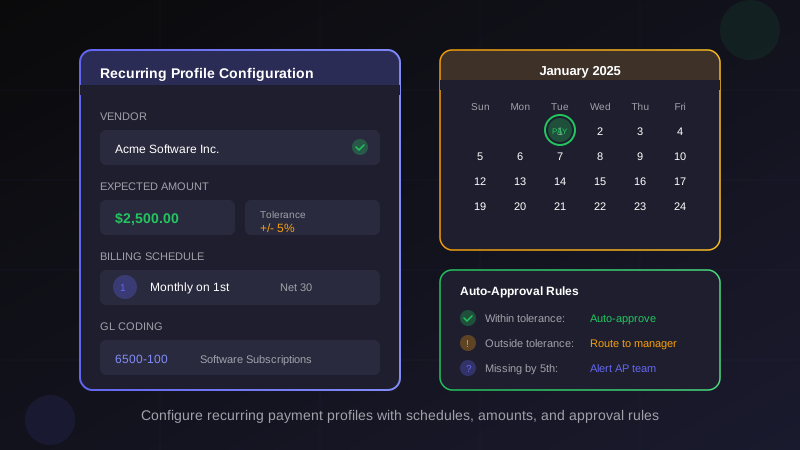
Configure recurring payment profiles with expected amounts, schedules, and variance thresholds
Building a Recurring Invoice Automation Framework
Effective recurring invoice automation requires several interconnected capabilities working together to handle the full lifecycle from invoice receipt through payment and reconciliation.
Step 1: Recurring Profile Setup
The foundation of recurring automation is a comprehensive profile for each recurring payment relationship. This profile captures everything the system needs to process invoices automatically:
- Vendor identification: Vendor ID, invoice sender email, EDI identifiers
- Expected amount: Fixed amount or acceptable range
- Billing frequency: Monthly, quarterly, annual, or custom schedules
- Invoice timing: Expected arrival date within each period
- GL coding: Account allocation for automatic coding
- Approval routing: Required approvals or auto-approval thresholds
- Payment terms: Standard terms or negotiated early pay discounts
- Contract reference: Link to master agreement for term validation
Recurring Profile Configuration Elements
Payment Schedule
Monthly on 1st, Net 30, ACH payment method
Amount Validation
Expected: $2,500, Tolerance: +/- 5%
Auto-Approval Rules
Within tolerance: Auto-approve. Outside: Route to manager
Missing Invoice Alerts
Alert on 5th if invoice not received
Step 2: Intelligent Invoice Matching
When invoices arrive, the system must automatically recognize them as recurring and match them to the appropriate profile. This matching uses multiple identifiers:
- Vendor ID from the invoice matches the profile vendor
- Invoice amount falls within expected range
- Invoice date aligns with expected billing cycle
- Service period matches the expected period
For well-established recurring relationships, matching confidence is typically very high. The system can automatically apply pre-configured GL coding, skip redundant approval routing for in-tolerance invoices, and schedule payment according to established terms.
Step 3: Variance Detection and Exception Handling
The real value of recurring automation comes from systematic variance detection. Rather than manually comparing each invoice to expectations, the system automatically identifies exceptions that require human attention:
Exception Categories for Recurring Invoices
Amount Variances
- - Unexpected price increases
- - Usage outside normal range
- - Additional charges or credits
- - Proration adjustments
Timing Exceptions
- - Missing expected invoices
- - Early or late arrivals
- - Duplicate submissions
- - Service period gaps
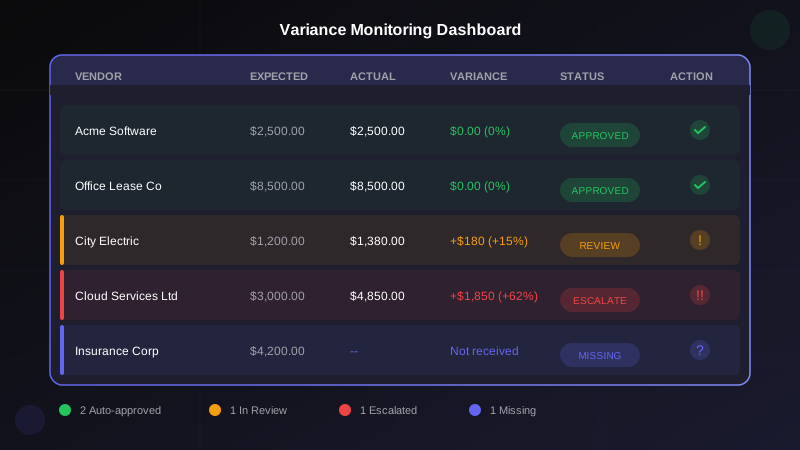
Intelligent variance monitoring catches anomalies while letting normal invoices flow through automatically
Proactive Payment Scheduling
Beyond reactive invoice processing, recurring automation enables proactive payment scheduling. Since you know what payments are coming, you can schedule them in advance to optimize cash flow and ensure timely vendor payments.
Cash Flow Forecasting
Recurring invoice profiles provide reliable data for cash flow forecasting. Treasury can see upcoming committed payments weeks or months in advance, improving cash position management and reducing surprise funding requirements. This visibility is especially valuable for organizations with significant fixed payment obligations.
Benefits of Scheduled Recurring Payments
Cash Management
- Predictable outflows
- Better liquidity planning
- Reduced borrowing costs
- Optimal payment timing
Vendor Relations
- Consistent on-time payment
- No late payment penalties
- Improved vendor score
- Better negotiating position
Early Payment Discount Capture
Recurring payments present consistent opportunities for early payment discounts. When you know an invoice is coming and have confidence in its amount, you can pre-authorize early payment to capture discount terms. For recurring payments, this discount capture becomes systematic rather than opportunistic.
Consider a vendor offering 2% net 10 terms on a $5,000 monthly invoice. Capturing that discount every month generates $1,200 in annual savings from a single vendor relationship. Multiply across all recurring relationships with discount terms, and the savings become substantial.
Contract Lifecycle Integration
Recurring invoices are typically tied to contracts with defined terms, renewal dates, and conditions. Integrating recurring automation with contract management unlocks additional value.
Term Validation
Automated systems can validate that invoiced amounts match contracted rates. When a vendor submits an invoice reflecting an unauthorized price increase, the system flags the discrepancy before payment. This validation becomes especially important as contracts approach renewal when vendors may attempt to implement new pricing prematurely.
Contract-Aware Invoice Processing
By linking recurring profiles to master contracts, the system can automatically validate that invoiced rates match contracted terms, flag invoices that arrive after contract expiration, alert stakeholders when renewals approach, and track cumulative spend against contract commitments. This integration transforms invoice processing from a payment function into a contract compliance function.
Renewal Management
Contract renewal dates often arrive without adequate advance notice, leading to auto-renewals at unfavorable terms or service disruptions from missed renewals. Recurring automation can trigger renewal workflows based on contract end dates, giving procurement adequate lead time to evaluate alternatives and negotiate terms.
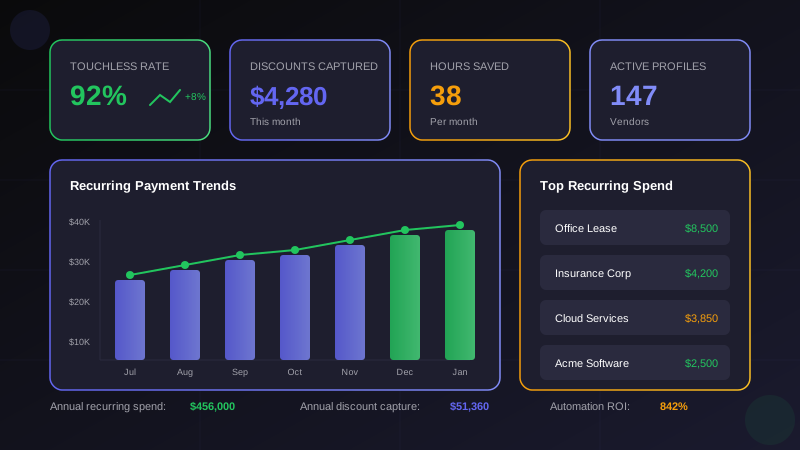
Analytics reveal optimization opportunities across your recurring payment portfolio
Measuring Recurring Automation Success
Track these metrics to evaluate the effectiveness of your recurring invoice automation program and identify opportunities for expansion.
Key Performance Indicators
Touchless Processing Rate
Percentage of recurring invoices processed without manual intervention
Target: 85%+
Variance Detection Rate
Percentage of legitimate variances caught before payment
Target: 100%
Missing Invoice Identification
Average days to identify missing expected invoices
Target: 5 days
Early Payment Discount Capture
Percentage of available discounts captured on recurring invoices
Target: 95%+
Implementation Approach
Successfully implementing recurring invoice automation requires a structured approach that builds confidence gradually while expanding coverage.
Phased Implementation Strategy
Phase 1: Foundation
- - Identify recurring vendors
- - Document payment patterns
- - Create recurring profiles
- - Set initial thresholds
Phase 2: Expansion
- - Enable auto-approval rules
- - Activate payment scheduling
- - Refine variance thresholds
- - Add contract integration
Start with High-Value, Low-Risk Candidates
Begin automation with invoices that are truly fixed and predictable: software subscriptions with defined user counts, equipment leases with fixed monthly payments, or insurance premiums. These provide quick wins with minimal risk of exceptions, building organizational confidence in the automated process.
Expand to Variable-Amount Invoices
Once fixed-amount automation is running smoothly, expand to variable invoices like utilities and usage-based services. Start with conservative tolerance thresholds and analyze exception patterns to refine thresholds over time. The goal is maximizing automation while maintaining appropriate financial control.
The Bottom Line
Recurring invoice automation represents one of the highest-ROI opportunities in accounts payable because it eliminates the most repetitive work while actually improving financial control. Instead of manually processing the same invoices month after month, AP teams focus on exceptions and strategic activities while automated systems handle routine processing.
The transformation extends beyond efficiency. Variance monitoring catches billing errors that manual review often misses. Scheduled payments improve vendor relationships through consistent on-time payment. Contract integration ensures you pay what you agreed to pay, not unauthorized increases. Cash flow forecasting becomes reliable when recurring obligations are systematically tracked.
For organizations still manually processing recurring invoices, the opportunity is clear: automate the predictable to focus human attention where it creates value. Start with your highest-volume recurring vendors, prove the concept, then expand systematically until recurring invoice processing requires human attention only when something genuinely needs review.
Quick Start: Identify Your Recurring Portfolio
Run a vendor analysis to identify all vendors paid every month for the past year. These are your recurring payment candidates. Sort by annual spend to prioritize automation efforts where they deliver the greatest time savings. Most organizations find that 20-30 vendors account for the majority of recurring spend, making focused automation highly effective.
Ryan Shugars
Director of Product
Ryan has spent 15 years as a Systems Architect, building enterprise solutions that transform how organizations manage their financial operations.