Real Estate AP: Managing Property Invoices, CAM Reconciliation, and Lease Accounting
Real estate companies face unique AP challenges that generic invoice processing systems cannot handle. From CAM reconciliation complexities to ASC 842 lease accounting requirements, property-focused organizations need purpose-built solutions. Here is how modern AP automation addresses these industry-specific demands.
Ryan Shugars
Director of Product
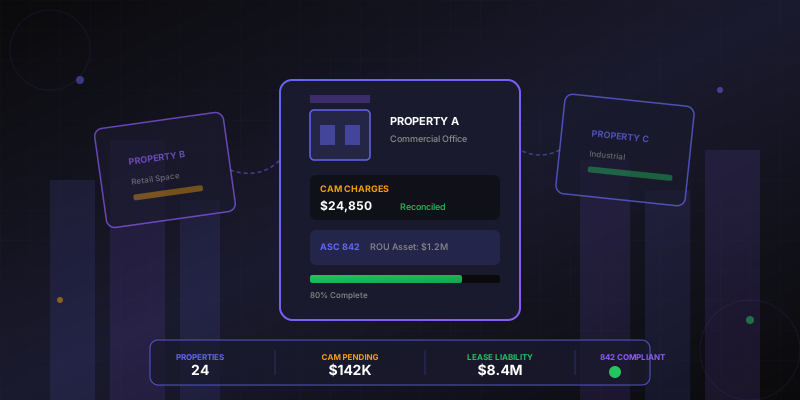
Real estate organizations operate in a world of complex lease agreements, multiple property invoices, and regulatory requirements that most AP systems were never designed to handle. Whether you manage commercial office buildings, retail centers, industrial properties, or mixed-use developments, your accounts payable function faces challenges that require specialized solutions.
The typical real estate AP department juggles recurring rent payments, Common Area Maintenance (CAM) reconciliations, property tax allocations, utility pass-throughs, and the ever-present demands of ASC 842 lease accounting compliance. Each property generates dozens of invoices monthly, and each lease contains unique terms that affect how costs should be calculated, allocated, and paid.
This article explores the distinct AP challenges facing real estate organizations and demonstrates how modern automation addresses these requirements while maintaining the accuracy and compliance that property management demands.
The Unique Complexity of Real Estate Invoice Processing
Real estate AP is fundamentally different from general corporate accounts payable. Understanding these differences is essential for selecting and implementing effective automation solutions.
CAM Reconciliation: The Annual Challenge
Common Area Maintenance charges represent one of the most complex aspects of commercial real estate AP. Landlords pass through their costs for maintaining common areas, property insurance, property taxes, and building operations to tenants based on their proportionate share of the property.
The reconciliation process occurs annually when landlords provide actual expense statements. Each statement must be validated against:
- The lease terms specifying which expenses are included and excluded
- The tenant's pro-rata share calculation (often based on rentable square footage)
- Any CAM caps or floors specified in the lease
- Base year or expense stop provisions that limit pass-through amounts
- Administrative fee caps (typically 10-15% of operating expenses)
For organizations leasing multiple properties, CAM reconciliation becomes a significant annual project. Each property has different lease terms, different landlords with varying statement formats, and different deadlines for disputing charges. Missing a dispute deadline can cost tens of thousands of dollars in overcharges.

CAM reconciliation requires validation against lease terms, pro-rata calculations, and expense caps
Real Estate AP Complexity: By the Numbers
ASC 842: The Lease Accounting Revolution
The implementation of ASC 842 transformed how organizations account for leases. What was once a simple monthly rent expense now requires calculating right-of-use (ROU) assets, lease liabilities, interest expense, and amortization schedules for every lease in the portfolio.
For real estate-intensive organizations, ASC 842 compliance creates ongoing AP challenges:
- Initial measurement complexity: Calculating the present value of lease payments using appropriate discount rates
- Lease modifications: Any change to lease terms requires remeasurement of both the ROU asset and lease liability
- Variable lease payments: CAM charges, percentage rent, and utility pass-throughs require careful classification
- Embedded leases: Identifying lease components within service agreements
- Disclosure requirements: Detailed schedules of lease obligations for financial statement notes
Many organizations initially addressed ASC 842 with spreadsheets or standalone lease accounting software. However, maintaining separate systems for invoice processing and lease accounting creates reconciliation challenges and increases the risk of errors.
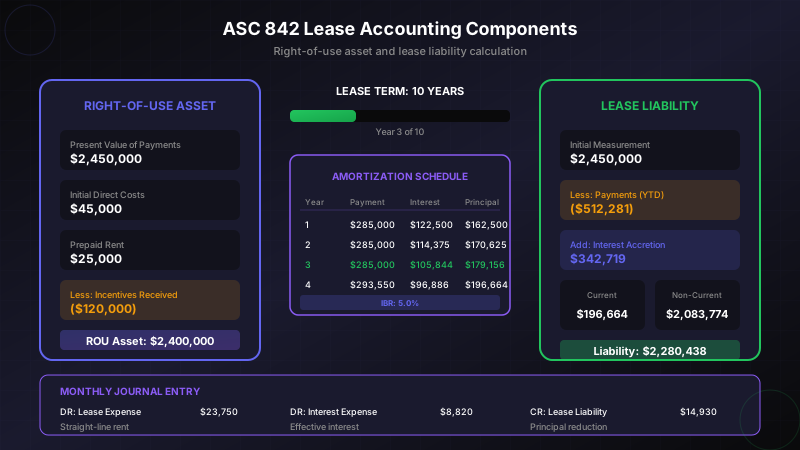
ASC 842 requires tracking ROU assets, lease liabilities, and detailed amortization schedules
Property-Level Invoice Allocation
Real estate organizations must allocate costs accurately to individual properties for profitability analysis, investor reporting, and tax purposes. A single vendor invoice might need to be split across:
- Multiple properties that received services
- Different cost categories (operating expenses, capital improvements, tenant improvements)
- Various funds or ownership structures
- Reimbursable versus non-reimbursable expenses
Incorrect property coding creates cascading problems: inaccurate NOI calculations, incorrect investor distributions, flawed tax allocations, and misleading property performance metrics. The complexity multiplies for organizations managing properties across multiple legal entities or investment funds.
The Cost of Manual CAM Reviews
Industry studies consistently show that 5-15% of CAM charges are overstatements when audited. For an organization with $10 million in annual CAM payments, that represents $500,000 to $1.5 million in potential savings. Yet most companies lack the resources to thoroughly review every landlord statement, leaving significant money on the table.
Multi-Property Payment Complexity
Real estate AP teams manage payment timing across dozens or hundreds of lease obligations, each with different due dates, grace periods, and late fee provisions:
Rent Payment Orchestration
Most commercial leases require rent payment on the first of the month, but variations exist. Some leases specify payment in advance, others in arrears. Grace periods range from zero to ten days. Late fees can be flat amounts, percentages of monthly rent, or per-day penalties.
Managing this complexity manually becomes nearly impossible as the portfolio grows. One missed payment or incorrectly calculated amount can trigger late fees, damage landlord relationships, or even constitute a lease default.
Operating Expense Payments
Beyond base rent, tenants typically pay estimated operating expenses monthly with an annual true-up. These estimates change periodically based on landlord projections, creating additional invoices that must be validated against lease terms and prior year actuals.
Percentage Rent and Variable Payments
Retail leases often include percentage rent provisions where additional rent is owed when sales exceed specified thresholds. These calculations require integration with sales reporting systems and careful application of lease-specific breakpoints and exclusions.
Hidden Costs of Manual Real Estate AP
How Modern AP Automation Addresses Real Estate Complexity
Purpose-built AP automation for real estate goes far beyond basic invoice capture. Here is how modern systems address each of the challenges outlined above:
Intelligent CAM Statement Processing
Advanced AP platforms can parse landlord operating expense statements automatically, extracting line-item details and comparing them against lease terms stored in the system. The automation identifies:
- Expenses that exceed caps or violate lease exclusions
- Year-over-year increases that exceed contractual limits
- Pro-rata share calculations that do not match lease terms
- Administrative fees that exceed allowable percentages
- Capital expenditures incorrectly included in operating expenses
This systematic validation transforms CAM reconciliation from a resource-intensive annual project into a streamlined review process, ensuring that every statement is thoroughly analyzed regardless of staff availability.
Integrated Lease Accounting
Modern systems maintain the lease data needed for ASC 842 compliance alongside invoice processing workflows. When a lease payment is processed, the system automatically generates the required journal entries for:
- Lease liability reduction (principal payment)
- Interest expense recognition (based on effective interest method)
- ROU asset amortization (typically straight-line)
- Variable lease payment expense (CAM and other pass-throughs)
Integration eliminates the reconciliation burden between AP and lease accounting systems while ensuring that every payment is properly reflected in financial statements.
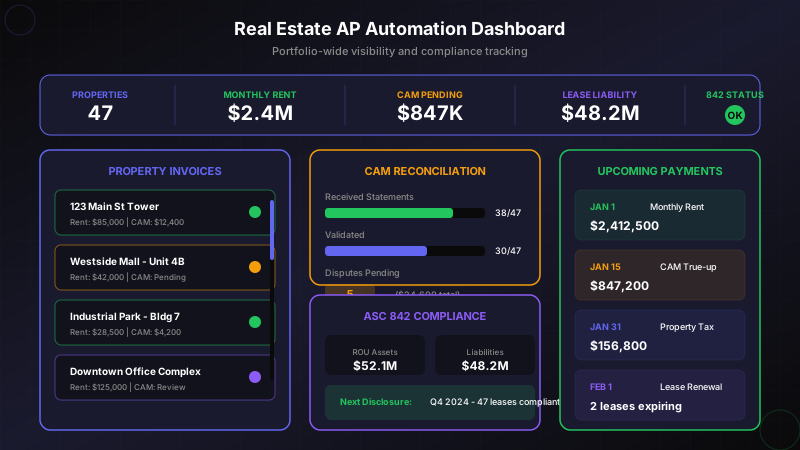
Modern dashboards provide real-time visibility across all properties and compliance requirements
Property-Centric Coding and Allocation
Machine learning models trained on historical coding patterns suggest property allocations automatically. For vendors that consistently serve specific properties, the system learns these patterns and applies them without manual intervention.
When invoices require split coding across multiple properties, the system can suggest allocations based on square footage ratios, ownership percentages, or other configurable formulas. What once required manual calculation can be reviewed and approved in seconds.
Payment Calendar Management
Automated payment scheduling ensures that rent and operating expense payments are made on time while optimizing cash flow. The system maintains awareness of:
- Each lease's payment due date and grace period
- Late fee triggers and calculation methods
- Optimal payment timing based on cash position
- Holidays and banking day considerations
Real Estate AP Automation ROI: Sample Calculation
Before Automation (Annual)
After Automation (Annual)
Annual Savings: $157,500 | ROI: 437%
Plus improved ASC 842 compliance and property performance visibility
Implementation Considerations for Real Estate Organizations
Successfully implementing AP automation in real estate requires attention to industry-specific factors:
Lease Data Integration
Your AP automation platform must integrate with or include comprehensive lease management capabilities. Critical data includes:
- Payment terms: Base rent, escalation schedules, and operating expense estimates
- CAM provisions: Included/excluded expenses, caps, base years, and administrative fee limits
- ASC 842 data: Discount rates, lease term determinations, and payment classifications
- Dates: Commencement, expiration, renewal options, and critical action deadlines
Property Management System Integration
For property managers and owners, AP automation should connect with property management software for seamless data flow:
- Yardi: The dominant property management platform requires robust API integration
- MRI Software: Another major player in commercial real estate technology
- RealPage: Particularly important for residential and multifamily properties
- AppFolio: Common in smaller property management operations
Multi-Entity and Fund Structures
Real estate investments often involve complex ownership structures with separate legal entities for each property or fund. Your AP system must support:
- Property-level P&L tracking and reporting
- Fund-level consolidation and investor reporting
- Intercompany transactions and eliminations
- Waterfall distribution calculations
ASC 842 Compliance Is Not Optional
Organizations that have struggled with ASC 842 compliance face increasing audit scrutiny. Auditors are becoming more sophisticated in testing lease accounting, and material weaknesses in this area can affect lending covenants, investor confidence, and regulatory standing. The cost of non-compliance far exceeds the investment in proper automation.
The Competitive Advantage of Real Estate AP Excellence
Beyond cost savings and compliance, AP automation creates strategic advantages for real estate organizations:
- Faster portfolio analysis: Real-time expense data enables quicker investment decisions
- Better lease negotiations: Historical expense data strengthens position in renewal discussions
- Accurate property valuations: Reliable NOI calculations support better acquisition and disposition pricing
- Improved investor reporting: Detailed, accurate expense data builds investor confidence
- Reduced audit costs: Organized documentation and clear audit trails minimize auditor time
Measuring Success
Real estate organizations implementing modern AP automation typically report: 80-90% reduction in CAM reconciliation time, 95%+ on-time payment rates, 70% fewer lease accounting errors, and complete elimination of ASC 842 audit findings. The impact on property management efficiency often justifies the investment within the first year.
Getting Started: A Phased Approach
Real estate organizations often find success with a phased implementation:
- Phase 1 (Weeks 1-4): Deploy core invoice capture and payment processing. Focus on establishing digital workflows for recurring rent and operating expense payments.
- Phase 2 (Weeks 5-8): Enable property-centric coding automation. Train the system on historical allocation patterns and begin shifting from manual coding to AI-assisted coding with human review.
- Phase 3 (Weeks 9-12): Implement CAM reconciliation automation and integrate lease data. This requires deeper integration with property and lease management systems.
- Phase 4 (Ongoing): Add ASC 842 journal entry automation and optimize based on lessons learned. Continuous improvement of CAM validation rules based on audit findings.
The Bottom Line
Real estate AP is fundamentally different from general corporate accounts payable. The complexity of CAM reconciliation, ASC 842 compliance, multi-property allocation, and payment timing requires purpose-built solutions that understand these unique requirements.
Manual processes that might work for simpler industries become bottlenecks and risk factors in real estate. Every unvalidated CAM statement leaves money on the table. Every missed lease accounting entry creates audit exposure. Every late payment damages landlord relationships and triggers unnecessary fees.
Modern AP automation addresses these challenges while delivering the cost savings and efficiency gains that real estate organizations need to maximize property returns. In an industry where NOI margins directly determine property values, AP excellence is not a luxury. It is a competitive necessity.
The real estate organizations that invest in modernizing their AP operations today will be better positioned to manage growing portfolios, satisfy investor reporting requirements, and maintain the financial accuracy needed to thrive in an increasingly competitive market.
Ryan Shugars
Director of Product
Ryan has spent 15 years as a Systems Architect, building enterprise solutions that transform how organizations manage their financial operations.