Payment Method Optimization: Choosing Between Check, ACH, Wire, and Virtual Card
Your payment method mix directly impacts costs, security exposure, and vendor relationships. Strategic optimization can save significant money while reducing fraud risk and even generating rebate income through virtual card programs.
Ryan Shugars
Director of Product
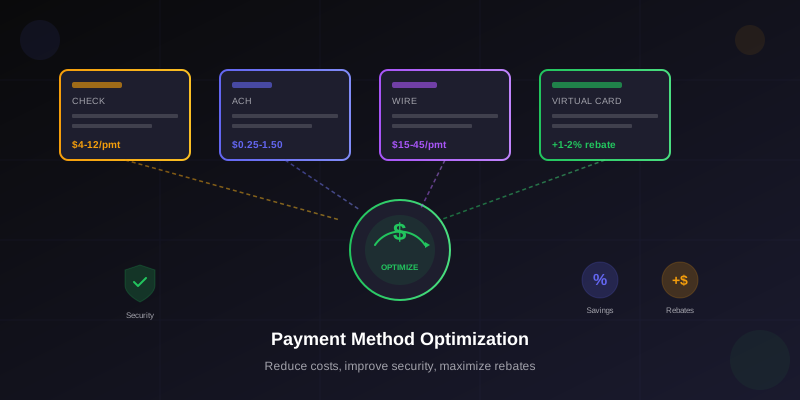
Every payment your AP department processes involves a choice, whether explicit or implicit, about how to send that money to vendors. Organizations that default to a single payment method, typically checks, are leaving money on the table and exposing themselves to unnecessary risk. Strategic payment method optimization transforms this overlooked decision into a source of cost savings, security improvement, and even revenue generation.
The modern payment landscape offers four primary options for B2B payments: paper checks, ACH transfers, wire transfers, and virtual cards. Each carries distinct cost profiles, processing characteristics, security considerations, and vendor acceptance patterns. Understanding these differences enables informed decisions that optimize for your organization's specific priorities and vendor base.
Most organizations operate with a payment method mix that evolved organically rather than strategically. Vendors requesting wires receive wires. Long-standing vendor relationships continue receiving checks because that's how it's always been done. This passive approach misses opportunities to reduce costs, improve control, and generate rebate income that directly benefits the bottom line.
Understanding the True Cost of Each Payment Method
Payment method costs extend far beyond the obvious transaction fees. A complete cost analysis must consider processing time, fraud exposure, float implications, and recovery capabilities when problems occur.
Cost Comparison by Payment Method
Total cost: $4-12 per payment
- - Printing, envelope, postage: $1.50-3.00
- - Processing labor: $2.00-5.00
- - Fraud investigation/resolution: $1-4 avg
Total cost: $0.25-1.50 per payment
- - Bank fees: $0.20-0.50
- - Processing labor: minimal
- - Fraud exposure: lower than check
Total cost: $15-45 per payment
- - Bank fees: $15-35 domestic, $35-45 intl
- - Same-day availability
- - Irrevocable once sent
Net benefit: +1-2% rebate
- - Transaction cost: $0 to payer
- - Rebates: 1-2% of spend
- - Enhanced security controls
Hidden Costs of Paper Checks
Paper checks appear inexpensive on the surface but carry substantial hidden costs that most organizations fail to track. Beyond printing and postage, consider the labor required to print, sign, stuff envelopes, and process positive pay files. Add the cost of check fraud investigations, stop payments, and reissued checks, and the true per-payment cost often exceeds $10.
Float, once a benefit of check payments, has largely disappeared as vendors deposit checks immediately using mobile capture. Meanwhile, check fraud continues to rise, with the American Bankers Association reporting check fraud attempts increased 84% between 2020 and 2023. Each fraudulent check costs time and money to investigate and resolve, even when caught before causing actual loss.
The Check Fraud Epidemic
Check fraud remains the most common form of payment fraud, with losses exceeding $20 billion annually. Sophisticated washing techniques can alter payee names and amounts, while organized rings use stolen mail to intercept and negotiate checks fraudulently. Every check in the mail represents fraud exposure that electronic payment methods eliminate entirely.
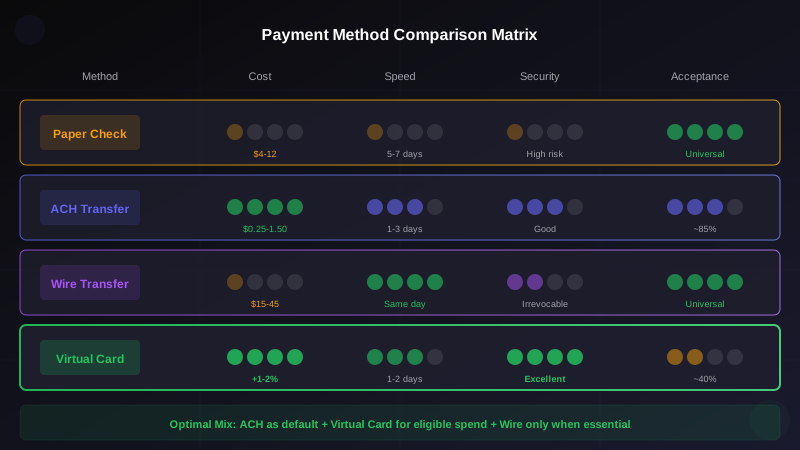
Comparing payment methods across cost, speed, security, and vendor acceptance dimensions
Strategic Payment Method Selection
Optimal payment method selection considers multiple factors beyond simple cost comparison. The right choice depends on payment urgency, amount, vendor relationship, and security requirements.
When to Use ACH Payments
ACH should be the default payment method for most recurring vendor relationships. Low cost, reasonable settlement speed (1-2 business days for same-day ACH, 2-3 days for standard), and strong fraud protections make ACH the workhorse of modern B2B payments.
- Ideal for: Regular vendor payments, recurring expenses, high-volume transactions
- Benefits: Lowest cost, automated remittance, easy reconciliation
- Considerations: Requires vendor banking information, slight delay vs. wire
- Security: NACHA rules provide return rights for unauthorized debits
When to Use Wire Transfers
Wire transfers remain necessary for specific situations despite their high cost. The irrevocable, same-day nature of wires makes them appropriate when speed is critical and the vendor cannot wait for ACH settlement.
- Ideal for: Large time-sensitive payments, international vendors, real estate closings
- Benefits: Same-day finality, global reach, guaranteed funds
- Considerations: High cost, irrevocable once sent, manual process
- Security: No reversal possible, verification critical before sending
Wire Fraud Prevention
The irrevocable nature of wire transfers makes them prime targets for business email compromise (BEC) attacks. Always verify wire instructions through a known phone number, not one provided in the payment request. Never wire funds based on email instructions alone, even if the email appears to come from a known vendor or executive.
When to Use Virtual Cards
Virtual cards represent the most overlooked opportunity in payment optimization. These single-use card numbers provide enhanced security while generating rebates typically ranging from 1-2% of payment volume. For an organization paying $10 million annually through virtual cards, that's $100,000-200,000 in rebate income.
- Ideal for: One-time purchases, travel expenses, vendors accepting card payments
- Benefits: Rebates, enhanced controls, automatic reconciliation
- Considerations: Not all vendors accept cards, interchange fees to suppliers
- Security: Single-use numbers eliminate fraud risk, spending controls
When Checks Still Make Sense
While minimizing check usage is generally advisable, some situations still warrant paper payments. Small vendors without electronic payment capabilities, one-time payments where collecting banking information isn't worthwhile, and situations requiring physical documentation may justify check use.
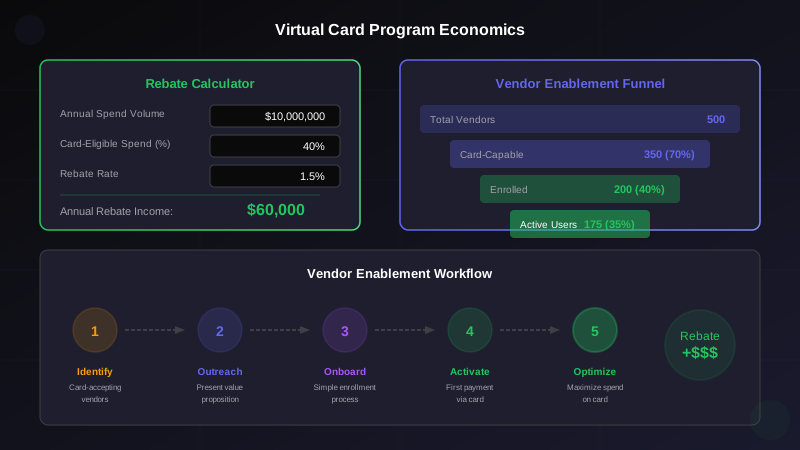
Virtual card programs can generate significant rebate income while improving payment security
Building a Virtual Card Program
Virtual card programs offer compelling economics but require thoughtful implementation. Maximizing rebate income depends on expanding vendor acceptance and optimizing card usage across eligible spend categories.
Virtual Card Program Economics
Typical Rebate Range
Based on program volume and card provider
1.0% - 2.0%
Average Vendor Acceptance
Percentage of vendors accepting virtual cards
30% - 50%
Interchange Fee to Vendor
Cost the vendor pays to accept card payment
2.0% - 3.0%
Break-Even Discount
Discount equivalent to accepting interchange cost
2/10 Net 30
Vendor Enablement Strategy
The key to virtual card program success is expanding vendor acceptance. Many vendors already accept card payments but aren't set up to receive virtual cards from your organization. A systematic enablement campaign can significantly increase acceptance rates.
- Identify candidates: Focus on vendors who already accept credit cards
- Present the value: Faster payment, guaranteed funds, reduced AR effort
- Streamline onboarding: Make acceptance as simple as possible
- Track acceptance: Monitor which vendors accept and which decline
- Optimize spend: Route maximum eligible spend through card program
Maximizing Virtual Card Rebates
Organizations with mature virtual card programs achieve 40-50% of total spend on cards. Start with vendors who already accept cards, then systematically work through your vendor base. Each percentage point of additional card spend directly increases rebate income, making vendor enablement an ongoing optimization opportunity.
Security Considerations by Payment Method
Each payment method carries distinct security profiles that should factor into method selection decisions, particularly for high-value or sensitive payments.
Security Profile Comparison
Paper Checks
- Highest fraud exposure of all methods
- Mail theft and washing common
- Account/routing number exposed
- Positive pay provides protection
ACH Payments
- NACHA rules provide return rights
- No physical document to intercept
- ACH blocks and filters available
- Bank info stored increases risk
Wire Transfers
- Irrevocable once sent
- Prime BEC fraud target
- Strong authentication typical
- Dual approval controls
Virtual Cards
- Single-use numbers eliminate reuse
- Exact amount controls
- Merchant category restrictions
- Expiration dates limit exposure
Implementing Payment Controls
Regardless of payment method, proper controls reduce fraud risk and ensure accuracy. Multi-level approval thresholds, segregation of duties, and verification procedures should apply across all payment types.
- Dual authorization: Require two approvers for payments above threshold
- Vendor verification: Validate bank account changes through known contacts
- Positive pay: Essential protection for organizations still issuing checks
- ACH blocks: Prevent unauthorized debits to your accounts
- Wire callbacks: Verify all wire instructions before execution
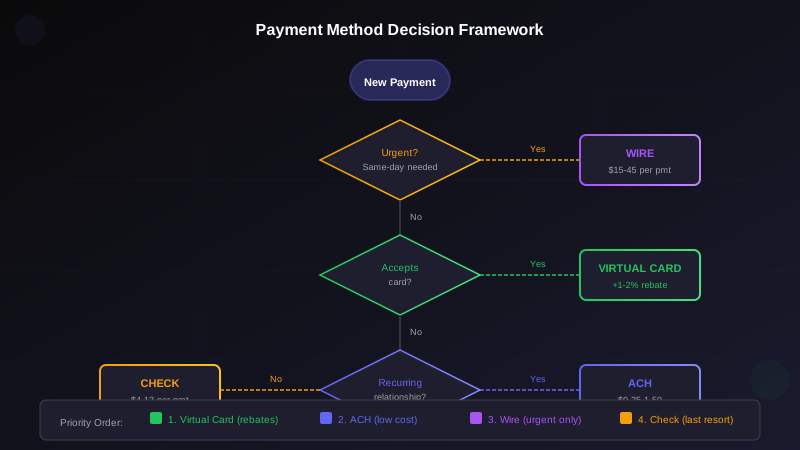
A structured approach to payment method optimization balances cost, security, and vendor relationships
Implementation Roadmap
Transforming your payment method mix requires a phased approach that balances quick wins with longer-term optimization. Start with low-hanging fruit while building toward comprehensive payment optimization.
Phased Implementation Approach
Phase 1: Quick Wins
- - Convert high-volume check vendors to ACH
- - Implement positive pay if not active
- - Review wire usage for unnecessary payments
Phase 2: Virtual Card Launch
- - Select virtual card provider
- - Identify card-accepting vendors
- - Begin vendor enablement campaign
Phase 3: Optimization
- - Systematic vendor migration
- - Monitor and expand card spend
- - Continuous rebate optimization
Measuring Payment Method Performance
Track key metrics to evaluate payment optimization progress and identify improvement opportunities. Regular analysis reveals trends and guides ongoing optimization efforts.
Key Performance Metrics
Electronic Payment Rate
Percentage of payments made electronically vs. check
Target: 90%+
Virtual Card Spend Ratio
Percentage of eligible spend on virtual cards
Target: 40%+
Average Payment Cost
Blended cost per payment across all methods
Target: Under $2
Rebate Income
Monthly income from virtual card rebates
Track monthly trend
The Bottom Line
Payment method optimization represents one of the highest-ROI opportunities in accounts payable. Organizations that strategically manage their payment mix achieve multiple benefits simultaneously: reduced processing costs, enhanced security, and direct rebate income that improves the bottom line.
The path forward is clear. Minimize paper check usage where possible, make ACH the default for routine vendor payments, limit wires to situations requiring same-day finality, and aggressively grow virtual card adoption to maximize rebate income. Each shift in payment mix delivers measurable financial benefit.
For organizations still writing hundreds of checks monthly, the opportunity is substantial. Converting even half of check volume to electronic methods can save $50,000+ annually in a mid-sized organization. Adding a mature virtual card program on top generates rebate income that effectively makes AP a profit center rather than pure cost center.
Start with Analysis
Before making changes, analyze your current payment method distribution and costs. Understanding your baseline enables realistic goal-setting and helps prioritize optimization efforts. Many organizations discover they're paying far more in check processing costs than they realized, making the business case for electronic payment adoption clear and compelling.
Ryan Shugars
Director of Product
Ryan has spent 15 years as a Systems Architect, building enterprise solutions that transform how organizations manage their financial operations.