Payment Fraud Prevention: Protecting Your Organization from BEC and Invoice Fraud
Business email compromise (BEC) and invoice fraud cost organizations billions annually. Traditional security measures are no longer enough. Here is how to build a layered defense that stops sophisticated payment fraud before money leaves your accounts.
Ryan Shugars
Director of Product
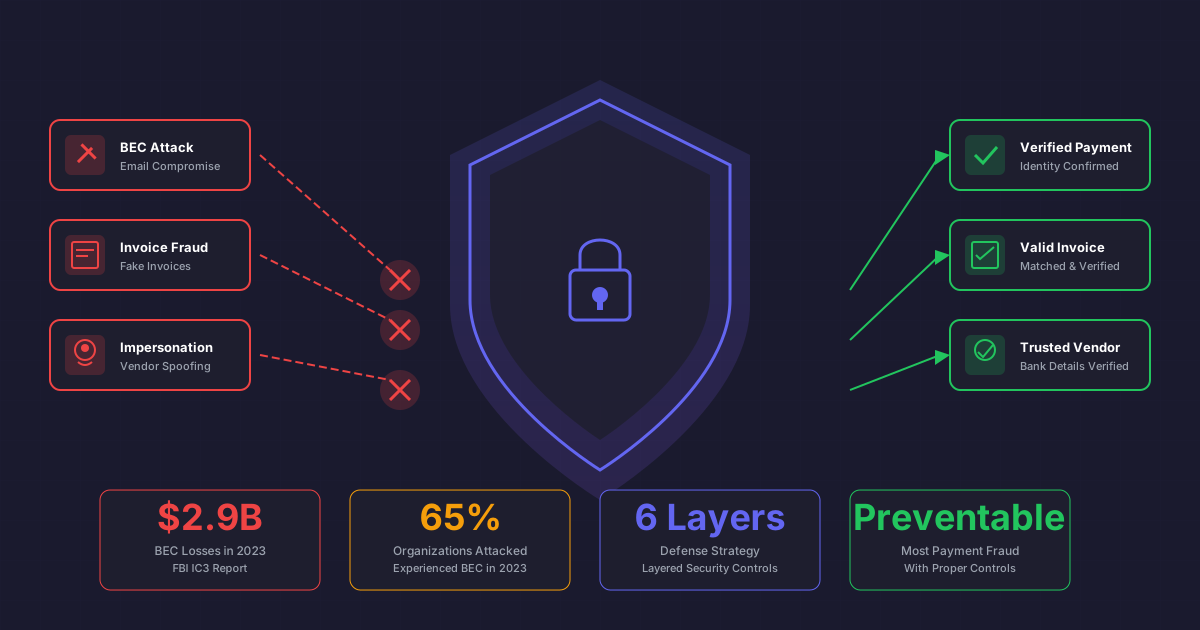
In March 2024, a Fortune 500 company wired $47 million to what they believed was a long-standing vendor. The email requesting updated banking details came from the vendor's CFO. The signature matched. The domain looked identical. Three weeks later, they discovered the CFO's email had been spoofed, and the money was unrecoverable.
This is not an isolated incident. The FBI's Internet Crime Complaint Center (IC3) reports that business email compromise (BEC) scams resulted in $2.9 billion in reported losses in 2023 alone, making it the costliest form of cybercrime. And these are just the cases that get reported. The actual figure is estimated to be three to four times higher.
The uncomfortable reality is that payment fraud has evolved far beyond what traditional security controls can handle. Sophisticated attackers spend months researching their targets, learning vendor relationships, studying communication patterns, and waiting for the perfect moment to strike. A single successful attack can dwarf years of fraud prevention investments.
The Anatomy of Modern Payment Fraud
Understanding how to defend against payment fraud requires understanding how these attacks actually work. Modern payment fraud schemes fall into several categories, each requiring different defensive strategies:
Business Email Compromise (BEC)
Attackers compromise or spoof executive or vendor email accounts to request fraudulent wire transfers, often impersonating CFOs, CEOs, or trusted suppliers. These emails typically create urgency and request secrecy.
Vendor Impersonation Fraud
Criminals create convincing invoices that mimic legitimate vendors, often using nearly identical logos, formatting, and even correct PO numbers obtained through reconnaissance or data breaches.
Account Takeover
Hackers gain access to actual vendor email accounts through phishing or credential stuffing, then send legitimate-looking requests to change payment details to accounts they control.
Internal Collusion
Employees with access to AP systems create fictitious vendors or manipulate existing vendor records to divert payments. This often involves multiple insiders working together to bypass controls.
What makes these schemes so effective is their sophistication. Gone are the days of obvious phishing emails with broken English and suspicious attachments. Today's fraudsters use AI to craft perfect prose, spend months in reconnaissance, and time their attacks to coincide with staff vacations or busy periods.
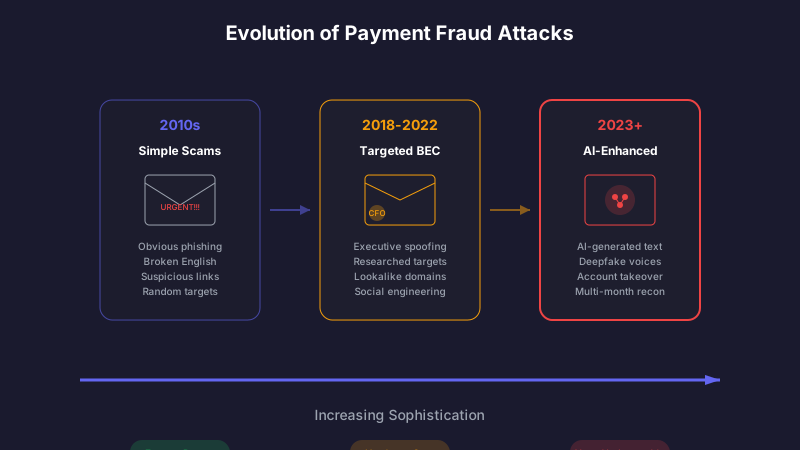
Payment fraud attacks have evolved from obvious scams to highly sophisticated social engineering
Why Traditional Controls Fail
Most organizations rely on a standard set of fraud prevention controls: segregation of duties, approval hierarchies, and periodic audits. While these remain important foundational elements, they were designed for a different threat landscape.
Consider why traditional controls fall short:
- Segregation of duties is bypassable: When an attacker compromises a vendor's email, they can intercept and modify legitimate invoices. Every control works perfectly, yet fraud still occurs.
- Approval workflows trust email: If a request appears to come from a legitimate source, even multi-level approvals will not catch it. Approvers verify the request, not the requester's identity.
- Audits happen after the fact: By the time an annual audit catches a discrepancy, fraudulent payments have long since been made and funds are unrecoverable.
- Training has limits: Even well-trained employees can be fooled by sophisticated attacks, especially during high-pressure periods or when requests appear to come from authority figures.
Payment Fraud: The Stark Reality
$2.9B
Reported BEC losses in 2023 (FBI IC3)
21,489
BEC complaints filed in 2023
$137K
Average loss per BEC incident
65%
Of organizations experienced BEC attacks in 2023
Building a Layered Defense Strategy
Effective payment fraud prevention requires multiple overlapping controls that work together. No single control is foolproof, but when combined, they create a defense-in-depth approach that dramatically reduces risk. Here are the six essential layers every organization needs.
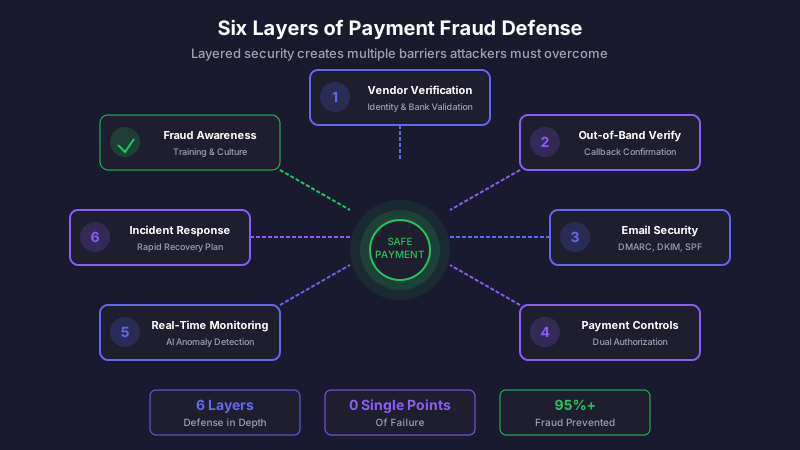
A layered defense strategy creates multiple barriers that attackers must overcome
Layer 1: Vendor Verification Procedures
The foundation of payment fraud prevention is knowing exactly who you are paying. This means implementing rigorous vendor verification at onboarding and ongoing validation throughout the relationship.
Essential Verification Controls:
- Validate vendor identity through independent sources, not information provided by the vendor
- Verify bank account ownership before any payment is processed
- Require callback verification to pre-registered phone numbers for any banking changes
- Implement a waiting period (24-72 hours) before new banking details become active
Layer 2: Out-of-Band Verification
Out-of-band verification means confirming requests through a different communication channel than the one used to make the request. If someone emails a payment request, verify it by phone. If they call, verify by email to a known address. This simple step defeats the vast majority of BEC attacks.
Out-of-Band Best Practices:
- Never use contact information provided in the suspicious request itself
- Maintain a verified contact registry for all vendors and update it regularly
- Require verbal confirmation for any payment changes above defined thresholds
- Train staff to be suspicious of requests that discourage verification
Layer 3: Email Security and Authentication
Email remains the primary vector for payment fraud. Implementing robust email security controls significantly reduces the attack surface available to fraudsters.
Email Security Essentials:
- Deploy DMARC, DKIM, and SPF to prevent domain spoofing
- Enable external email banners that warn users when messages originate outside the organization
- Implement email filtering that flags lookalike domains and suspicious patterns
- Use email authentication tools that verify sender identity for financial communications
Layer 4: Payment Controls and Dual Authorization
Strong payment controls ensure that no single person can initiate and approve a payment without oversight. This not only prevents external fraud but also deters internal threats.
Payment Control Framework:
- Require dual authorization for payments above risk-based thresholds
- Implement positive pay with your bank to verify check details
- Use ACH debit blocks and filters to prevent unauthorized withdrawals
- Set up wire transfer callbacks for amounts exceeding defined limits
Layer 5: Real-Time Monitoring and Alerts
Proactive monitoring enables early detection of suspicious patterns before payments are made. AI-powered systems can analyze thousands of transactions to identify anomalies that human reviewers would miss.
Monitoring Capabilities:
- Flag new vendors receiving large first payments
- Alert on banking detail changes for established vendors
- Monitor for invoices that deviate from historical patterns
- Track payments to high-risk geographies or accounts
Layer 6: Incident Response and Recovery
Even with the best controls, fraud attempts will occur. Having a documented incident response plan ensures rapid action to minimize losses when an attack is detected.
Incident Response Essentials:
- Establish direct contacts at your bank for emergency payment recalls
- Document escalation procedures with clear roles and responsibilities
- Maintain relationships with law enforcement and FBI IC3 for reporting
- Conduct post-incident reviews to strengthen controls
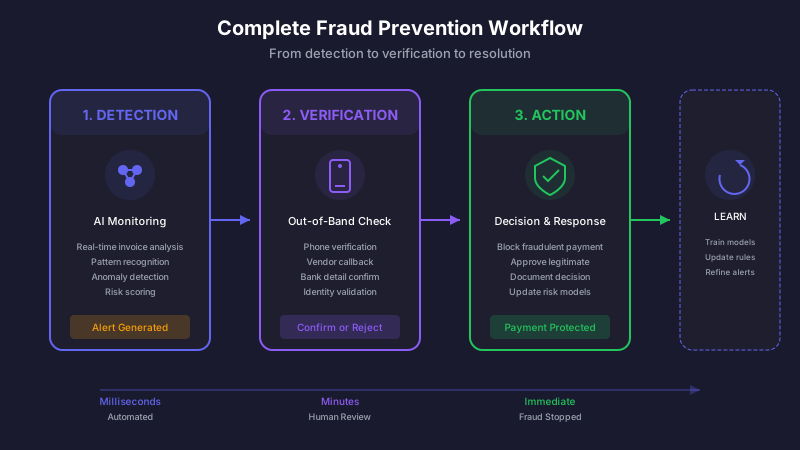
A complete fraud prevention workflow integrates detection, verification, and response capabilities
The Role of Technology in Fraud Prevention
While processes and training form the foundation of fraud prevention, technology amplifies their effectiveness. Modern AP automation platforms provide capabilities that manual processes simply cannot match.
AI-Powered Detection
Machine learning models can analyze invoice patterns, vendor behavior, and payment requests in milliseconds, flagging anomalies that would take humans hours or days to identify. The best systems learn from your organization's specific patterns, improving detection accuracy over time.
Key technology capabilities to look for include:
- Vendor master validation: Automatic cross-referencing of vendor details against business registries, sanctions lists, and known fraud databases.
- Invoice anomaly detection: AI analysis that identifies unusual amounts, timing patterns, or formatting that may indicate fraud.
- Banking change workflows: Automated processes that enforce verification steps when payment details are modified.
- Audit trail generation: Complete documentation of every action for compliance and investigation purposes.
Building a Culture of Fraud Awareness
Technology and processes are only as effective as the people using them. Creating a culture where employees feel empowered to question suspicious requests is essential.
Key cultural elements include:
- Regular training: Conduct fraud awareness training at least quarterly, using real examples and simulated attacks.
- Psychological safety: Ensure employees know they will not be punished for delaying a payment to verify its legitimacy, even if it turns out to be genuine.
- Clear escalation paths: Make it easy to report suspicious activity without bureaucratic barriers.
- Executive buy-in: When leadership takes fraud prevention seriously, the entire organization follows.
The Urgency Trap
Fraudsters exploit urgency to bypass controls. Phrases like "the CEO needs this immediately" or "we will lose the deal if this is not paid today" are red flags. Legitimate requests can always wait for proper verification. Train your team: the more urgent the request, the more carefully it should be verified.
Measuring Your Fraud Prevention Effectiveness
You cannot improve what you do not measure. Effective fraud prevention programs track key metrics to identify weaknesses and demonstrate value to leadership.
Essential metrics to track include:
- Attempted fraud detection rate: How many suspicious invoices or requests are caught before payment?
- False positive rate: How many legitimate transactions are flagged? High rates create alert fatigue.
- Time to detection: How quickly are fraud attempts identified after they enter your systems?
- Verification compliance: What percentage of high-risk transactions receive required verification steps?
- Training completion: Are all relevant employees completing fraud awareness training?
Implementation Roadmap
Building a comprehensive fraud prevention program does not happen overnight. Here is a phased approach that balances quick wins with sustainable improvement:
- Week 1-2: Assessment Evaluate current controls, identify gaps, and document existing vendor verification and payment approval processes.
- Week 3-4: Quick Wins Implement external email banners, update callback verification procedures, and review high-risk vendor accounts.
- Month 2: Process Enhancement Deploy enhanced vendor verification procedures and payment approval workflows. Train staff on new protocols.
- Month 3: Technology Integration Implement or upgrade AP automation with fraud detection capabilities. Configure monitoring and alerting.
- Ongoing: Continuous Improvement Regular training, metric tracking, and control testing. Update procedures as new threats emerge.
The Bottom Line
Payment fraud is not a question of if, but when. The organizations that avoid catastrophic losses are those that have layered defenses in place before attackers strike.
The good news is that most payment fraud is preventable. BEC attacks succeed because of gaps in verification procedures, not because of unstoppable technology. Invoice fraud works because organizations trust what looks legitimate without confirming it actually is.
By implementing the six layers of defense outlined here, vendor verification, out-of-band confirmation, email security, payment controls, real-time monitoring, and incident response, you create a security posture that forces attackers to work much harder. Most will simply move on to easier targets.
The investment in fraud prevention is measured in the millions of dollars you never lose. Can your organization afford to wait?
Ryan Shugars
Director of Product
Ryan has spent 15 years as a Systems Architect, building enterprise solutions that transform how organizations manage their financial operations.