Nonprofit AP Best Practices: Fund Accounting, Grant Compliance, and Donor Restrictions
Nonprofit accounts payable operates in a fundamentally different world than for-profit AP. Every dollar must be tracked not just by vendor and expense type, but by fund, grant, donor restriction, and reporting requirement. Here's how to build AP processes that maintain compliance while honoring the trust donors place in your organization.
Ryan Shugars
Director of Product
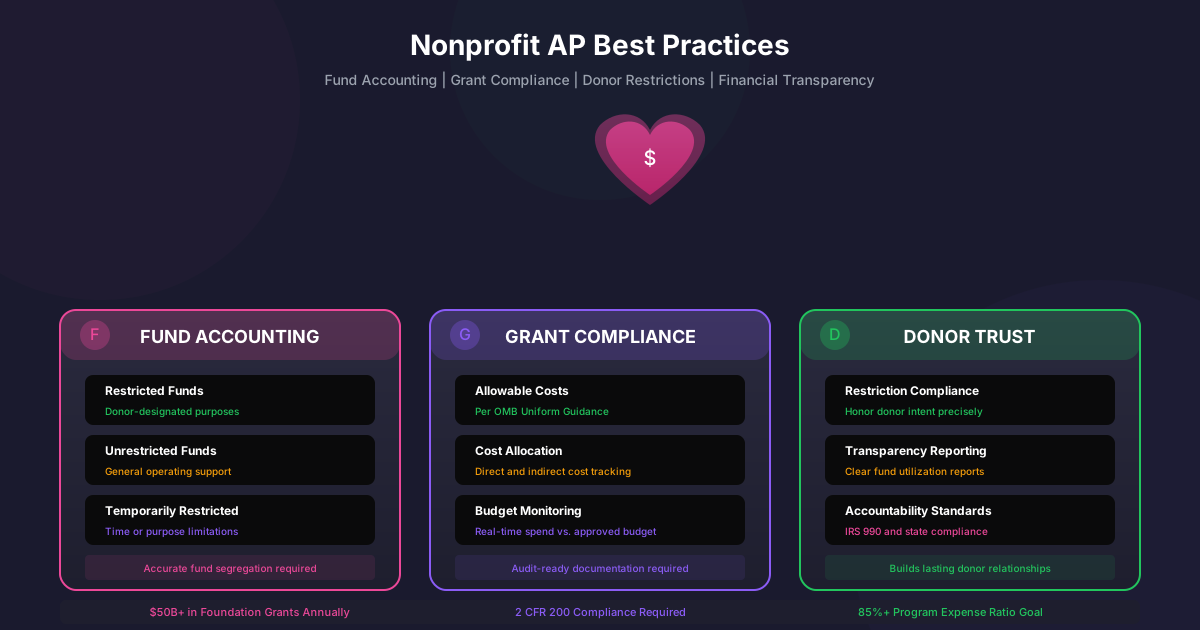
Nonprofit organizations manage over $2.6 trillion in annual revenue in the United States alone. Unlike their for-profit counterparts, nonprofits must track every expenditure against donor intent, grant requirements, and regulatory obligations. A single invoice might need to be split across multiple funds, each with different restrictions, reporting requirements, and compliance standards.
The consequences of mismanaging restricted funds extend far beyond financial penalties. Donor trust, once broken, is extraordinarily difficult to rebuild. Foundation grants come with clawback provisions. Federal grants carry the weight of the OMB Uniform Guidance. And your Form 990 is public, meaning any interested party can scrutinize your expense ratios and fund management practices.
Understanding Fund Accounting for AP
Fund accounting is the backbone of nonprofit financial management. Unlike for-profit accounting, which focuses on profitability, fund accounting tracks resources based on their source, restrictions, and intended use. For AP teams, this means every invoice must be coded not just to the right expense account, but to the right fund.
Fund Categories in Nonprofit AP
Available for any organizational purpose
- Undesignated general funds
- Board-designated reserves
- Investment in fixed assets
- Operating reserves
Must be used per donor stipulations
- Purpose-restricted (specific programs)
- Time-restricted (future periods)
- Perpetual (endowments)
- Grant-funded activities
The Multi-Fund Invoice Challenge
Nonprofit AP frequently encounters invoices that must be allocated across multiple funds. Consider a utility bill for a building that houses three programs, each funded by different grants. Or a consultant invoice for work that benefits both a restricted program and general operations. These scenarios require systematic allocation methodologies.
- Direct allocation: Costs that can be specifically identified with a particular fund
- Indirect cost allocation: Shared costs distributed using an approved methodology
- Square footage allocation: Facility costs based on space utilization
- FTE allocation: Personnel-related costs based on time allocation
- Program benefit allocation: Based on which programs benefit from the expense
Cost Allocation Documentation
Your cost allocation methodology must be documented, consistently applied, and defensible under audit. The IRS and grant auditors will examine whether your allocations reflect actual benefit to each fund. Arbitrary or inconsistent allocations can trigger questioned costs and reputational damage.
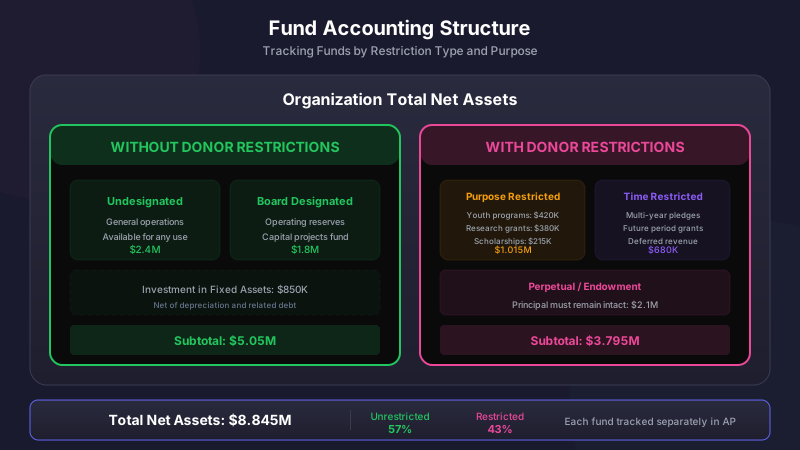
Fund accounting requires tracking each fund separately with clear restriction classifications
Grant Compliance in Accounts Payable
Government and foundation grants come with extensive compliance requirements that directly impact AP operations. The OMB Uniform Guidance (2 CFR 200) establishes the framework for federal grant management, and many foundations have adopted similar standards.
Allowable Cost Verification
Before processing any invoice against a grant, AP must verify the cost is allowable under the grant terms. The Uniform Guidance defines cost principles that determine allowability:
- Necessary and reasonable: The cost is essential for program operations
- Allocable: The cost benefits the grant in proportion to the charge
- Consistent: Similar costs are treated the same across all funding sources
- Authorized: Included in the approved budget or otherwise permitted
- Properly documented: Supporting documentation meets audit requirements
Common Unallowable Costs Under Federal Grants
- Alcoholic beverages
- Entertainment costs
- Fundraising expenses
- Lobbying activities
- Bad debt expenses
- Equipment over $5,000
- Foreign travel
- Participant support costs
- Budget transfers over 10%
- Subaward modifications
- Conference costs
- Memberships
- Professional services
- Travel costs
- Indirect costs
Budget Monitoring and Spending Controls
Grant budgets typically contain line items that cannot be exceeded without prior approval. AP must implement controls that prevent overspending and alert program managers when budget thresholds approach:
- Real-time budget checking: Verify available balance before invoice approval
- Threshold alerts: Notify managers at 75%, 90%, and 100% of budget line
- Period awareness: Track spending against grant period, not just fiscal year
- Carryforward rules: Understand which grants allow unspent funds to roll over
- No-cost extension tracking: Monitor modified end dates and adjusted budgets
Donor Restriction Management
Beyond formal grants, individual and foundation donors often attach restrictions to their gifts. These restrictions create legally binding obligations that your organization must honor. AP plays a critical role in ensuring expenditures align with donor intent.
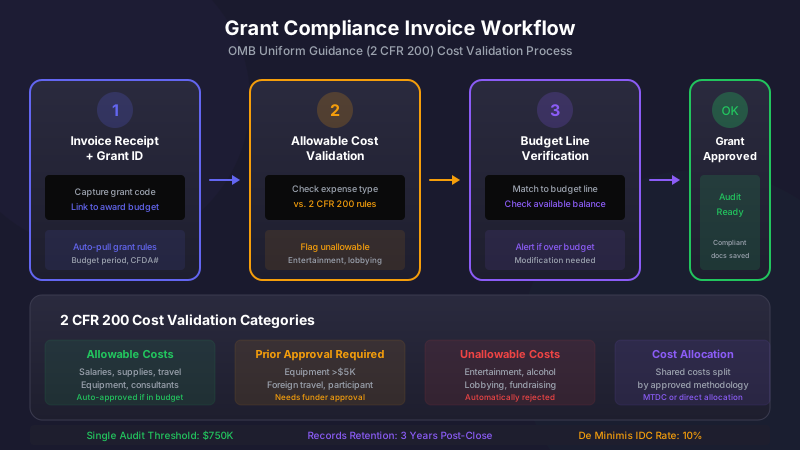
Automated grant compliance workflow ensures every invoice meets 2 CFR 200 requirements
Types of Donor Restrictions
Understanding the nature of restrictions helps AP teams properly classify and track expenditures:
- Purpose restrictions: Funds must be used for a specific program or purpose (e.g., scholarship fund, building campaign)
- Time restrictions: Funds cannot be spent until a future period (e.g., multi-year pledge)
- Perpetual restrictions: Principal must remain intact forever (e.g., endowment)
- Conditional gifts: Restriction only applies until a condition is met
Restriction Release Process
Purpose Restriction
Released when expenses match the restricted purpose
Time Restriction
Released when the specified time period arrives
Perpetual Restriction
Never released; only investment income may be spent
Building Donor Trust Through Transparency
Donors increasingly expect detailed reporting on how their gifts are used. Your AP processes directly impact your ability to provide this transparency. Consider these practices:
- Detailed fund tracking: Link every expenditure to specific gifts or grants
- Program expense ratios: Calculate and report the percentage of funds going to programs vs. administration
- Impact reporting: Connect financial data to outcome metrics
- Stewardship reports: Provide regular updates to major donors on fund utilization
- Public transparency: Prepare for Form 990 scrutiny and watchdog ratings
Charity Watchdog Standards
Organizations like Charity Navigator and GuideStar evaluate nonprofits based on financial metrics. A program expense ratio above 75% is generally considered acceptable, while top-rated charities often exceed 85%. Your AP processes directly impact these calculations through proper expense classification and allocation.
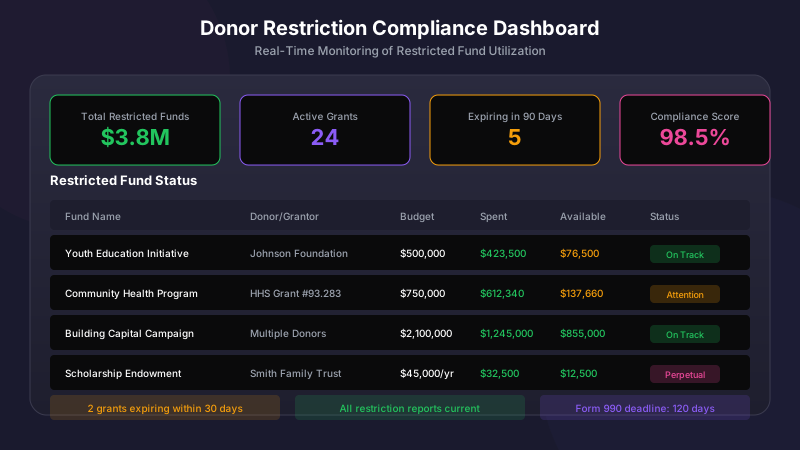
Real-time dashboards provide visibility into restricted fund status and compliance metrics
Automating Nonprofit AP Compliance
The complexity of nonprofit AP demands automation. Manual processes cannot reliably enforce fund restrictions, verify grant allowability, and maintain the audit trails required for compliance. Modern AP automation addresses these challenges through:
- Fund-aware invoice coding: Automatically suggest or require fund allocation based on expense type and vendor
- Grant budget integration: Real-time visibility into available budget by grant line item
- Allowable cost validation: Flag potentially unallowable costs before approval
- Restriction tracking: Maintain donor restriction metadata throughout the invoice lifecycle
- Allocation automation: Apply consistent allocation methodologies across shared costs
- Audit trail generation: Document every approval, allocation, and coding decision
Nonprofit AP Automation Benefits
- 94% reduction in fund coding errors
- 100% grant budget visibility
- Zero unallowable cost approvals
- Complete audit documentation
- 65% faster invoice processing
- 80% reduction in audit prep time
- Real-time fund balance reporting
- Automated donor stewardship data
Preparing for Nonprofit Audits
Nonprofit AP must maintain audit-ready documentation at all times. Whether facing an annual financial audit, a Single Audit (for organizations spending $750,000+ in federal funds), or a foundation grant review, your AP records must demonstrate:
- Proper fund classification: Every transaction correctly coded to restricted or unrestricted funds
- Allowable cost compliance: Documentation that expenses meet grant requirements
- Consistent cost allocation: Methodologies applied uniformly across all grants
- Segregation of duties: Appropriate controls over payment processing
- Donor intent adherence: Evidence that restrictions were honored
Your Nonprofit AP Action Plan
Strengthening nonprofit AP compliance requires systematic improvements across people, processes, and technology. Start with these priorities:
- Document your fund structure: Create a clear chart of funds with restriction types and compliance requirements
- Establish allocation policies: Develop and document consistent cost allocation methodologies
- Implement budget controls: Build real-time grant budget monitoring into your approval workflow
- Train your team: Ensure AP staff understand fund accounting principles and grant compliance
- Automate compliance checks: Use technology to enforce restrictions and flag potential issues
- Prepare for transparency: Build systems that can generate donor stewardship reports and public accountability metrics
Nonprofit AP complexity is not optional. Donors, foundations, government agencies, and the public all expect accountability for how charitable dollars are spent. Organizations that build robust fund accounting, grant compliance, and restriction tracking into their AP operations protect themselves from compliance failures while building the trust that sustains their mission. The investment in proper nonprofit AP infrastructure pays dividends in donor confidence, successful audits, and organizational sustainability.
Ryan Shugars
Director of Product
Ryan has spent 15 years as a Systems Architect, building enterprise solutions that transform how organizations manage their financial operations.