Multi-Entity AP Management: Consolidation, Intercompany, and Shared Services
Organizations operating across multiple legal entities face unique accounts payable challenges. From subsidiaries and divisions to international operations, managing AP efficiently while maintaining proper controls and financial reporting integrity requires sophisticated strategies for consolidation, intercompany transactions, and shared service operations.
Ryan Shugars
Director of Product
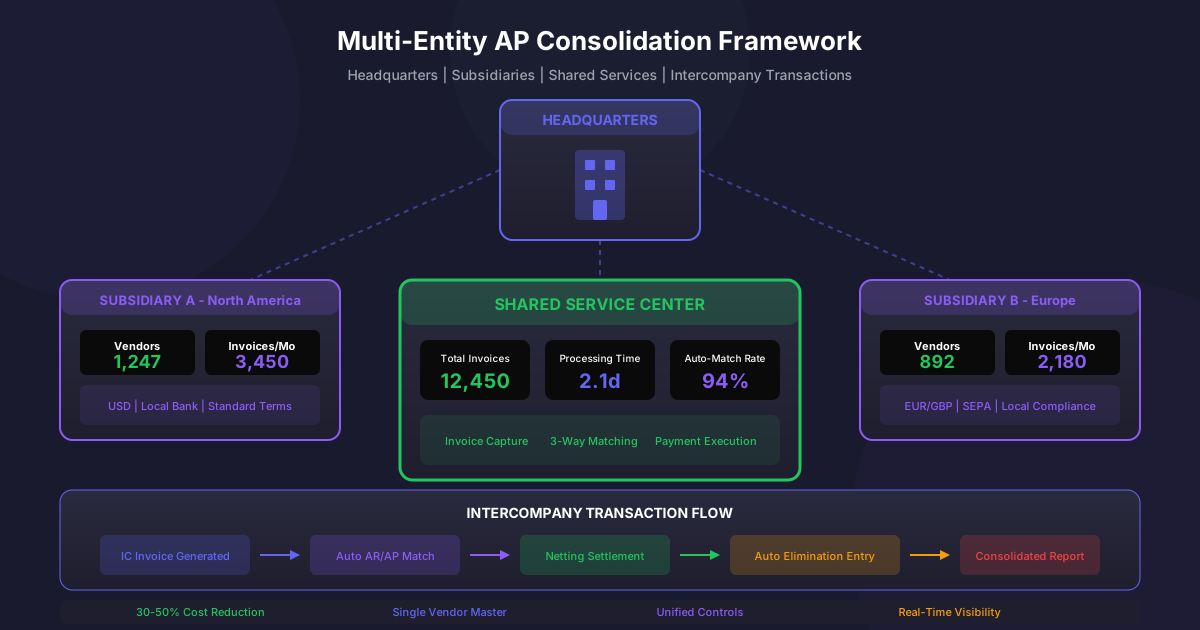
As organizations grow through acquisitions, geographic expansion, or divisional restructuring, their accounts payable operations become increasingly complex. A company with five subsidiaries might process invoices through five separate AP departments, each with its own vendors, approval workflows, and payment processes. This fragmentation leads to duplicated effort, inconsistent controls, missed consolidation opportunities, and limited visibility into total organizational spend.
Multi-entity AP management is the strategic approach to handling accounts payable across multiple legal entities, divisions, or subsidiaries. Whether you are consolidating operations into a shared service center, managing complex intercompany transactions, or simply trying to gain visibility across decentralized AP functions, the principles and strategies outlined here will help you build a more efficient and controlled AP operation.
The Multi-Entity AP Challenge
Organizations with multiple legal entities face a unique set of AP challenges that single-entity companies never encounter. These challenges multiply with each additional entity, creating exponential complexity as organizations grow:
Multi-Entity AP Complexity Factors
- Separate vendor master files per entity
- Distinct chart of accounts structures
- Different approval hierarchies
- Multiple banking relationships
- Entity-specific tax requirements
- Shared service allocations
- Management fee charges
- Intercompany loans and interest
- Transfer pricing compliance
- Elimination entry requirements
- Multiple currencies and exchange rates
- Country-specific tax regulations
- Local language invoices
- Regional payment methods
- Time zone coordination
- Consolidated financial statements
- Segment reporting obligations
- Statutory filing requirements
- Management reporting needs
- Audit trail maintenance
Three Models for Multi-Entity AP
Organizations generally adopt one of three models for managing AP across multiple entities, each with distinct advantages and trade-offs. The right choice depends on your organizational structure, growth trajectory, and strategic priorities.
1. Decentralized Model
In the decentralized model, each entity maintains its own AP function with local staff, systems, and processes. This approach is common in holding company structures where subsidiaries operate with significant autonomy.
- Advantages: Local expertise, entity autonomy, faster local decision-making
- Disadvantages: Duplicated costs, inconsistent controls, limited leverage, poor visibility
- Best for: Highly autonomous subsidiaries, recently acquired entities, diverse industries
2. Centralized Model
Centralized AP consolidates all invoice processing, approval workflows, and payment execution into a single corporate function. Entities submit invoices to headquarters, which handles all processing on their behalf.
- Advantages: Maximum efficiency, consistent controls, leverage with vendors, full visibility
- Disadvantages: Slower local responsiveness, requires strong systems, resistance from entities
- Best for: Tightly integrated operations, similar business models, strong corporate culture
3. Shared Services Model
The shared services model creates a dedicated internal organization that provides AP services to all entities. Unlike pure centralization, shared services operates as an internal service provider with service level agreements and chargeback mechanisms.
- Advantages: Balanced efficiency and responsiveness, clear accountability, scalable
- Disadvantages: Requires significant investment, governance complexity, cultural change
- Best for: Mid-to-large enterprises, organizations seeking transformation, growth-oriented companies
The Shared Services Advantage
Organizations that implement shared services for AP typically achieve 30-50% cost reduction in processing costs while improving cycle times by 40% or more. The key is treating the shared service center as a genuine service organization with clear SLAs and continuous improvement mandates.
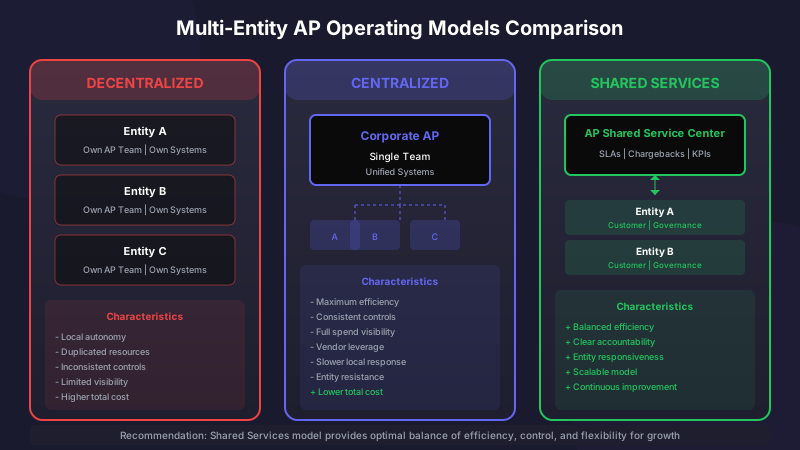
Comparison of multi-entity AP operating models and their characteristics
Intercompany Invoice Management
Intercompany transactions represent one of the most complex aspects of multi-entity AP. When one entity provides goods or services to another entity within the same corporate family, the resulting invoices require special handling to ensure proper accounting, tax compliance, and consolidated financial reporting.
Types of Intercompany Transactions
Understanding the categories of intercompany transactions helps establish appropriate processing workflows and controls:
- Shared Service Allocations: IT, HR, finance, and other corporate services charged to operating entities
- Management Fees: Corporate overhead allocation based on revenue, headcount, or other metrics
- Intercompany Sales: Goods transferred between entities, often at transfer pricing rates
- Intercompany Loans: Financing arrangements between entities with associated interest
- Royalties and Licensing: Intellectual property charges between entities
- Cost Reimbursements: Pass-through of expenses incurred on behalf of another entity
Intercompany Invoice Workflow
Invoice Generation
Selling entity creates intercompany invoice
Auto-Matching
System matches AR in seller with AP in buyer
Approval Workflow
Buyer entity approves based on agreement terms
Settlement
Netting or cash settlement per policy
Elimination
Auto-generate elimination entries for consolidation
Transfer Pricing Considerations
Transfer pricing, the pricing of goods and services between related entities, is one of the most scrutinized areas of international tax compliance. AP systems must support:
- Validation of prices against transfer pricing policies
- Documentation of arm's-length pricing methodology
- Consistent application across all intercompany transactions
- Year-end adjustments when actual results differ from projections
- Support for tax authority audits with complete transaction history
Transfer Pricing Audit Risk
Transfer pricing is a top audit priority for tax authorities worldwide. Adjustments can result in double taxation, penalties, and interest. Ensure your AP system maintains complete documentation of intercompany transaction pricing and supports the arm's-length principle required by OECD guidelines.
Building a Shared Service Center for AP
For organizations ready to transform their multi-entity AP operations, establishing a shared service center (SSC) represents the most significant opportunity for improvement. A well-designed SSC can dramatically reduce costs, improve controls, and free entity finance teams to focus on business partnering rather than transaction processing.
SSC Design Principles
Successful AP shared service centers are built on these foundational principles:
- Service Orientation: Treat entities as customers with defined SLAs and satisfaction measures
- Process Standardization: Implement common workflows while allowing necessary variations
- Technology Enablement: Deploy automation to maximize efficiency and accuracy
- Continuous Improvement: Build a culture of ongoing optimization and innovation
- Governance Structure: Establish clear roles, responsibilities, and escalation paths
- Talent Development: Create career paths that attract and retain strong performers
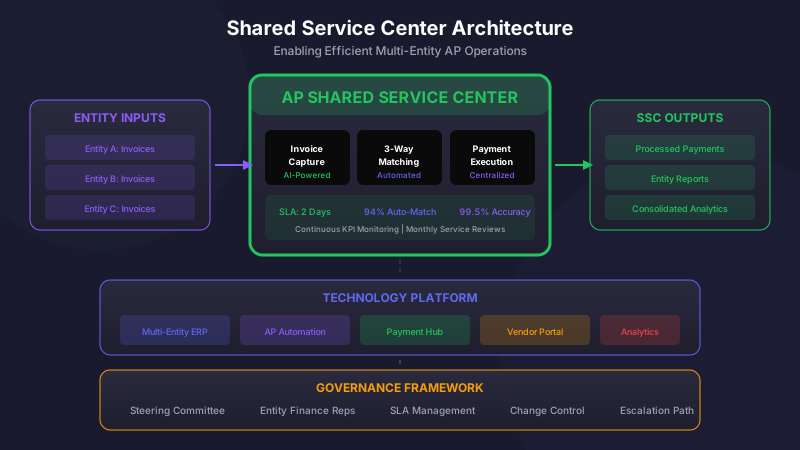
Shared service center architecture enabling efficient multi-entity AP operations
SSC Implementation Roadmap
Implementing a shared service center is a major transformation that requires careful planning and execution. A phased approach reduces risk and builds momentum:
SSC Implementation Phases
- Process documentation and standardization
- Technology platform selection
- SSC location and staffing model
- Governance framework design
- SLA definition and KPI establishment
- Migrate 2-3 entities as pilot
- Validate processes and technology
- Train SSC staff
- Refine workflows based on learnings
- Document transition playbook
- Wave-based entity migration
- Scale SSC operations
- Continuous process optimization
- Entity change management
- Performance monitoring
- Advanced automation deployment
- Continuous improvement initiatives
- Expanded scope (AR, T&E, etc.)
- Benchmarking and target raising
- Innovation and emerging tech adoption
Technology Requirements for Multi-Entity AP
Managing AP across multiple entities requires technology that supports complexity while enabling efficiency. Key capabilities include:
Multi-Entity Architecture
- Entity Hierarchies: Support for complex ownership structures and reporting relationships
- Unified Vendor Master: Single vendor record with entity-specific attributes
- Flexible Chart of Accounts: Entity-specific coding with consolidation mapping
- Multi-Currency: Real-time exchange rates and proper accounting treatment
- Role-Based Security: Entity-level access controls with cross-entity visibility options
Intercompany Capabilities
- Intercompany Identification: Automatic recognition of intercompany transactions
- AR/AP Matching: Automated reconciliation between selling and buying entities
- Netting Functionality: Support for intercompany balance settlement
- Elimination Automation: Auto-generation of consolidation elimination entries
- Transfer Pricing Validation: Price checking against approved policies
Consolidation Support
- Real-Time Visibility: Cross-entity dashboards and reporting
- Standardized Workflows: Consistent processes with entity-specific variations
- Centralized Payments: Payment factory capabilities for efficiency
- Consolidated Vendor Management: Leverage across all entities
- Unified Analytics: Cross-entity spend analysis and benchmarking
Automation Multiplies Multi-Entity Benefits
Organizations with multi-entity structures see even greater benefits from AP automationthan single-entity companies. Automation eliminates the duplicated effort of processing similar invoices across entities, standardizes controls automatically, and provides the cross-entity visibility that manual processes cannot deliver.
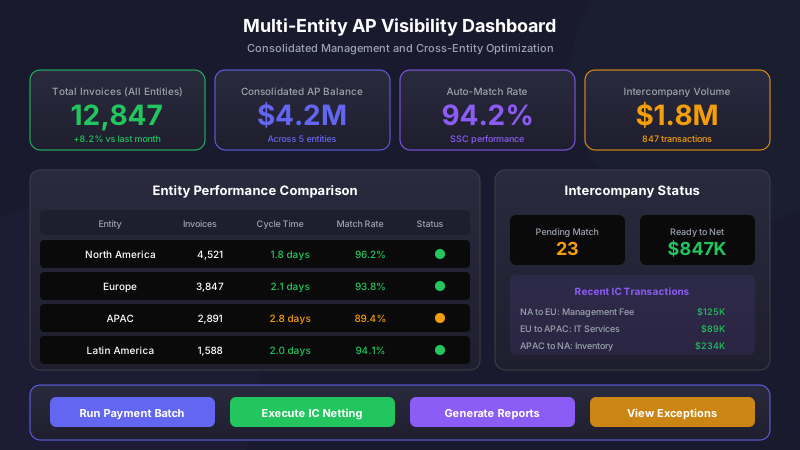
Cross-entity AP visibility dashboard enabling consolidated management and optimization
Best Practices for Multi-Entity AP Success
Organizations that excel at multi-entity AP share common practices that balance standardization with flexibility and efficiency with control:
Multi-Entity AP Best Practices
Standardize Where Possible, Customize Where Necessary
Create a standard AP process framework that applies to all entities, with documented variations only where legal, regulatory, or operational requirements demand them.
Establish Clear Governance
Define decision rights, escalation paths, and accountability for AP performance. Include entity finance leaders in governance to maintain alignment.
Invest in Vendor Master Governance
Maintain a single, clean vendor master across all entities. Prevent duplicates, enforce data quality standards, and enable consolidated vendor management.
Automate Intercompany Processing
Eliminate manual intercompany invoice handling with automated matching, approval workflows, and settlement processes that reduce errors and accelerate close.
Measure and Report Consistently
Track the same KPIs across all entities to enable benchmarking, identify best practices for sharing, and hold all operations to common standards.
Plan for Acquisition Integration
Develop a repeatable playbook for integrating newly acquired entities into your AP framework, enabling faster time-to-synergy and consistent operations.
Common Pitfalls to Avoid
Multi-entity AP transformations often encounter challenges that can derail progress. Be aware of these common pitfalls:
- Underestimating Change Management: Entity finance teams may resist centralization. Invest in communication, involvement, and demonstrating benefits.
- Over-Standardizing Too Fast: Attempting to standardize everything immediately creates resistance. Prioritize high-impact areas first.
- Neglecting Entity Needs: SSCs that become disconnected from entity requirements lose credibility. Maintain regular feedback loops.
- Insufficient Technology Investment: Trying to manage multi-entity complexity with single-entity tools creates inefficiency and risk.
- Ignoring Data Quality: Garbage in, garbage out. Clean data is essential for automation and analytics across entities.
- Forgetting About Controls: Efficiency gains mean nothing if controls weaken. Ensure consolidation strengthens rather than compromises controls.
Your Multi-Entity AP Action Plan
Whether you are managing two entities or two hundred, the path to optimized multi-entity AP starts with understanding your current state and defining your target. Consider these steps:
- Assess Current State: Document AP processes, systems, and performance across all entities
- Identify Opportunities: Quantify potential benefits from consolidation, standardization, and automation
- Define Target Operating Model: Choose the right model (decentralized, centralized, or shared services) for your organization
- Build the Business Case: Quantify costs, benefits, and risks to secure investment
- Plan the Transformation: Develop a phased roadmap with clear milestones and success metrics
- Execute with Discipline: Follow the plan, manage change, and course-correct as needed
- Optimize Continuously: Build a culture of ongoing improvement to sustain and extend benefits
Multi-entity AP management represents one of the most significant opportunities for finance transformation. Organizations that master it gain not only cost savings and efficiency, but also the visibility and control needed to optimize cash flow, strengthen vendor relationships, and support business growth. The complexity is real, but so are the rewards for organizations that get it right.
Ryan Shugars
Director of Product
Ryan has spent 15 years as a Systems Architect, building enterprise solutions that transform how organizations manage their financial operations.