Intelligent Invoice Routing: AI-Powered Workflows That Eliminate Bottlenecks
Traditional invoice routing relies on rigid rules that fail when reality gets complicated. AI-powered routing learns from your organization's patterns to get invoices to the right approvers faster, cutting cycle times and eliminating the approval bottlenecks that delay payments.
Ryan Shugars
Director of Product
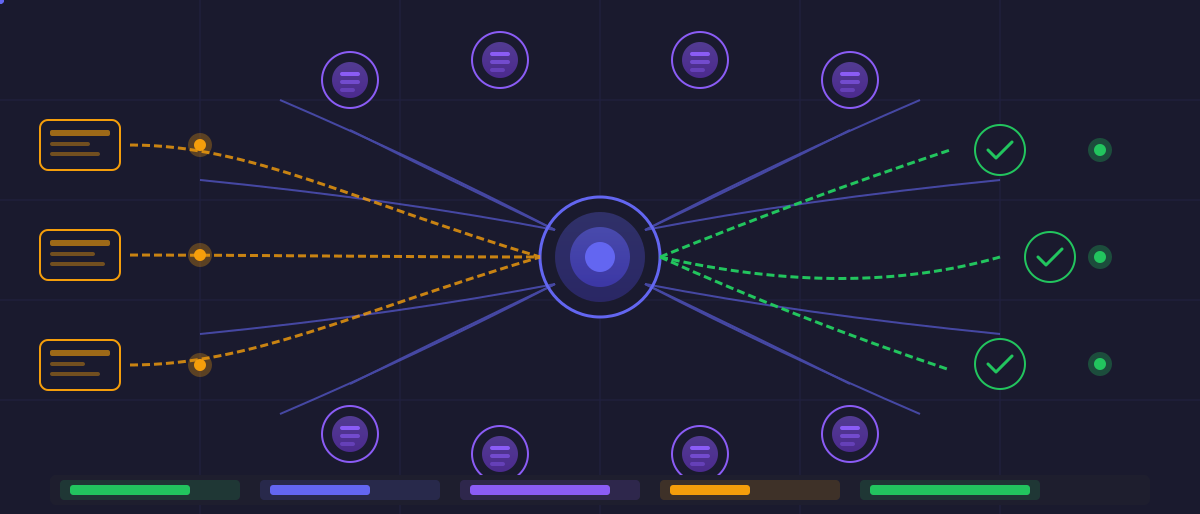
A single invoice sitting in someone's approval queue for five days can trigger a cascade of problems: missed early payment discounts, strained vendor relationships, and month-end scrambles that stress your entire finance team. According to the Institute of Finance and Management, 43% of invoices experience routing delays that add an average of 6.4 days to the payment cycle. The culprit isn't lazy approvers—it's rigid routing systems that weren't designed for how modern organizations actually work.
Traditional invoice routing operates on static rules: invoices over $10,000 go to the CFO, IT purchases route to the IT director, and so on. These rules work until they don't. What happens when the IT director is on vacation? When a $15,000 invoice actually relates to marketing software? When an approver has 200 invoices in their queue while their colleague has none?
Intelligent routing powered by machine learning addresses these challenges by understanding context, learning from patterns, and adapting to your organization's unique approval dynamics. The result is faster cycle times, fewer bottlenecks, and approvers who actually approve—because they're seeing the right invoices at the right time.
The Hidden Cost of Routing Bottlenecks
Before exploring solutions, let's quantify what inefficient routing actually costs. The direct and indirect impacts extend far beyond delayed payments:
The Real Impact of Invoice Routing Delays
Average annual cost of missed early payment discounts per $10M in AP spend
Average delay added when invoices route to wrong approvers
Percentage of AP staff time spent on routing escalations and follow-ups
Higher rejection rates when invoices reach wrong approvers first
Beyond hard costs, routing bottlenecks create soft costs that compound over time. Approvers who receive irrelevant invoices develop "approval fatigue" and take longer to process even legitimate items. Vendors who experience payment delays lose trust and may adjust their pricing or payment terms. AP staff spend hours chasing approvals instead of focusing on strategic work. These hidden costs often exceed the direct financial impact.
Why Traditional Routing Rules Fail
Most invoice routing systems operate on a hierarchy of static rules. While this approach works for straightforward scenarios, it breaks down in predictable ways:
The Rigidity Problem
Static rules can't account for context. A rule that says "route marketing invoices to the Marketing Director" doesn't know that this particular vendor also works with Sales, and that the Sales VP actually requested this purchase. The invoice bounces between departments, adding days to the cycle.
The Availability Problem
Traditional systems route to job titles, not people with capacity. When an approver is on vacation, sick, or simply overwhelmed, invoices pile up. By the time someone checks the queue, payment deadlines have passed and vendor relationships are strained.
The Threshold Problem
Dollar-based routing thresholds create artificial bottlenecks. A $10,001 invoice requires CFO approval while a $9,999 invoice doesn't—even if the underlying business context is identical. Meanwhile, senior executives become approval bottlenecks for routine purchases that happen to exceed arbitrary limits.
The Change Management Problem
When organizations reorganize, acquire companies, or change approval policies, traditional routing rules require manual updates across dozens or hundreds of configurations. During transitions, invoices inevitably route incorrectly, creating backlogs and compliance risks.
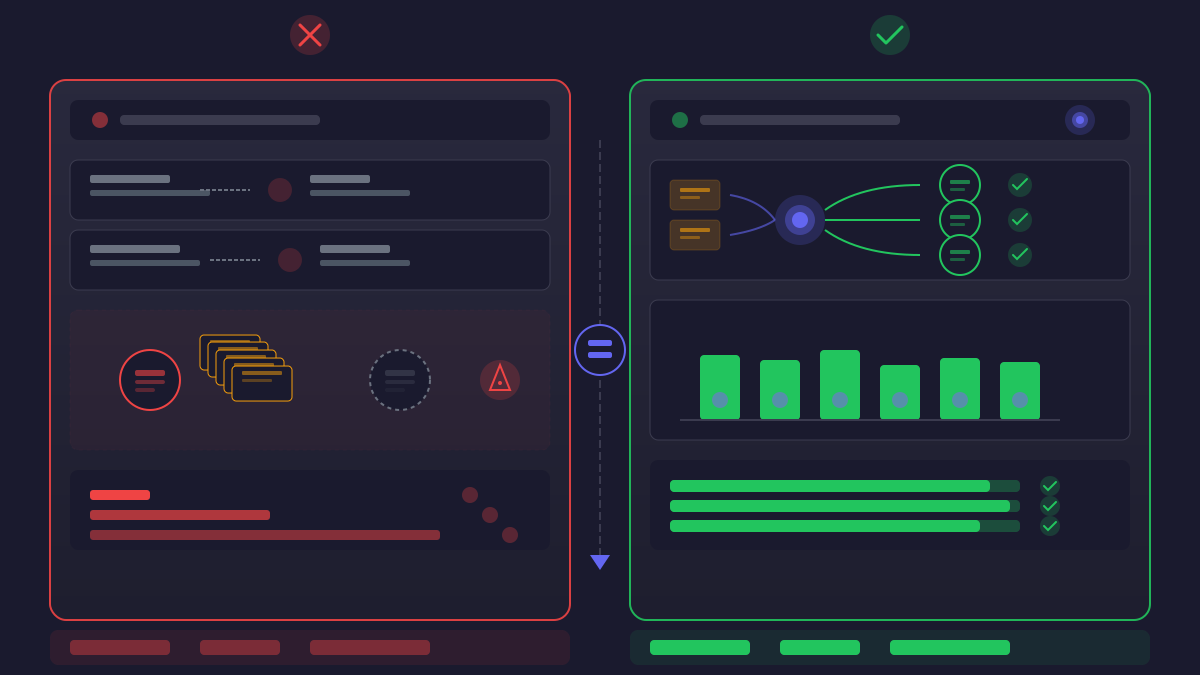
Traditional routing creates bottlenecks while intelligent routing distributes workload dynamically
How AI-Powered Routing Works
Intelligent invoice routing leverages machine learning to understand patterns in your approval data and make routing decisions that static rules cannot. Here's how the key capabilities work together:
Pattern Recognition and Learning
AI routing systems analyze historical approval data to understand the true patterns in your organization. They learn that certain vendors' invoices always go to a specific approver regardless of department coding, that invoices with particular GL codes have informal approval paths, and that some approvers consistently delegate to their direct reports below certain thresholds.
What AI Learns From Your Data
- Historical approval patterns by vendor, cost center, and GL code
- Approver delegation behaviors and informal escalation paths
- Timing patterns—when approvers are most responsive
- Exception patterns that predict which invoices will need special handling
Dynamic Workload Balancing
Rather than routing based solely on organizational hierarchy, intelligent systems consider approver availability and queue depth. If an approver already has 50 invoices pending while a qualified peer has 5, the system can redistribute appropriately—ensuring faster processing without violating approval authority rules.
This workload balancing extends to capacity planning. The system learns that certain approvers process invoices faster on Tuesdays and Thursdays, or that month-end creates approval backlogs that require pre-emptive load distribution.
Context-Aware Routing
Traditional systems route based on invoice header data: amount, vendor, department. AI-powered systems analyze deeper context to make better routing decisions:
- Purchase order linkage: When an invoice matches a PO, route to the PO requestor for verification regardless of invoice coding
- Vendor relationship history: Established vendors with clean track records may qualify for expedited approval paths
- Invoice content analysis: Understanding what was purchased helps route to the right business stakeholder
- Project or budget associations: Route to project managers for project-related spend regardless of GL coding
Predictive Escalation
One of the most valuable capabilities is predicting when invoices will stall and proactively escalating before problems occur. The AI learns that certain invoice types typically require additional documentation, that specific approvers become unresponsive after certain timeframes, and that some vendor-approver combinations have historically problematic patterns.
When the system detects early warning signs of a potential bottleneck, it can automatically notify backup approvers, alert AP staff for intervention, or even suggest rerouting before the delay materializes.
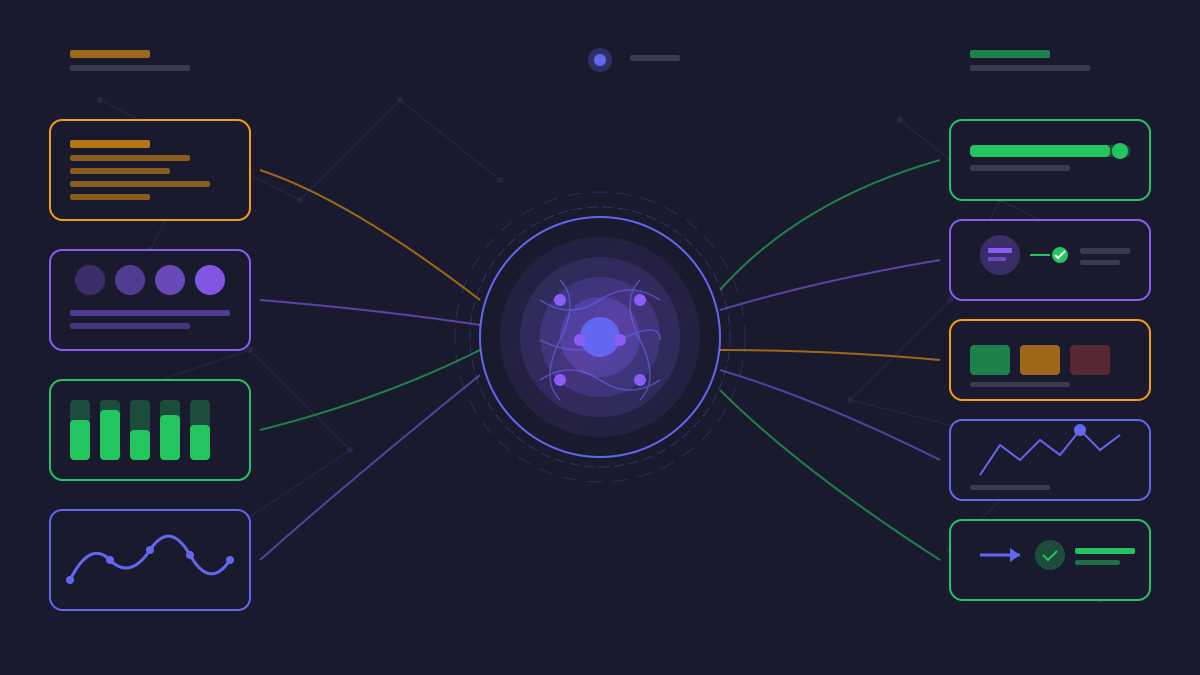
AI models continuously learn from approval patterns to optimize routing decisions
Building Effective Intelligent Workflows
Implementing AI-powered routing isn't just about technology—it's about designing workflows that leverage intelligent capabilities while maintaining control and compliance. Here's how to build workflows that actually work:
Define Clear Routing Policies
AI augments human judgment; it doesn't replace it. Start by documenting your approval policies clearly: who can approve what, under what circumstances delegation is allowed, and what requires multiple approvals. The AI learns within these constraints, optimizing execution while respecting policy.
Sample Intelligent Routing Policy Matrix
Recurring Vendor Invoices
Matches historical pattern within 10% variance
Auto-approve or Department Manager
PO-Matched Invoices
3-way match successful
PO Requestor for confirmation
New Vendor First Invoice
No historical pattern available
Department Head + AP Review
Variance from Expected Amount
Greater than 20% variance from prediction
Manager + Exception review queue
Implement Tiered Approval Authority
Rather than single threshold breaks, implement tiered authority that gives AI more flexibility:
- Tier 1 (Up to $1,000): Department supervisors, with AI determining the most appropriate based on context
- Tier 2 ($1,000-$10,000): Department managers or directors, with load balancing across qualified approvers
- Tier 3 ($10,000-$50,000): VP-level approval, with parallel routing to accelerate high-value items
- Tier 4 (Over $50,000): Executive committee or CFO, with predictive flagging for expected high-value invoices
Design for Exceptions
Every workflow needs exception paths. Design explicit routes for:
- Approver unavailability: Automatic delegation rules with appropriate controls
- Disputed invoices: Separate workflow for items requiring vendor communication
- Urgent payments: Expedited paths for time-sensitive invoices with appropriate audit logging
- Unusual items: Human review queues for invoices that don't match learned patterns
Enable Self-Optimizing Workflows
The most effective intelligent workflows improve themselves over time. This requires:
- Feedback loops: When approvers reject routing decisions or reassign invoices, the system learns from these corrections
- Performance monitoring: Track cycle times, rejection rates, and escalation frequency by routing path
- Periodic review: Regular analysis of routing effectiveness with human oversight
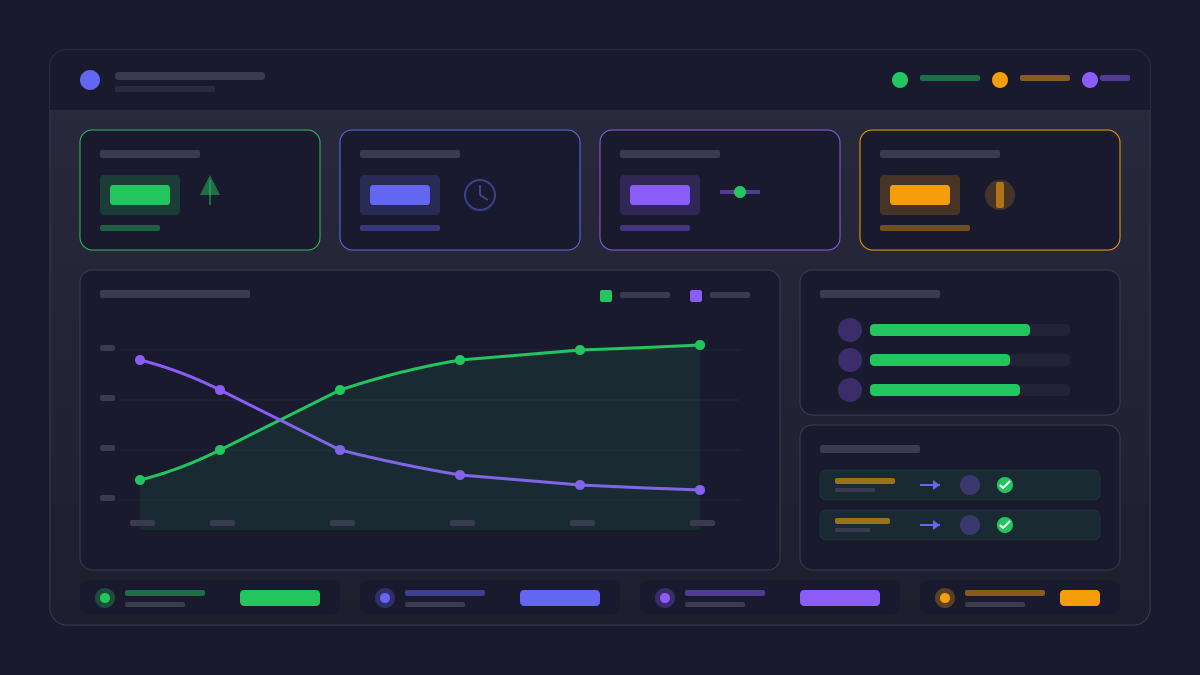
Real-time dashboards help monitor routing performance and identify optimization opportunities
Measuring Routing Performance
Effective intelligent routing requires ongoing measurement. Track these KPIs to ensure your workflows are delivering value:
Invoice Routing KPIs
First-Time Routing Accuracy
Percentage of invoices approved by first assigned approver
Target: > 85%
Average Approval Cycle Time
Days from invoice receipt to final approval
Target: < 3 days
Queue Balance Score
Standard deviation of approver queue depths
Target: Low variance
Escalation Rate
Percentage of invoices requiring manual escalation
Target: < 5%
Rerouting Frequency
Invoices manually reassigned after initial routing
Target: < 10%
Early Payment Discount Capture
Percentage of available discounts captured
Target: > 90%
Common Implementation Pitfalls
Organizations implementing intelligent routing often stumble in predictable ways. Avoid these common mistakes:
- Starting without clean data: AI models are only as good as the data they learn from. Clean up approver records, organizational hierarchies, and historical routing data before implementation.
- Over-automating initially: Build trust by starting with AI-assisted routing where the system recommends but humans confirm. Transition to automated routing as accuracy improves.
- Ignoring change management: Approvers need to understand how intelligent routing works and trust its decisions. Communicate clearly about what the system does and doesn't do.
- Neglecting edge cases: Ensure you have explicit handling for situations the AI hasn't seen: new departments, reorganizations, and unusual invoice types.
- Forgetting compliance: Maintain full audit trails of routing decisions and ensure the AI respects segregation of duties and approval authority limits.
Real-World Results
Organizations implementing intelligent invoice routing consistently report significant improvements across key metrics:
Typical Outcomes from Intelligent Routing
- 45-60% reduction in average approval cycle time
- 70% decrease in invoices requiring manual rerouting
- 35% improvement in early payment discount capture
- 50% reduction in AP staff time spent on approval follow-ups
These improvements compound over time. As the AI learns your organization's patterns more deeply, routing accuracy continues to improve. Organizations typically see their best results 6-12 months after implementation, once the system has learned through a full business cycle.
Getting Started with Remmi's Intelligent Routing
Remmi's AI-native platform includes intelligent invoice routing as a core capability. Unlike legacy systems that bolt on AI as an afterthought, Remmi was designed from the ground up to leverage machine learning for smarter routing decisions.
Key capabilities include:
- Automatic pattern learning: Remmi analyzes your historical approval data to understand how your organization actually works, not just how the org chart says it should
- Real-time workload balancing: Invoices route to available approvers with capacity, not just the next name in a hierarchy
- Predictive bottleneck detection: The system identifies invoices at risk of stalling and alerts AP staff before problems occur
- Continuous optimization: Every approval decision feeds back into the model, making routing smarter over time
- Full audit compliance: Complete audit trails ensure you maintain control while leveraging AI-powered efficiency
Your Path to Smarter Routing
Transforming invoice routing doesn't require a massive technology overhaul. Here's a practical path forward:
Phase 1: Assess (Weeks 1-2)
- Document current routing rules and approval authorities
- Analyze historical approval data for patterns and bottlenecks
- Identify your biggest routing pain points and cost drivers
Phase 2: Design (Weeks 3-4)
- Define intelligent routing policies and approval tiers
- Design exception handling workflows
- Establish success metrics and monitoring approach
Phase 3: Implement (Weeks 5-8)
- Configure intelligent routing with your policies
- Start with AI-assisted routing for validation
- Train approvers on the new system
Phase 4: Optimize (Ongoing)
- Monitor routing performance metrics
- Review and refine policies based on results
- Gradually increase automation as confidence builds
The Bottom Line
Invoice routing bottlenecks aren't inevitable—they're the result of systems that weren't designed for the complexity of modern organizations. AI-powered intelligent routing addresses the root causes: rigid rules, availability blindness, and lack of context awareness.
The technology exists today to route invoices smarter, faster, and with fewer bottlenecks. Organizations that embrace intelligent routing gain a competitive advantage through faster payments, better vendor relationships, and more productive AP teams. Those that don't will continue losing money to missed discounts and wasting staff time on avoidable escalations.
The question isn't whether to modernize your invoice routing—it's how quickly you can capture the benefits while your competitors are still stuck with manual workarounds.
Ryan Shugars
Director of Product
Ryan has spent 15 years as a Systems Architect, building enterprise solutions that transform how organizations manage their financial operations.