Invoice Matching Tolerances: Balancing Automation with Financial Control
The right tolerance thresholds can increase your straight-through processing rate by 40% while actually strengthening financial controls. Too tight, and your AP team drowns in exceptions. Too loose, and you're paying for errors. Here's how to find the balance.
Ryan Shugars
Director of Product

Every AP department faces the same fundamental tension: the desire to automate invoice processing for efficiency versus the need to maintain financial controls that prevent overpayments. According to APQC research, organizations with optimized matching tolerances achieve 85% straight-through processing rates, compared to just 45% for those with poorly designed tolerance policies.
Invoice matching tolerances define the acceptable variance between what you ordered, what you received, and what you're being invoiced. When invoices fall within tolerance, they auto-match and flow straight to payment. When they exceed tolerance, they require human review. The trick is setting thresholds that catch real problems while ignoring immaterial variances.
Getting this balance right directly impacts both your AP efficiency and your financial accuracy. Set tolerances too tight, and your team spends hours investigating penny differences that don't matter. Set them too loose, and you're approving overpayments that add up to significant losses over time.
Understanding the Three Types of Matching
Before diving into tolerance design, it's essential to understand the matching processes where tolerances apply. Each matching type serves different control purposes and requires different tolerance approaches.
Invoice Matching Methods
Compares invoice to purchase order. Validates pricing, quantities, and terms against what was ordered.
Best for: Services, subscriptions
Adds goods receipt to the comparison. Confirms you received what you ordered before paying.
Best for: Physical goods, inventory
Includes inspection or quality verification before payment approval.
Best for: High-value, critical items
Each matching method involves multiple comparison points where variances can occur. A 3-way match, for instance, compares invoice quantity to PO quantity, invoice quantity to receipt quantity, invoice price to PO price, and extended amounts across all three documents. Each comparison point needs its own tolerance definition.
The Five Tolerance Dimensions
Effective tolerance policies address five distinct dimensions of variance. Understanding each dimension helps you design policies that are both comprehensive and practical.

Tolerance policies must address multiple dimensions to provide comprehensive control
1. Quantity Tolerance
Quantity variances are among the most common matching exceptions. Vendors may ship slightly more or less than ordered, or receivers may count differently than packing slips indicate. Smart quantity tolerances account for these operational realities while catching significant discrepancies.
Industry benchmarks suggest quantity tolerances of 2-5% for most goods, with tighter tolerances (0-1%) for high-value items and looser tolerances (5-10%) for bulk commodities where exact counts are impractical.
2. Price Tolerance
Price variances occur when invoice prices differ from PO prices. These might reflect legitimate price changes, catalog updates, or errors. Price tolerances typically combine percentage and absolute thresholds to handle both high-value and low-value items appropriately.
Why Percentage Alone Isn't Enough
A 5% price variance on a $10 item is just $0.50. But 5% on a $50,000 item is $2,500. Effective tolerance policies combine percentage thresholds with absolute caps. For example: "Accept price variances up to 3% OR $100, whichever is lower." This approach protects against both relative and absolute overpayments.
3. Extended Amount Tolerance
Sometimes individual line items match perfectly, but the invoice total differs from expectations due to rounding, tax calculation differences, or freight adjustments. Extended amount tolerances catch these discrepancies at the document level rather than the line level.
4. Percentage vs. Absolute Tolerances
Most sophisticated tolerance policies use a combination of percentage and absolute value thresholds. This dual approach ensures appropriate scrutiny regardless of transaction size. A $50 variance might be immaterial on a $10,000 invoice but highly suspicious on a $100 invoice.
5. Directional Tolerances
Many organizations apply different tolerances based on variance direction. Over-invoicing (vendor charging more than expected) typically warrants tighter tolerances than under-invoicing. After all, paying less than expected is rarely a problem for the buyer.
Designing Your Tolerance Framework
A well-designed tolerance framework considers multiple factors beyond simple numeric thresholds. The goal is creating policies that are both effective at catching problems and practical to implement.
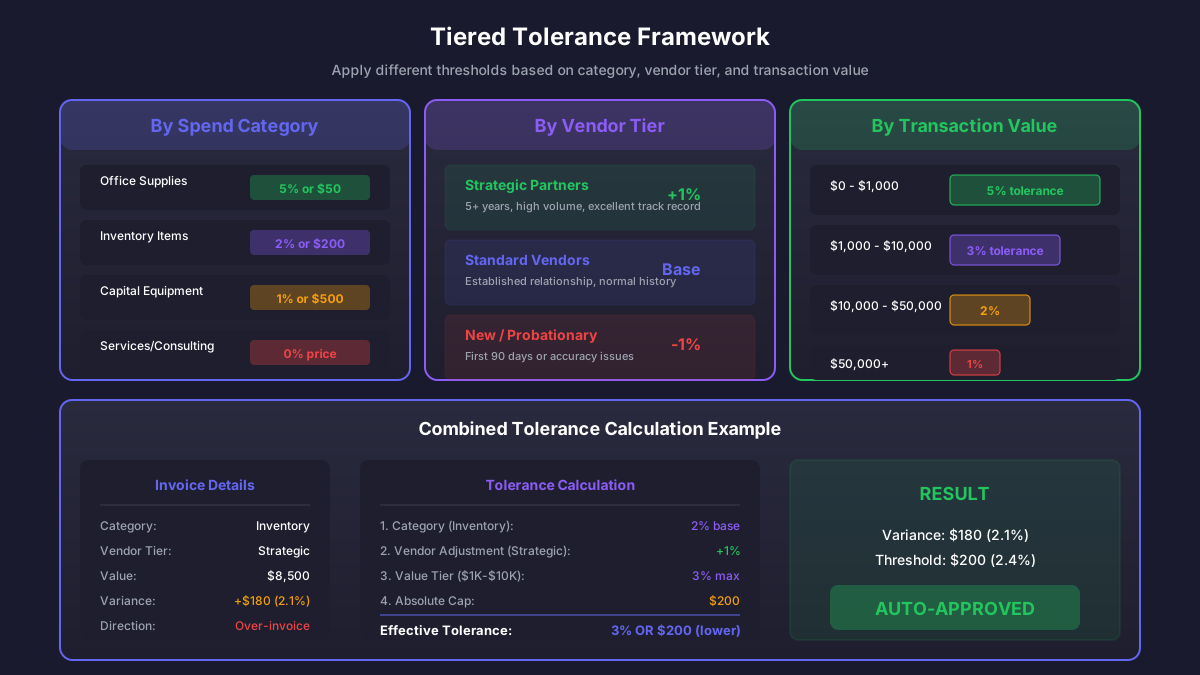
Tiered tolerance frameworks apply different thresholds based on risk and materiality
Tolerance Framework Components
Commodity Categories
Different tolerances by spend category
Office supplies: 5% | Equipment: 1%
Vendor Tiers
Adjusted thresholds by vendor relationship
Strategic: 3% | Standard: 2%
Value Tiers
Tighter controls for higher values
<$1K: 5% | >$10K: 1%
Absolute Caps
Maximum variance regardless of percentage
Never exceed $500 variance
Category-Based Tolerances
Different spend categories warrant different tolerance levels. Raw materials with fluctuating market prices might need looser tolerances than fixed-price service contracts. Office supplies where exact counts rarely matter can tolerate more variance than precision equipment where every unit is tracked.
Vendor-Based Adjustments
Your most trusted, long-term vendors might earn slightly looser tolerances based on their track record. New vendors or those with historical accuracy problems might warrant tighter scrutiny. This risk-based approach concentrates review effort where it matters most.
Value-Tiered Thresholds
Transaction value should influence tolerance levels. A $5,000 variance on a $1 million purchase order might be perfectly acceptable, while the same $5,000 variance on a $10,000 order demands investigation. Tiered thresholds ensure proportional control.
Common Tolerance Pitfalls to Avoid
Even well-intentioned tolerance policies can create problems if poorly designed or implemented. Understanding common pitfalls helps you avoid them in your own framework.
Tolerance Design Pitfalls
Zero Tolerance Policies
Requiring exact matches floods exception queues with immaterial variances, overwhelming staff and delaying legitimate invoices.
Solution: Even 1% tolerance dramatically reduces noise
Percentage-Only Thresholds
Without absolute caps, large transactions can pass with significant dollar variances that should require review.
Solution: Combine percentage with absolute limits
One-Size-Fits-All
Applying identical tolerances across all categories ignores legitimate differences in variance patterns.
Solution: Tiered tolerances by category and risk
Set-and-Forget Mentality
Tolerance policies that never evolve become misaligned with changing business conditions and vendor practices.
Solution: Quarterly review of exception patterns
Measuring Tolerance Effectiveness
The right metrics help you continuously optimize your tolerance policies. Track these key indicators to understand whether your thresholds are appropriately calibrated.
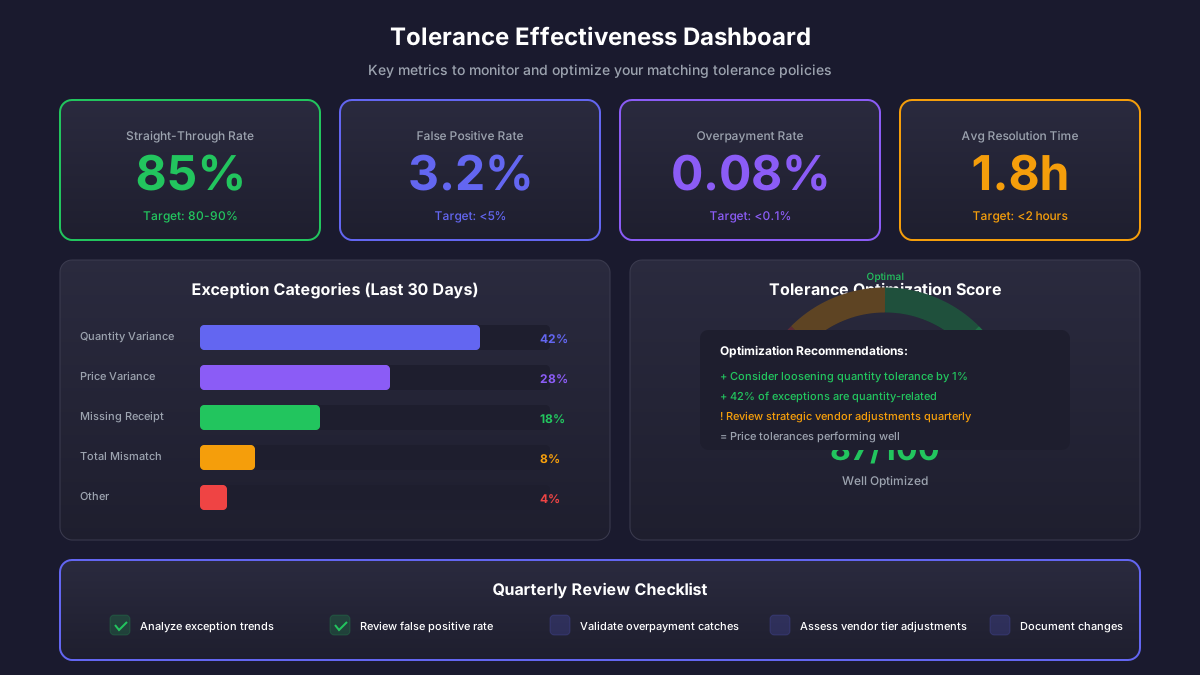
Key metrics reveal whether tolerances are optimally calibrated for your operations
Tolerance Effectiveness Metrics
Target straight-through processing rate for auto-matched invoices
False positive rate (exceptions that require no action)
Overpayment rate on auto-approved invoices
Average exception resolution time
The goal is finding the sweet spot where most legitimate invoices auto-match while problematic invoices reliably trigger exceptions. If your straight-through rate is below 70%, your tolerances are likely too tight. If your overpayment discovery rate is climbing, they may be too loose.
Best Practices for Tolerance Implementation
Implementing effective tolerance policies requires attention to both technical configuration and organizational change management.
Implementation Checklist
- Analyze historical exception data to understand current variance patterns
- Segment tolerances by category, vendor tier, and transaction value
- Combine percentage thresholds with absolute caps for comprehensive control
- Apply tighter tolerances for over-invoicing than under-invoicing
- Document tolerance rationale for audit purposes
- Schedule quarterly reviews to optimize based on exception trends
Sample Tolerance Matrix
- Office Supplies: 5% or $50, whichever is lower
- Inventory Items: 2% or $200, whichever is lower
- Capital Equipment: 1% or $500, whichever is lower
- Services: 0% price variance, 3% quantity variance
- Strategic Vendors: Standard tolerance + 1%
- New Vendors: Standard tolerance - 1% for first 90 days
The Bottom Line
Invoice matching tolerances are a powerful lever for AP efficiency. Well-designed tolerance policies dramatically increase straight-through processing while maintaining the financial controls your organization needs. The key is moving beyond one-size-fits-all thresholds to risk-based, tiered approaches that concentrate human review where it matters most.
Start by analyzing your current exception patterns. Identify which variances are triggering the most review work and whether those reviews are finding real problems. Then systematically adjust tolerances to reduce false positives while maintaining catch rates for genuine issues.
The organizations achieving 85%+ straight-through rates aren't taking more risk. They're being smarter about where to apply scrutiny. Their tolerance frameworks ensure that human attention focuses on material variances that warrant investigation, not penny differences that waste everyone's time.
Ryan Shugars
Director of Product
Ryan has spent 15 years as a Systems Architect, building enterprise solutions that transform how organizations manage their financial operations.