Automating Invoice Exception Handling: From Manual Chaos to Intelligent Resolution
Invoice exceptions are the silent productivity killers in accounts payable. They interrupt workflows, delay payments, and consume disproportionate amounts of staff time. But with AI-powered automation, what once required hours of investigation can now be resolved in seconds.
Ryan Shugars
Director of Product
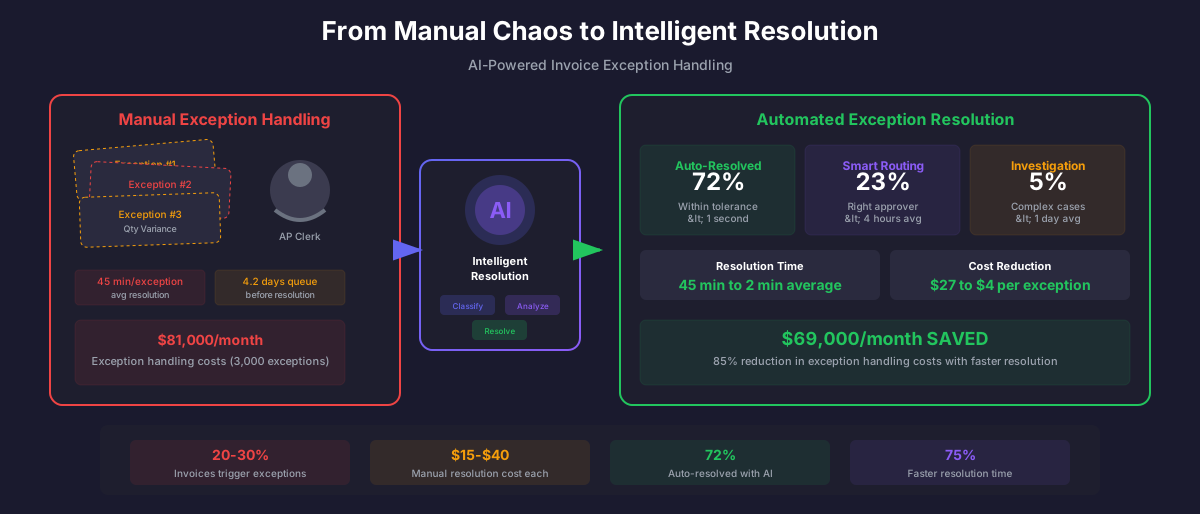
Every AP department knows the feeling: an invoice arrives that doesn't quite match the purchase order. Maybe the quantities differ by a few units. Perhaps the unit price is slightly off. Or the vendor name on the invoice doesn't exactly match your vendor master. These exceptions halt automated processing and trigger a cascade of manual investigation that can take days to resolve.
According to industry research, invoice exceptions occur in 20-30% of all invoices processed, and each exception costs between $15 and $40 to resolve manually. For an organization processing 10,000 invoices monthly, that translates to 2,000-3,000 exceptions costing $30,000 to $120,000 per month in resolution effort alone—not counting the downstream impacts of delayed payments and damaged vendor relationships.
The traditional approach treats exceptions as inevitable interruptions requiring human judgment. But AI-powered automation reveals a different reality: most exceptions follow predictable patterns that intelligent systems can resolve automatically, transforming exception handling from a bottleneck into a streamlined, efficient process.
The Anatomy of Invoice Exceptions
Understanding why exceptions occur is the first step toward automating their resolution. Exceptions fall into several distinct categories, each with characteristic patterns and optimal resolution strategies.
Common Exception Categories and Their Causes
Invoice unit price differs from PO price—often due to price increases, volume discounts, or currency fluctuations
35% of all exceptions
Invoiced quantity doesn't match PO or receiving document—partial shipments, over-deliveries, or data entry errors
25% of all exceptions
Invoice lacks PO number, account codes, or required fields—incomplete vendor submissions or OCR capture failures
20% of all exceptions
Invoice vendor doesn't match PO vendor—parent/subsidiary confusion, name variations, or factoring arrangements
20% of all exceptions
Traditional exception handling treats each of these categories as requiring unique human investigation. An AP clerk receives an alert, opens the invoice, compares it to the PO, contacts the vendor or requisitioner, documents the resolution, and finally approves or rejects the payment. This process can take anywhere from 15 minutes to several days depending on the complexity and availability of stakeholders.
The Hidden Costs of Manual Exception Handling
The direct cost of resolving exceptions is significant, but the hidden costs often dwarf the visible ones:
- Lost early payment discounts—while exceptions languish in queues, 2% net 10 terms expire, costing organizations thousands in foregone savings
- Late payment penalties—unresolved exceptions miss payment deadlines, triggering fees and damaging credit terms
- Vendor relationship damage—repeated payment delays strain supplier partnerships and may result in less favorable terms
- Staff burnout—the tedious, repetitive nature of exception handling contributes to AP turnover and training costs
- Audit risk—inconsistent resolution practices create compliance gaps that auditors scrutinize
Exception Handling Cost Calculator
$27
Average resolution cost
per exception
45 min
Average resolution time
per exception
4.2 days
Average queue time
before resolution begins
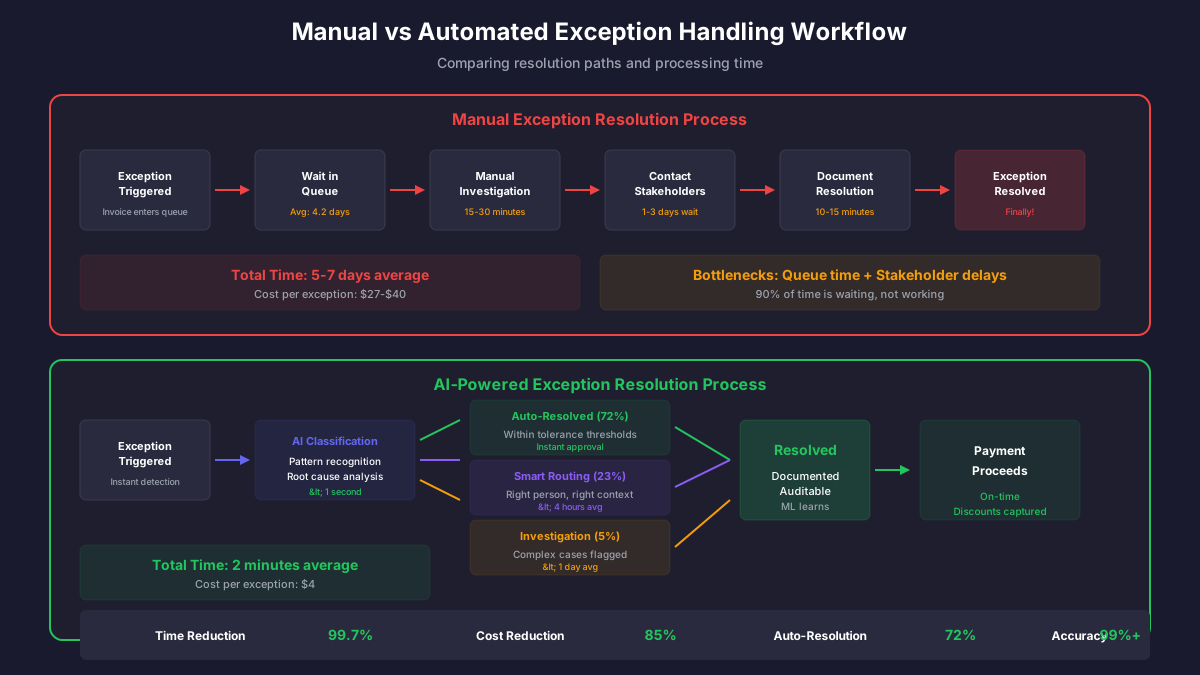
Manual exception handling creates bottlenecks while AI-powered resolution processes exceptions in real-time
How AI Transforms Exception Resolution
AI-powered exception handling doesn't just speed up manual processes—it fundamentally reimagines how exceptions are identified, categorized, and resolved. Here's how modern systems approach each stage:
Intelligent Exception Classification
When an invoice triggers an exception, AI immediately classifies it based on multiple signals: the type of discrepancy, the vendor's history, similar past exceptions, and resolution patterns. This classification determines the optimal resolution path—some exceptions can be auto-resolved, others routed to specific approvers, and still others flagged for detailed investigation.
Pattern Recognition in Action
AI learns from your organization's exception history. If a specific vendor regularly invoices 2% above PO prices and those exceptions are consistently approved, the system learns to auto-approve similar variances—while still flagging unusual deviations from the pattern.
Automated Root Cause Analysis
Rather than requiring AP staff to investigate each exception manually, AI systems perform instant root cause analysis by:
- Cross-referencing documents—comparing invoice details against POs, contracts, receiving documents, and historical transactions
- Identifying data inconsistencies—detecting OCR errors, unit of measure mismatches, and calculation mistakes
- Analyzing vendor patterns—recognizing that certain vendors always invoice in different currencies or apply specific surcharges
- Checking contract terms—validating that price increases fall within contractual limits or anniversary dates
Smart Resolution Recommendations
For exceptions requiring human approval, AI provides resolution recommendations based on historical decisions. An approver sees not just the exception details, but also:
- How similar exceptions were resolved in the past
- Which approver typically handles this exception type
- Supporting documentation relevant to the decision
- Risk assessment and impact analysis
This context enables faster, more consistent decisions while reducing the cognitive load on AP staff.
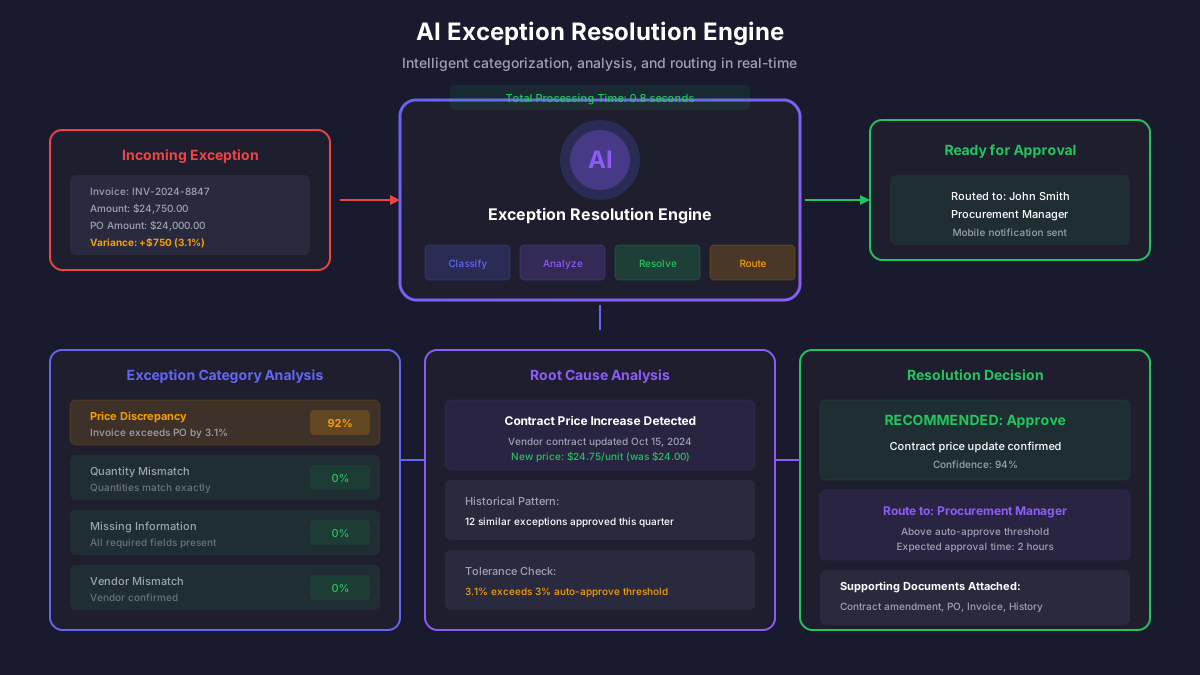
AI analyzes exception patterns to determine optimal resolution strategies automatically
Building Tolerance-Based Auto-Resolution
One of the most powerful capabilities of modern AP automation is configurable tolerance-based resolution. Rather than triggering exceptions for every minor discrepancy, intelligent systems apply business rules that reflect real-world decision-making:
Sample Tolerance Configuration
Price Variance
Invoice price vs PO price
or $500, whichever is less
Quantity Variance
Invoice qty vs received qty
for non-inventory items
Tax Calculation
Expected vs invoiced tax
rounding differences
Early/Late Invoice
Invoice date vs expected date
potential duplicate risk
These tolerances can be configured at multiple levels—globally, by vendor category, by commodity type, or even for individual vendor relationships. The result is a system that reflects your organization's actual risk tolerance while eliminating unnecessary manual intervention.
Workflow Automation for Complex Exceptions
Not all exceptions can be auto-resolved through tolerance matching. Complex exceptions require coordination across multiple stakeholders. AI-powered workflow automation ensures these exceptions move efficiently through the organization:
- Intelligent routing—exceptions are automatically assigned to the most appropriate resolver based on type, amount, vendor, and availability
- Escalation management—if exceptions aren't resolved within defined timeframes, they automatically escalate to supervisors
- Parallel processing—when exceptions require input from multiple parties, requests are sent simultaneously rather than sequentially
- Mobile resolution—approvers can review and resolve exceptions from anywhere, eliminating delays from travel or remote work
Continuous Learning Loop
Every resolution decision feeds back into the AI model. Over time, the system learns which exceptions truly require human judgment and which can be safely auto-resolved—continuously improving accuracy and reducing exception volumes.
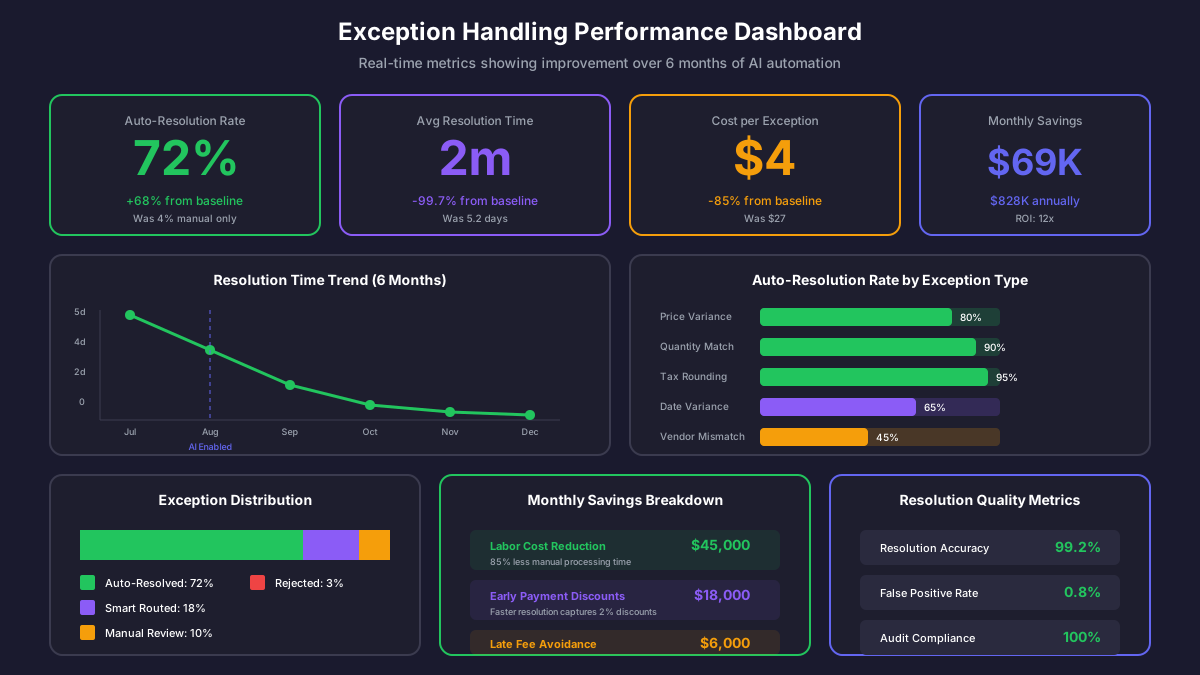
Automated exception handling delivers measurable improvements in resolution time, cost, and accuracy
Measuring Exception Handling Performance
Effective exception management requires clear metrics to track improvement and identify optimization opportunities:
Key Performance Indicators for Exception Handling
Percentage of invoices triggering exceptions—target reduction from 25% to under 10%
Percentage of exceptions resolved without human intervention—target 60-80% auto-resolution
Average time from exception trigger to resolution—target reduction from days to hours
Percentage of resolutions that don't require reversal or adjustment—target 99%+ accuracy
Implementation Best Practices
Successfully automating exception handling requires a thoughtful implementation approach:
1. Analyze Current Exception Patterns
Before configuring automation, analyze 6-12 months of exception data to understand:
- Which exception types occur most frequently
- Which exceptions are typically approved vs rejected
- Which vendors generate the most exceptions
- How long different exception types take to resolve
This analysis informs tolerance settings and workflow configurations that reflect actual business practices.
2. Start Conservative, Then Optimize
Begin with conservative tolerance thresholds that auto-resolve only the most clear-cut exceptions. Monitor results carefully, then gradually expand automation as confidence builds. This approach minimizes risk while demonstrating value.
3. Involve Stakeholders Early
Exception handling touches multiple departments—procurement, receiving, finance, and operations. Engage stakeholders early to ensure workflow configurations meet everyone's needs and to build buy-in for the new processes.
4. Document Resolution Policies
Use the automation implementation as an opportunity to formalize exception handling policies. Clear documentation supports consistent decision-making and simplifies auditor inquiries.
The Path Forward
Invoice exception handling has traditionally been viewed as an unavoidable cost of doing business—a necessary evil that consumes AP resources without adding value. AI-powered automation changes this equation entirely.
Organizations implementing intelligent exception handling routinely achieve:
- 70-80% reduction in manual exception handling time
- 60-75% improvement in average resolution speed
- 40-50% decrease in exception-related payment delays
- 90%+ consistency in resolution decisions
The technology exists today to transform exception handling from a chaotic, labor-intensive process into a streamlined, intelligent workflow. The only question is how quickly your organization will capture these benefits.
The invoices with exceptions won't stop coming. But how you handle them can change dramatically—from manual chaos to intelligent resolution.
Ryan Shugars
Director of Product
Ryan has spent 15 years as a Systems Architect, building enterprise solutions that transform how organizations manage their financial operations.