Invoice Archival and Retention: Meeting Legal Requirements While Enabling Access
Your invoices tell the story of every dollar your organization has spent. Keeping them accessible for audits and analysis while meeting complex retention requirements is a balancing act that requires thoughtful policy design and modern technology.
Ryan Shugars
Director of Product
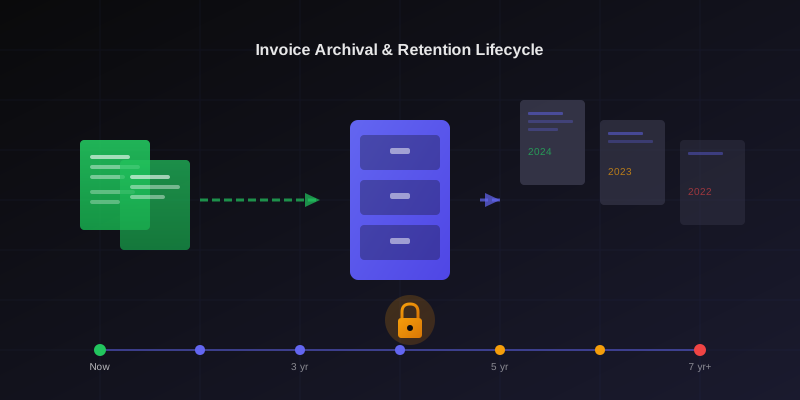
The average enterprise maintains millions of invoice records spanning years or even decades. These documents serve as evidence of transactions, support tax filings, enable audits, and provide historical data for strategic analysis. Yet many organizations struggle to balance the competing demands of regulatory compliance, operational accessibility, and storage economics.
Poor records management creates real business risk. Organizations face penalties for failing to produce documents during audits, lose the ability to defend against duplicate payment claims, and miss opportunities to analyze historical spending patterns. On the other hand, keeping everything forever creates storage costs, security exposure, and legal discovery risks.
Understanding Retention Requirements
Invoice retention requirements vary dramatically based on industry, geography, and the nature of the transactions documented. There is no single “right” retention period that applies to all organizations.
Common Retention Requirements
IRS General Rule
Standard business records
Capital Assets
Equipment, property, major purchases
Government Contracts
FAR/DFAR requirements
Healthcare (HIPAA)
Medical-related invoices
SOX Compliance
Public company audit records
EU VAT
European VAT documentation
The Longest Requirement Governs
When multiple retention requirements apply to the same document, the longest period governs. An invoice for a piece of equipment used in a government contract might need to satisfy IRS requirements, FAR requirements, and asset lifecycle requirements simultaneously. The practical result is that many organizations adopt a “longest common denominator” approach, retaining all invoices for 7-10 years regardless of specific requirements.
State Requirements Vary
State tax authorities often have different retention requirements than federal agencies. Some states require records for up to 10 years from the date of filing. Organizations operating in multiple states must track and apply the most stringent applicable requirement.
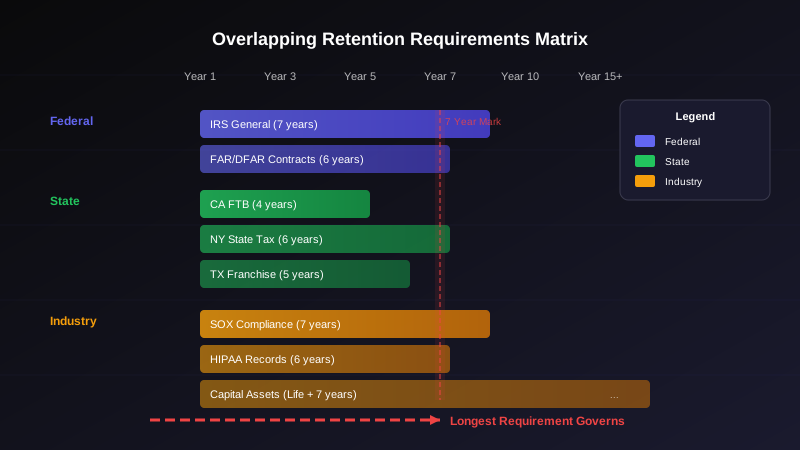
Multiple overlapping requirements create complex retention obligations
Designing Your Retention Policy
An effective invoice retention policy addresses five key dimensions: what to retain, how long to retain it, where to store it, who can access it, and how to dispose of it when the retention period expires.
Document Classification
Not all invoices require the same treatment. A thoughtful classification scheme enables appropriate retention and access levels:
- Standard operational invoices: Routine purchases of goods and services with standard 7-year retention
- Capital asset invoices: Equipment, property, and major purchases retained for asset life plus 7 years
- Contract-related invoices: Invoices tied to specific contracts following contract retention requirements
- Regulatory-sensitive invoices: Healthcare, environmental, or other regulated purchases with specific requirements
- Tax-critical invoices: Invoices supporting tax positions that may face extended statute limitations
Retention Period Calculation
Retention periods typically begin from one of several trigger dates:
- Invoice date: The date appearing on the invoice itself
- Payment date: When the invoice was actually paid
- Fiscal year end: The close of the fiscal year containing the transaction
- Contract completion: When the related contract is fully performed
- Asset disposal: When the purchased asset is sold or retired
Storage Tier Strategy
Current fiscal year + 1
- Instant access
- Full search capability
- Active workflows
- Higher cost per GB
Years 2-5
- Minutes to access
- Indexed search
- Audit support
- Moderate cost
Years 5+
- Hours to retrieve
- Basic metadata search
- Compliance retention
- Lowest cost
Balancing Compliance and Accessibility
The fundamental tension in records management is between minimizing risk through retention and enabling value through accessibility. Organizations need quick access to historical invoices for many legitimate purposes:
- Audit support: Internal and external auditors require rapid document retrieval
- Vendor disputes: Resolving payment disagreements requires access to original invoices
- Duplicate detection: Comparing new invoices against historical records prevents overpayment
- Spend analysis: Historical data enables trend analysis and category management
- Contract renegotiation: Understanding historical pricing supports vendor negotiations
- Legal discovery: Litigation may require producing invoices on short notice
Making Archives Searchable
The key to balancing retention with accessibility is intelligent indexing. Every archived invoice should be searchable by:
- Invoice number and date
- Vendor name and ID
- Purchase order reference
- GL account coding
- Amount and currency
- Payment date and method
- Full-text content (OCR)
The Retrieval Standard
Best-in-class organizations can retrieve any invoice from the past 7 years within 30 seconds. This capability transforms audit preparation from a weeks-long project into a routine query. The key is maintaining searchable indexes even when the documents themselves move to cold storage.
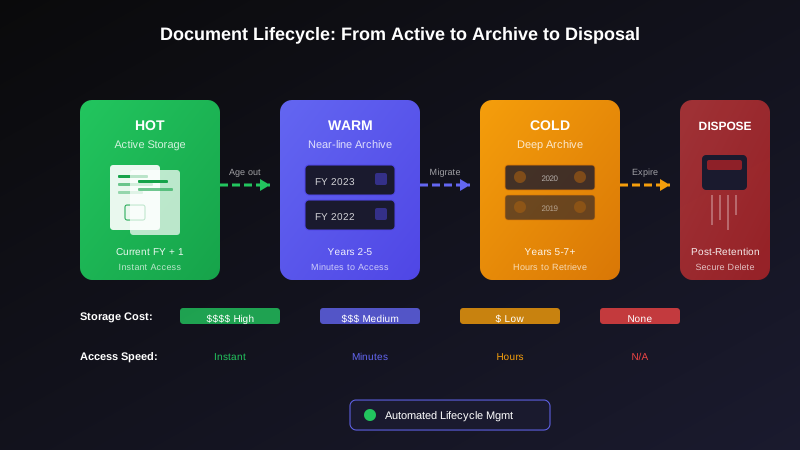
Automated lifecycle management moves documents through storage tiers based on age and access patterns
Legal Hold and Litigation Readiness
When litigation is reasonably anticipated, organizations must preserve all potentially relevant documents regardless of normal retention schedules. This “legal hold” requirement creates significant obligations for AP archives.
Implementing Legal Holds
An effective legal hold process for invoice archives includes:
- Hold identification: Define the scope of documents subject to the hold by vendor, date range, or category
- Preservation in place: Suspend normal deletion processes for affected documents
- Chain of custody: Document that holds were properly implemented and maintained
- Hold release: Formal process to release holds when litigation concludes
Legal Hold Best Practices
- Implement holds immediately upon notice
- Over-include rather than under-include
- Document all hold actions with timestamps
- Include all copies and backups
- Regularly verify hold compliance
- Delete anything after receiving notice
- Rely on informal communication
- Assume IT handles preservation
- Release holds without legal approval
- Forget about cloud and email copies
Security and Access Controls
Invoice archives contain sensitive financial information that requires appropriate protection. A comprehensive security approach addresses multiple dimensions:
Data Protection Requirements
- Encryption at rest: All archived documents encrypted using strong algorithms
- Encryption in transit: Secure protocols for document retrieval and transfer
- Access authentication: Multi-factor authentication for archive access
- Role-based authorization: Granular permissions based on job function
- Audit logging: Complete record of all archive access and searches
- Geographic controls: Compliance with data residency requirements
Access Hierarchy
Different users require different levels of archive access:
- AP staff: Full access to invoices within their assigned scope
- Business users: Access to invoices related to their cost centers
- Auditors: Read-only access with export capabilities
- Legal: Special access during discovery with chain of custody
- Administrators: System configuration and access management
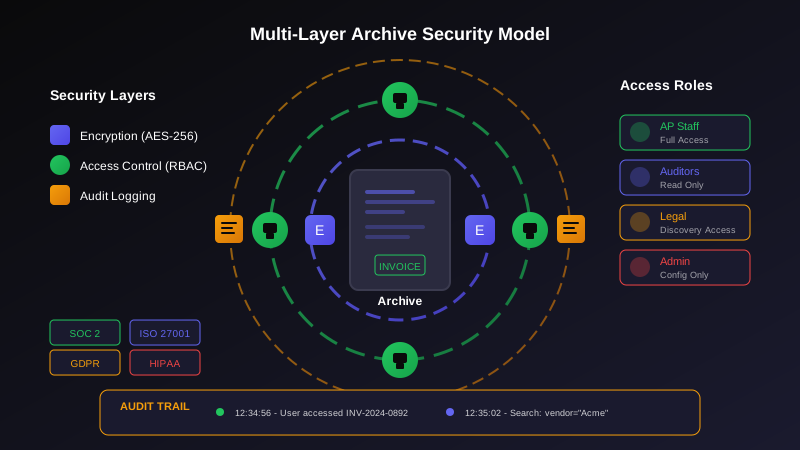
Multi-layer security protects archived invoices while enabling authorized access
Defensible Disposition
When retention periods expire, documents should be systematically disposed of through a “defensible disposition” process. Keeping documents longer than required creates unnecessary cost, security risk, and litigation exposure.
Disposition Process
- Eligibility review: Verify no legal holds or extended requirements apply
- Approval workflow: Appropriate authorization before destruction
- Secure destruction: Certified destruction that prevents recovery
- Documentation: Maintain destruction certificates and audit trails
- Verification: Confirm destruction across all copies and backups
Disposition Metrics
Average storage cost reduction with active disposition
Reduction in e-discovery scope and cost
Decrease in security exposure surface
Technology for Modern Records Management
Modern AP automation platforms provide integrated archival capabilities that address the full records management lifecycle:
- Automated classification: AI-powered categorization of invoices by retention requirements
- Lifecycle management: Automatic progression through storage tiers based on age
- Intelligent indexing: Full-text search with OCR across all archived documents
- Legal hold management: Centralized hold implementation and tracking
- Disposition automation: Scheduled destruction with approval workflows
- Compliance reporting: Dashboard visibility into retention status and risks
Compliance Confidence
Organizations with automated records management report 90% fewer audit findings related to document retention and can respond to discovery requests 5x faster than those relying on manual processes.
Building Your Records Management Program
Implementing effective invoice archival requires collaboration across legal, IT, AP, and business stakeholders. Start with these priorities:
- Inventory your requirements: Document all retention obligations by category and jurisdiction
- Assess current state: Audit existing invoice storage locations and accessibility
- Define your policy: Create a formal retention schedule approved by legal and finance
- Implement technology: Deploy or configure systems to automate lifecycle management
- Train stakeholders: Ensure all parties understand their responsibilities
- Monitor compliance: Regular audits to verify policy adherence
Effective records management is not about keeping everything forever or deleting as quickly as possible. It's about having a defensible, documented approach that satisfies regulatory requirements while enabling the business value that historical invoice data provides. Organizations that get this balance right protect themselves from compliance risk while unlocking insights from their AP data that drive better business decisions.
Ryan Shugars
Director of Product
Ryan has spent 15 years as a Systems Architect, building enterprise solutions that transform how organizations manage their financial operations.