International AP: Managing Multi-Currency Invoices and Cross-Border Payments
As businesses expand globally, accounts payable teams face unprecedented complexity. Managing invoices in multiple currencies, navigating international banking requirements, and ensuring compliance with diverse regulatory frameworks requires specialized processes and technology. Here's your comprehensive guide to mastering international AP operations.
Ryan Shugars
Director of Product
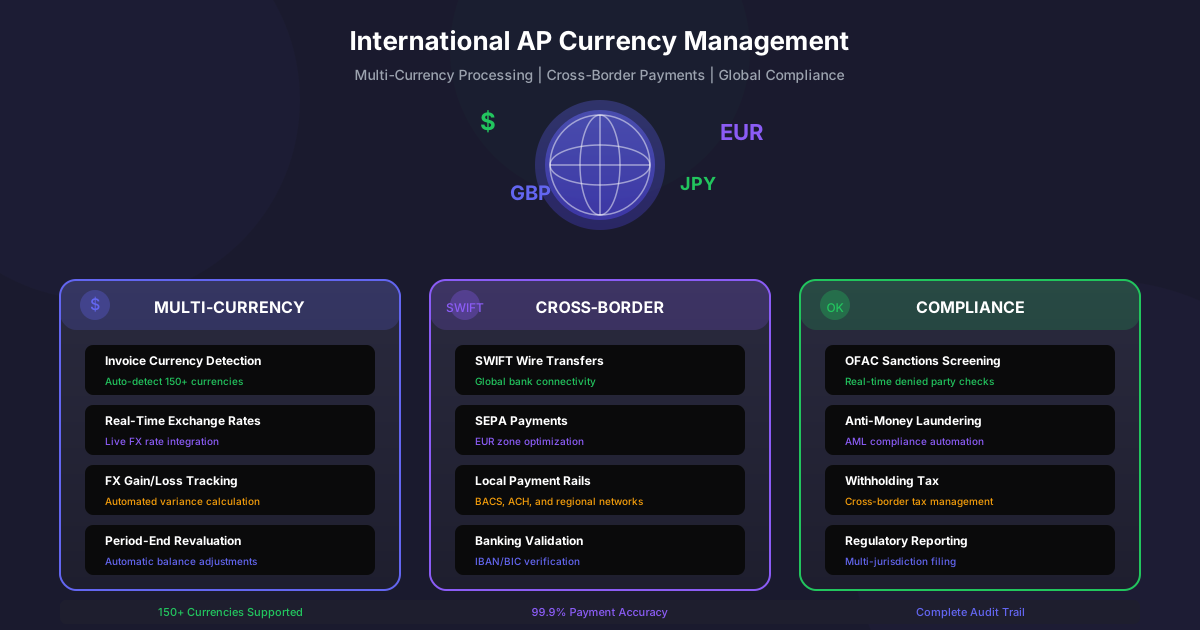
The global economy presents both tremendous opportunities and significant operational challenges for accounts payable departments. Organizations with international vendors process invoices in dozens of currencies, manage payments across different banking systems, and navigate regulatory requirements that vary by country. The complexity is staggering: a single multinational may deal with 50+ currencies, different payment rails in each country, and varied tax and compliance requirements across every jurisdiction.
For AP teams, international operations multiply the potential for errors, delays, and financial losses. Currency fluctuations can erode margins, payment delays damage vendor relationships, and compliance failures trigger regulatory penalties. Mastering international AP is not just an operational necessity but a strategic imperative for organizations competing in global markets.
The Scope of International AP Complexity
International accounts payable differs fundamentally from domestic operations. Every aspect of the invoice-to-payment cycle becomes more complex when crossing borders:
International AP Challenge Areas
- Multi-currency invoice capture
- Exchange rate determination
- FX gain/loss tracking
- Currency revaluation
- International wire transfers
- SWIFT/BIC requirements
- Local payment methods
- Banking intermediaries
- OFAC sanctions screening
- Anti-money laundering (AML)
- Withholding tax requirements
- Local reporting obligations
Multi-Currency Invoice Processing
The foundation of international AP is accurately capturing and processing invoices denominated in foreign currencies. This involves more than simply recording the invoice amount. AP teams must:
- Capture the invoice currency: Accurately identify and record the currency in which the invoice is denominated
- Determine the appropriate exchange rate: Decide which rate to use, whether invoice date, receipt date, or payment date
- Calculate the functional currency equivalent: Convert to your reporting currency for booking purposes
- Track for revaluation: Monitor open payables for currency fluctuations that affect balance sheet values
- Record FX gains and losses: Capture realized gains/losses at payment and unrealized at period-end
Exchange Rate Policies
Organizations must establish clear policies for exchange rate determination. Common approaches include:
- Spot rate at invoice date: Uses the exchange rate on the day the invoice is received or dated
- Spot rate at payment date: Converts at the rate applicable when payment is made
- Average rate for the period: Uses monthly or quarterly average rates for simplicity
- Contracted rate: For vendors with forward contracts or agreed rates
Exchange Rate Impact
Currency fluctuations can significantly impact costs. A 5% swing in exchange rateson a $1 million international spend translates to $50,000 in variance. Organizations with substantial foreign payables should consider hedging strategies and rate monitoring as part of their AP operations.
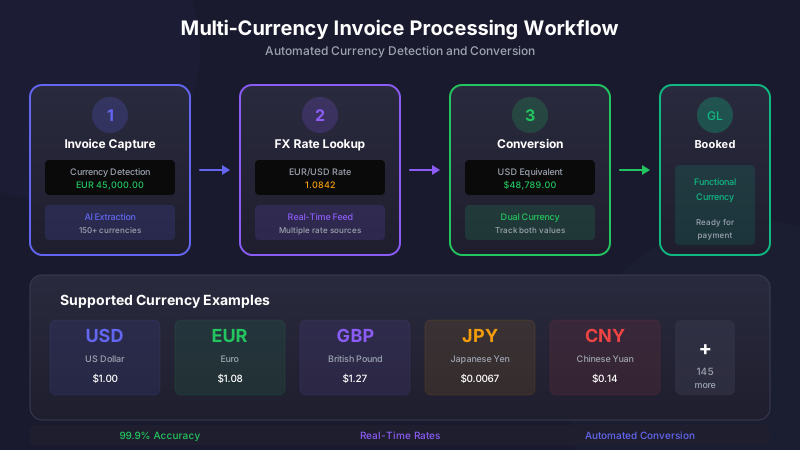
Automated multi-currency processing ensures accurate capture and conversion of international invoices
Cross-Border Payment Methods
International payments require navigating a complex landscape of payment methods, banking networks, and intermediaries. Each method has different cost structures, processing times, and vendor acceptance:
International Payment Methods Comparison
SWIFT Wire Transfer
Traditional bank-to-bank transfers via SWIFT network
1-5 business days
SEPA (Europe)
Single Euro Payments Area for EUR transactions
1-2 business days
International ACH/BACS
Local clearing networks with international reach
2-4 business days
Global Payment Platforms
Fintech solutions like Payoneer, TransferWise, etc.
1-3 business days
Virtual Cards (Cross-Border)
International commercial card payments
Same day
Banking Information Requirements
International payments require accurate and complete banking information that varies by country and payment method:
- SWIFT/BIC codes: Required for international wire transfers to identify the receiving bank
- IBAN: International Bank Account Number used in Europe, Middle East, and parts of Africa
- Routing/Sort codes: Country-specific bank identifiers (ABA in US, Sort Code in UK)
- Intermediary bank details: Required when correspondent banking is involved
- Beneficiary address: Many countries require complete vendor address for compliance
Payment Rejection Risk
Incomplete or inaccurate banking information is the leading cause of international payment failures. 15-20% of international wire transfers require manual intervention due to data quality issues, resulting in delays of 3-5 additional business days and fees of $25-50 per repair.
Regulatory Compliance for International Payments
Cross-border payments trigger numerous regulatory requirements designed to prevent money laundering, terrorist financing, and sanctions violations. AP teams must build compliance into their processes:
OFAC Sanctions Screening
The Office of Foreign Assets Control maintains lists of sanctioned countries, entities, and individuals. Before any international payment, organizations must verify that:
- The vendor is not on any sanctions list (SDN, Consolidated, Sectoral)
- The beneficiary country is not subject to comprehensive sanctions
- The payment does not involve sanctioned industries or activities
- Intermediary banks are not sanctioned entities
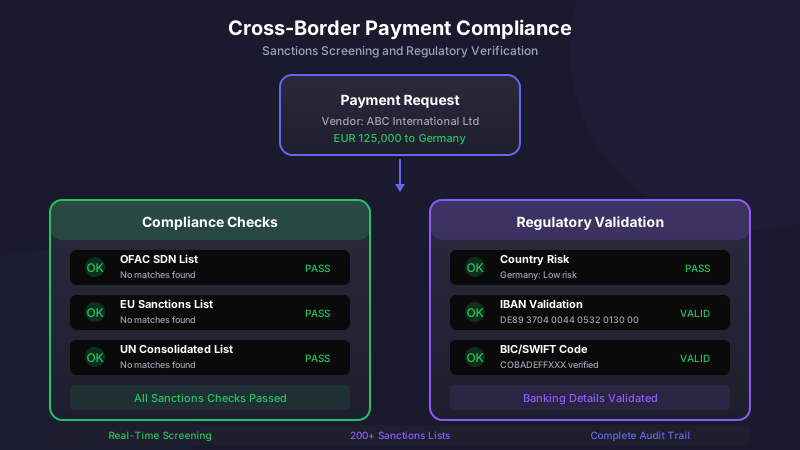
Automated compliance screening ensures every international payment meets regulatory requirements
International Withholding Tax
Many countries require withholding tax on payments to foreign vendors. AP teams must:
- Determine withholding obligations: Varies by payment type (services, royalties, interest)
- Apply treaty benefits: Tax treaties may reduce or eliminate withholding
- Collect required documentation: W-8BEN, W-8BEN-E, or local equivalents
- Remit and report: File required withholding returns and issue statements
Global Withholding Tax Considerations
- Service fees (consulting, IT, marketing)
- Royalties and licensing fees
- Interest payments
- Dividend distributions
- Technical service fees
- W-8BEN/W-8BEN-E for US payors
- Tax residency certificates
- Treaty benefit claim forms
- Self-declaration statements
- Beneficial ownership documentation
Managing Foreign Exchange Risk
Currency volatility can significantly impact the cost of international purchases. Proactive FX risk management strategies help organizations protect margins and improve cost predictability:
Hedging Strategies
- Forward contracts: Lock in exchange rates for future payments at known amounts
- Currency options: Provide rate protection with flexibility if rates move favorably
- Natural hedging: Match currency inflows and outflows to reduce net exposure
- Netting: Consolidate payables and receivables in same currency to reduce exposure
Rate Monitoring and Timing
Even without formal hedging programs, AP teams can optimize payment timing based on currency movements:
- Monitor rate trends for major currencies in your payment mix
- Set rate alerts for favorable payment opportunities
- Consider early payment when rates are favorable (balanced against cash flow needs)
- Batch payments by currency to reduce transaction costs
Currency Revaluation
Open foreign currency payables must be revalued at period-end using closing rates. This creates unrealized FX gains or losses that impact financial statements. Automated systems should calculate and post revaluations, then reverse them in the following period to ensure proper accounting when payments are made.
Global Vendor Management
Managing vendors across multiple countries requires robust processes for onboarding, validation, and ongoing relationship management:
International Vendor Onboarding
Onboarding international vendors requires additional due diligence and data collection:
- Complete banking information: SWIFT/BIC, IBAN, intermediary bank details
- Tax documentation: W-8 forms, VAT registration, tax residency certificates
- Sanctions screening: OFAC, EU, UN, and local sanctions list verification
- Beneficial ownership: Ultimate ownership identification for AML compliance
- Currency preferences: Invoice currency and payment currency preferences
- Contact information: Local contacts for payment inquiries and disputes
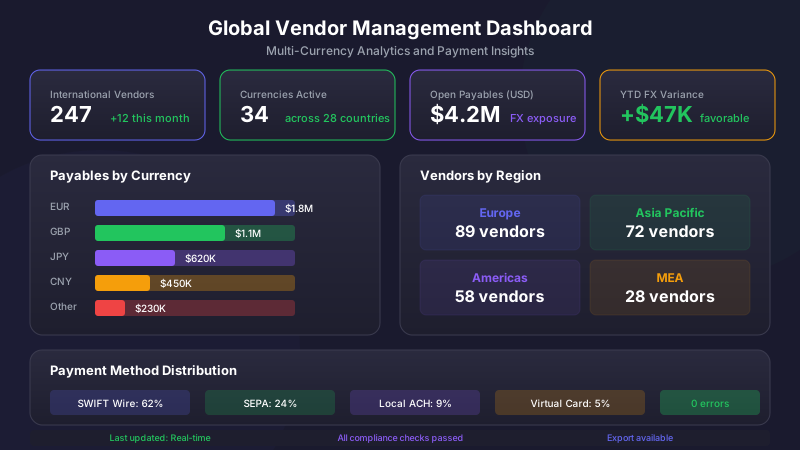
Centralized global vendor management provides visibility across currencies and regions
International Vendor Data Requirements
- Bank name and address
- SWIFT/BIC code
- IBAN or local account number
- Intermediary bank details (if applicable)
- Preferred payment currency
- W-8BEN or W-8BEN-E (US payors)
- Tax residency certificate
- VAT/GST registration
- Business registration documents
- Beneficial ownership declaration
Automating International AP Operations
Manual processes cannot scale to handle the complexity of international AP. Modern automation platforms address global requirements through:
- Multi-currency invoice capture: Automatic currency detection and extraction from invoices in any format
- Real-time exchange rates: Integration with FX rate providers for accurate conversion
- Automated compliance screening: Continuous sanctions and denied party list checking
- Global payment formatting: Automatic generation of payment files in country-specific formats
- Banking validation: IBAN and SWIFT/BIC validation before payment submission
- FX gain/loss calculation: Automated tracking and posting of currency variances
- Period-end revaluation: Automatic revaluation of open foreign currency balances
International AP Automation Benefits
Organizations automating international AP operations report 85% reduction in payment errors, 60% faster processing times, and complete compliance with sanctions screening requirements. The elimination of manual currency conversions and banking data entry alone can save hundreds of hours annually for global organizations.
Best Practices for International AP Success
Organizations excelling at international AP operations follow these proven practices:
- Standardize vendor onboarding globally: Use consistent data collection and validation processes across all regions
- Establish clear exchange rate policies: Document rate sources, timing, and approval thresholds for rate variances
- Implement payment method optimization: Match payment methods to vendor preferences and cost efficiency
- Automate compliance screening: Screen every vendor and payment against current sanctions lists
- Centralize visibility: Maintain global dashboards showing payables by currency, region, and vendor
- Build local expertise: Develop knowledge of key country requirements for major vendor locations
- Monitor FX exposure: Track and report on currency exposure across the payables portfolio
- Validate banking data: Verify IBAN and SWIFT codes before adding to vendor master
Your International AP Action Plan
Building world-class international AP capabilities requires focused effort across people, processes, and technology. Start with these priorities:
- Audit your current state: Assess currency exposure, payment methods, and compliance processes
- Document exchange rate policies: Establish clear, consistent policies for rate determination
- Validate vendor banking data: Verify accuracy of international banking information in vendor master
- Implement sanctions screening: Ensure every international vendor and payment is screened
- Optimize payment methods: Evaluate cost and timing of current payment approaches
- Automate currency processing: Deploy tools that handle multi-currency capture and conversion
- Train your team: Build knowledge of international payment requirements and compliance obligations
International AP complexity will only increase as global supply chains expand and regulatory requirements evolve. Organizations that invest in robust international AP capabilities now will be positioned to support global growth while managing costs and compliance risks effectively. The payoff extends beyond operational efficiency to competitive advantage in serving international customers and partnering with global suppliers.
Ryan Shugars
Director of Product
Ryan has spent 15 years as a Systems Architect, building enterprise solutions that transform how organizations manage their financial operations.