Hospitality AP: Managing High-Volume Daily Operations Across Properties
Hotels, resorts, and casinos process invoices at a pace that would overwhelm most AP departments. When fresh produce arrives at 6 AM, F&B vendors deliver throughout the day, and maintenance emergencies happen around the clock, your AP operations must keep up. Here is how leading hospitality organizations scale their AP to match the speed of operations.
Ryan Shugars
Director of Product
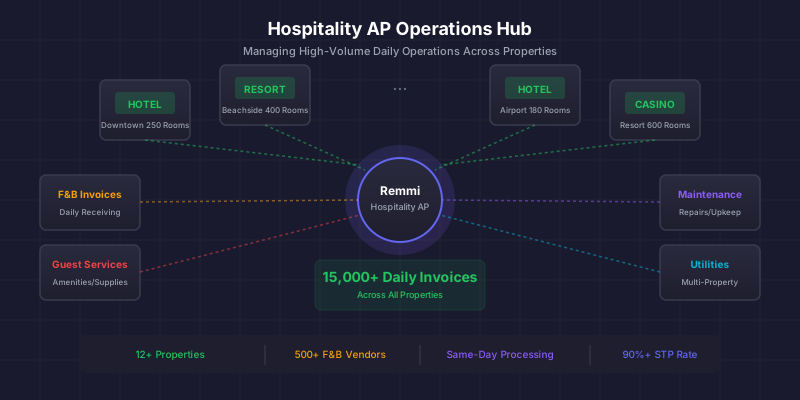
Hospitality is a 24/7 business, and its accounts payable operations must be equally relentless. A single full-service hotel can generate 80 to 120 invoices per day. A resort property with multiple restaurants, spas, and recreational facilities might see 200 or more. Casino resorts with their round-the-clock food service can exceed 400 daily invoices. Traditional AP processes built for weekly batch processing simply cannot keep pace.
According to the American Hotel and Lodging Association, the average hotel spends 35-45% of revenue on operational expenses processed through accounts payable. For a 300-room hotel generating $15 million in annual revenue, that represents over $6 million flowing through AP each year. Every day of processing delay, every missed early payment discount, and every duplicate payment represents real margin erosion in an industry where net margins often hover around 5-10%.
The Hospitality AP Challenge: Volume Meets Velocity
Hospitality AP is defined by two characteristics that set it apart from other industries: the sheer volume of daily transactions and the velocity at which they must be processed. Unlike manufacturing with weekly or monthly supplier deliveries, hotels receive deliveries continuously throughout the day, every day of the year.
Hospitality Invoice Categories
Daily perishable deliveries, dry goods, beverages, restaurant supplies requiring same-day processing
Amenities, linens, toiletries, in-room supplies, and guest-facing consumables
Maintenance, repairs, equipment service, landscaping, and property upkeep
Electric, gas, water, waste management, and telecommunications across properties
Each category brings unique processing requirements. F&B invoices arrive with deliveries and must be matched against receiving documents created at the loading dock. Guest service invoices often lack purchase orders and require department manager approval. Operations invoices may be for emergency repairs that need expedited payment. Utility invoices require allocation across cost centers and properties.
Food and Beverage: The AP Pressure Cooker
No aspect of hospitality AP is more demanding than food and beverage invoicing. F&B operations depend on fresh deliveries that arrive before breakfast service begins. A hotel restaurant might receive deliveries from 15 to 20 different vendors before 10 AM: produce distributors, meat and seafood suppliers, dairy vendors, bakeries, beverage distributors, and specialty food providers.
The Daily Receiving Challenge
Each delivery generates an invoice that must be processed rapidly. Unlike other industries where a few days delay in invoice processing is acceptable, hospitality F&B requires same-day or next-day processing to maintain vendor relationships and capture early payment discounts that can significantly impact food cost percentages.
- Morning rush: 70% of F&B deliveries arrive between 5 AM and 10 AM
- Receiving verification: Kitchen staff must confirm quantities and quality at delivery
- Invoice capture: Paper invoices arrive with deliveries and need immediate digitization
- Price validation: Every line item must match contracted or quoted prices
F&B Cost Control Starts at Receiving
Every hospitality finance professional knows that food cost management begins at the back door. When receiving staff can scan invoices directly into the AP system, match against purchase orders, and flag price discrepancies before the delivery truck leaves, you have created a closed-loop system that prevents cost leakage at the source.
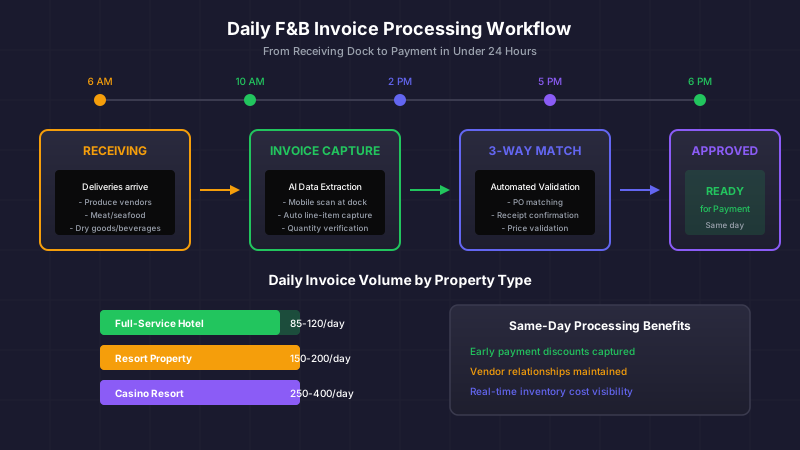
Same-day processing ensures F&B invoices move from receiving dock to approval in hours, not days
Multi-Property Complexity: Scaling Without Chaos
Hotel management companies and multi-property operators face compounding complexity. A hospitality group with 12 properties might process 50,000 invoices monthly across a vendor base of 2,000 suppliers. Some vendors serve all properties while others are location-specific. Corporate contracts must be honored across all locations while allowing for local purchasing flexibility.
Centralized vs. Distributed Processing
The hospitality industry has long debated whether AP should be centralized at corporate headquarters or distributed to individual properties. Modern AP automation enables a hybrid approach that captures the benefits of both:
- Centralized intake: All invoices flow to a single digital repository regardless of property
- Distributed approval: Property-level managers approve local expenditures within defined limits
- Corporate oversight: Regional and corporate controllers have visibility across all properties
- Unified payment: Payments execute from central treasury for optimal cash management
Multi-Property Allocation Methods
Revenue-Based Allocation
Shared costs distributed by property revenue percentage
Corporate services
Room Count Allocation
Fixed costs distributed by number of rooms
Insurance, licensing
Usage-Based Allocation
Variable costs distributed by actual consumption
F&B supplies
Direct Assignment
Property-specific costs charged directly
Local repairs
Vendor Rebates and Volume Discounts
Multi-property hospitality groups often negotiate volume-based rebates with major suppliers. A food service distributor might offer a 2% rebate on annual purchases exceeding $500,000 across all properties. Tracking these rebates manually across dozens of properties and hundreds of invoices is virtually impossible. Automated AP captures every qualifying purchase, tracks progress toward rebate thresholds, and ensures rebate payments are received and properly allocated.
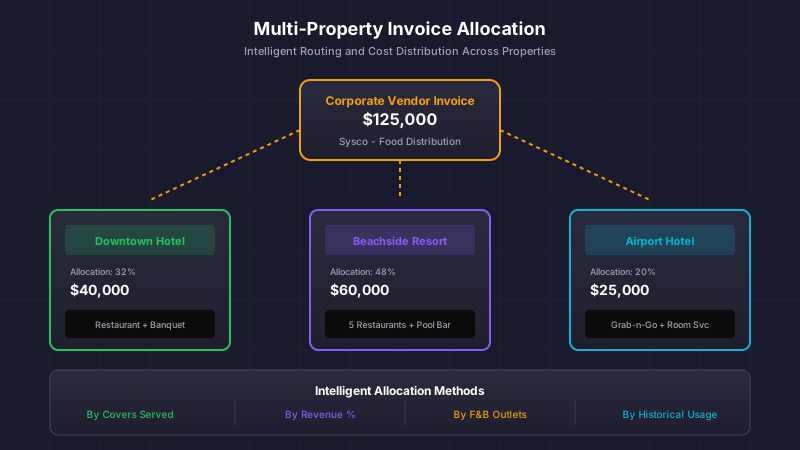
Intelligent allocation distributes shared vendor invoices across properties automatically
Operations and Maintenance: The Unpredictable Category
Hotels are complex physical plants that require constant maintenance. HVAC systems, plumbing, elevators, pools, parking structures, and guest room fixtures all demand ongoing attention. Unlike F&B with its predictable daily patterns, maintenance invoices arrive unpredictably following emergency repairs, scheduled maintenance, and capital improvements.
The challenge with operations invoices is the approval complexity. A routine HVAC filter replacement might be approved by the engineering manager. A major chiller repair might require general manager approval. A capital replacement project involves corporate authorization. AP automation must route each invoice to the appropriate approver based on amount, category, and property.
Emergency Repair Payment Pitfall
When a hotel elevator breaks down on a busy weekend, getting it repaired takes priority over proper procurement procedures. The repair vendor demands immediate payment. Without automated AP that can handle rush processing, these emergency payments often bypass controls entirely, creating audit risk and potential for duplicate payments when the regular invoice arrives later.
Property-Level Approval Without Property-Level Bottlenecks
Hotel general managers and department heads are not sitting at desks reviewing invoices. They are on the floor managing guest experiences, handling staff issues, and responding to operational demands. Yet their approval is essential for maintaining proper financial controls.
Mobile-First Approval Workflows
Effective hospitality AP must meet managers where they are. Mobile approval capabilities allow a GM to review and approve invoices from anywhere in the property, during a meeting, or while traveling between properties.
- Push notifications: Alert managers when invoices await their approval
- Context-rich display: Show invoice details, vendor history, and PO match status
- One-tap approval: Enable rapid approval for routine invoices
- Escalation rules: Automatically route to backup approvers after defined periods
Delegation During Peak Season
During high-occupancy periods, GMs cannot be burdened with routine AP approvals. Effective delegation frameworks allow assistant managers to approve routine invoices while reserving GM attention for exceptions and high-value items. The key is defining clear thresholds and maintaining complete audit trails.
Integration with Property Management Systems
Hospitality AP does not exist in isolation. It connects to property management systems (PMS), point-of-sale systems, inventory management, and payroll. These integrations create powerful automation opportunities and important validation checks.
- PMS integration: Validate occupancy-based expenses against actual room nights
- POS integration: Match F&B purchases against sales data for cost analysis
- Inventory integration: Reconcile received goods against perpetual inventory
- Payroll integration: Coordinate contract labor invoices with scheduling systems
Key Integration Benefits
Food Cost Percentage
Real-time visibility into F&B costs vs. revenue
Target: 28-32% for full service
Cost Per Occupied Room
Track variable expenses against occupancy
Industry benchmark: $25-45
Vendor Payment Terms
Optimize payment timing for cash flow
Capture 2% early pay discounts
Invoice Exception Rate
Monitor match failures for process improvement
Target: Below 10%

Real-time dashboards provide visibility into AP performance across all properties and categories
Measuring Hospitality AP Performance
Hospitality AP requires metrics that reflect the unique demands of the industry. Traditional KPIs remain important, but hospitality-specific measures provide deeper operational insight.
Core Performance Metrics
- Same-day processing rate: Percentage of invoices processed within 24 hours of receipt
- F&B invoice accuracy: Match rate for food and beverage invoices against POs and receiving
- Property-level visibility: Time from invoice receipt to property manager awareness
- Vendor payment performance: Percentage of invoices paid within terms
- Early payment discount capture: Percentage of available discounts actually captured
Implementation Phases for Hospitality AP
- Phase 1 (Weeks 1-4): Centralize invoice intake, deploy mobile capture at receiving docks
- Phase 2 (Weeks 5-8): Implement F&B matching rules, connect PMS and inventory systems
- Phase 3 (Weeks 9-12): Deploy mobile approval, configure property-level workflows
- Phase 4 (Ongoing): Optimize matching tolerances, expand vendor EDI connections
The Seasonal Challenge
Unlike many industries with relatively stable invoice volumes, hospitality experiences dramatic seasonal swings. A beach resort might process three times as many invoices during summer peak season as during winter slow periods. A ski resort faces the opposite pattern. Conference hotels see spikes around major events.
Effective hospitality AP must scale with these patterns. Automated processing handles volume surges that would overwhelm manual teams. AI-powered matching and coding maintain accuracy even as volumes spike. The AP team focuses on exceptions rather than routine processing regardless of season.
The Bottom Line
Hospitality AP is among the most demanding applications of accounts payable automation. The combination of daily high-volume processing, perishable goods requiring immediate handling, multi-property complexity, and 24/7 operations creates challenges that manual processes simply cannot address.
Leading hospitality organizations have recognized that AP automation is not merely a back-office efficiency play. It is an operational necessity that directly impacts food cost control, vendor relationships, and ultimately guest experience. When the kitchen runs out of a key ingredient because a vendor stopped delivering over a payment dispute, guests notice.
Modern AI-native AP automation enables hospitality organizations to process invoices at the speed their operations demand. From the receiving dock at 6 AM to the maintenance emergency at midnight, every invoice is captured, validated, routed, and paid with the efficiency that hospitality requires.
The question for hospitality finance leaders is not whether to automate AP but how quickly they can transform operations. Every day of manual processing is a day of missed discounts, strained vendor relationships, and limited visibility into one of the largest cost categories in the business.
Ryan Shugars
Director of Product
Ryan has spent 15 years as a Systems Architect, building enterprise solutions that transform how organizations manage their financial operations.