Healthcare AP Compliance: HIPAA, Anti-Kickback, and Vendor Management Requirements
Healthcare organizations face a regulatory landscape unlike any other industry. From HIPAA's strict data protection requirements to the Anti-Kickback Statute's scrutiny of vendor relationships, accounts payable teams must navigate compliance obligations that carry severe penalties for violations. Here's your comprehensive guide to healthcare AP compliance.
Ryan Shugars
Director of Product
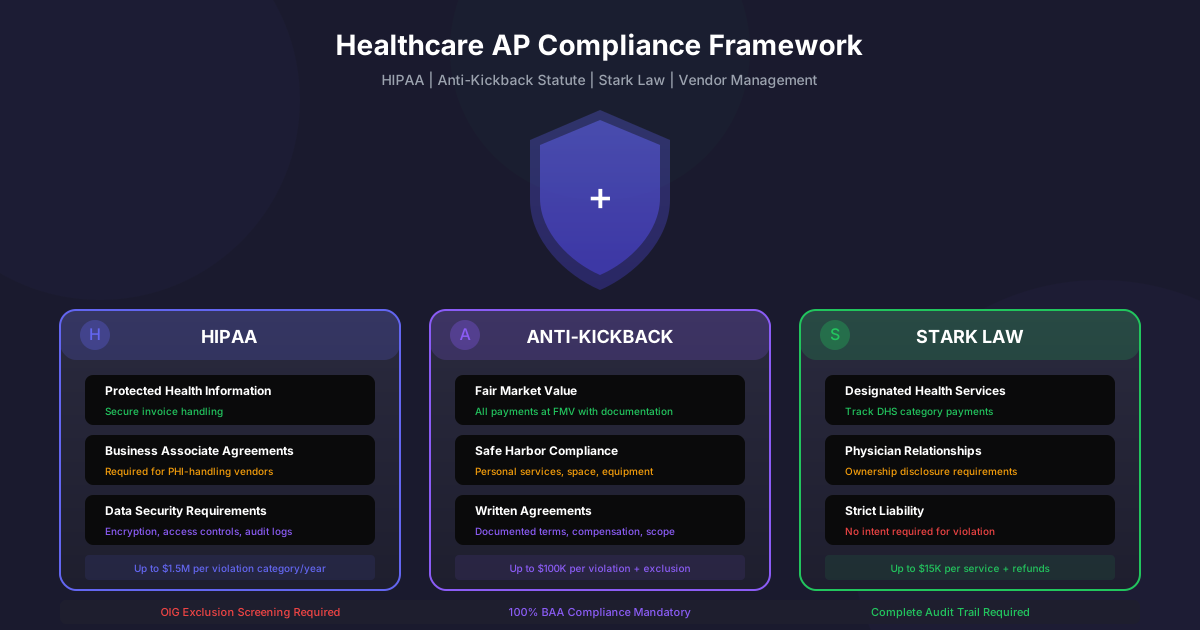
The healthcare industry faces a unique compliance challenge: processing thousands of vendor invoices while maintaining strict adherence to regulations designed to protect patient data, prevent fraud, and ensure fair business practices. The stakes are extraordinarily high. HIPAA violations can result in fines up to $1.5 million per violation category per year, while Anti-Kickback Statute violations carry penalties of up to $100,000 per violationplus potential exclusion from federal healthcare programs.
For accounts payable teams in healthcare organizations, compliance is not optional. Every invoice processed, every vendor relationship managed, and every payment made must align with a complex web of federal and state regulations. Understanding these requirements, and building systems that enforce them, is essential for organizational survival.
The Healthcare Compliance Landscape for AP
Healthcare AP compliance extends far beyond standard financial controls. Three major regulatory frameworks directly impact how healthcare organizations manage their vendor payments and relationships:
Key Healthcare AP Regulations
Health Insurance Portability and Accountability Act
- Protected Health Information (PHI)
- Business Associate Agreements
- Data security requirements
- Breach notification obligations
42 U.S.C. Section 1320a-7b(b)
- Prohibits payment for referrals
- Fair market value requirements
- Safe harbor provisions
- Intent-based violations
Physician Self-Referral Law
- Designated health services
- Financial relationship disclosure
- Strict liability standard
- Written agreement requirements
HIPAA Compliance in Accounts Payable
While HIPAA is primarily associated with clinical operations, its requirements extend deeply into financial operations. AP teams regularly handle invoices and documentation that contain Protected Health Information, including:
- Medical equipment invoices that reference specific patients or procedures
- Laboratory service bills with patient identifiers or test information
- Pharmacy invoices listing patient medications
- Home health services with patient addresses and care details
- Durable medical equipment rentals tied to specific patients
Business Associate Agreement Requirements
Any vendor that handles PHI on behalf of your organization must have a Business Associate Agreement (BAA) in place. This includes:
- Cloud software providers storing healthcare data
- Billing and collection agencies
- Consultants with access to patient information
- IT service providers managing healthcare systems
- Document destruction companies
BAA Compliance Alert
Processing vendor payments without valid BAAs in place creates significant liability. OCR enforcement actions have resulted in settlements exceeding $10 millionfor organizations that failed to maintain proper business associate agreements.
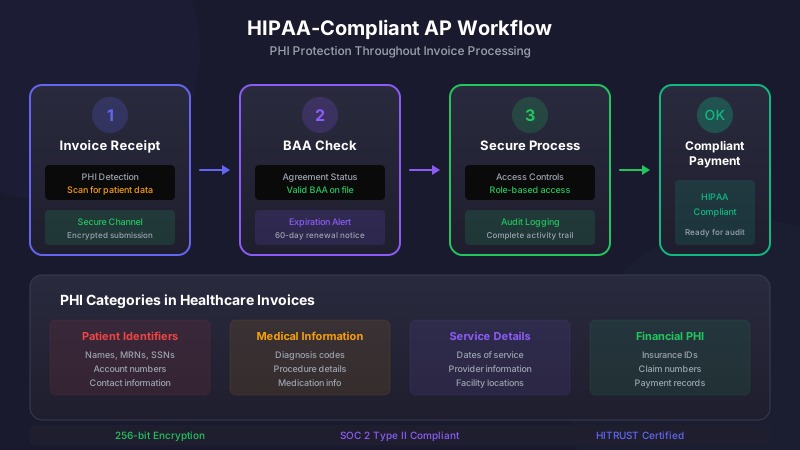
HIPAA-compliant AP workflow ensures PHI protection throughout the invoice lifecycle
The Anti-Kickback Statute: AP Implications
The Anti-Kickback Statute (AKS) makes it a criminal offense to knowingly offer, pay, solicit, or receive anything of value to induce or reward referrals for services covered by federal healthcare programs. For AP teams, this creates several critical obligations:
Fair Market Value Documentation
Every payment to a vendor with referral potential must be documented at fair market value. This includes:
- Physician consulting agreements - Compensation must reflect actual services rendered
- Medical director fees - Hours and rates must be commercially reasonable
- Equipment leases - Terms must match market conditions
- Space rentals - Rates consistent with comparable properties
- Professional services - Fees aligned with industry standards
Anti-Kickback Safe Harbors for AP
Personal Services Safe Harbor
Written agreement, aggregate compensation set in advance
Space Rental Safe Harbor
Written agreement, FMV rent, commercially reasonable
Equipment Rental Safe Harbor
Written agreement, consistent with FMV, specified terms
GPO Safe Harbor
Group purchasing organization fee arrangements
Vendor Relationship Documentation
AP teams play a critical role in maintaining the documentation that demonstrates compliance with AKS safe harbors. For each vendor relationship with referral implications, you need:
- Written agreement specifying services, compensation, and term
- Fair market value determination documentation
- Proof that compensation does not vary with referral volume
- Evidence that services are actually provided as contracted
- Regular compliance review and attestation records
Stark Law Compliance in Vendor Management
The Stark Law prohibits physicians from referring Medicare patients for designated health services to entities with which they have a financial relationship, unless an exception applies. For AP, this means careful tracking of payments to physician-owned entities and ensuring all arrangements meet exception requirements.
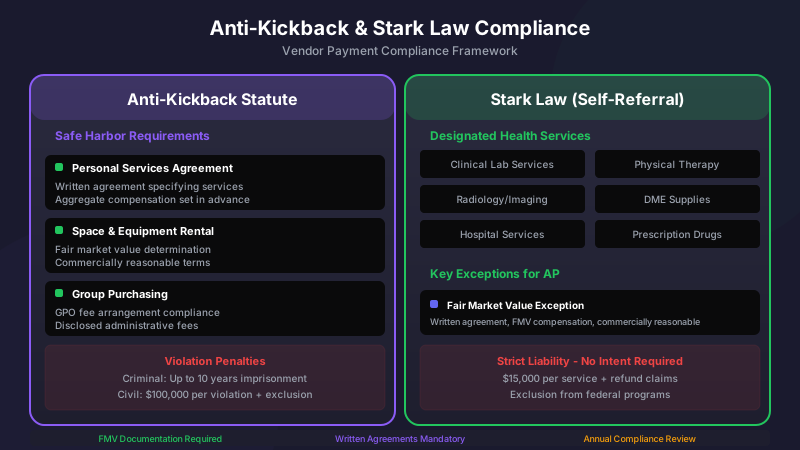
Automated compliance checks ensure vendor payments meet AKS and Stark Law requirements
Designated Health Services Categories
Stark Law applies to referrals for these designated health services (DHS):
- Clinical laboratory services
- Physical therapy, occupational therapy, and speech-language pathology
- Radiology and imaging services (MRI, CT, ultrasound)
- Radiation therapy services and supplies
- Durable medical equipment and supplies
- Parenteral and enteral nutrients, equipment, and supplies
- Prosthetics, orthotics, and prosthetic devices
- Home health services
- Outpatient prescription drugs
- Inpatient and outpatient hospital services
Stark Law: Strict Liability
Unlike the Anti-Kickback Statute, Stark Law violations do not require intent. A technical violation, even if inadvertent, can trigger penalties including denial of payment, refund requirements, civil monetary penalties up to $15,000 per service, and exclusion from federal healthcare programs.
Building a Compliant Healthcare AP Process
Healthcare AP compliance requires systematic processes that embed regulatory requirements into daily operations. Here is a framework for building compliance into your workflow:
Vendor Onboarding Compliance
Before processing the first payment to any vendor, complete these compliance steps:
- Business Associate screening: Determine if BAA is required based on PHI access
- Referral relationship assessment: Identify any potential AKS or Stark implications
- Fair market value documentation: Obtain FMV determination for referral-related arrangements
- Written agreement review: Ensure contracts include required compliance provisions
- Exclusion screening: Verify vendor is not on OIG exclusion list or SAM debarment list
- Ownership disclosure: Document any physician ownership interests
Healthcare Vendor Compliance Checklist
- W-9 with TIN verification
- OIG exclusion list screening
- SAM.gov debarment check
- State Medicaid exclusion search
- Basic vendor due diligence
- Business Associate Agreement
- Security questionnaire
- SOC 2 or HITRUST certification
- Data handling procedures
- Breach notification terms
- Fair market value appraisal
- Written service agreement
- Compensation methodology
- Safe harbor documentation
- Legal compliance review
- Ownership disclosure forms
- Stark exception documentation
- DHS service categorization
- Compensation structure review
- Annual compliance attestation
Invoice Processing Compliance
Every invoice from a compliance-sensitive vendor should trigger specific verification steps:
- Agreement validation: Confirm invoice matches terms of written agreement
- Service verification: Ensure services were actually rendered as described
- Rate confirmation: Verify rates match contracted FMV amounts
- PHI handling: Process any PHI-containing invoices through secure channels
- Documentation attachment: Link supporting documentation for audit trail
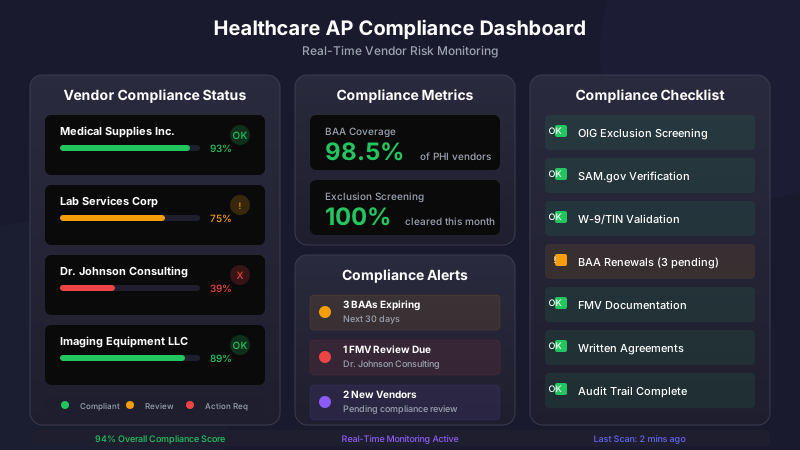
Automated compliance monitoring provides real-time visibility into vendor risk status
Automating Healthcare AP Compliance
Manual compliance processes cannot scale with the volume and complexity of healthcare vendor relationships. Modern AP automation platforms address healthcare-specific requirements through:
- Automated exclusion screening: Real-time OIG and SAM.gov checks before payment
- BAA tracking: Automated alerts for expiring or missing Business Associate Agreements
- FMV monitoring: Flag payments that deviate from documented fair market value
- PHI protection: Secure handling of invoices containing protected information
- Audit trail generation: Complete documentation for compliance audits
- Exception workflows: Route compliance-sensitive payments for additional review
Compliance Automation ROI
Healthcare organizations using automated compliance monitoring report 94% reduction in compliance gaps and 78% faster audit preparation. More importantly, automated exclusion screening has prevented payments to excluded entities that would have triggered False Claims Act liability.
Exclusion Screening: A Non-Negotiable Requirement
Healthcare organizations must not employ or contract with individuals or entities excluded from federal healthcare programs. The consequences of paying an excluded vendor include:
- Civil monetary penalties up to $10,000 per item or service
- Assessment of up to three times the amount claimed
- Potential exclusion from federal healthcare programs
- False Claims Act liability with treble damages
Best practices for exclusion screening include:
- Screen all new vendors before first payment
- Conduct monthly rescreening of active vendors
- Screen vendor employees with patient care responsibilities
- Maintain documentation of all screening activities
- Implement automated alerts for exclusion list updates
Preparing for Healthcare AP Audits
Healthcare organizations face audits from multiple sources: OIG, CMS Recovery Audit Contractors, state Medicaid agencies, and commercial payers. AP teams should maintain:
- Complete vendor files: All compliance documentation readily accessible
- Payment reconciliation: Ability to tie payments to contracts and services
- FMV support: Documentation supporting payment amounts
- BAA inventory: Current status of all Business Associate Agreements
- Exclusion screening logs: Evidence of consistent screening activities
- Exception documentation: Records of compliance reviews for flagged payments
Your Healthcare AP Compliance Action Plan
Strengthening healthcare AP compliance is an ongoing commitment. Start with these priorities:
- Inventory your vendors: Categorize by compliance risk level (PHI access, referral relationship, physician ownership)
- Gap assessment: Identify missing BAAs, FMV documentation, or written agreements
- Implement exclusion screening: Establish automated screening before every payment
- Automate compliance checks: Build regulatory requirements into your AP workflow
- Train your team: Ensure AP staff understand healthcare-specific compliance obligations
- Document everything: Maintain audit-ready records of all compliance activities
Healthcare AP compliance is complex, but it is manageable with the right processes and technology. Organizations that embed compliance into their AP operations protect themselves from catastrophic penalties while building the documentation foundation that supports successful audits. The investment in compliance infrastructure pays dividends in risk reduction and operational confidence.
Ryan Shugars
Director of Product
Ryan has spent 15 years as a Systems Architect, building enterprise solutions that transform how organizations manage their financial operations.