Freight Invoice Audit: Automating Transportation Cost Verification and Recovery
Transportation costs represent one of the largest expense categories for many organizations, yet freight invoices contain error rates far higher than typical vendor invoices. Automated freight audit closes this gap by systematically validating every shipment charge.
Ryan Shugars
Director of Product
For organizations with significant shipping volumes, freight invoices represent a unique accounts payable challenge. Unlike standard vendor invoices with straightforward line items, freight bills contain complex rate structures, accessorial charges, and weight-based pricing that create ample opportunity for billing errors—and most of those errors favor the carrier, not the shipper.
Industry studies consistently show that 3-7% of freight invoices contain billing errors, with the average error representing a 4-6% overcharge. For an organization spending $10 million annually on freight, that translates to $300,000-$700,000 in potential overcharges. Without systematic audit processes, these overcharges go undetected and unrecovered—representing pure profit loss that compounds year after year.
The complexity of freight billing makes manual audit impractical at scale. Each invoice requires comparing billed rates against contracted rates, validating accessorial charges, verifying weight and dimensional calculations, and confirming that discounts and fuel surcharges are correctly applied. Automating these validations transforms freight audit from an impossible task to a systematic cost recovery operation.
Understanding Freight Invoice Complexity
Before exploring automation strategies, it's essential to understand why freight invoices are particularly error-prone and difficult to validate.
Why Freight Invoices Are Error-Prone
Origin, destination, weight, class, mode, and service level all affect pricing
Liftgate, residential delivery, detention, reweigh, and more
Each carrier contract has unique rate tables, minimums, and discounts
Fuel surcharges, GRIs, and peak surcharges change frequently
Rate Structure Complexity
Freight rates aren't simple per-unit prices. They're calculated based on a matrix of factors including origin and destination zones, shipment weight or dimensional weight (whichever is greater), freight class for LTL shipments, service level selected, and any negotiated discounts. Each carrier has its own base rate tables, and these rates are frequently updated through General Rate Increases (GRIs).
Most shippers negotiate discounts off published rates, adding another layer of complexity. A contract might specify a 65% discount off base rates for zone 5-6 shipments under 150 lbs, but a 58% discount for heavier shipments. Validating that each invoice correctly applies the appropriate discount requires detailed contract knowledge and precise calculations.
Accessorial Charge Proliferation
Beyond base transportation charges, freight invoices include numerous accessorial fees for additional services. Common accessorials include:
- Residential delivery: Deliveries to homes rather than commercial addresses
- Liftgate service: When loading dock isn't available
- Inside delivery: Moving freight beyond the threshold
- Limited access: Construction sites, schools, military bases
- Detention/waiting time: When drivers wait beyond free time
- Reweigh and reclassification: When actual differs from billed
- Fuel surcharge: Variable charge based on diesel prices
Each accessorial should only be charged when the service was actually provided and at the contracted rate. Carriers sometimes apply accessorials incorrectly—charging residential fees for commercial addresses or detention charges that exceed contracted allowances.
The Accessorial Error Epidemic
Research indicates that 15-20% of accessorial charges are applied incorrectly. Common issues include charging residential delivery for commercial addresses, applying liftgate fees when dock service was used, and billing for services never requested or rendered. These "phantom" charges often go unquestioned because shippers lack visibility into what happened at delivery.
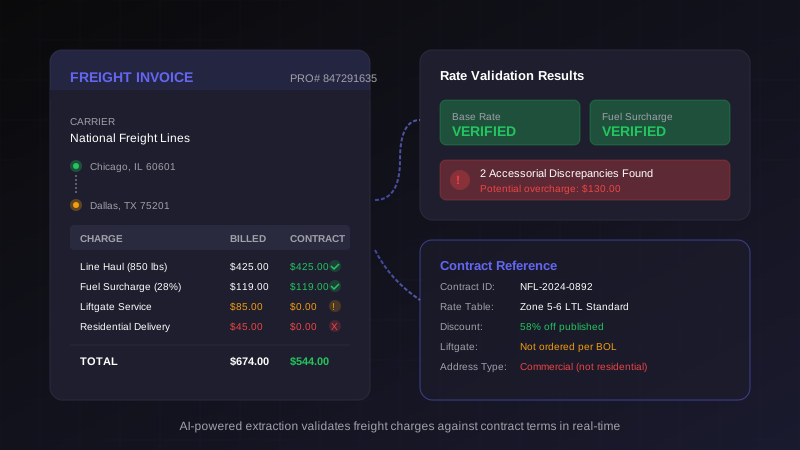
AI-powered extraction captures complex freight rate structures and validates against carrier contracts
Building an Automated Freight Audit System
Effective freight invoice automation requires specialized capabilities that go beyond standard AP automation. The system must understand freight-specific data, integrate with carrier rate tables, and apply complex validation logic.
Step 1: Invoice Capture and Data Extraction
Freight invoices arrive through multiple channels—EDI feeds from larger carriers, email attachments, carrier portals, and even paper. A comprehensive capture strategy ensures no invoices escape the audit process.
Critical Data Points for Freight Audit
Shipment Identification
PRO number, BOL number, PO reference, tracking number
Origin and Destination
Full addresses with ZIP codes for zone determination
Weight and Dimensions
Actual weight, dimensional weight, freight class
Charge Breakdown
Line haul, fuel surcharge, accessorials, discounts, totals
Step 2: Contract Rate Integration
The foundation of freight audit is comparing billed rates against contracted rates. This requires maintaining current carrier contracts in a format the system can use for automated comparisons.
Key contract elements to capture include:
- Base rate tables or discount structures by service level
- Minimum charges and weight break thresholds
- Accessorial rates and any included services
- Fuel surcharge tables and calculation methods
- Volume commitments and earned discount tiers
- Contract effective dates and expiration
Rate Validation Logic
For each line item, the audit system calculates the expected charge based on contract terms and shipment characteristics. It then compares this expected amount to the billed amount, flagging any discrepancies that exceed tolerance thresholds. Tolerance settings typically range from $0.50 to $5.00, balancing the cost of disputes against recovery amounts.
Step 3: Accessorial Validation
Accessorial charges require validation beyond rate comparison. The system should verify:
- Service eligibility: Was the accessorial requested or applicable?
- Address classification: Is the delivery address actually residential?
- Contracted rates: Does the charge match the contracted accessorial rate?
- Duplicate charges: Is the same service charged multiple times?
- Bundled services: Are charges applied for services included in the base rate?
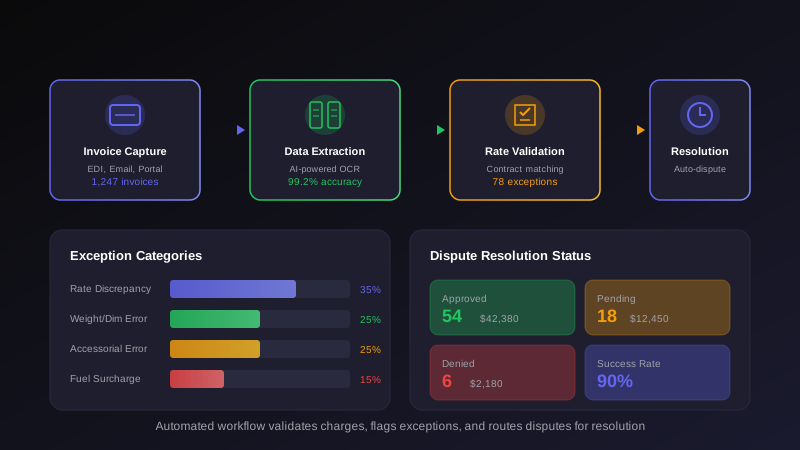
Automated workflows validate freight charges, flag exceptions, and route disputes for resolution
Common Freight Billing Errors and Recovery Opportunities
Understanding the most frequent error types helps prioritize audit logic and set appropriate validation rules. Here are the errors that deliver the highest recovery rates.
Top Freight Billing Error Categories
Rate Errors (35% of recoveries)
- Discount not applied
- Wrong rate table used
- Expired contract rates
- Incorrect zone calculation
Weight/Dim Errors (25%)
- Dimensional weight overstatement
- Actual weight discrepancy
- Freight class misclassification
- NMFC code errors
Accessorial Errors (25%)
- Phantom accessorials
- Incorrect residential flag
- Unauthorized detention
- Duplicate charges
Fuel Surcharge Errors (15%)
- Wrong surcharge table
- Outdated fuel index
- Calculation errors
- Contracted caps exceeded
Duplicate Invoice Detection
Freight billing is particularly susceptible to duplicate invoices. Carriers may re-invoice for unpaid amounts, issue corrections, or simply make errors in their billing systems. Duplicate detection must account for:
- Same PRO number billed multiple times
- Same shipment with different invoice numbers
- Original invoices followed by corrected invoices
- Split billing from interline shipments
The Dispute Management Process
Identifying billing errors is only half the battle. Recovering overcharges requires an effective dispute management process with carriers.
Best Practices for Dispute Resolution
Documentation
- - Retain original BOL and POD
- - Capture shipment photos
- - Document weight tickets
- - Archive rate confirmations
Process
- - Submit within carrier time limits
- - Track dispute aging
- - Escalate unresolved items
- - Measure recovery rates by carrier
Automated Dispute Filing
Many carriers offer dispute portals or accept disputes via EDI. Automation can generate dispute documentation, file claims with supporting evidence, and track resolution status. This systematic approach ensures disputes don't fall through the cracks and recovery opportunities aren't lost to carrier time limits.
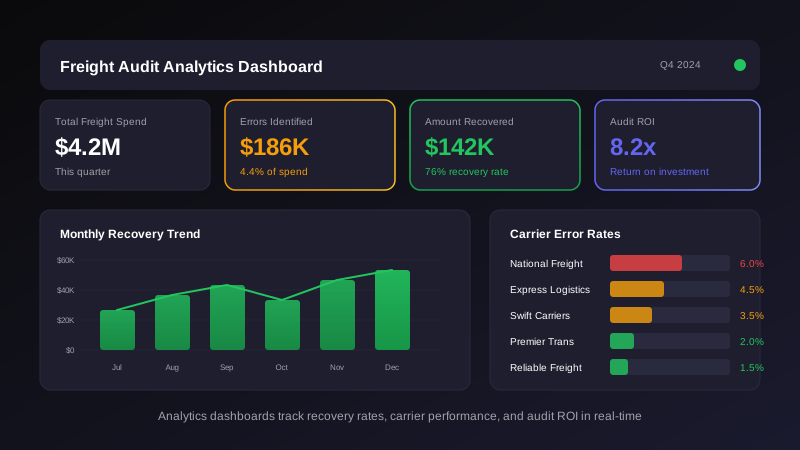
Analytics dashboards track recovery rates, carrier performance, and audit ROI
Measuring Freight Audit Success
A well-implemented freight audit program delivers measurable returns. Track these metrics to evaluate program effectiveness and identify improvement opportunities.
Key Performance Indicators
Recovery Rate
Total recovered divided by total freight spend
Target: 2-5%
Dispute Success Rate
Percentage of disputes resulting in credit or refund
Target: 70-85%
Audit Coverage
Percentage of freight spend audited
Target: 100%
Time to Recovery
Average days from dispute to credit receipt
Target: 30-45 days
Beyond Cost Recovery: Strategic Benefits
While cost recovery drives the ROI calculation, automated freight audit delivers additional strategic benefits:
- Carrier performance visibility: Error rates by carrier inform routing decisions
- Contract negotiation data: Actual spend and service data strengthens negotiations
- Spend analytics: Detailed data supports transportation optimization
- Budget accuracy: Validated costs improve transportation forecasting
- Compliance assurance: Audit trails support internal and external audits
Implementation Considerations
Organizations approaching freight audit automation should consider these factors for successful implementation.
Implementation Checklist
Preparation
- - Compile all carrier contracts
- - Map invoice receipt channels
- - Define tolerance thresholds
- - Establish dispute workflows
Integration
- - TMS connectivity for shipment data
- - ERP integration for payment
- - Carrier EDI connections
- - Analytics and reporting tools
Build vs. Buy Considerations
Organizations can build freight audit capabilities in-house, partner with dedicated freight payment companies, or leverage AP automation platforms with freight audit functionality. The right choice depends on shipping volume, carrier diversity, internal capabilities, and desired control over the process.
The Bottom Line
Freight invoice audit represents one of the highest-ROI opportunities in accounts payable. The combination of complex billing, high error rates, and significant spend volumes creates substantial recovery potential that far exceeds the cost of automated audit programs.
Organizations paying carriers without systematic audit are accepting a permanent 2-5% cost increase on their transportation spend. With freight costs representing a major expense category for most companies, that acceptance translates to significant profit leakage that compounds annually.
Modern automation makes comprehensive freight audit practical regardless of shipment volume. AI-powered extraction handles invoice format diversity, rules engines validate rates against contracts, and workflow automation manages disputes through resolution. The result: recovered overcharges that fund the automation investment many times over.
Quick Win: Historical Audit
Most carrier contracts allow disputes for 180 days or more after invoice date. Running a historical audit on recent invoices often uncovers immediate recovery opportunities that can fund your ongoing audit program. Organizations regularly recover hundreds of thousands of dollars in overcharges from just the past six months of freight invoices.
Ryan Shugars
Director of Product
Ryan has spent 15 years as a Systems Architect, building enterprise solutions that transform how organizations manage their financial operations.