Escheatment Compliance: Managing Unclaimed Property and Avoiding Penalties
Every uncashed check, unredeemed credit, and unprocessed refund in your AP system represents a potential compliance liability. Understanding escheatment requirements is essential for avoiding penalties and audit exposure.
Ryan Shugars
Director of Product
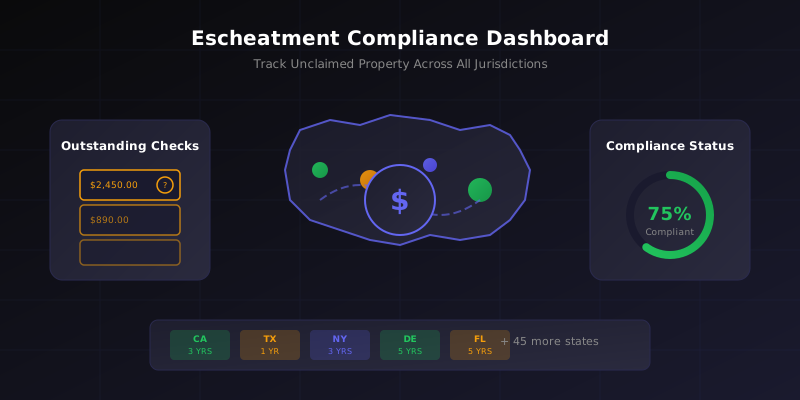
Buried in your accounts payable system are thousands of dollars in unclaimed property that legally belongs to someone else. Outstanding checks that were never cashed, vendor credits that were never applied, customer refunds that were never claimed. Each represents a compliance obligation that many organizations overlook until an audit brings painful penalties.
Escheatment, the legal process of transferring unclaimed property to the state, affects every organization that issues payments or maintains credits on behalf of others. With all 50 states actively enforcing unclaimed property laws and penalties reaching 25% or more of the property value, plus interest, the financial stakes are significant. Yet many AP departments lack the visibility, processes, and tools to manage this compliance obligation effectively.
What Is Escheatment and Why Does It Matter?
Escheatment is based on the legal principle that property should not remain in limbo indefinitely. When a company holds money that belongs to someone else, whether a vendor, customer, or employee, and that person cannot be located or fails to claim the property for a specified period, the property “escheats” to the state. The state then holds the property as custodian, making it available to the rightful owner who may later come forward.
Common AP Property Types Subject to Escheatment
Outstanding Checks
Checks issued but never cashed
Vendor Credits
Credit balances on vendor accounts
Customer Refunds
Unredeemed refund checks or credits
Unclaimed Rebates
Promotional rebates not redeemed
Unidentified Deposits
Payments received without clear ownership
Suspended Payables
Invoices approved but never paid
The Scale of the Problem
The numbers are staggering. States collectively hold over $80 billion in unclaimed property, with billions more added each year. For individual companies, the exposure can be substantial. An organization processing 50,000 checks annually with a 1% outstanding rate accumulates 500 uncashed checks per year. At an average value of $500 per check, that represents $250,000 in potential escheatment liability annually, plus penalties and interest if not properly reported.
Penalties Add Up Quickly
States impose significant penalties for escheatment non-compliance. Delaware, where many companies are incorporated, charges interest of 1% per month on late-reported property plus penalties up to $1,000 per month for failure to file. Multi-state audits examining 10-15 years of records can result in assessments reaching millions of dollars.
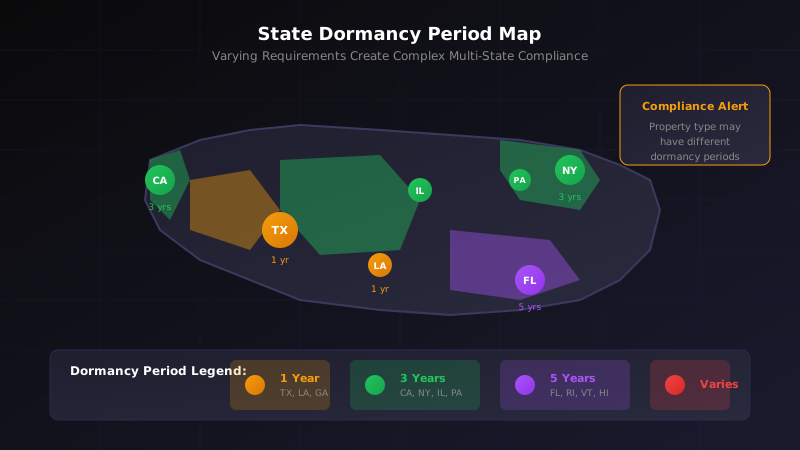
Dormancy periods vary by state and property type, creating complex compliance requirements
Understanding Dormancy Periods
The “dormancy period” is the length of time property must remain unclaimed before it becomes reportable to the state. These periods vary significantly by state and property type, creating a complex compliance matrix for companies operating nationally.
State Variations
While many states have adopted versions of the Uniform Unclaimed Property Act, implementation varies widely:
- Check dormancy: Ranges from 1 year (Texas, Louisiana) to 5 years (Rhode Island, Vermont)
- Most common period: 3 years for outstanding checks in the majority of states
- Vendor credits: Often 3-5 years depending on the state
- Customer refunds: Typically 3 years, but some states use 1-2 years
Dormancy Period Examples by State
- Texas: 1 year for most property
- Louisiana: 1 year for checks
- Georgia: 1 year for wages
- Florida: 1 year for money orders
- California: 3 years for most property
- New York: 3 years for checks
- Illinois: 3 years general
- Pennsylvania: 3 years for checks
- Rhode Island: 5 years for checks
- Vermont: 5 years general
- Hawaii: 5 years for most property
- Alaska: 5 years general
- Delaware: State of incorporation rules
- Nevada: No income tax but strict reporting
- South Dakota: Expedited compliance programs
- New Jersey: Negative reporting required
Which State Gets the Property?
Determining the correct state for reporting follows a priority hierarchy established by Supreme Court decisions:
- First priority: State of the owner's last known address
- Second priority: State of incorporation of the holder (if no address is known)
- Third priority: State where the transaction occurred (in limited cases)
This means companies incorporated in Delaware may report significant amounts to Delaware even when they have no operations there, simply because they lack good address information for the property owners.
The Escheatment Compliance Process
Meeting escheatment requirements involves a multi-step process that must be executed annually. Missing any step creates exposure for penalties and audit liability.
Annual Compliance Timeline
Property Identification
Review all accounts for property approaching or exceeding dormancy thresholds
Due Diligence Outreach
Send required letters to owners attempting to reunite them with their property
Report Preparation
Prepare state-specific reports with required data fields and formats
Filing and Remittance
Submit reports and transfer funds to appropriate states by their deadlines
Due Diligence Requirements
Before reporting property to the state, most jurisdictions require a good-faith effort to locate the owner. This “due diligence” typically involves:
- Written notice: Sending a letter to the owner's last known address
- Timing: Usually 60-120 days before the report due date
- Content requirements: Specific language about the property and how to claim it
- Return mail: Document any returned mail as evidence of attempt
- Electronic options: Some states now allow email for due diligence
Due Diligence Saves Money
Organizations that implement robust due diligence programs reunite 15-30% of dormant property with its owners before reporting to the state. This preserves vendor relationships, avoids the administrative burden of escheatment, and keeps the funds available for legitimate business use longer.
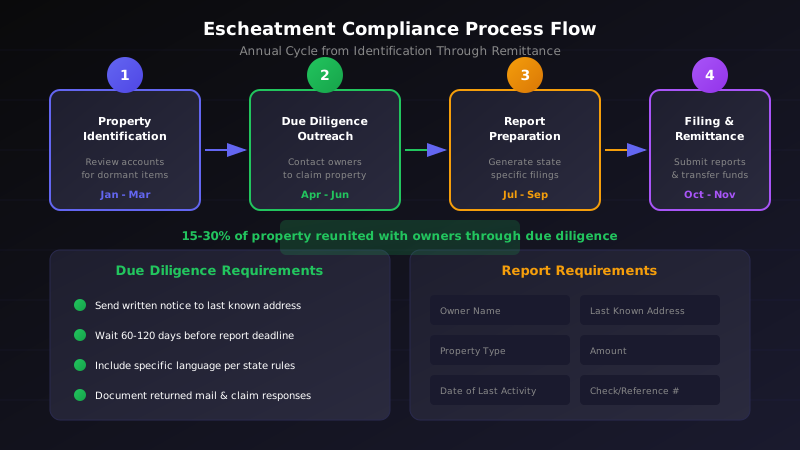
The compliance process requires coordination across AP, treasury, legal, and tax functions
Managing Audit Risk
Unclaimed property audits have become a significant revenue source for states. Unlike traditional tax audits conducted by state employees, most unclaimed property audits are performed by third-party audit firms working on contingency fees. This creates aggressive enforcement with auditors financially motivated to find exposure.
Audit Characteristics
- Look-back periods: Typically 10-15 years, sometimes longer
- Multi-state coordination: One audit may cover 40+ states simultaneously
- Estimation: When records are incomplete, auditors use statistical estimates
- Duration: Audits often take 2-5 years to complete
- Cost: Legal and consulting fees alone can reach hundreds of thousands
Audit Defense Strategies
- Maintain complete records for look-back period
- Document all due diligence efforts
- Keep evidence of prior-year filings
- Retain voided check documentation
- Track all owner contact attempts
- Engage specialized legal counsel early
- Challenge unreasonable estimation methods
- Provide complete documentation
- Negotiate payment terms if needed
- Consider voluntary disclosure agreements
Voluntary Disclosure Programs
Many states offer voluntary disclosure agreements (VDAs) that allow companies to proactively come into compliance with reduced penalties and shorter look-back periods. VDAs are particularly valuable for organizations that:
- Have never filed unclaimed property reports
- Have inconsistent or incomplete filing histories
- Discover significant unreported property
- Want to avoid third-party auditor involvement
VDA Benefits
Voluntary disclosure typically reduces the look-back period from 15+ years to 5-10 years, eliminates or reduces penalties, and provides certainty of outcome. Organizations save an average of 40-60% compared to audit assessments by proactively entering VDA programs.
Building an Effective Compliance Program
Sustainable escheatment compliance requires institutionalized processes, not annual fire drills. An effective program integrates unclaimed property management into regular AP operations.
Key Program Elements
- Ownership: Assign clear responsibility for escheatment compliance
- Inventory: Maintain a complete list of property types that may require reporting
- Tracking: Flag items approaching dormancy thresholds automatically
- Due diligence: Systematic outreach to owners before reporting
- Documentation: Retain all records needed for audit defense
- Reporting: Accurate, timely filing to all required states
- Training: Ensure staff understand escheatment implications of their work
Program Maturity Indicators
Reactive
No formal process; filing only when contacted by states
Compliant
Annual filing process but limited integration with AP
Optimized
Integrated monitoring with proactive owner reunification
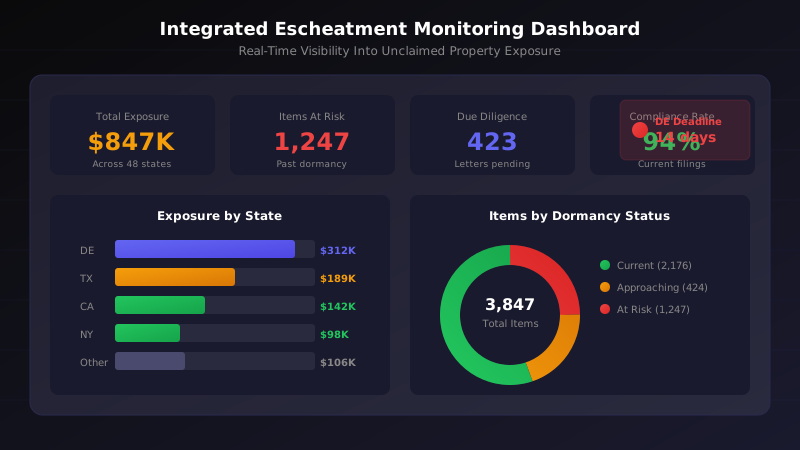
Integrated monitoring provides visibility into escheatment exposure across the organization
Technology-Enabled Compliance
Modern AP automation platforms provide capabilities that dramatically simplify escheatment compliance:
- Automated aging: Track dormancy periods by state and property type
- Early warning alerts: Flag items approaching dormancy thresholds
- Owner verification: Validate contact information before payments go stale
- Due diligence automation: Generate and track required owner notifications
- Report generation: Create state-specific reports in required formats
- Audit trail: Maintain documentation for audit defense
Automation Impact
Organizations with automated escheatment monitoring reduce outstanding check balances by 35-50% through proactive owner outreach, cutting escheatment liability and associated compliance costs proportionally.
Best Practices for AP Teams
While escheatment compliance often falls to tax or treasury departments, AP teams play a crucial role in minimizing exposure and supporting compliance:
- Maintain accurate vendor data: Current addresses reduce uncashable check rates
- Monitor outstanding payments: Follow up on checks not cleared within 30-60 days
- Void stale checks promptly: Reissue or investigate rather than letting checks age
- Apply credits proactively: Don't let vendor credits sit unused
- Document exceptions: Keep records of why payments weren't completed
- Coordinate with treasury: Ensure escheatment data needs are understood
Escheatment compliance is not optional, and the consequences of non-compliance are severe. But with proper processes, technology, and attention, organizations can minimize their exposure while protecting vendor relationships and avoiding the costly disruption of unclaimed property audits. The key is treating escheatment as an ongoing operational requirement rather than an annual compliance exercise.
Ryan Shugars
Director of Product
Ryan has spent 15 years as a Systems Architect, building enterprise solutions that transform how organizations manage their financial operations.