Sustainable AP Operations: Reducing Environmental Impact Through Digitization
As organizations face increasing pressure to demonstrate environmental responsibility, the accounts payable function offers significant opportunities for sustainability improvements. From eliminating paper to optimizing payment methods, AP automation directly reduces your organization's carbon footprint while improving operational efficiency.
Ryan Shugars
Director of Product
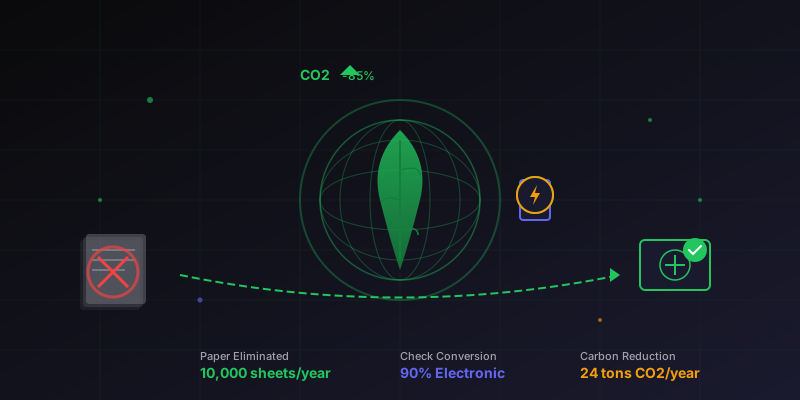
The traditional accounts payable process is surprisingly resource-intensive. Paper invoices, physical check payments, and document storage consume vast quantities of natural resources while generating significant carbon emissions. A single check payment, from paper production through mail delivery, produces approximately 4 pounds of CO2 equivalent. For organizations processing thousands of invoices monthly, the environmental impact adds up quickly.
Sustainability in AP isn't just about corporate responsibility, though that matters increasingly to stakeholders, employees, and customers. It's also about operational efficiency. The same digitization that reduces environmental impact also accelerates processing, reduces costs, and improves accuracy. Green AP and efficient AP are fundamentally the same thing.
The Environmental Footprint of Traditional AP
Before implementing sustainability initiatives, organizations need to understand the baseline environmental impact of their AP operations. Traditional paper-based AP processes consume resources at every stage.
Environmental Impact of Traditional AP
Average AP department processing 5,000 invoices annually
Paper, printing, envelope, and postal transportation
Physical file rooms require ongoing energy consumption
Physical document delivery for signatures and approvals
Paper Production and Waste
The paper used in AP operations, invoices received, copies made, checks printed, and documents filed, requires significant resources to produce. Each ton of paper requires approximately 24 trees, 20,000 gallons of water, and 12,000 kWh of electricity to manufacture. The average AP department handling 5,000 invoices annually consumes roughly half a ton of paper when you include all copies and related documents.
Beyond production, paper disposal creates additional environmental burden. While paper is recyclable, the recycling process itself requires energy and water. Paper that ends up in landfills decomposes and releases methane, a greenhouse gas significantly more potent than CO2 over short time horizons.
Check Payment Impact
Check payments represent one of the largest environmental impacts in AP. Each check requires paper stock, specialized printing, an envelope, and postal transportation. The Federal Reserve estimates that processing and transporting a single paper check generates approximately 4 pounds of CO2 equivalent when accounting for the full lifecycle.
For an organization issuing 1,000 checks monthly, that's 48,000 pounds or 24 tons of CO2 annually, just from the payment method. Converting these payments to electronic methods virtually eliminates this impact.
The Paper Trail Reality
A single invoice processed manually touches paper at least 5 times: original invoice, copy for approval, copy for records, payment documentation, and audit file copy. Combined with check payments and mailing, one transaction can consume 10+ sheets of paper and generate pounds of emissions.
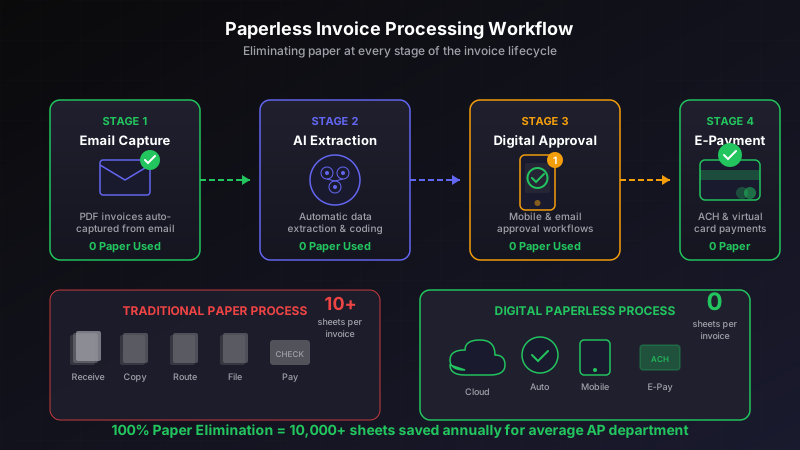
Digital invoice capture eliminates paper at the source, preventing downstream environmental impact
Building a Sustainable AP Operation
Transforming AP into a sustainable operation requires addressing environmental impact across the entire invoice-to-payment lifecycle. Here's a comprehensive framework for green AP initiatives.
Phase 1: Eliminate Paper at the Source
The most effective sustainability improvement is preventing paper from entering the AP workflow in the first place. This requires working with vendors to shift invoice delivery methods.
Invoice Delivery Transformation
Electronic Invoice Networks
EDI, supplier networks, B2B e-invoicing platforms
100%
paper eliminated
Email PDF Invoices
Direct email with PDF attachments for automated capture
95%
paper eliminated
Vendor Portal Submission
Self-service upload and data entry by suppliers
100%
paper eliminated
Scan and Destroy
Immediate digitization of remaining paper invoices
80%
paper eliminated
Phase 2: Digitize Internal Workflows
Even when invoices arrive electronically, traditional AP processes often reintroduce paper through printing for review, physical routing for approval, and document copies for filing. Digital workflow automation eliminates these internal paper touches.
- Electronic approval workflows: Route invoices digitally with email notifications and mobile approval capabilities
- Digital document management: Store all invoices and supporting documents electronically with searchable archives
- Electronic signatures: Capture approvals digitally without printing for wet signatures
- Automated GL coding: AI-powered coding eliminates paper coding sheets and manual lookup processes
- Exception handling: Resolve discrepancies through digital workflows rather than paper-based communication
Phase 3: Transform Payment Methods
Payment method selection has the single largest impact on AP's environmental footprint. Transitioning from checks to electronic payments eliminates paper, printing, and transportation emissions.
Payment Method Environmental Impact
Paper Check
4.0 lbs
CO2 per payment
ACH Transfer
0.1 lbs
CO2 per payment
Virtual Card
0.05 lbs
CO2 per payment
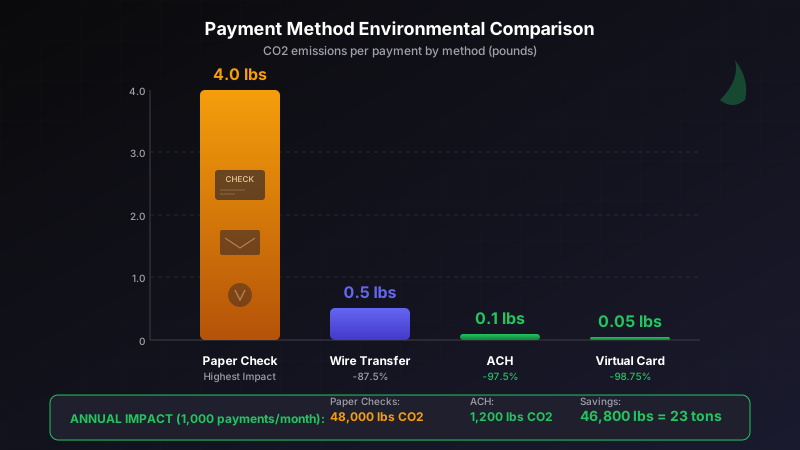
Converting from checks to electronic payments can reduce payment-related emissions by 97%
Measuring Your AP Environmental Impact
To demonstrate sustainability progress and set meaningful goals, organizations need to measure their AP environmental footprint. Here's a framework for calculating and tracking key sustainability metrics.
AP Sustainability Metrics
Paper Metrics
- Paper invoices received vs. electronic
- Pages printed per invoice processed
- Physical document storage footprint
- Paper checks issued vs. electronic
Carbon Metrics
- CO2 from paper production
- CO2 from printing and copying
- CO2 from mail transportation
- CO2 from storage climate control
Resource Metrics
- Water usage (paper production)
- Energy consumption (operations)
- Toner and ink consumption
- Office supply consumption
Progress Metrics
- E-invoice adoption rate
- Electronic payment percentage
- Paperless approval rate
- Year-over-year improvement
Calculating Your Carbon Savings
Organizations can estimate their AP carbon reduction using these approximate conversion factors:
- Paper eliminated: 6 lbs CO2 per 500-sheet ream avoided
- Checks eliminated: 4 lbs CO2 per check converted to electronic
- Storage reduced: 20 lbs CO2 per file cabinet eliminated annually
- Courier eliminated: 2 lbs CO2 per delivery avoided
ESG Reporting and Stakeholder Communication
AP sustainability improvements contribute to broader Environmental, Social, and Governance (ESG) reporting requirements. As investors, customers, and regulators increasingly demand environmental accountability, AP digitization provides measurable sustainability achievements.
Including AP in Sustainability Reports
Organizations should incorporate AP sustainability metrics into their ESG disclosures. Key reporting elements include:
- Baseline measurements: Document starting environmental impact before initiatives
- Reduction targets: Set specific goals for paper, checks, and emissions reduction
- Progress tracking: Report actual results against targets quarterly or annually
- Scope 3 emissions: Include supply chain payment impacts in comprehensive carbon accounting
Vendor Sustainability Partnership
Engaging vendors in your sustainability initiatives creates multiplier effects. When you require electronic invoicing, your vendors also benefit from reduced paper and mailing costs. Organizations achieving 80%+ e-invoicing adoptionoften cite vendor enthusiasm for the environmental benefits as a key driver of rapid acceptance.
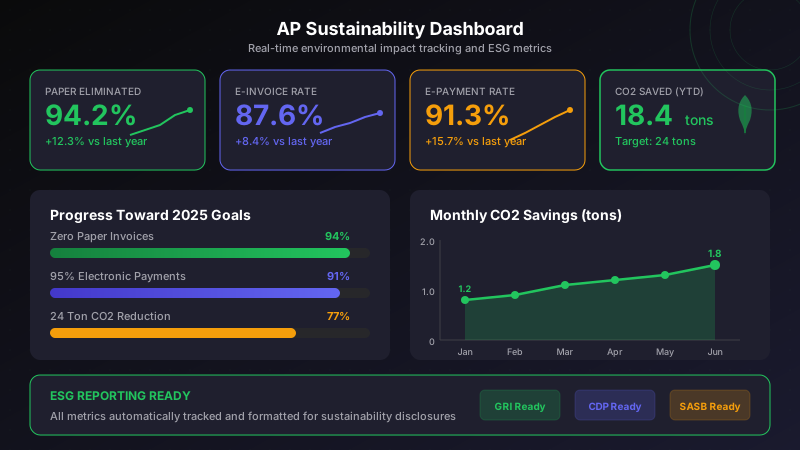
Comprehensive sustainability dashboards track environmental impact reduction across AP operations
Implementation Roadmap
Transforming AP into a sustainable operation requires a structured approach. Here's a phased roadmap for achieving green AP operations.
Green AP Implementation Phases
Phase 1: Assessment (Weeks 1-4)
Measure current environmental footprint and identify opportunities
Baseline
Phase 2: Quick Wins (Weeks 5-12)
Eliminate unnecessary printing, digitize internal workflows
30% Reduction
Phase 3: E-Invoice Adoption (Months 3-9)
Transition vendors to electronic invoice submission
60% Reduction
Phase 4: Payment Conversion (Months 6-12)
Convert check payments to ACH and virtual card
85% Reduction
The Business Case for Green AP
Sustainability in AP delivers compelling business benefits beyond environmental responsibility. Organizations implementing green AP initiatives consistently report significant operational improvements alongside environmental gains.
- Cost reduction: Eliminating paper and checks reduces direct costs by $3-8 per invoice
- Process acceleration: Digital workflows process invoices 5-10x faster than paper
- Storage savings: Digital archives eliminate physical storage costs and space requirements
- Audit efficiency: Electronic records enable instant retrieval versus manual file searches
- Employee satisfaction: Staff prefer working with modern digital tools over paper processes
Combined Impact
Organizations achieving full AP digitization typically report 70-90% reduction in paper consumption, 90%+ electronic payment adoption, and 50-70% faster invoice processing. The environmental benefits and operational improvements reinforce each other, creating a compelling case for green AP transformation.
The Bottom Line
Sustainable AP operations represent an opportunity to simultaneously improve environmental performance and operational efficiency. The same digitization that eliminates paper and reduces emissions also accelerates processing, reduces costs, and improves accuracy.
For organizations facing pressure to demonstrate environmental responsibility, AP transformation offers measurable sustainability achievements. Paper eliminated, checks converted, and emissions reduced are concrete metrics that contribute to ESG reporting and stakeholder communication.
The path to green AP is clear: digitize invoice receipt, automate internal workflows, convert to electronic payments, and measure your progress. Each step reduces environmental impact while improving AP performance. In this case, doing well and doing good are the same thing.
Quick Win: Payment Method Audit
Start your green AP journey with a payment method audit. Identify your top 50 vendors by check volume and assess which can convert to ACH or virtual card. Most organizations find that 60-70% of check volume can convert to electronic payments with minimal effort, instantly eliminating the largest source of AP environmental impact.
Ryan Shugars
Director of Product
Ryan has spent 15 years as a Systems Architect, building enterprise solutions that transform how organizations manage their financial operations.