Dynamic Discounting: Optimizing Payment Timing for Maximum Financial Benefit
Traditional early payment discounts force a binary choice. Dynamic discounting creates a sliding scale of opportunities, letting you deploy excess cash for guaranteed returns while suppliers get faster access to working capital.
Ryan Shugars
Director of Product
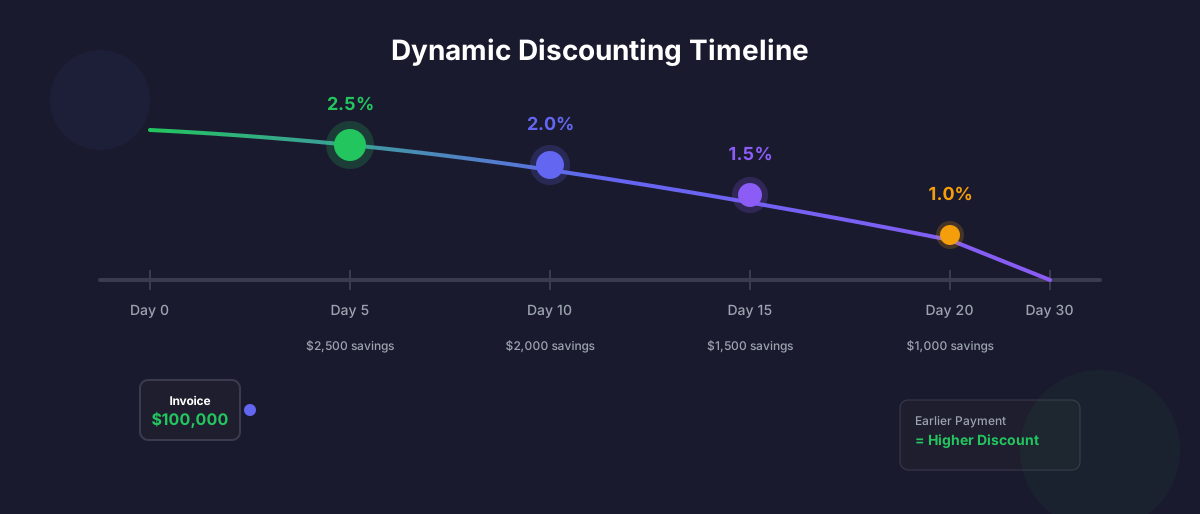
Most organizations capture less than 20% of available early payment discounts, leaving millions on the table each year. The traditional 2/10 Net 30 model forces an all-or-nothing decision—pay in 10 days for 2%, or pay full price at 30 days. Dynamic discounting eliminates this constraint, creating a flexible discount schedule that adjusts based on payment timing and your available cash.
Unlike traditional static terms, dynamic discounting programs calculate discount rates on a sliding scale—the earlier you pay, the higher the discount. Pay on day 5 and receive 2.5%. Pay on day 15 and receive 1.5%. This flexibility transforms payment timing from a rigid constraint into a strategic lever for both buyers and suppliers.
How Dynamic Discounting Works
Dynamic discounting operates on a simple principle: time has value. Suppliers benefit from faster access to cash, and they're willing to share some of that value with buyers who can accelerate payment. The key innovation is making this exchange continuous rather than binary.
Dynamic Discount Calculation Example
For a $100,000 invoice with Net 30 terms and a 36% APR discount rate:
25 days early x 36% APR / 365
20 days early x 36% APR / 365
15 days early x 36% APR / 365
10 days early x 36% APR / 365
The APR-based calculation provides consistent returns regardless of payment timing. For the buyer, early payment generates a risk-free return equivalent to the discount APR. For suppliers, the cost of early payment is typically lower than traditional financing alternatives like factoring or lines of credit.
The Business Case for Dynamic Discounting
Organizations implement dynamic discounting for diverse reasons, from deploying excess cash to strengthening supplier relationships. Understanding these drivers helps you build a compelling business case for your organization.
For Buyers: Guaranteed Returns on Excess Cash
In a low-yield environment, dynamic discounting offers returns that far exceed traditional cash investments. A 36% APR discount rate translates to guaranteed returns that outperform money market funds, short-term bonds, and even many equity investments—with zero market risk.
Buyer Benefits
- - Risk-free returns: 12-36% APR on deployed cash
- - Flexibility: Deploy cash when available, preserve it when needed
- - Supplier relationships: Become a preferred customer through fast payment
- - Supply chain stability: Improve supplier financial health
- - Negotiating leverage: Early payment capability as a negotiating chip
For Suppliers: Affordable Access to Working Capital
Suppliers often face expensive financing options when they need to accelerate cash flow. Factoring costs 3-5% per month. Bank credit lines may be unavailable or have utilization constraints. Dynamic discounting provides an alternative that's typically cheaper and more accessible.
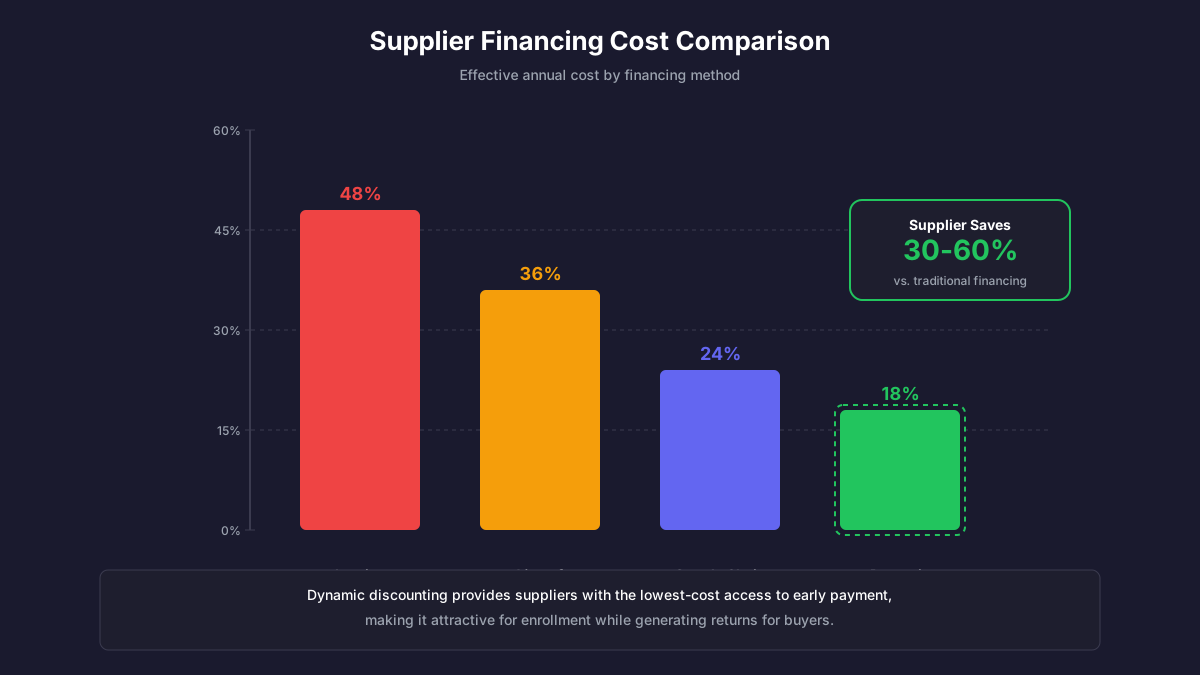
Dynamic discounting typically costs suppliers less than traditional financing alternatives
Implementing a Dynamic Discounting Program
Successful dynamic discounting requires the right technology, supplier engagement, and operational processes. Here's a structured approach to implementation.
Step 1: Assess Your Discount Opportunity
Before launching a program, quantify the potential value. Analyze your payables data to understand discount capture rates, payment timing patterns, and available cash for deployment.
Program Assessment Questions
Current Discount Capture Rate
What % of available discounts do you capture today?
Benchmark: 20-30%
Average Days Payable Outstanding
Room between DPO and standard terms = opportunity
Calculate Gap
Eligible Spend Volume
Total spend with suppliers open to early payment
Target: 40-60%
Available Cash for Deployment
Excess cash that could earn discount returns
Varies
Step 2: Define Your Discount Structure
Set the APR you'll offer suppliers for early payment. This rate should be attractive enough to drive supplier participation while generating meaningful returns for your organization. Market rates typically range from 12% to 36% APR, with most programs settling between 18% and 24%.
- Conservative (12-18% APR): Attracts more suppliers, lower per-transaction returns
- Standard (18-24% APR): Balances participation with returns
- Aggressive (24-36% APR): Higher returns, may limit participation to cash-constrained suppliers
Step 3: Select and Onboard Suppliers
Not every supplier is a good fit for dynamic discounting. Focus on suppliers that meet key criteria:
- Invoice volume: Regular, predictable invoice flow
- Invoice size: Large enough to make early payment worthwhile
- Relationship stability: Long-term suppliers you want to support
- Cash needs: Suppliers who value faster payment
Supplier Onboarding Challenges
The biggest barrier to dynamic discounting success is supplier adoption. Many suppliers are unfamiliar with the concept, skeptical of "too good to be true" offers, or lack the internal processes to accept early payment. Plan for significant outreach and education during the onboarding phase.
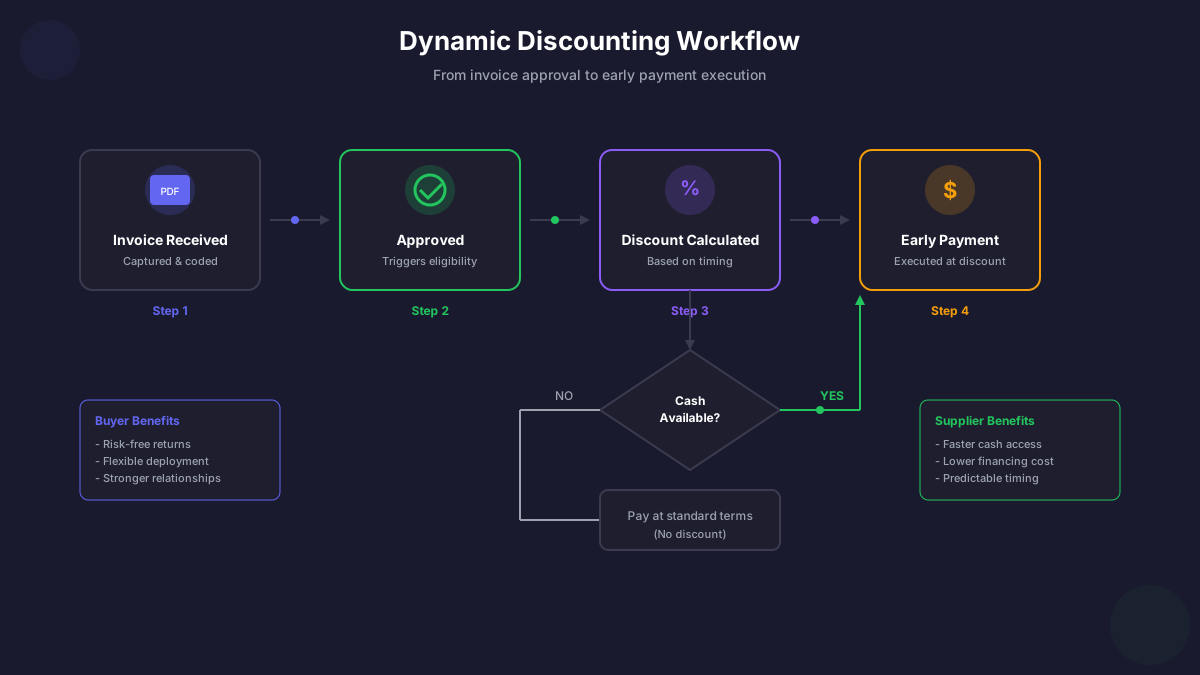
The dynamic discounting workflow integrates with standard AP processes
Step 4: Integrate with AP Processes
Dynamic discounting works best when integrated seamlessly with your AP workflow. Approved invoices should automatically become eligible for early payment, with discount offers calculated and presented without manual intervention.
Key integration points include:
- Invoice approval: Trigger discount eligibility upon final approval
- Cash management: Connect with treasury for available cash visibility
- Payment execution: Automate early payment processing
- Reporting: Track discount capture, returns, and supplier participation
Dynamic Discounting vs. Supply Chain Finance
Dynamic discounting is often confused with supply chain finance (SCF), also known as reverse factoring. While both accelerate supplier payments, they differ in important ways.
Dynamic Discounting vs. Supply Chain Finance
Dynamic Discounting
- Funded by buyer's own cash
- No third-party financing
- Returns stay with buyer
- Simpler to implement
- Limited by available cash
Supply Chain Finance
- Funded by financial institutions
- Extends buyer payment terms
- Larger volume capacity
- More complex structure
- Accounting considerations
Many organizations use both programs in parallel. Dynamic discounting deploys excess cash for guaranteed returns, while SCF handles volume beyond available cash capacity and supports payment term extension strategies.
Measuring Program Success
Track these metrics to evaluate and optimize your dynamic discounting program:
Key Performance Metrics
Financial Metrics
- - Total discount value captured
- - Effective APR on deployed cash
- - Cash utilization rate
- - Cost avoidance vs. traditional financing
Operational Metrics
- - Supplier enrollment rate
- - Invoice participation rate
- - Average days payment acceleration
- - Processing exceptions
Common Implementation Challenges
Organizations launching dynamic discounting programs commonly encounter these obstacles:
Challenge 1: Low Supplier Adoption
Many suppliers don't understand the value proposition or lack the operational capability to accept variable payment timing. Address this through education, simplified enrollment processes, and targeting suppliers most likely to benefit.
Challenge 2: Cash Availability Volatility
Dynamic discounting requires available cash. Seasonal businesses or organizations with variable cash flows may struggle to deploy cash consistently. Consider combining with SCF to maintain program continuity during cash-tight periods.
Challenge 3: Process Integration Gaps
Manual invoice processing creates delays that erode the window for early payment. Automation is essential—invoices must be approved quickly to maximize discount capture opportunity.
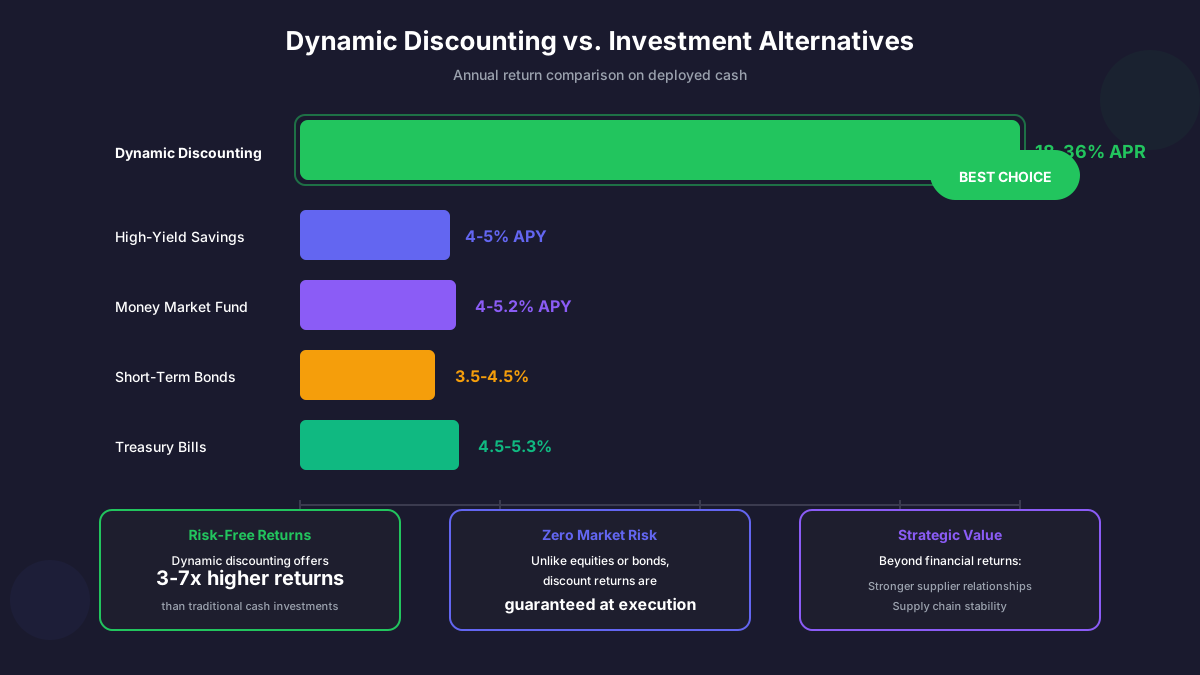
Dynamic discounting returns consistently outperform traditional cash investment alternatives
Quick Start: Pilot Program Framework
Start with a focused pilot to prove value before scaling. Here's a 60-day framework for launching a successful pilot:
60-Day Pilot Framework
Weeks 1-2
Select Pilot Suppliers
Identify 10-20 high-volume suppliers with good relationships and likely interest
Weeks 3-4
Configure and Onboard
Set discount rates, enroll suppliers, integrate with payment processes
Weeks 5-8
Execute and Measure
Process early payments, track participation, measure returns, gather feedback
Quick Win: Calculate Your Opportunity
Estimate your dynamic discounting opportunity with a simple calculation: Take your annual spend with suppliers offering early payment terms, multiply by your current discount capture gap (industry average is 70-80%), then multiply by the average discount percentage. For a $50M company capturing only 20% of available 2% discounts, the opportunity is $800,000 annually—before considering the enhanced flexibility of dynamic rates.
The Bottom Line
Dynamic discounting transforms early payment from a rigid, underutilized option into a flexible financial tool. By creating a sliding scale of discounts based on payment timing, organizations can deploy cash strategically, capture guaranteed returns, and strengthen supplier relationships simultaneously.
The combination of low-yield cash alternatives, increasing supplier demand for faster payment, and maturing technology platforms makes this an ideal time to implement dynamic discounting. Start with a focused pilot, prove the value, and scale systematically to unlock the full potential of your payables optimization.
The invoices you're already paying represent an untapped investment opportunity. Dynamic discounting lets you capture returns that exceed virtually any other risk-free investment available to corporate treasury.
Ryan Shugars
Director of Product
Ryan has spent 15 years as a Systems Architect, building enterprise solutions that transform how organizations manage their financial operations.