Credit Memo Processing: Ensuring Timely Application and Accurate Vendor Balances
Lost or misapplied credit memos silently drain working capital. Organizations that optimize credit memo processing recover 2-5% more vendor credits annually while reducing vendor balance discrepancies by 80%. Here's how to capture every dollar you're owed.
Ryan Shugars
Director of Product
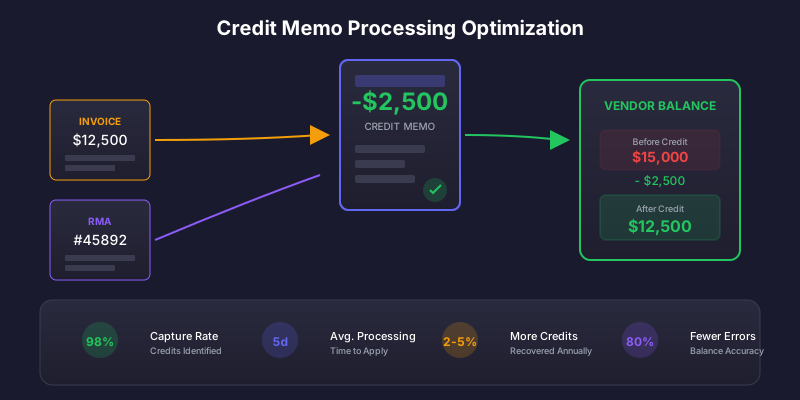
Credit memos represent real money owed to your organization, yet they often receive far less attention than invoices. According to IOFM research, organizations lose an average of 1.5% of their annual spend to unclaimed or misapplied vendor credits. For a company processing $100 million in payables annually, that's $1.5 million walking out the door.
The root cause is typically a fragmented approach to credit memo management. Unlike invoices, which have clear workflows and deadlines, credit memos often arrive unexpectedly through various channels and lack the urgency that drives invoice processing. They sit in email inboxes, get filed in paper trays, or simply fall through the cracks of AP operations.
Optimizing credit memo processing requires treating these documents with the same rigor as invoices. This means establishing clear capture mechanisms, matching credits to their source transactions, applying them to the right vendor accounts, and ensuring they're utilized before expiration or write-off.
Understanding Credit Memo Types and Sources
Credit memos originate from various business scenarios, and understanding these sources is essential for building comprehensive capture processes. Each type requires different handling approaches and has different implications for vendor relationships and financial reporting.
Credit Memo Categories
Credits issued when merchandise is returned to the vendor. Typically reference the original invoice and require matching to ensure full credit.
Trigger: Physical goods returned
Credits for pricing errors, retroactive price decreases, or contract compliance corrections on previously paid invoices.
Trigger: Price discrepancy resolution
Volume rebates, promotional credits, or performance incentives earned based on purchasing thresholds or contract terms.
Trigger: Volume/performance milestones
Marketing allowances, cooperative advertising credits, or other promotional support credits from vendors.
Trigger: Marketing agreements
Each credit type enters your organization through different channels. Return credits often accompany shipping documentation. Price adjustments may arrive via email after dispute resolution. Rebate credits frequently require proactive claiming. Marketing allowances might come through completely separate vendor contacts. This fragmentation makes centralized capture essential.
The Credit Memo Processing Lifecycle
Effective credit memo management follows a structured lifecycle from initial capture through final application. Each stage presents opportunities for optimization and potential failure points that allow credits to slip away.
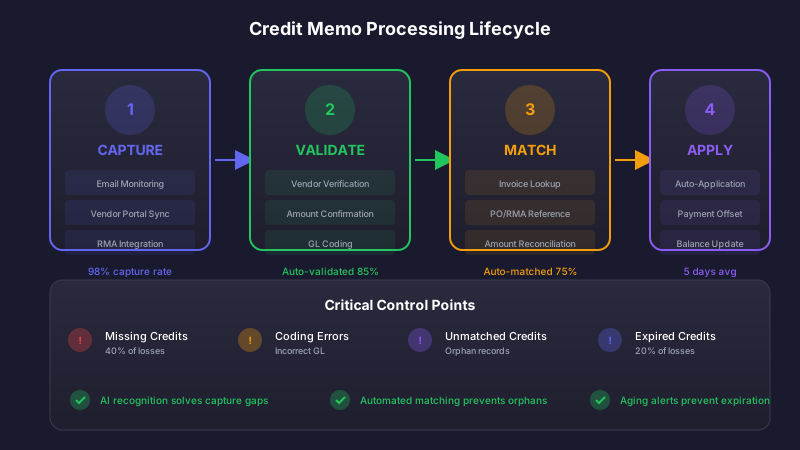
The credit memo lifecycle requires attention at every stage to prevent value leakage
Stage 1: Capture and Recognition
The first challenge is simply knowing a credit memo exists. Unlike invoices that vendors actively push for payment, credit memos represent money flowing the other direction, giving vendors less incentive to ensure delivery. Proactive capture mechanisms are essential.
Best practice organizations establish multiple capture channels: dedicated email addresses for credits, vendor portal monitoring, integration with return merchandise authorization (RMA) systems, and automated scanning of all incoming vendor correspondence for credit-related documents.
Capture Rate Benchmarks
Leading organizations capture 98%+ of all vendor credits within 5 days of issuance. The remaining 2% typically requires vendor statement reconciliation to identify. Organizations without systematic capture processes often miss 15-25% of credits entirely, discovering them only when vendors write them off or during annual audits.
Stage 2: Validation and Coding
Once captured, credit memos require validation similar to invoices. This includes verifying the vendor, confirming the credit amount, matching to source transactions, and ensuring proper GL coding. Invalid or fraudulent credit requests do occur and require the same scrutiny as invoice fraud.
Proper coding is particularly important for credits. Return credits should reverse the original purchase coding. Price adjustments should hit the same expense or inventory accounts. Rebates may require different treatment depending on whether they're volume-based (reducing cost of goods) or performance-based (potentially other income).
Stage 3: Matching and Reconciliation
Credit memos should be matched to their originating transactions whenever possible. This serves multiple purposes: it validates the credit amount, ensures proper accounting treatment, closes the loop on exception resolution, and provides documentation for audits.
Automated matching looks for references in the credit memo to original invoice numbers, PO numbers, or RMA numbers. When credits don't include clear references, additional research may be needed before application.
Stage 4: Application and Utilization
The final stage is applying credits to reduce outstanding balances or future payments. This is where significant value leakage occurs. Credits that sit unapplied may eventually expire, be written off by vendors, or simply be forgotten while the organization continues paying full invoice amounts.
Common Credit Memo Processing Failures
Understanding where credit memo processing typically breaks down helps organizations focus improvement efforts where they'll have the greatest impact.
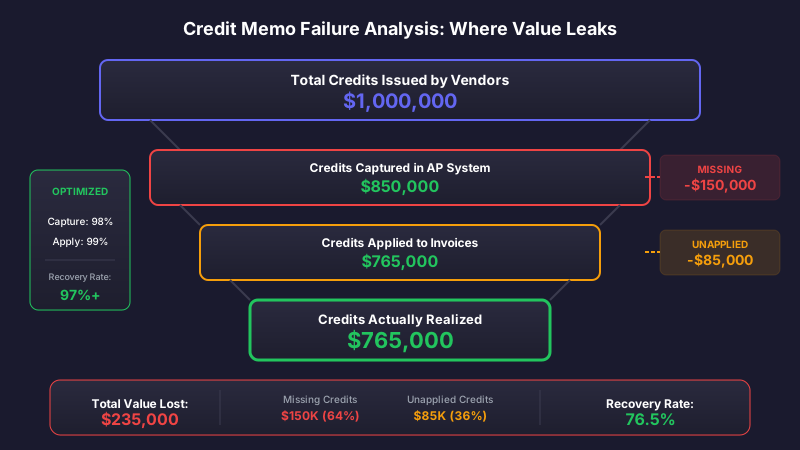
Credit memo failures occur at multiple points, each causing financial leakage
Credit Memo Failure Points
Missing Credits
Credits that never enter AP systems
40% of credit losses
Unapplied Credits
Credits captured but never utilized
30% of credit losses
Expired Credits
Credits that exceeded utilization windows
20% of credit losses
Misapplied Credits
Credits applied to wrong vendors or accounts
10% of credit losses
The Unapplied Credit Problem
The most common failure is credits that enter the system but never get applied. This happens when credits aren't linked to active payment cycles, when vendor relationships end before credits are used, or when AP staff aren't alerted to available credits when processing invoices from the same vendor.
Automated credit application solves this by automatically applying available credits against new invoices from the same vendor. Payment runs should check for unapplied credits before processing, reducing payment amounts accordingly.
The Expiration Risk
Many credits have expiration dates, particularly promotional credits, rebates, and returns processed under specific policies. Without systematic tracking, these deadlines pass unnoticed. Aging reports for credits, similar to invoice aging, help prioritize credits that need immediate utilization.
Building an Optimized Credit Memo Workflow
A well-designed credit memo workflow addresses each failure point while minimizing manual effort. The goal is creating a system where credits flow as smoothly as invoices, with appropriate controls and visibility.
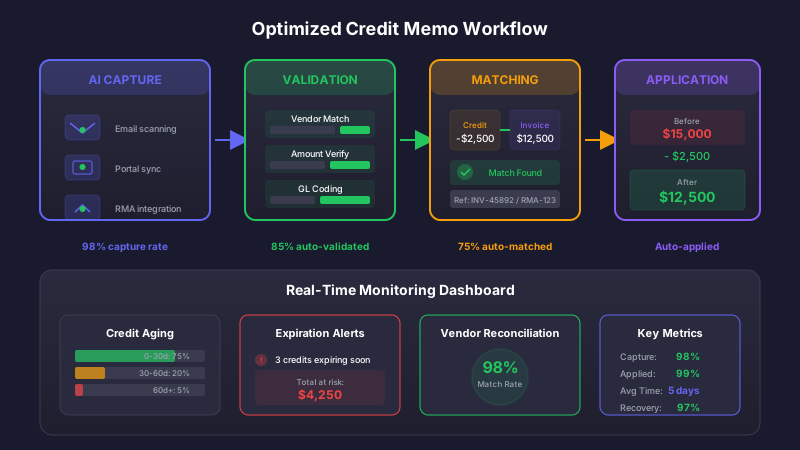
An optimized workflow automates routine tasks while maintaining appropriate controls
Automation Opportunities
AI-powered document recognition identifies credit memos from all incoming correspondence, extracting key data automatically.
Automated matching links credits to original transactions using reference numbers, amounts, and vendor relationships.
Credits automatically apply against new invoices, with alerts when manual intervention is needed.
Aging reports and expiration alerts ensure credits are utilized before they're lost.
Centralized Credit Management
All credits should flow through a central system that provides visibility and control. This means establishing single points of entry for credits regardless of their source, unified processing workflows, and consolidated reporting.
The central system should maintain a credit register showing all open credits by vendor, their aging, associated source transactions, and utilization status. This register becomes the authoritative source for credit availability and supports reconciliation with vendor statements.
Proactive Credit Claiming
Some credits require active claiming rather than passive receipt. Volume rebates, for instance, often require submitting purchase documentation to trigger credit issuance. Marketing allowances may require proof of promotional activity.
Optimized workflows include calendar triggers for credits that accrue over time, automated tracking of purchases against rebate thresholds, and workflows that generate claim documentation when milestones are reached.
Measuring Credit Memo Performance
Tracking the right metrics reveals whether credit memo processes are performing optimally and where improvement opportunities exist.
Key Performance Metrics
Credit capture rate (credits captured vs. credits issued by vendors)
Average credit age at application (time from receipt to utilization)
Credit expiration rate (credits expired vs. total credits received)
Vendor statement match rate (credit balances agree with vendor records)
Implementation Checklist
- Establish dedicated email addresses and channels for credit receipt
- Implement automated credit memo recognition and data extraction
- Create matching workflows linking credits to source transactions
- Enable automatic credit application during payment processing
- Set up credit aging reports with expiration alerts
- Establish regular vendor statement reconciliation processes
- Track capture rate, application time, and expiration metrics
The Vendor Relationship Impact
Beyond the direct financial impact, credit memo handling affects vendor relationships. Vendors notice when credits go unused for extended periods. It suggests disorganization and can affect their willingness to issue credits proactively in the future.
Conversely, organizations that efficiently process and apply credits build trust with vendors. When disputes arise, vendors are more likely to issue credits quickly knowing they'll be properly applied rather than contested or ignored.
The Bottom Line
Credit memos represent real value that many organizations fail to fully capture. The combination of fragmented receipt channels, inconsistent processing, and lack of systematic application results in significant financial leakage that goes largely unnoticed.
Optimizing credit memo processing starts with treating credits with the same urgency as invoices. Establish clear capture channels. Validate and code credits systematically. Match them to source transactions. Apply them automatically when possible. Monitor aging and expiration.
Organizations that implement these practices recover more vendor credits, maintain more accurate vendor balances, and build stronger supplier relationships. The 2-5% improvement in credit recovery directly impacts working capital and, ultimately, the bottom line.
Ryan Shugars
Director of Product
Ryan has spent 15 years as a Systems Architect, building enterprise solutions that transform how organizations manage their financial operations.