The CFO's Guide to AP Automation ROI: Metrics That Matter
When presenting AP automation to the board, vague promises of efficiency do not secure budget. You need hard numbers: specific cost reductions, measurable productivity gains, and a clear payback timeline. This guide provides the framework.
Ryan Shugars
Director of Product
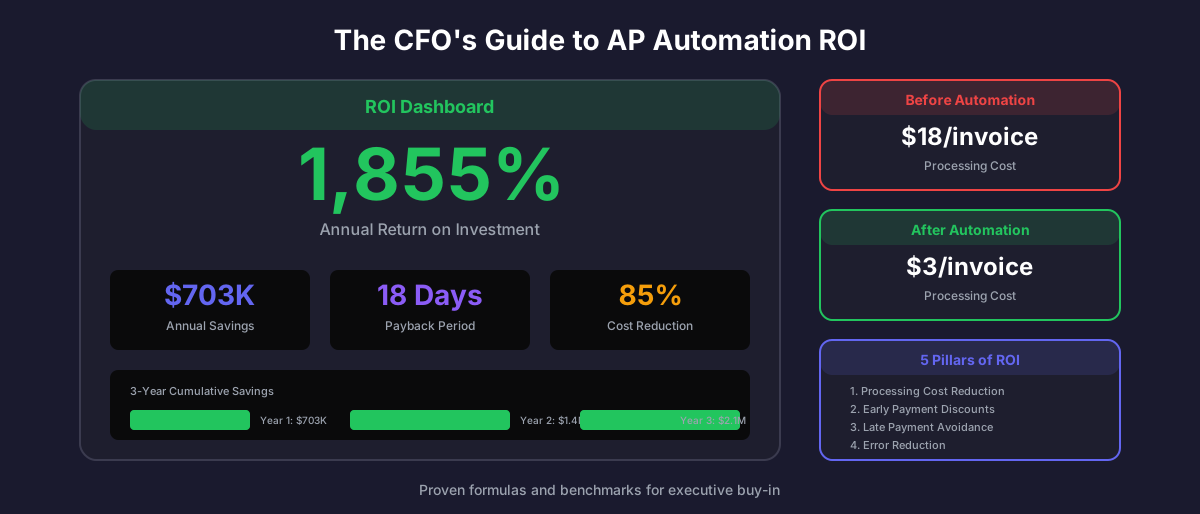
The average CFO evaluates technology investments using three criteria: return on investment, time to value, and risk profile. AP automation excels on all three dimensions when presented correctly. Here is how to build a compelling business case.
The ROI Formula: Breaking Down the Components
AP automation ROI comes from five primary sources. Each should be quantified separately and then aggregated:
The Five Pillars of AP Automation ROI
Labor savings from automated data entry and routing
Capturing 2/10 net 30 terms consistently
Eliminating penalty fees and interest
Preventing duplicates and overpayments
Faster audits with complete documentation
Calculating Your Baseline: Current State Metrics
Before projecting savings, establish your current performance baseline. These metrics form the foundation of your ROI calculation:
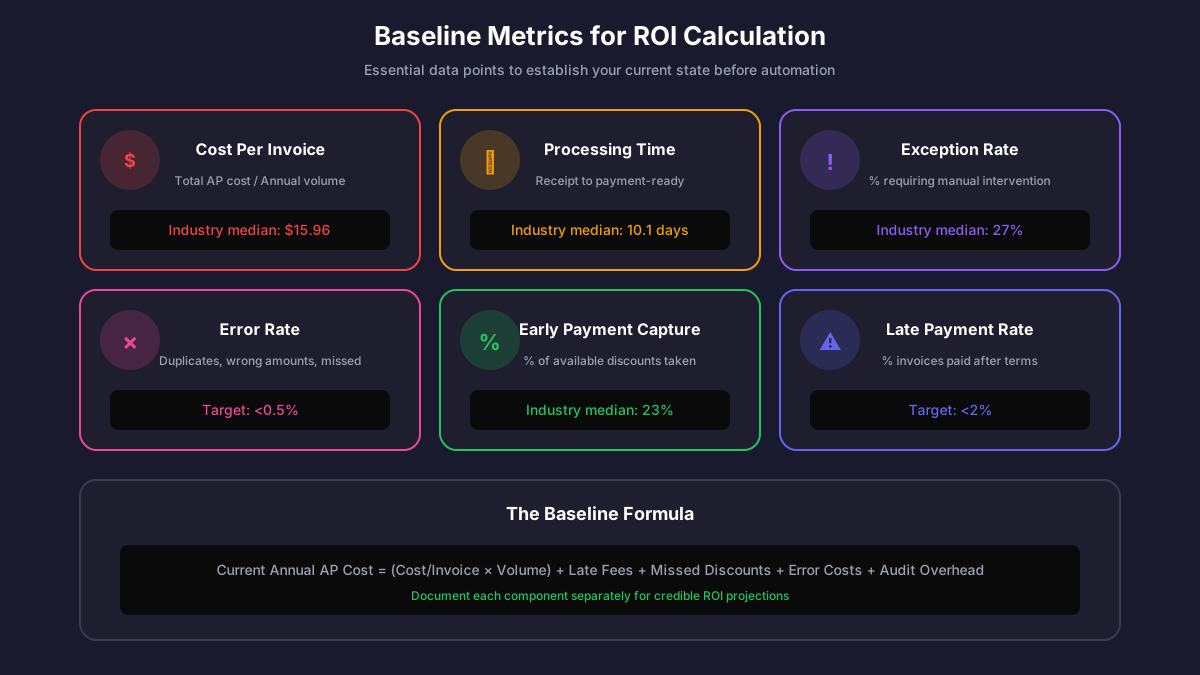
Essential baseline metrics for AP automation ROI calculation
Key Baseline Metrics to Capture
- Cost per invoice: Total AP department cost / annual invoice volume
- Processing time: Average hours from receipt to payment-ready
- Exception rate: Percentage requiring manual intervention
- Error rate: Duplicate payments, wrong amounts, missed invoices
- Early payment capture: Percentage of available discounts taken
- Late payment rate: Percentage of invoices paid after terms
The CFO-Ready ROI Template
Here is a practical template for a mid-market organization processing 3,000 invoices monthly:
Sample ROI Calculation: 3,000 Invoices/Month
Current State (Annual)
Automated State (Annual)
Annual Savings: $703,700
ROI: 1,855% | Payback: 0.6 months
Presenting to the Board: What CFOs Want to See
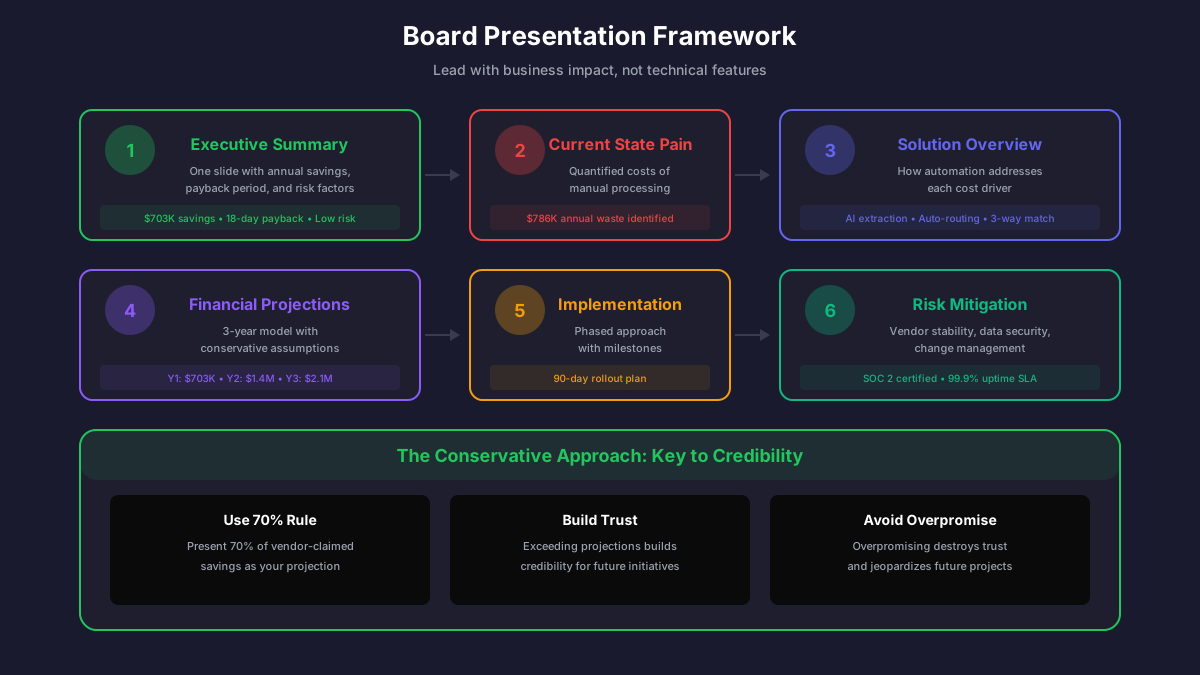
Board presentation framework: leading with impact metrics
Board presentations should lead with business impact, not technical features:
- Executive summary: One slide with annual savings, payback period, and risk factors
- Current state pain: Quantified costs of manual processing
- Solution overview: How automation addresses each cost driver
- Financial projections: 3-year model with conservative assumptions
- Implementation timeline: Phased approach with milestones
- Risk mitigation: Vendor stability, data security, change management
The Conservative Approach
Always present conservative projections. Use 70% of vendor-claimed savings rates. If actual results exceed projections, you build credibility for future initiatives. Overpromising destroys trust.
Benchmark Data: Industry Standards
APQC and Ardent Partners benchmarking data provides credible reference points:
Industry Benchmarks: Manual vs. Automated
| Metric | Manual (Median) | Automated (Top Quartile) |
|---|---|---|
| Cost per invoice | $15.96 | $2.36 |
| Processing time | 10.1 days | 3.2 days |
| Exception rate | 27% | 8% |
| Invoices per FTE | 5,000/year | 25,000/year |
| Early payment capture | 23% | 78% |
The Bottom Line
AP automation ROI is not speculative. The math is straightforward: reduce processing costs by 80%, capture early payment discounts, eliminate late fees, and prevent errors. For most organizations, the payback period is measured in weeks, not years.
The question is not whether AP automation delivers ROI. The question is how much longer you can afford to delay.
Ryan Shugars
Director of Product
Ryan has spent 15 years as a Systems Architect, building enterprise solutions that transform how organizations manage their financial operations.